Some links in this blog are affiliate links. If you make a purchase through these links, I may receive a small commission. This helps support the site at no extra cost to you.
There is something effortlessly inviting about a French country kitchen. It’s a style that balances rustic warmth with refined elegance, where every element feels lived-in yet intentional. While cabinetry and farmhouse sinks often steal the spotlight, the foundation of this aesthetic lies right beneath your feet.

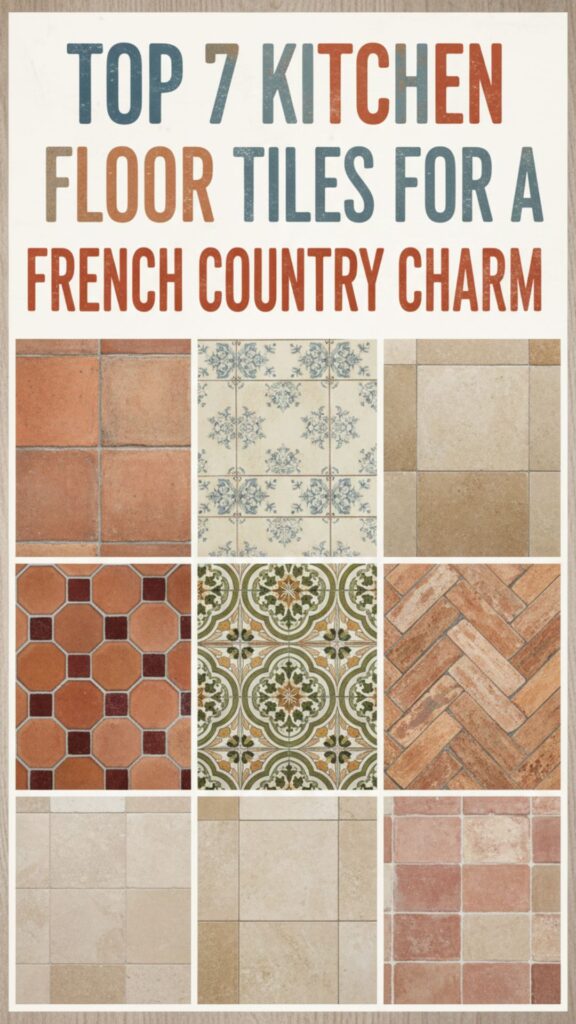
Choosing the right flooring is essential to grounding the space and achieving that authentic provincial feel. Whether you are renovating an old cottage or bringing character to a new build, the right tiles can instantly transport you to the rolling hills of Provence. From tumbled limestone to classic checkerboard patterns, here are seven kitchen floor tiles that perfectly capture French country charm.
1. Tumbled Limestone
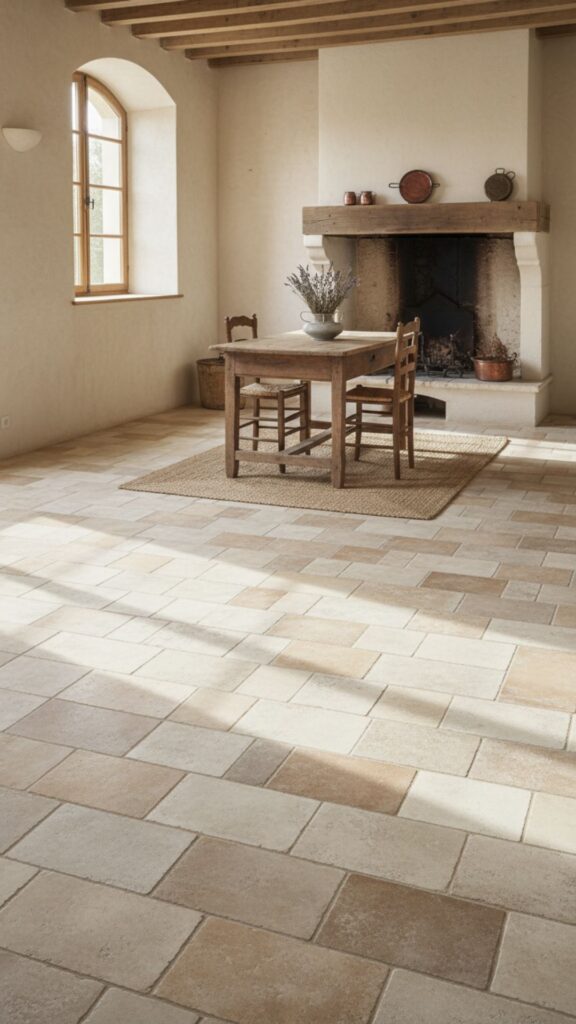
Nothing says French farmhouse quite like natural limestone. Its soft, neutral tones and textured surface bring an immediate sense of history to a room. Tumbled edges give the stone a worn, antique appearance that looks like it has been there for centuries.
How To Get The Look:
- Opt for large-format rectangular tiles laid in a random or running bond pattern.
- Choose warm beige, cream, or soft gray tones to keep the space airy.
- Use a light grout that blends seamlessly with the stone for a cohesive look.
Shopping List
- Tumbled limestone tiles
- Natural stone sealer
- Beige grout
- Large format floor tiles
- Stone floor cleaner
- Textured stone tiles
- Limestone pavers
- Matte finish sealer
- Neutral stone flooring
- Rustic floor tiles
2. Terracotta Tiles
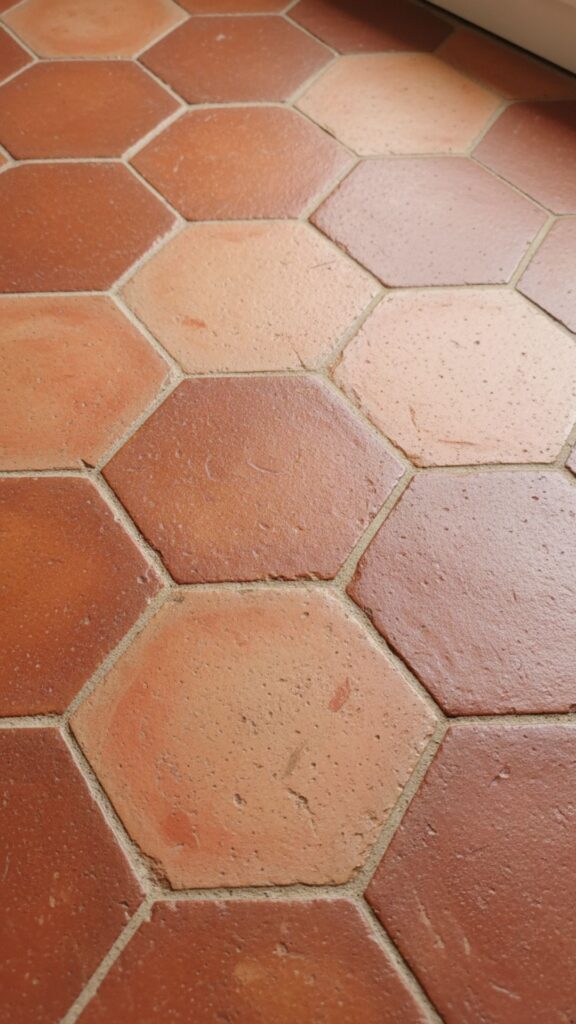
Terracotta is a staple in French country design, adding deep, earthy warmth to the kitchen. These red-clay tiles are durable, unpretentious, and develop a beautiful patina over time. Hexagon or square shapes are the most traditional choices for this aesthetic.
How To Get The Look:
- Select handmade or hand-finished tiles for slight variations in color and shape.
- Embrace the natural imperfections; they add to the rustic charm.
- Consider a wide grout line in a contrasting gray or off-white.
Shopping List
- Terracotta floor tiles
- Hexagon clay tiles
- Red clay tiles
- Square terracotta tiles
- Rustic terracotta
- Traditional clay pavers
- Terracotta sealer
- Wide joint grout
- Mexican pavers
- Saltillo tiles
3. Classic Checkerboard
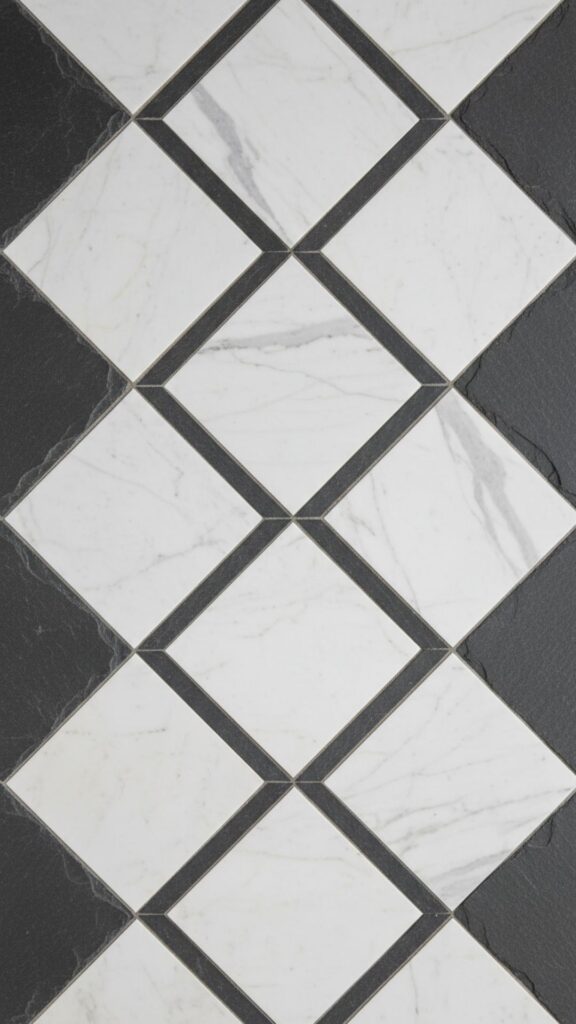
While often associated with grand chateaus, the checkerboard floor works beautifully in humble country kitchens too. It adds a graphic element that feels timeless rather than trendy. Softening the contrast by using grey and white instead of stark black and white keeps it feeling authentically French.
How To Get The Look:
- Pair a soft white marble with a grey limestone or slate.
- Lay the tiles on a diagonal (diamond pattern) to visually expand the room.
- Keep the finish matte or honed rather than polished to maintain a casual vibe.
Shopping List
- Black and white floor tiles
- Marble floor tiles
- Grey slate tiles
- Honed marble tiles
- Checkerboard flooring
- Diagonal floor tiles
- Carrara marble tiles
- Grey limestone tiles
- Matte checkerboard tiles
- Classic tile patterns
4. Reclaimed Brick
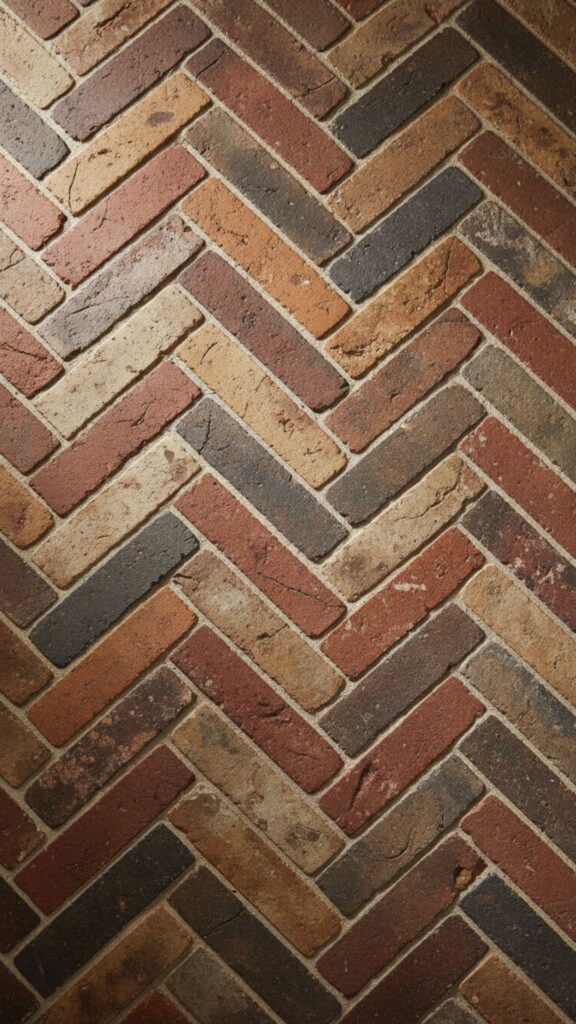
For a truly rustic, cottage-style kitchen, reclaimed brick flooring is unmatched. It offers incredible texture and durability, handling high-traffic areas with ease. The variations in red, brown, and tan hues bring instant warmth and a sense of permanence.
How To Get The Look:
- Look for “brick veneers” or thin bricks if full-sized bricks are too heavy for your subfloor.
- Lay them in a herringbone pattern for added visual interest and classic style.
- Seal the brick properly to prevent staining in a kitchen environment.
Shopping List
- Brick veneer flooring
- Thin brick tiles
- Herringbone brick tiles
- Reclaimed brick pavers
- Red brick flooring
- Brick floor sealer
- Rustic brick tiles
- Old Chicago brick tiles
- Brick paver sheets
- Vintage brick tiles
5. Patterned Encaustic Cement
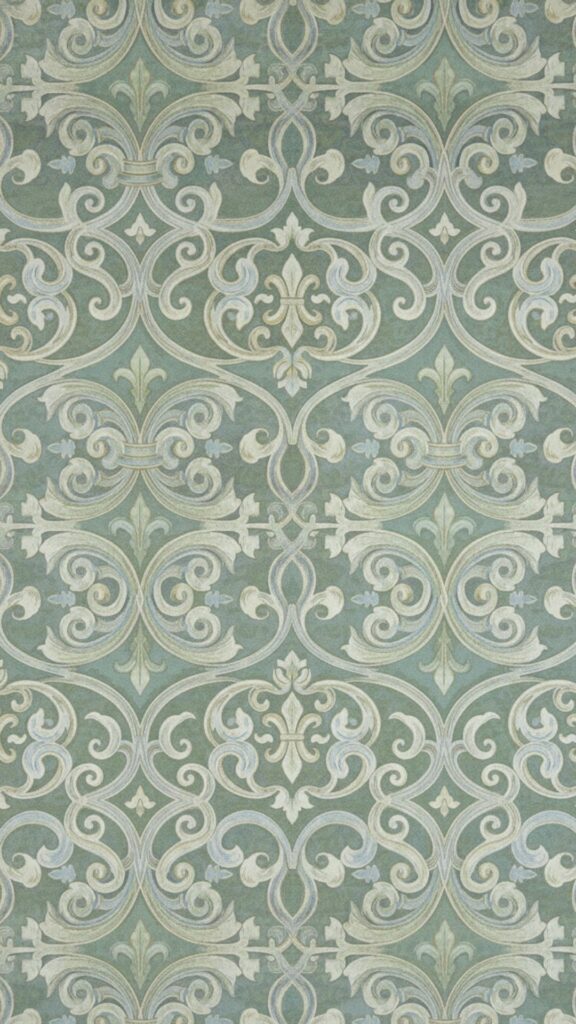
Encaustic tiles add a splash of pattern and color while maintaining an old-world feel. These cement tiles are known for their matte finish and intricate, often floral or geometric, designs. They work beautifully as a focal point in a smaller kitchen or pantry.
How To Get The Look:
- Stick to muted color palettes like sage green, dusty blue, or charcoal.
- Choose a vintage-inspired pattern that looks like it belongs in a historic home.
- Ensure they are properly sealed, as cement is porous and can absorb spills.
Shopping List
- Encaustic cement tiles
- Patterned floor tiles
- Vintage cement tiles
- Blue and white tiles
- Geometric floor tiles
- Floral cement tiles
- Matte patterned tiles
- Cement tile sealer
- Decorative floor tiles
- Old world tiles
6. Flagstone Slate
Flagstone slate provides a dramatic, darker contrast to the typically light French country cabinetry. The uneven surface and irregular shapes create a relaxed, organic look that feels very grounded and earthy.
How To Get The Look:
- Choose large, irregular slabs for a “crazy paving” look or uniform rectangles for structure.
- Look for multi-color slate that includes hints of rust and gold to warm up the grey.
- A honed finish is softer and more suitable for indoors than a rough cleft finish.
Shopping List
- Black slate tiles
- Flagstone flooring
- Natural slate tiles
- Multicolor slate
- Large slate pavers
- Honed slate tiles
- Grey stone flooring
- Slate tile sealer
- Rust slate tiles
- Irregular stone tiles
7. Wood-Look Porcelain
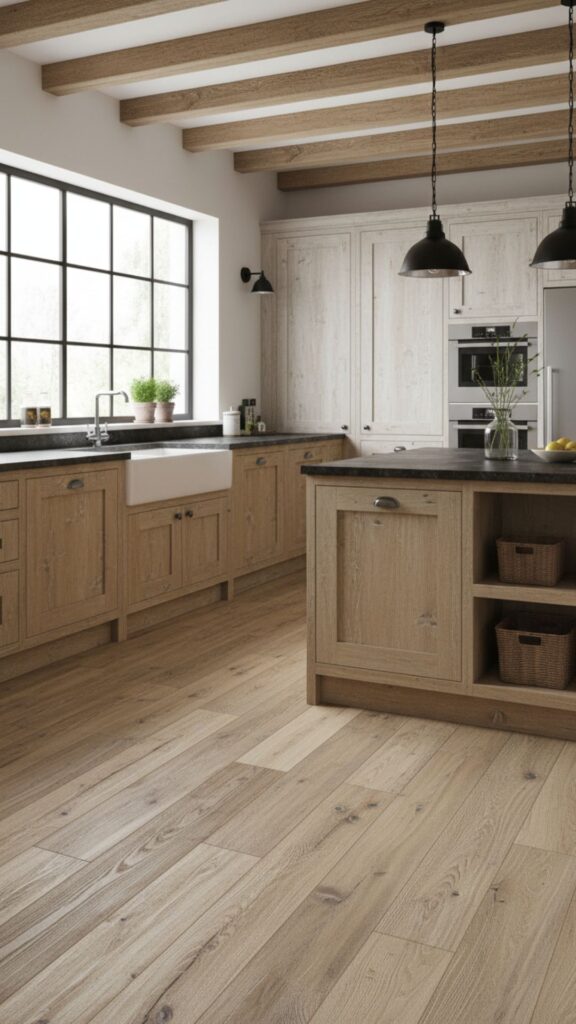
If you love the look of aged French oak floorboards but need the durability of tile, wood-look porcelain is a fantastic compromise. It withstands water and spills much better than real wood, making it ideal for messy kitchen zones.
How To Get The Look:
- Choose planks with a matte finish and realistic grain texture.
- Select a “distressed” or “reclaimed” wood style in a light oak or whitewashed tone.
- Install with minimal grout lines to mimic the appearance of real wood planks.
Shopping List
- Wood look porcelain tiles
- Distressed wood tiles
- Whitewashed wood tiles
- Light oak tile
- Plank floor tiles
- Matte wood tiles
- Reclaimed wood look tiles
- Farmhouse wood tiles
- Porcelain plank flooring
- Grout for wood look tile
Bringing the French Countryside Home
Creating a French country kitchen is about capturing a feeling of ease and elegance. The floor you choose sets the stage for everything else, from your farm table to your copper pots. Whether you lean towards the warmth of terracotta or the cool sophistication of limestone, these options provide a timeless foundation that celebrates natural beauty and imperfect charm.
Frequently Asked Questions (FAQs)
1. Are terracotta tiles hard to maintain in a kitchen?
Terracotta is porous, so it requires sealing upon installation and periodic resealing to prevent stains. Once sealed, it is quite durable and easy to sweep and mop, but spills should be wiped up quickly to avoid discoloration.
2. Can I use real limestone in a high-traffic kitchen?
Yes, but choose a tumbled or honed finish rather than polished, as it hides scratches and wear better. Limestone is softer than granite or porcelain, so it may show patina over time, which many believe adds to the French country charm.
3. Is wood-look tile a good alternative to real hardwood?
Absolutely. Wood-look porcelain is waterproof, scratch-resistant, and easier to clean than real hardwood. It’s an excellent choice for kitchens where moisture and spills are common, offering the aesthetic of wood without the maintenance.
4. What color grout should I use for French country tiles?
For a natural stone or terracotta look, choose a grout color that blends with the tile (like beige or sand) or a neutral grey. Avoid stark white or black grout, as it can look too modern or industrial for this softer, rustic style.
5. Do patterned cement tiles fade over time?
High-quality encaustic cement tiles have the pattern inlaid into the body of the tile, so they don’t wear off easily. However, they can stain if not properly sealed. Direct, harsh sunlight over many years may cause slight fading, but indoors this is rarely an issue.