Some links in this blog are affiliate links. If you make a purchase through these links, I may receive a small commission. This helps support the site at no extra cost to you.
Open shelves have become a staple in modern home design, blending functionality with aesthetic appeal.
Whether in kitchens, living rooms, or even bathrooms, these versatile storage solutions allow you to display your favorite items while keeping your space organized.
But styling open shelves isn’t just about placing items on a surface—it’s an art. Done right, it can elevate the look of your entire room; done wrong, it can make the space feel cluttered and chaotic.
Do you know that humans naturally notice patterns and symmetry? This is why thoughtfully styled shelves can instantly make a room feel more harmonious and inviting.
Many people think open shelves are merely for storage, but in reality, they are a canvas for showcasing your personality, creativity, and design sense.
In this guide, we will explore 10 open-shelf styling tips that will help you achieve a modern, chic, and functional look. Along the way, we’ll include some fascinating design insights, myths, and fun facts to inspire your next decor project.

Table of Contents

10 Best Open-Shelf Styling
1. Balance Function and Aesthetics
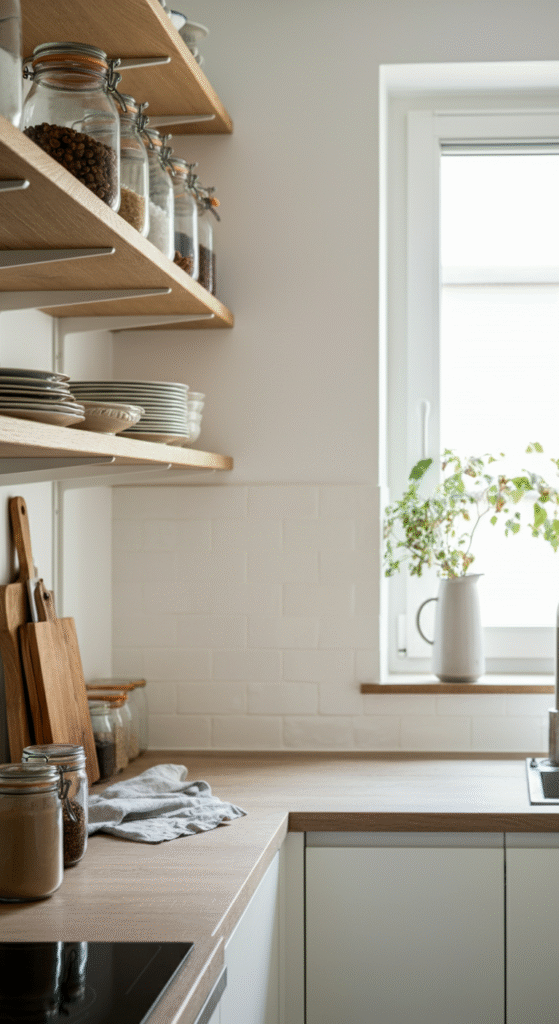
When styling open shelves, it’s important to strike a balance between functionality and visual appeal. This means arranging items in a way that is both practical to reach and pleasing to the eye.
Tip: Combine frequently used items with decorative pieces. For example, in a kitchen, display your favorite cookbooks next to stylish jars or plants. This approach ensures your shelves are not just decorative but also serve a purpose.
Do you know? Research in environmental psychology shows that cluttered spaces can increase stress levels. A well-organized shelf doesn’t just look good—it can also improve your mental well-being.
2. Layering Creates Depth

One common mistake is placing items in a single straight line on the shelf. Instead, layering objects of different sizes and shapes creates a sense of depth and dimension.
Tip: Place taller items like vases at the back, medium items in the middle, and small decorative pieces at the front. Overlapping objects slightly can make the shelf look curated rather than random.
Interesting fact: Visual layering is a technique borrowed from art and photography, where foreground, midground, and background elements guide the viewer’s eye naturally through a composition.
3. Stick to a Cohesive Color Palette
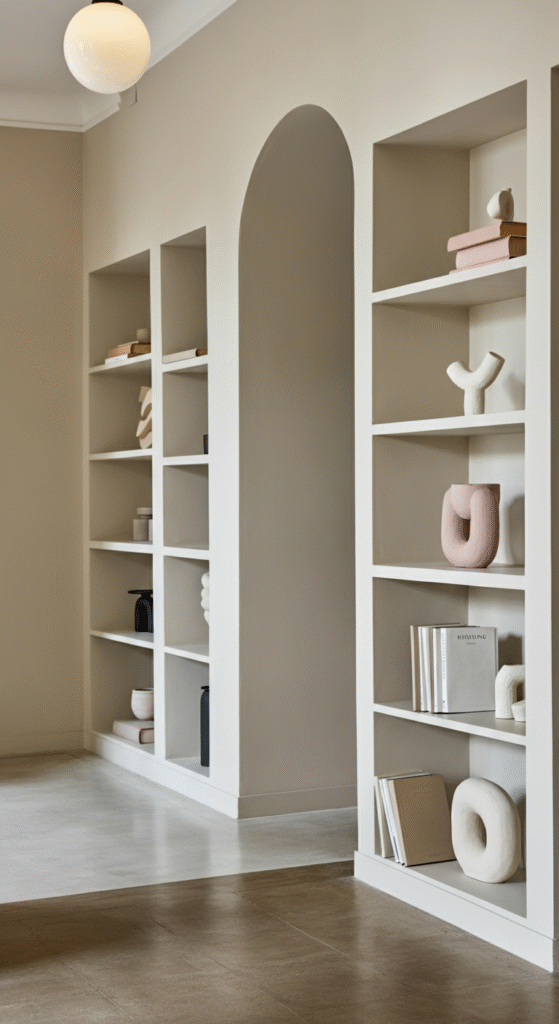
A cohesive color palette instantly makes shelves look intentional rather than chaotic. Choose a palette that complements the room’s overall design. Neutrals like white, beige, gray, or black can serve as a modern base, while pops of color can add personality.
Tip: Use three main colors and one accent color. For instance, a modern living room shelf might combine white, natural wood, black, and a hint of teal.
Myth busted: Many people believe that more colors make a shelf more lively. In reality, too many colors can make it appear cluttered and unorganized.
4. Mix Textures for Visual Interest
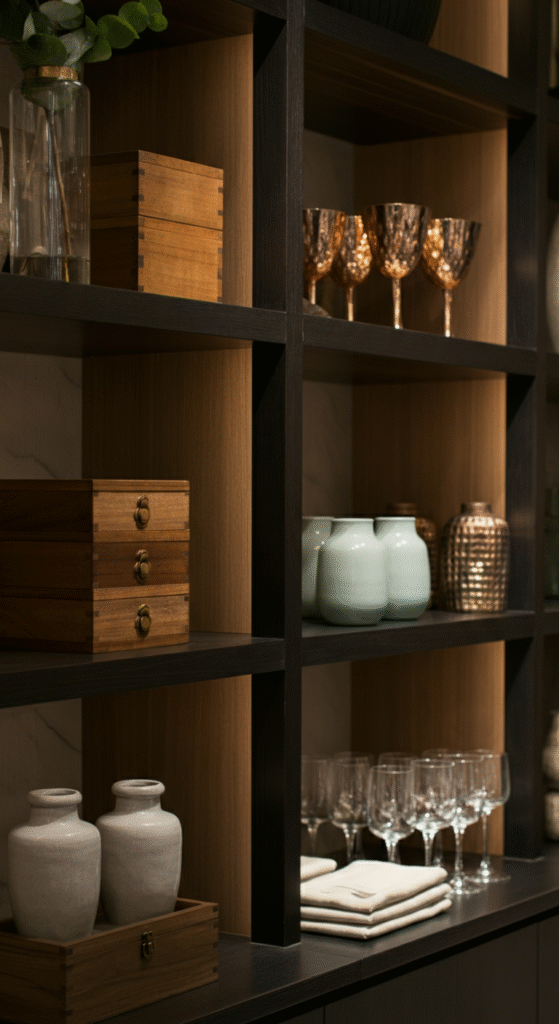
Texture plays a crucial role in modern shelf styling. Combining materials like glass, wood, metal, and ceramics adds depth and tactile appeal.
Tip: Pair a sleek ceramic vase with a rustic wooden box or a metallic candle holder with a woven basket. The contrast between textures creates visual intrigue and keeps the shelf from feeling flat.
Do you know? Even subtle texture differences can significantly impact how warm or cold a space feels. Smooth surfaces tend to feel modern and minimalistic, while rough textures add warmth and comfort.
5. Embrace Negative Space

Negative space, or empty space, is just as important as the items you place on the shelf. Avoid overcrowding—letting some space breathe creates a sense of order and elegance.
Tip: For a modern look, leave at least 20–30% of the shelf empty. This approach highlights key pieces and ensures your display doesn’t overwhelm the viewer.
Interesting fact: The concept of negative space is widely used in design, from architecture to fashion. It’s the principle that what you don’t include can be just as powerful as what you do.
6. Use Books Creatively

Books are not only practical but also versatile decor items. How you arrange them can dramatically change the shelf’s vibe.
Tip: Stack books horizontally and vertically for variation. Use them as platforms for small decor items like candles, vases, or sculptures. Choosing books with coordinated spine colors can make them blend seamlessly with your color palette.
Myth busted: You don’t need to own books you’ve read to style shelves. Decorative books can be purely aesthetic, adding texture, color, and a sense of sophistication to your space.
7. Add Natural Elements
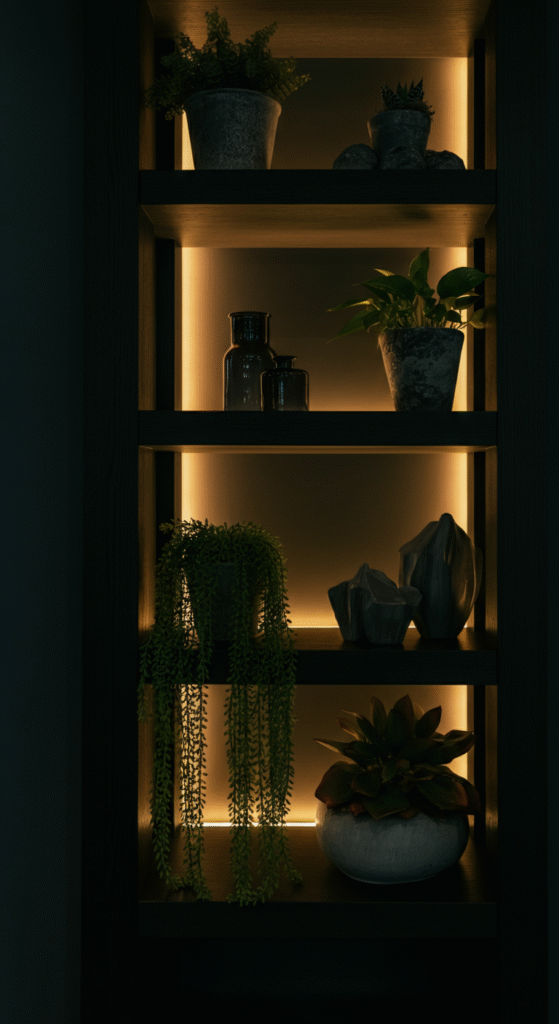
Plants, flowers, or even natural objects like shells and stones can bring life to your shelves. Natural elements soften hard lines and inject freshness into your modern space.
Tip: Small potted plants or trailing vines look especially appealing on staggered shelves. For larger shelves, a medium-sized plant at one end can balance the arrangement.
Do you know? Indoor plants can purify air, improve mood, and reduce stress, making them both functional and decorative for your open shelving.
8. Incorporate Art and Personal Items
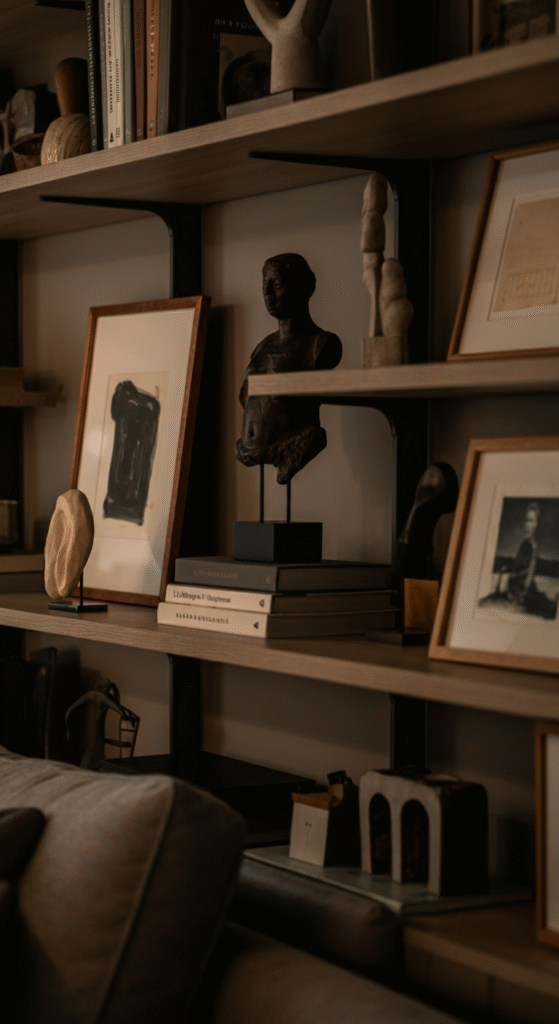
Open shelves are the perfect place to display art, photos, and meaningful personal items. This adds personality and makes your space truly yours.
Tip: Use small framed art pieces or favorite collectibles. Rotate items seasonally to keep the shelf dynamic and interesting.
Interesting fact: Psychologists say personal items in your environment can improve emotional well-being and make your home feel more comfortable and inviting.
9. Vary Heights and Shapes
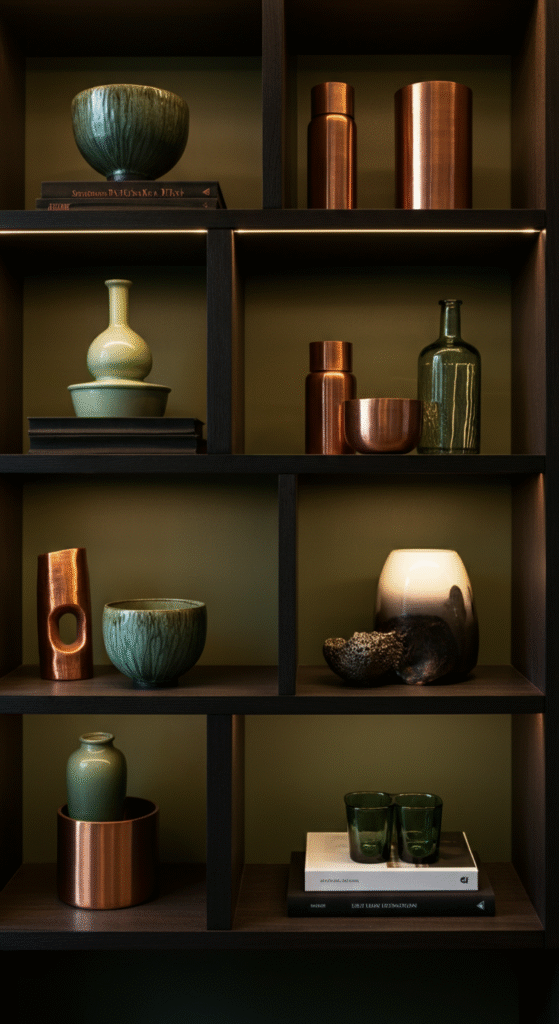
Uniform items lined up in a row can look boring. Introduce variety by mixing different shapes and heights for a modern, dynamic display.
Tip: Combine tall vases, short bowls, medium sculptures, and round objects together. Group items in odd numbers—like three or five—because odd-numbered arrangements are visually more appealing.
Do you know? Designers often use the “rule of three” because our brains naturally find odd-numbered groupings more engaging and aesthetically pleasing.
10. Keep it Seasonal and Evolving
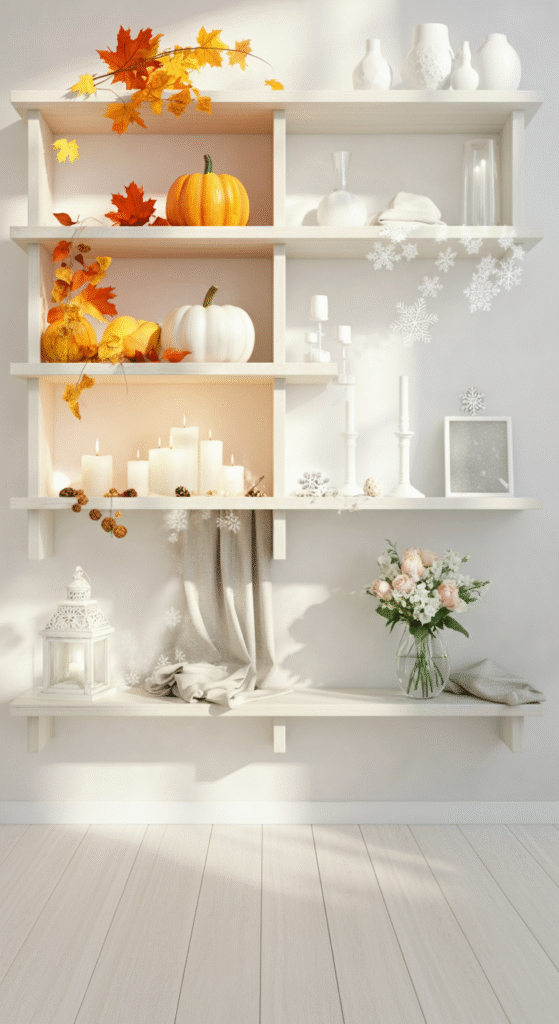
Shelves shouldn’t be static. Update them periodically to reflect seasons, holidays, or new trends. This keeps your space feeling fresh and aligned with your personal style.
Tip: Swap seasonal decor like fall leaves, winter candles, or spring flowers. Even small changes like a new vase or book cover can make a big difference.
Interesting fact: Rotating decor is a principle used in retail and hospitality design to maintain interest and encourage exploration—why not use it at home?
Conclusion
Open-shelf styling is more than just arranging items on a surface—it’s an opportunity to showcase your creativity, personality, and sense of style.
By balancing aesthetics with functionality, layering items, sticking to a cohesive color palette, mixing textures, leaving negative space, and including personal touches, you can create a modern, curated look that transforms your room.
Remember, open shelves are dynamic. They evolve with your tastes and lifestyle, allowing you to experiment with colors, textures, and seasonal items. Whether in the kitchen, living room, or bedroom, a thoughtfully styled open shelf doesn’t just store—it communicates style, harmony, and personality.
By implementing these 10 open-shelf styling tips, you can confidently design shelves that are both visually stunning and highly functional, turning a simple storage solution into a centerpiece of modern interior design.
Frequently Asked Questions (FAQs)
What are open shelves and why are they popular in modern homes?
Open shelves are storage units without doors, allowing items to be displayed openly. They are popular in modern homes because they combine functionality with style, making spaces feel airy, organized, and visually appealing.
How do I prevent my open shelves from looking cluttered?
Focus on balance, negative space, and grouping items thoughtfully. Use the rule of odd numbers, layer objects, and avoid overcrowding. Keep only essential or decorative items visible and store the rest elsewhere.
Can I mix decorative items with functional items on open shelves?
Absolutely! Mixing functional and decorative items creates a curated, lived-in look. For example, display cookbooks alongside a small plant or decorative jars in a kitchen setting.
How do I choose a color palette for my shelves?
Stick to 3 main colors and 1 accent color. Consider the room’s overall palette and choose colors that complement it. Neutral tones with occasional pops of color often work best for a modern look.
Should I use plants on open shelves?
Yes, plants or natural elements add freshness, color, and texture. Small potted plants, succulents, or trailing vines work particularly well and can also improve indoor air quality.