Some links in this blog are affiliate links. If you make a purchase through these links, I may receive a small commission. This helps support the site at no extra cost to you.
Designing a kitchen that balances style with functionality is the cornerstone of a successful home renovation. Whether you are working with a cozy apartment corner or an expansive open-plan space, the right layout transforms how you cook, entertain, and live.
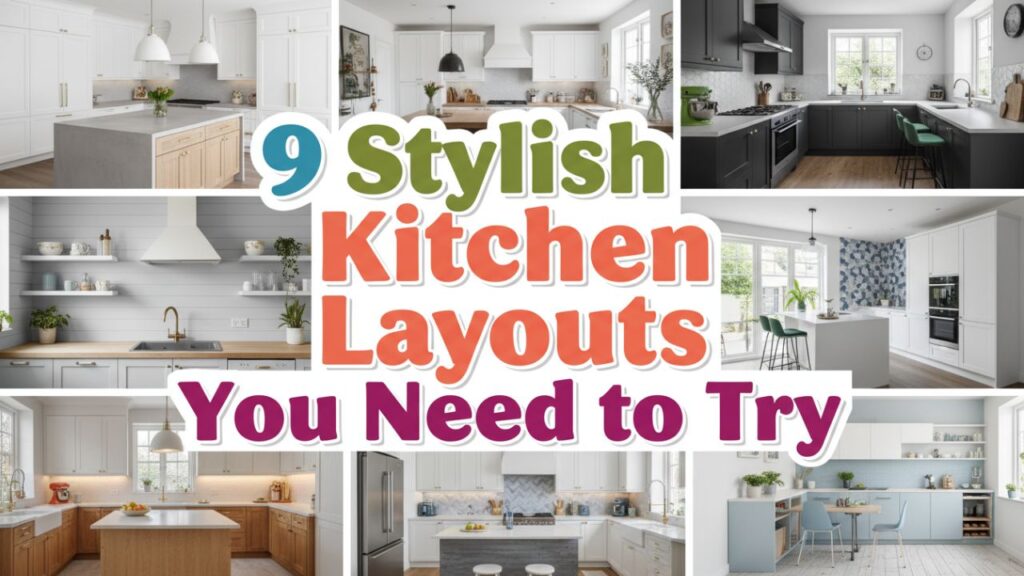
Choosing the best configuration requires more than just picking cabinets; it involves understanding your workflow and how you move through the space. From the classic efficiency of the galley to the social appeal of a large island, these nine kitchen layouts offer solutions for every home size and aesthetic preference.
1. The One-Wall Kitchen
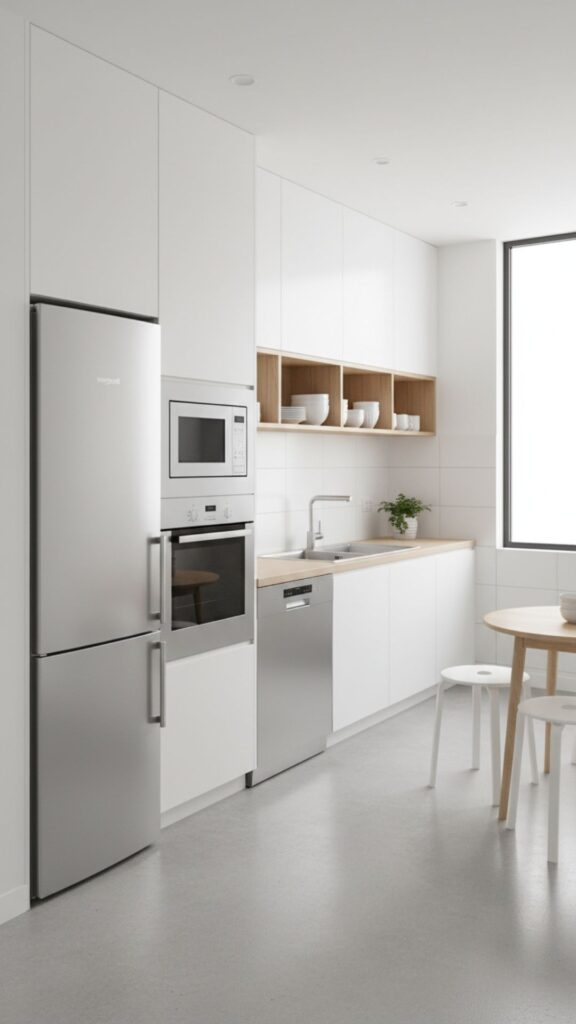
Ideal for studio apartments or lofts, the one-wall kitchen keeps all appliances, cabinets, and countertops along a single wall. This layout maximizes floor space, allowing for an open feel in smaller areas.
How To Get The Look:
- Install vertical shelving to maximize storage without cluttering the floor.
- Choose a statement backsplash to create a focal point.
- Use compact appliances to maintain a streamlined appearance.
Shopping List
2. The Galley Kitchen
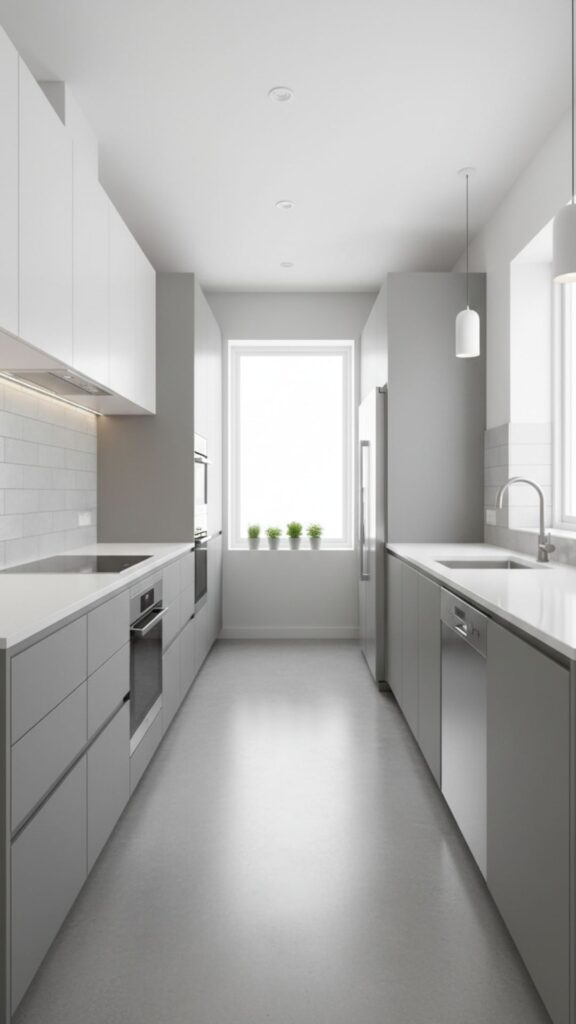
Named after the cooking areas on ships, the galley kitchen consists of two parallel runs of units forming a central corridor. It is highly efficient for cooking as it keeps everything within easy reach, minimizing steps between the sink, stove, and fridge.
How To Get The Look:
- Keep the walkway clear of obstructions to ensure smooth traffic flow.
- Use light colors on cabinets to prevent the space from feeling narrow.
- Add under-cabinet lighting to brighten workspaces.
Shopping List
3. The L-Shaped Kitchen
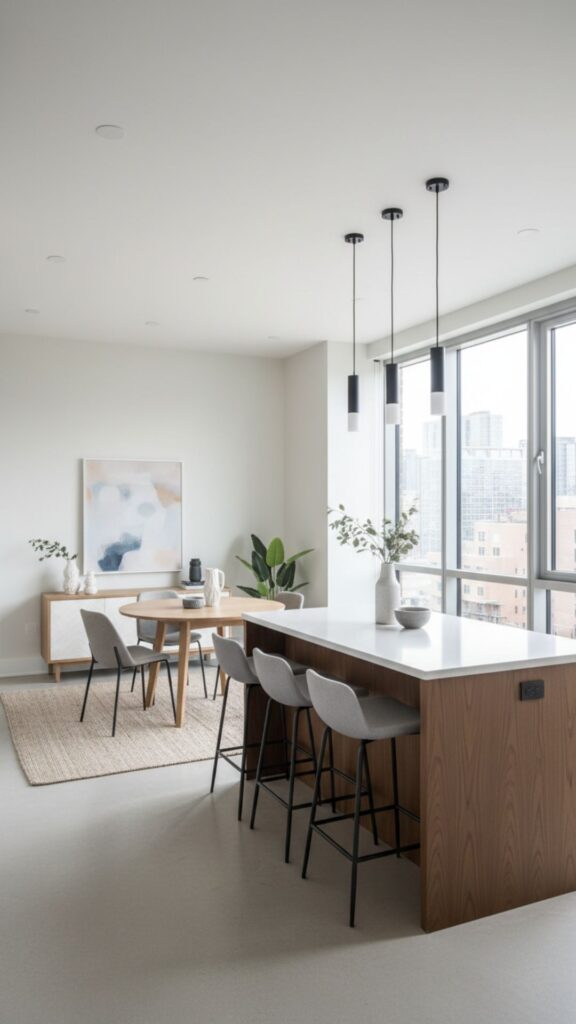
The L-shaped layout is versatile and works well in both small and medium-sized spaces. It utilizes two adjoining walls, creating a natural work triangle while leaving the rest of the room open for a dining table or island.
How To Get The Look:
- Utilize corner cabinets with lazy Susans to maximize storage.
- Place the sink on one leg of the “L” and the stove on the other.
- Add a small movable island if space permits.
Shopping List
4. The U-Shaped Kitchen
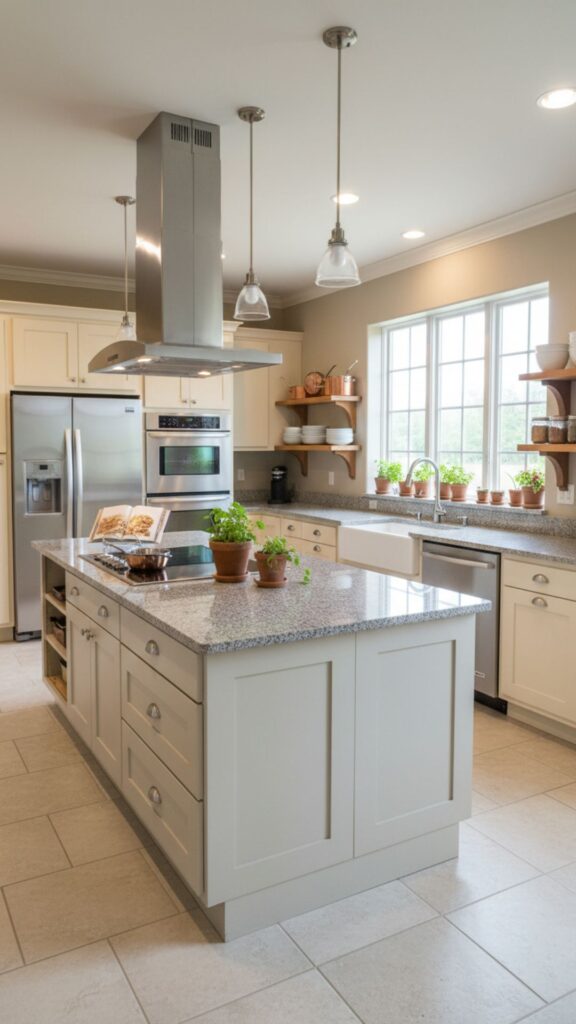
For those who love to cook, the U-shaped kitchen surrounds you on three sides with countertops and appliances. This layout offers ample storage and workspace, allowing for efficient meal preparation without traffic interference.
How To Get The Look:
- Keep upper cabinets to a minimum on one wall to avoid a “boxed-in” feeling.
- Ensure enough clearance between facing cabinets for drawers to open fully.
- Consider a peninsula on one end for casual seating.
Shopping List
5. The Island Kitchen
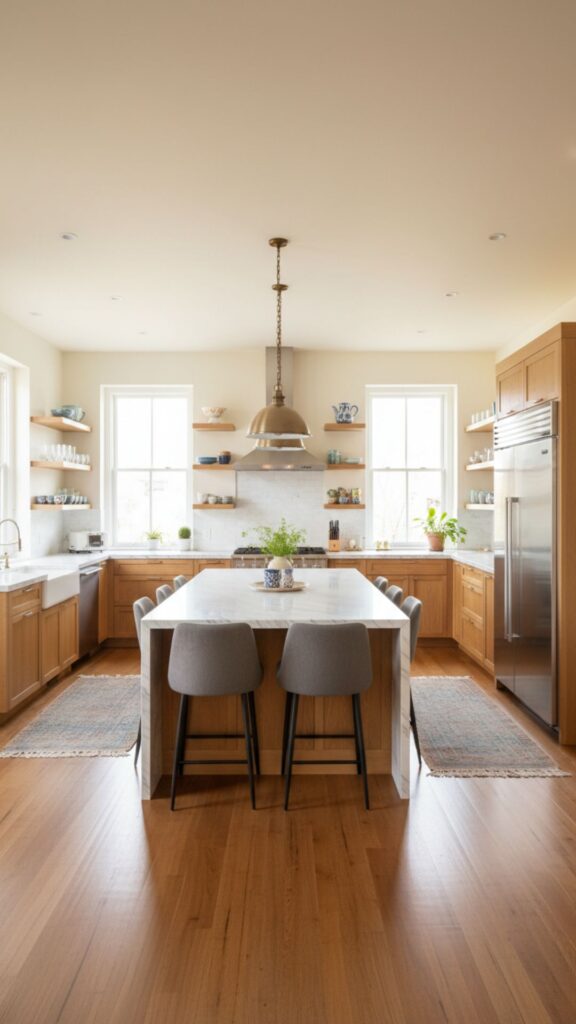
Adding an island to a kitchen layout provides a central hub for cooking, eating, and socializing. It works best in larger L-shaped or one-wall kitchens where there is enough clearance for movement around the entire perimeter.
How To Get The Look:
- Install a prep sink on the island to improve workflow.
- Use contrasting countertop materials for the island to make it stand out.
- Incorporate seating on one side for a breakfast bar.
Shopping List
6. The Peninsula Kitchen
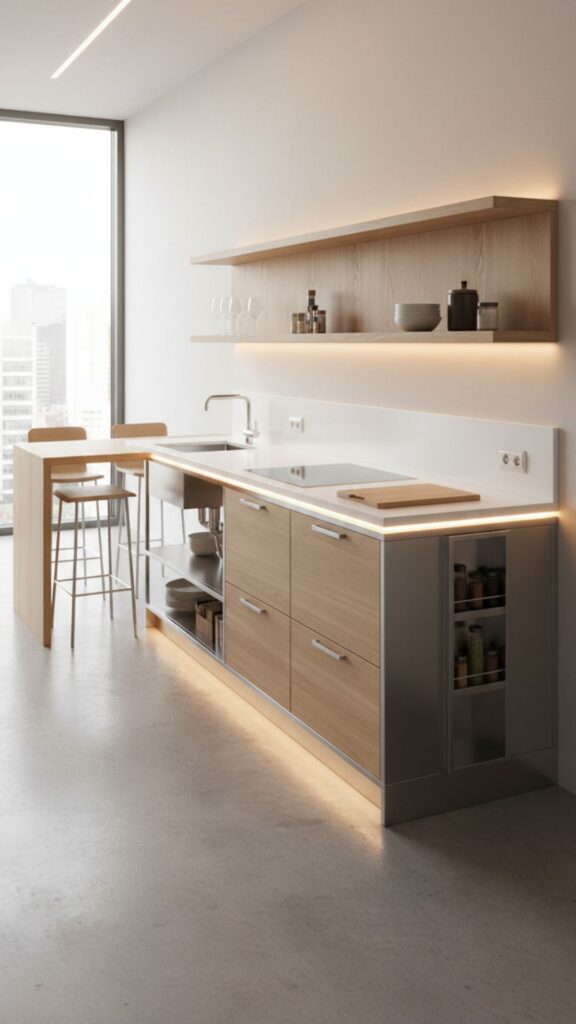
A peninsula offers the benefits of an island but is connected to the main workspace on one end. It is a smart solution for narrower rooms where a freestanding island would disrupt the flow.
How To Get The Look:
- Use the peninsula as a room divider in open-concept homes.
- Add cabinets on the dining side for extra storage.
- Keep the countertop height consistent for a seamless look.
Shopping List
7. The Two-Island Kitchen
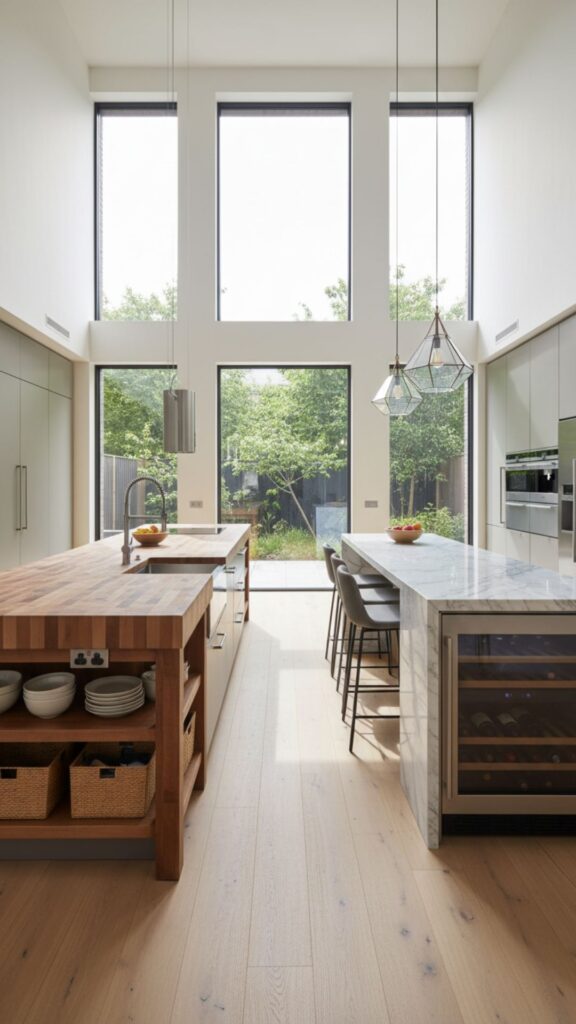
In luxury homes or expansive spaces, two islands can separate tasks effectively. One island is typically dedicated to food preparation with a sink and butcher block, while the other serves as a dedicated space for entertaining and eating.
How To Get The Look:
- Ensure adequate walkway space (at least 42-48 inches) between islands.
- Use matching lighting fixtures to unify the space.
- Designate specific zones for each island to prevent clutter.
Shopping List
8. The G-Shaped Kitchen
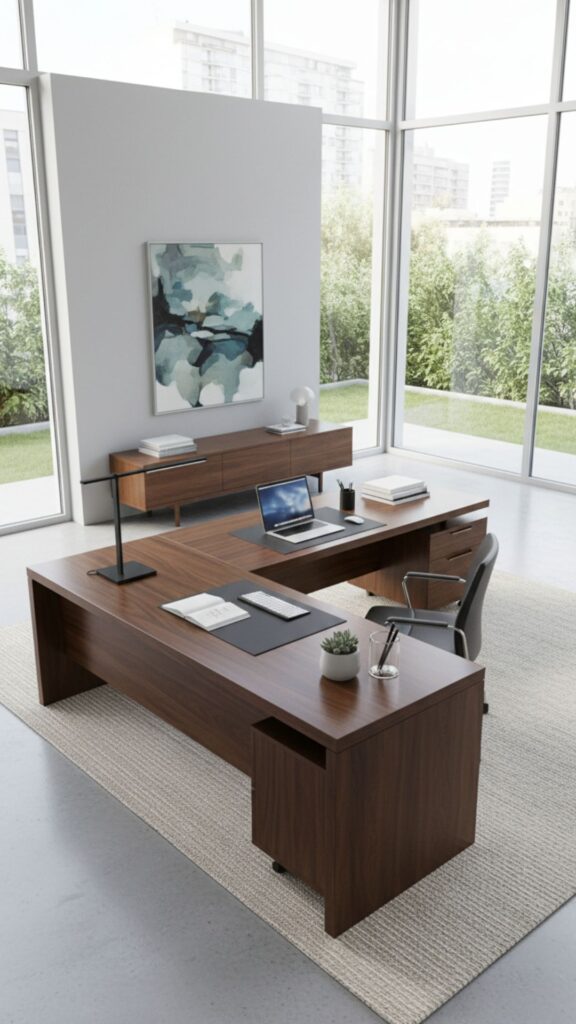
An expansion of the U-shaped layout, the G-shaped kitchen adds a fourth “wall” in the form of a peninsula. This design maximizes countertop surface area and is perfect for households that need multiple workstations.
How To Get The Look:
- Use the extra peninsula leg as a breakfast bar or serving station.
- Avoid overhead cabinets above the peninsula to keep the sightlines open.
- Optimize corner storage with specialized shelving solutions.
Shopping List
9. The Open Concept Kitchen
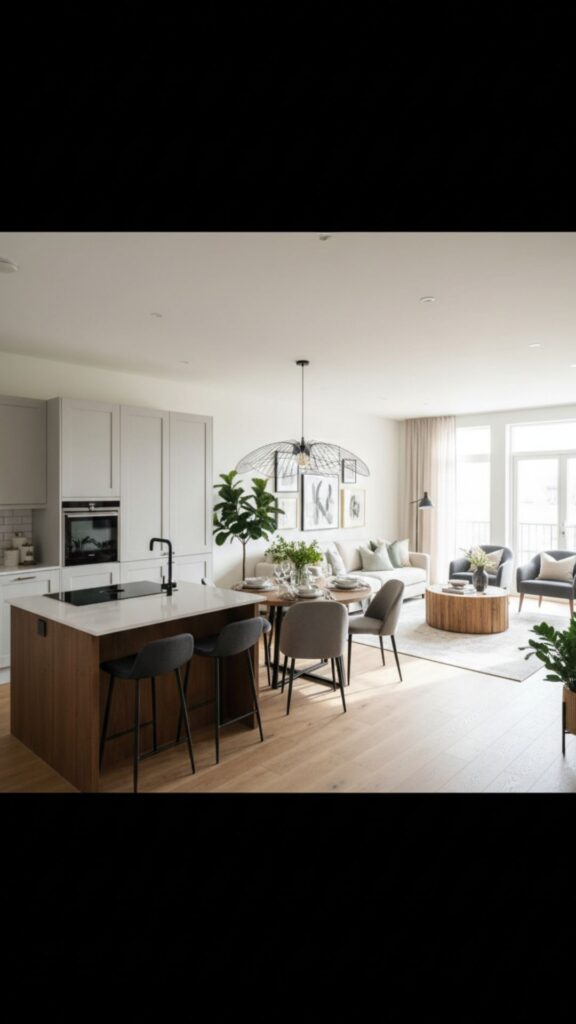
Breaking down walls to merge the kitchen with the living or dining room creates a social and airy atmosphere. While not strictly a “shape,” this layout relies on zones created by furniture placement rather than walls.
How To Get The Look:
- Use area rugs to define the kitchen zone versus the living zone.
- Ensure your range hood is powerful and quiet to keep cooking smells contained.
- Coordinate kitchen cabinetry colors with living room furniture.
Shopping List
Plan Your Perfect Space
Selecting a kitchen layout is the first step toward building a room that meets your culinary needs and design aspirations. By considering your available square footage and lifestyle, you can choose a configuration that maximizes efficiency and style. Whether you opt for a sleek galley or a sprawling double-island setup, the right foundation ensures your renovation creates a home you love for years to come.
Frequently Asked Questions (FAQs)
1. What is the most efficient kitchen layout?
The galley kitchen is often considered the most efficient layout because it minimizes the distance between the primary work zones. It creates a streamlined workflow where the sink, stove, and refrigerator are easily accessible with minimal movement.
2. How much space do I need for a kitchen island?
You generally need at least 36 to 48 inches of clearance on all sides of an island to ensure doors and drawers open comfortably and people can walk through. If your kitchen is less than 13 feet wide, a peninsula or a rolling cart might be a better option than a fixed island.
3. Can I change my kitchen layout without moving plumbing?
Yes, but your options will be limited. You can often change cabinetry configurations, add an island (without a sink), or extend countertops. However, moving the sink, dishwasher, or gas stove usually requires moving plumbing and gas lines, which significantly increases renovation costs.
4. What is the kitchen work triangle?
The kitchen work triangle is a design concept that connects the three main work areas: the sink, the stove, and the refrigerator. The goal is to keep the distance between these points close enough for efficiency but far enough apart to avoid cramping, ensuring a smooth cooking process.
5. Is an L-shaped kitchen good for small spaces?
Yes, the L-shaped layout is excellent for small to medium spaces. It maximizes corner space and keeps the center of the room open, making the kitchen feel larger. This layout also easily accommodates a small dining table or a portable island if extra prep space is needed.