Some links in this blog are affiliate links. If you make a purchase through these links, I may receive a small commission. This helps support the site at no extra cost to you.
Kitchen trends tend to cycle rapidly, leaving homeowners dizzy from the whiplash of going from all-white minimalism to moody maximalism in a few short years. However, traditional design elements possess a staying power that transcends the “flavor of the month.”
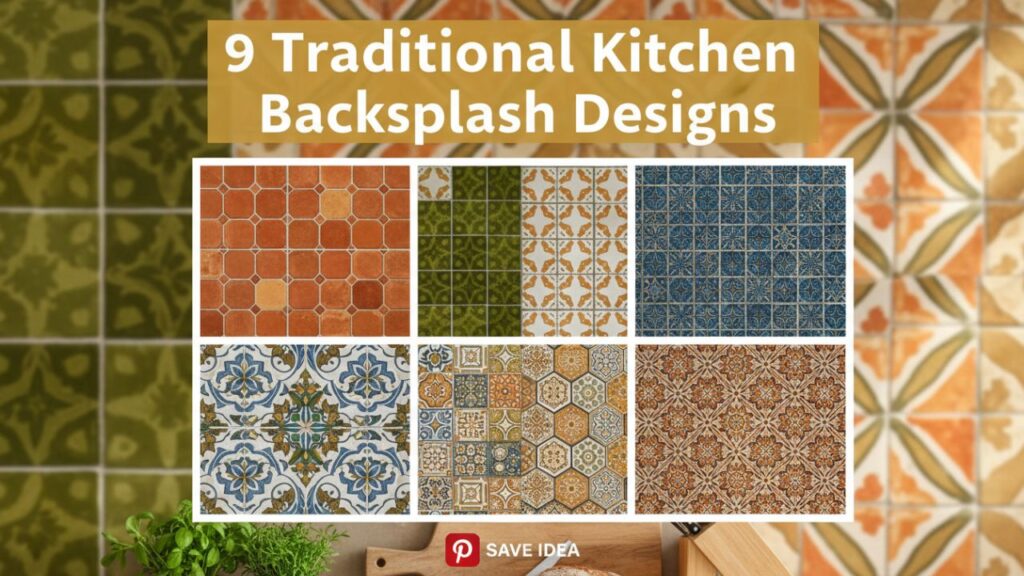
A backsplash serves as the jewelry of the kitchen—a focal point that ties the cabinetry and countertops together. If you want a kitchen that ages gracefully, looking as relevant in a decade as it does today, traditional designs are the safest and most stylish bet.
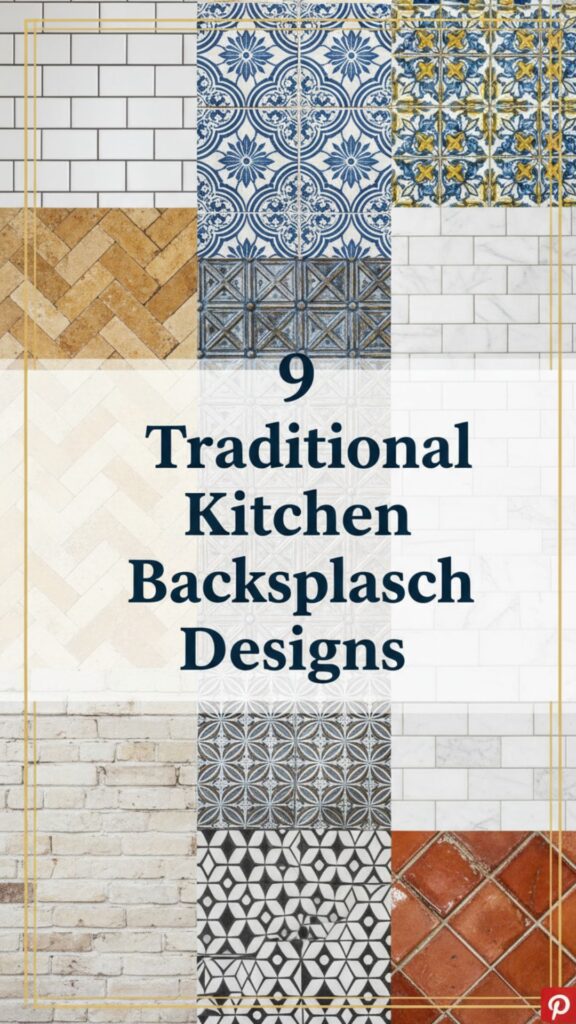
1. Classic White Subway Tile
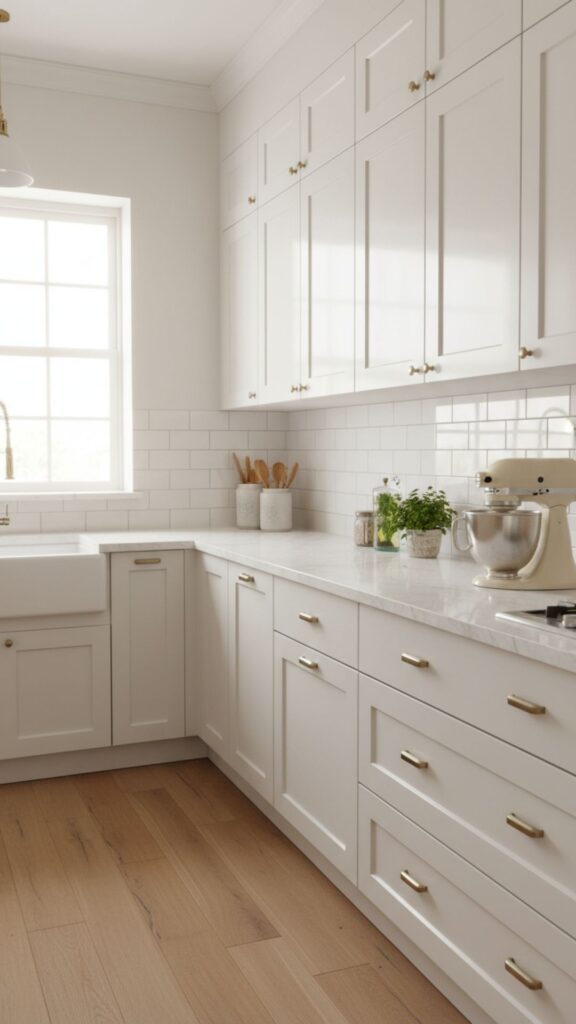
Originated in NYC subway stations in the early 1900s, this design hasn’t left the lexicon since. It remains clean, bright, and universally appealing, acting as the perfect backdrop for any kitchen style.
How To Get The Look:
- Opt for standard 3×6 inch ceramic tiles for the most authentic look.
- Use grey or dark grout to add dimension and hide everyday grime.
- Lay them in a running bond pattern (like bricks) to keep it traditional.
Shopping List
- white subway tile
- grey grout
- tile spacers
- notched trowel
- tile cutter
- thinset mortar
- grout float
- silicone caulk
- sponge
- bucket
- level tool
- tile saw
- knee pads
- safety glasses
- measuring tape
2. Charming Beadboard
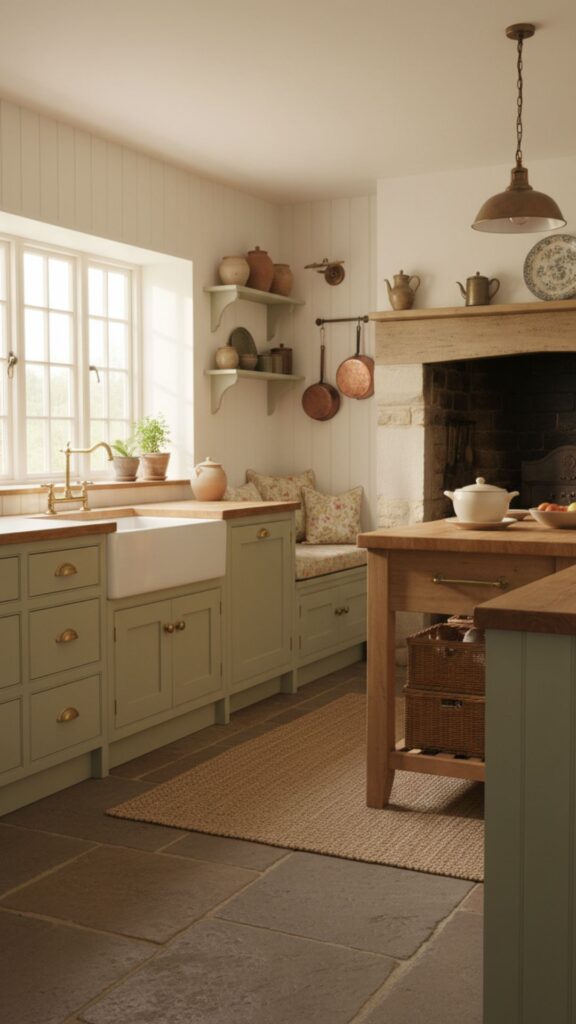
For a cozy, English cottage feel, beadboard paneling offers texture without the coldness of stone or ceramic. It creates vertical lines that can help a small kitchen feel taller.
How To Get The Look:
- Install vertical tongue-and-groove boards or sheets.
- Paint with semi-gloss, moisture-resistant paint to protect against splashes.
- Add a top rail for a finished, furniture-like edge.
Shopping List
- beadboard paneling
- construction adhesive
- caulk gun
- semi gloss white paint
- paint brush set
- jigsaw tool
- wood filler
- sandpaper block
- trim molding
- stud finder
- measuring tape
- level
- nail gun
- finishing nails
- drop cloth
3. Rustic Travertine
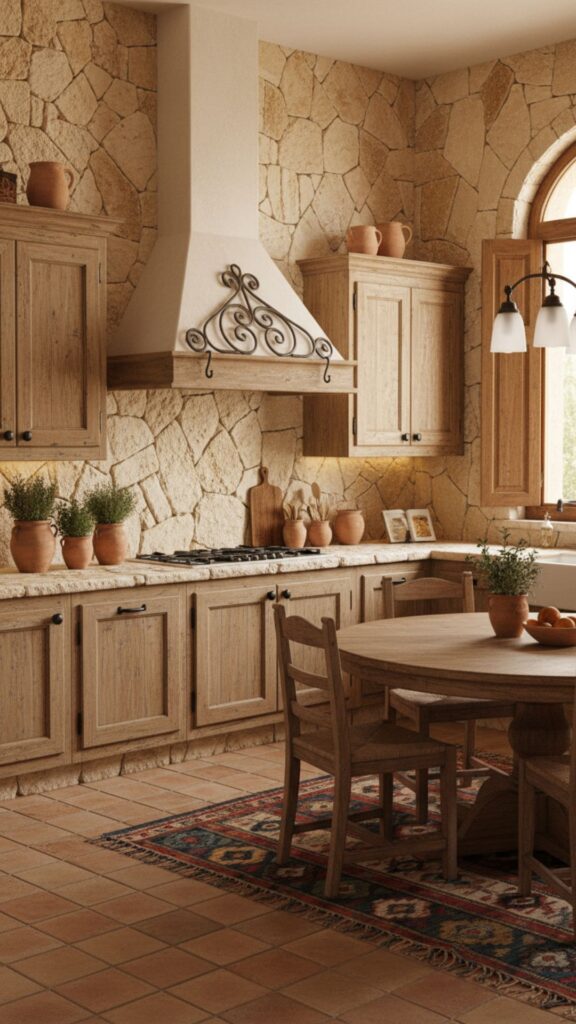
Tumbled travertine brings warmth and an Old World Mediterranean vibe that feels grounded and earthy. Its natural pits and variations mean no two tiles are exactly alike.
How To Get The Look:
- Choose tumbled finishes for a softer, aged appearance rather than polished.
- Stick to warm beige and cream tones to keep it inviting.
- Seal the stone thoroughly to prevent staining from cooking grease.
Shopping List
- travertine tile
- stone sealer
- beige grout
- wet tile saw
- thinset mortar
- notched trowel
- grout float
- tile spacers
- stone cleaner
- heavy duty bucket
- mixing drill attachment
- rubber mallet
- knee pads
- safety goggles
- masking tape
4. Elegant Herringbone
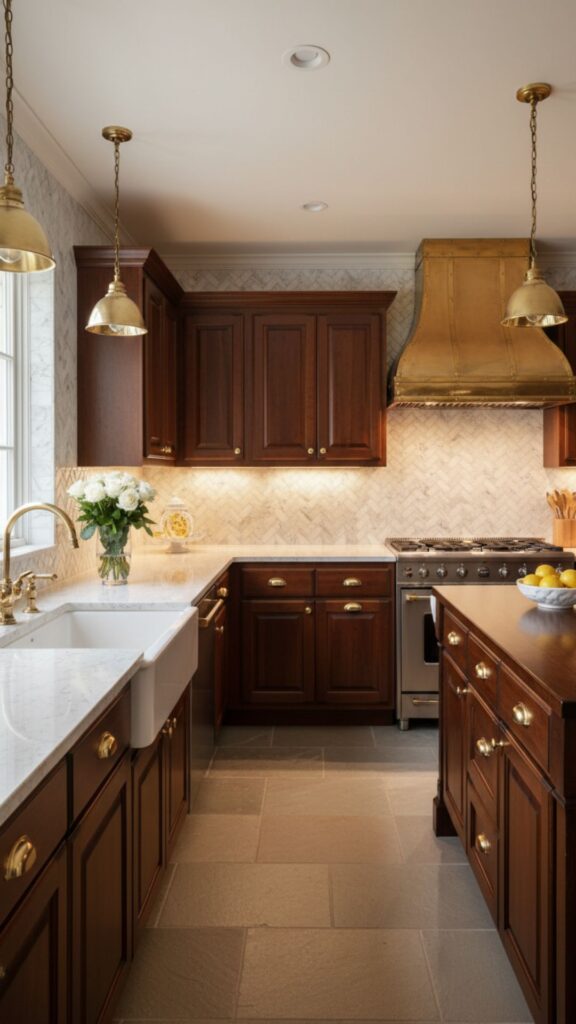
Herringbone isn’t a material but a specific layout pattern. Taking a simple rectangular tile and laying it in a V-shape instantly elevates the space, adding movement and texture without color chaos.
How To Get The Look:
- Use marble or high-gloss ceramic rectangles (longer tiles emphasize the pattern).
- Ensure 45-degree angles are precise during installation.
- Use a contrasting grout to highlight the zig-zag pattern.
Shopping List
- herringbone mosaic tile
- marble subway tile
- white thinset
- laser level
- tile nippers
- grout haze remover
- grout bag
- sponge
- bucket
- notched trowel
- tile spacers
- measuring tape
- safety glasses
- knee pads
- cleaning cloth
5. Hand-Painted Delft Style
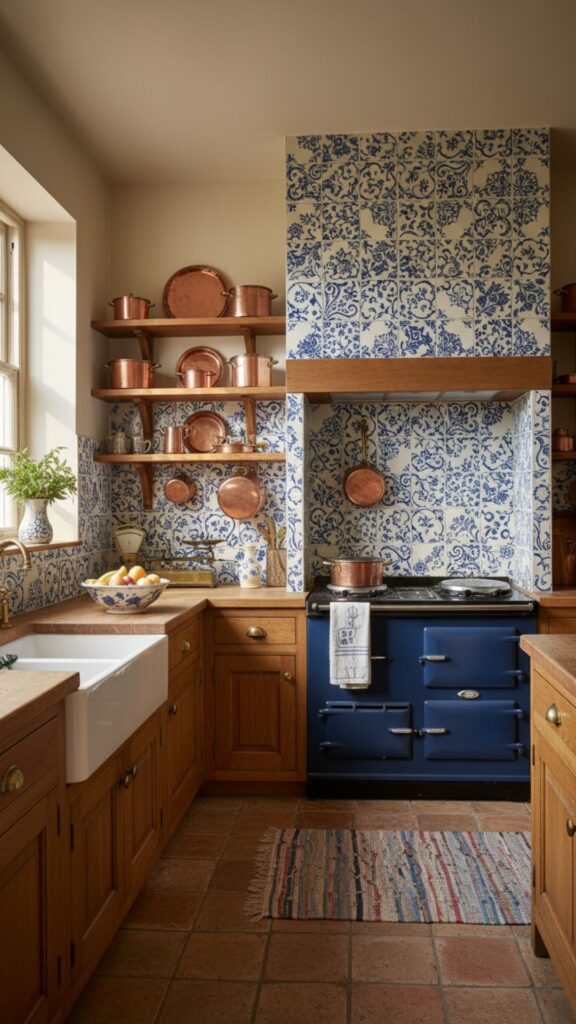
Drawing inspiration from Dutch pottery, blue and white hand-painted tiles add intricate detail and history. This style works beautifully in vintage or eclectic kitchens.
How To Get The Look:
- Create a focal point or “picture frame” behind the range.
- Mix patterned tiles with solid white squares to avoid visual clutter.
- Keep cabinetry simple to let the intricate tile design shine.
Shopping List
- blue and white tile
- patterned ceramic tile
- white ceramic tile
- tile adhesive
- bright white grout
- tile cutter
- tile spacers
- grout float
- silicone sealant
- sponge
- bucket
- level tool
- painter tape
- cleaning spray
- microfiber cloth
6. Exposed Brick Veneer
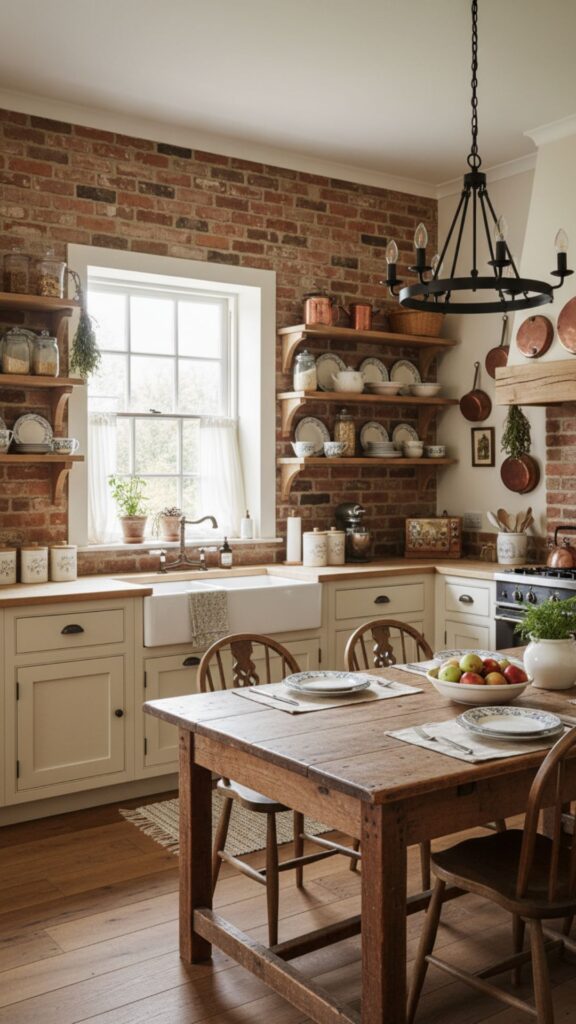
Exposed brick offers an industrial yet farmhouse-traditional aesthetic that adds incredible texture to a smooth kitchen. Using veneer makes it lighter and easier to install than full brick.
How To Get The Look:
- Use brick veneer sheets for easier installation on drywall.
- Consider a “German smear” technique (smearing wet mortar over the brick) to soften the red tones.
- Seal the brick matte to make it easier to clean without losing the rustic look.
Shopping List
- brick veneer
- brick adhesive
- pointing trowel
- grout piping bag
- mortar mix
- whitewash paint
- brick sealer
- masonry brush
- drop cloth
- spirit level
- angle grinder
- dust mask
- safety goggles
- sponge
- heavy duty bucket
7. Vintage Penny Tile
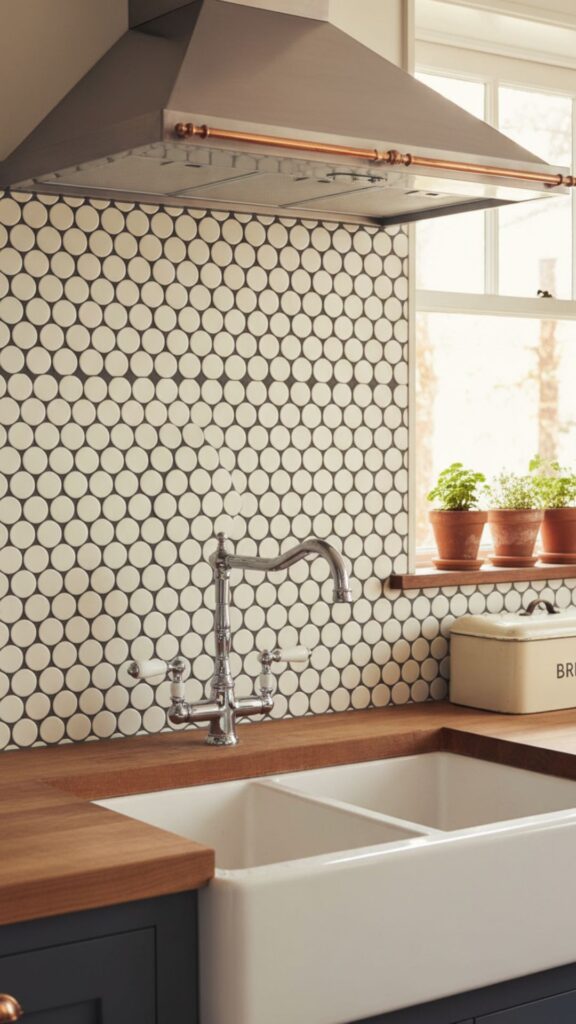
Small, round tiles often found in historic homes from the 20s and 30s. They add a playful, retro texture that feels very nostalgic and breaks up the straight lines of cabinetry.
How To Get The Look:
- White penny tiles with black grout create a classic graphic look.
- Use sheets of mesh-backed tile for faster, even installation.
- This works exceptionally well for adding curve appeal to a boxy kitchen.
Shopping List
- penny round tile
- black penny tile
- white penny tile
- flexible grout
- rubber grout float
- notched trowel
- tile cutter
- tile adhesive
- grout sponge
- bucket
- silicone sealant
- level
- measuring tape
- knee pads
- cleaning cloth
8. Pressed Tin
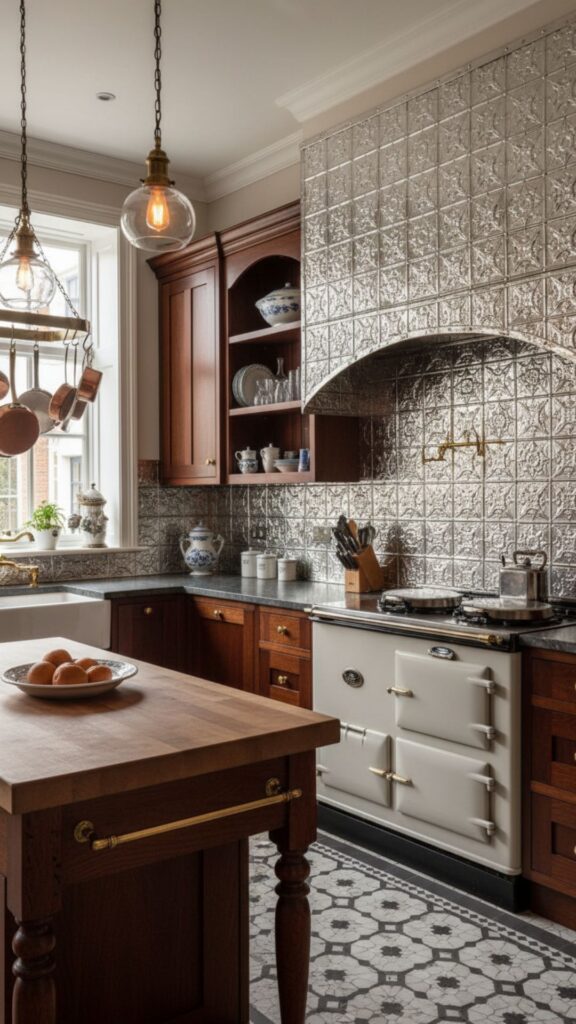
Popular in the Victorian era, pressed tin adds a metallic sheen and intricate patterns, reflecting light beautifully to make a space feel larger and grander.
How To Get The Look:
- Purchase 2×4 foot panels for quick coverage and easier cleaning than real individual tiles.
- Choose a finish that matches your hardware (copper, antique silver, or paintable white).
- Use a clear coat or purchase pre-finished panels to prevent rust.
Shopping List
- tin backsplash panels
- tin snips
- heavy duty construction adhesive
- decorative nails
- measuring tape
- spirit level
- metal file
- work gloves
- caulk gun
- clear coat spray
- paint brush
- metallic paint
- cleaning cloth
- drop cloth
- hammer
9. Marble Slab
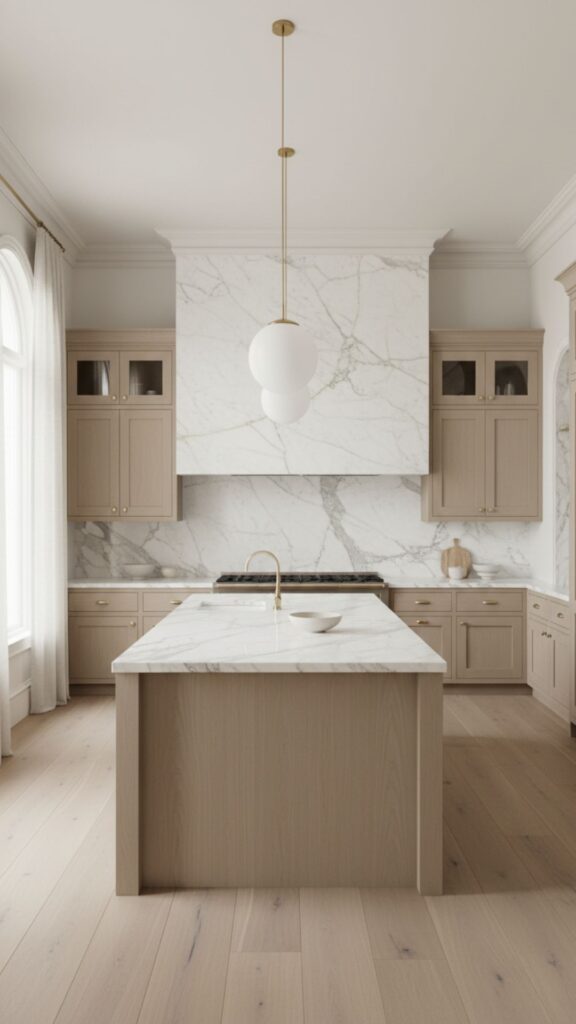
Nothing says luxury quite like a continuous slab of marble. It creates a seamless, high-end traditional look that removes the visual noise of grout lines entirely.
How To Get The Look:
- Match the backsplash material exactly to your countertops for a “quiet luxury” aesthetic.
- Look for veining that flows in a pleasing direction.
- Keep the rest of the kitchen understated to allow the natural stone to be the hero.
Shopping List
- marble contact paper
- peel and stick marble tile
- real marble tile
- stone polish
- stone sealer
- cutting board
- marble cleaner
- silicone caulk
- construction adhesive
- trowel
- tile spacer
- level tool
- measuring tape
- safety gear
- microfiber cloth
Building a Foundation of Style
Traditional doesn’t have to mean stuffy or outdated. By incorporating these time-tested materials and patterns, you build a kitchen foundation that withstands the whims of trend cycles. Whether you choose the humble subway tile or the luxurious marble slab, these designs offer a sense of permanence and history that makes a house feel like a home.
Frequently Asked Questions
1. What is the most timeless kitchen backsplash?
Subway tile is widely considered the most timeless option due to its simplicity, affordability, and over 100-year history in design.
2. Is beadboard distinct enough for a kitchen backsplash?
Yes, but it requires maintenance. Because it is wood, it must be sealed and painted with high-quality, moisture-resistant paint to withstand splashes behind a sink or stove.
3. Can I install a backsplash over existing tile?
In some cases, yes, using specific adhesives, but it is generally recommended to remove old tile to ensure a flat, secure surface and to preserve outlet depth.
4. How do I choose the right grout color?
Match the grout to the tile for a seamless look, or choose a contrasting color (like grey grout with white tile) to highlight the shape and pattern of the layout.
5. Are these traditional styles expensive?
It varies greatly. Beadboard and subway tile are very budget-friendly, while solid marble slabs and hand-painted tiles sit at the higher end of the price spectrum.