Some links in this blog are affiliate links. If you make a purchase through these links, I may receive a small commission. This helps support the site at no extra cost to you.
Does your bedroom feel more like a storage unit for laundry and stress than a place to rest? You aren’t alone. In our hyper-connected lives, finding a space that genuinely invites calm is rare. This is why traditional Japanese interior design, with its roots in Zen philosophy and deep respect for nature, is so appealing. It isn’t just about minimalism; it is about intentionality.
Japanese aesthetics, often centered around concepts like Ma (negative space) and Wabi-Sabi (finding beauty in imperfection), prioritize harmony and balance. By stripping away the unnecessary, you allow the essential elements of a room to breathe. The result is a bedroom that lowers your heart rate the moment you step inside.
Whether you want to do a full renovation or just add a few calming touches, these nine traditional decor ideas will help you transform your sleeping space into a true sanctuary of peace.

Table of Contents

9 Bedroom Aesthetic Japanese Decor Ideas
1. Tatami Flooring

Traditionally, Japanese floors are covered in tatami mats made from woven soft rush straw. They provide a soft, natural texture underfoot and a subtle, grassy scent that instantly grounds the room. If wall-to-wall tatami isn’t feasible, a large area rug can achieve the same aesthetic and tactile experience.
Shopping List
- Tatami mat king size
- Traditional Japanese rush grass rug
- Foldable tatami mattress
- Japanese floor tiles
- Igusa rush grass mat
- Authentic tatami flooring
- Japanese straw mat
- Interlocking tatami tiles
- Thick tatami floor mat
- Natural woven floor mat
- Green tea scented tatami
- Japanese area rug
- Rush grass yoga mat
- Goza mat
- Tatami bed base
2. Shoji Screens

Shoji screens are sliding doors or room dividers made of translucent paper over a wooden lattice frame. They are brilliant for diffusing harsh natural light into a soft, ambient glow while maintaining privacy without blocking light entirely.
Shopping List
- Shoji screen room divider
- Japanese sliding door kit
- Window pane room divider
- Rice paper screen
- Shoji paper roll
- Wood lattice divider
- Cherry blossom shoji screen
- Black grid room divider
- Double hinged shoji screen
- Mini shoji lamp screen
- Japanese privacy screen
- Shoji window film
- Oriental furniture partition
- Zen room divider
- 4 panel shoji screen
3. Low Platform Bed
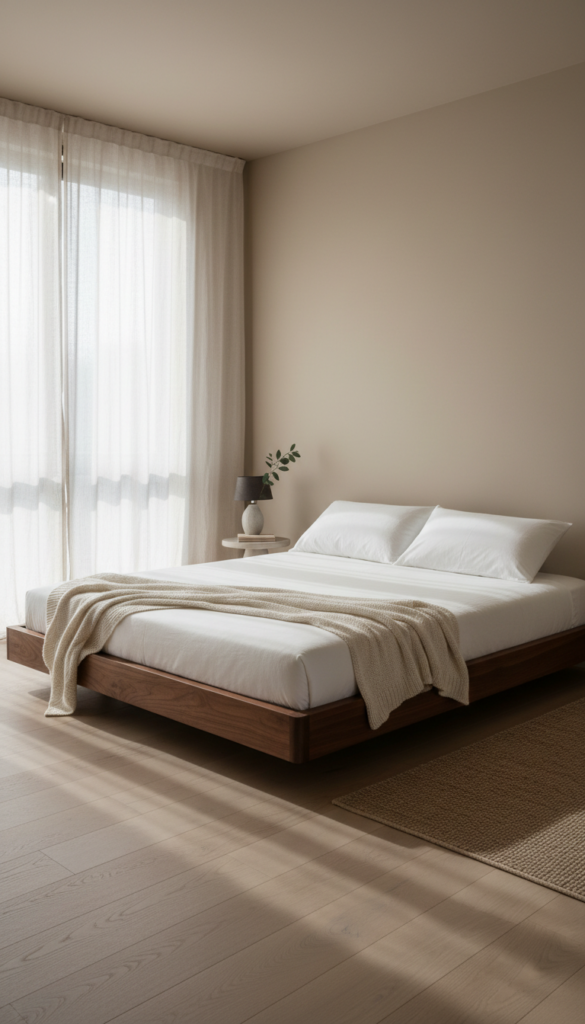
In Japan, it is common to sleep close to the ground, often on a shikibuton (futon mattress). A low platform bed frame mimics this grounded feeling, promoting cooler airflow and making ceilings appear higher, which opens up the visual space of the room.
Shopping List
- Japanese platform bed frame
- Low profile wood bed
- Solid wood platform bed
- Japanese joinery bed
- Minimalist bed frame
- Floyd style platform bed
- Natural wood bed base
- Platform bed no headboard
- Low loft bed frame
- Walnut platform bed
- Bamboo bed frame
- Queen low profile bed
- Bed frame with tatami insert
- Thuma style bed
- Rustic low bed frame
4. Nature-Inspired Scroll Art (Kakejiku)

Japanese decor avoids cluttered gallery walls. Instead, try hanging a single Kakejiku (hanging scroll) featuring calligraphy or nature scenes like mountains, bamboo, or cherry blossoms. This creates a focused point of contemplation.
Shopping List
- Japanese hanging scroll art
- Kakejiku wall art
- Silk scroll painting
- Cherry blossom scroll
- Bamboo wall scroll
- Sumie ink wash painting
- Japanese calligraphy art
- Mountain landscape scroll
- Tiger scroll painting
- Koi fish wall scroll
- Vintage japanese scroll
- Samurai wall art
- Four seasons scroll set
- Zen buddhist scroll
- Crane bird scroll art
5. Washi Paper Lighting
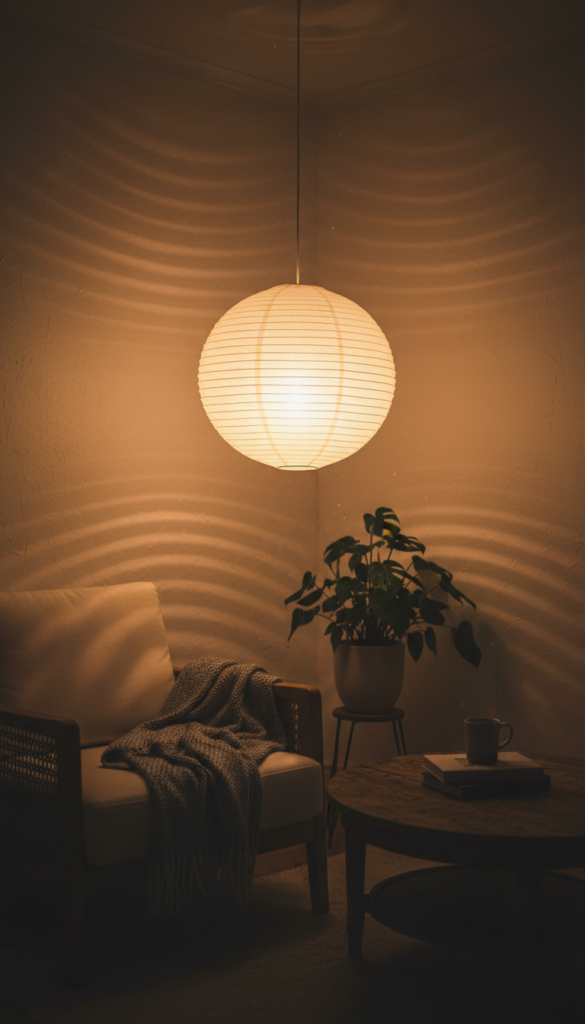
Harsh, overhead lighting is the enemy of relaxation. Traditional Japanese lighting uses Washi paper shades to diffuse light, creating a warm, organic glow. Whether as a pendant light or a floor lamp, these fixtures mimic the softness of moonlight.
Shopping List
- Noguchi style paper lamp
- Japanese rice paper floor lamp
- Washi paper pendant light
- Paper lantern hanging
- Bamboo table lamp
- Asian style bedside lamp
- Round paper shade
- Square japanese lamp
- Zen lighting fixtures
- Wood and paper lantern
- Japanese lantern lamp
- Akari light sculpture replica
- Tripod paper floor lamp
- Shoji table lamp
- Soft glow bedroom light
6. Indoor Nature (Bonsai or Ikebana)
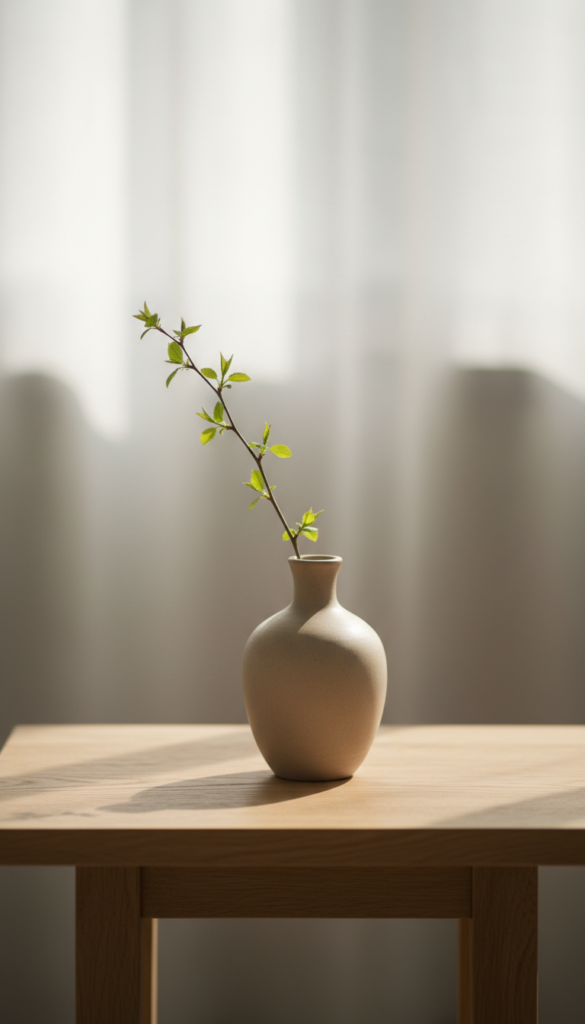
Bringing nature indoors is essential in Japanese aesthetics. A carefully pruned Bonsai tree or a simple Ikebana flower arrangement serves as a living sculpture, reminding us of the changing seasons and the beauty of life.
Shopping List
- Live bonsai tree
- Juniper bonsai
- Ikebana vase
- Kenzan flower frog
- Ceramic flower vase
- Bonsai pruning shears
- Artificial bonsai tree
- Japanese zen garden kit
- Bamboo indoor plant
- Shallow planter pot
- Moss ball plant
- Cherry blossom branches artificial
- Zen river rocks
- Air plants
- Japanese maple tree indoor
7. Earthy, Neutral Color Palette
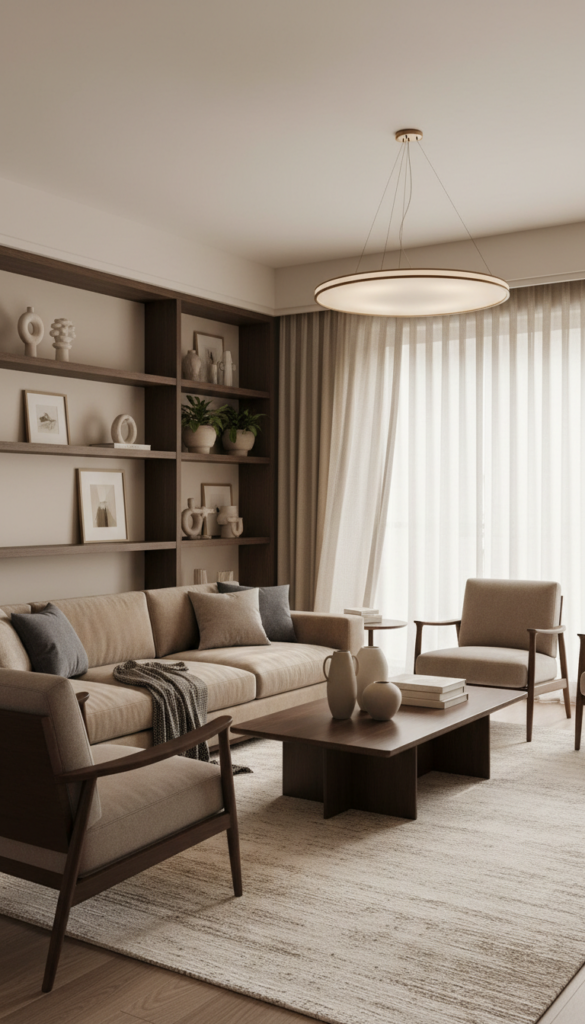
Japanese bedrooms shy away from loud, jarring colors. The palette is derived from nature: browns of wood, greens of plants, and greys of stone. These colors reduce visual noise and promote mental clarity.
Shopping List
- Beige linen duvet cover
- Warm gray throw pillow
- Taupe curtains
- Natural cotton sheets
- Brown textured blanket
- Cream area rug
- Sand colored comforter
- Earth tone wall art
- Sage green bed runner
- Charcoal linen pillowcases
- Bamboo window shades
- Neutral textured wallpaper
- Slate gray throw blanket
- Mushroom colored bedding
- Off white curtains
8. Tansu Chests (Minimalist Storage)

Clutter disrupts the flow of energy. Japanese storage solutions, like Tansu chests, are often beautiful pieces of craftsmanship in their own right, featuring distinct iron hardware and wood joinery. They keep possessions hidden but accessible.
Shopping List
- Japanese tansu chest
- Asian style dresser
- Step tansu cabinet
- Paulownia wood storage
- Tea cabinet storage
- Wooden storage trunk
- Minimalist wood dresser
- Antique style cabinet
- Bamboo drawer organizer
- Stackable wood storage bins
- Small wooden apothecary cabinet
- Japanese jewelry box
- Dark wood nightstand
- Zen storage bench
- Rattan storage baskets
9. Natural Fabrics and Textiles

Plastic and synthetic materials feel alien in a Japanese-inspired room. Focus on linens, silk, and cotton for your bedding and cushions. These materials breathe, age well, and provide a tactile connection to the natural world.
Shopping List
- 100% linen duvet set
- Silk throw pillow cover
- Organic cotton sheets
- Hemp bedspread
- Waffle weave blanket
- Zabuton floor cushion
- Raw silk fabric runner
- Chunky wool knit blanket
- Bamboo fiber sheets
- Muslin throw blanket
- Natural jute rug
- Linen curtains natural
- Cotton waffle robe
- Buckwheat hull pillow
- Tenugui hand towel
Finding Your Zen
Embracing Japanese decor isn’t just about buying new things; it’s about shifting your mindset. It’s about creating a space where everything has a purpose and a place. By incorporating elements like tatami mats, shoji screens, and natural textures, you build a physical environment that supports mental stillness. Start with one or two changes, and watch how the energy of your room—and your sleep—begins to shift.
Frequently Asked Questions (FAQs)
1. Can I mix traditional Japanese decor with modern furniture?
Absolutely. This is often called “Japandi” style (Japanese + Scandinavian). The key is to keep the lines clean and the color palette neutral. A modern, low-profile bed looks right at home on a tatami-style rug.
2. Is tatami flooring difficult to maintain?
Real woven tatami requires some care—it shouldn’t get wet and can fade in direct sunlight. However, modern synthetic tatami mats offer the same look and feel but are much more durable and easier to clean with a vacuum.
3. Do I have to sleep on the floor?
Not at all. While traditional futons are placed on the floor, you can achieve the same aesthetic with a low-platform bed frame. The goal is to keep the furniture low to the ground to create a sense of spaciousness.
4. What are the best plants for a Japanese bedroom?
Stick to green, leafy plants with simple structures. Bonsai trees, bamboo (lucky bamboo), peace lilies, and snake plants are excellent choices because they look sculptural and are known for air purification.
5. How can I make my room look Japanese on a budget?
Start with decluttering—it’s free! Then, focus on lighting. Swapping a harsh overhead bulb for a soft paper floor lamp is an affordable change that drastically alters the room’s mood. Adding a few natural elements like stones or a single branch in a vase also adds to the aesthetic without cost.