Some links in this blog are affiliate links. If you make a purchase through these links, I may receive a small commission. This helps support the site at no extra cost to you.
Imagine waking up in a bedroom that feels slow, soft, and quietly happy. Not rushed. Not loud. A space that almost smells like old books, fresh linen, and morning sunlight. That is the real pull of cottagecore bedroom aesthetic cozy vintage decor.
Cottagecore is not just about looks. It is about mood. Comfort. Nostalgia. A gentle rebellion against fast living. Pinterest made it popular, yes, but the feeling itself is much older. Think countryside mornings, hand stitched fabrics, and furniture that looks like it has lived a life.
In this guide, we are not rushing through ideas. We are opening small doors. Each one leads to a detail that changes how your bedroom feels when you step inside. Some are obvious. Some are rarely talked about. All of them matter.
Let us get into the quiet secrets that actually make cottagecore work.
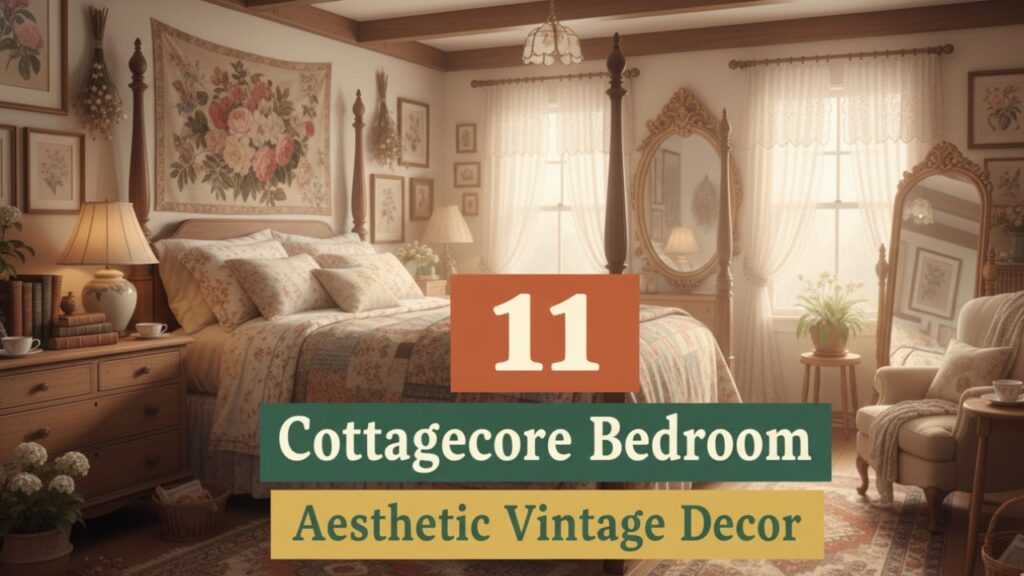
Table of Contents
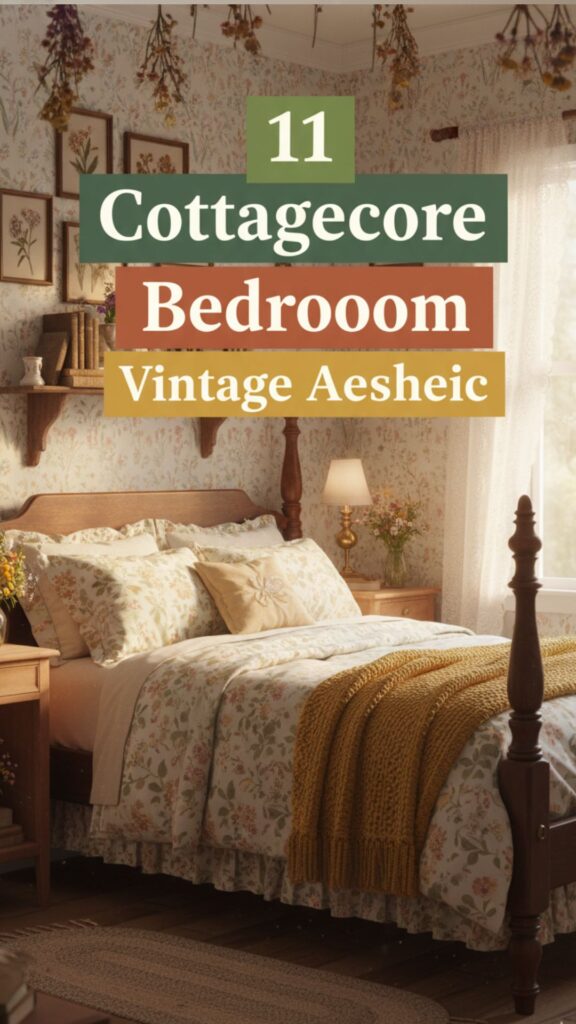
11 Cottagecore Secrets for Vintage Bedroom Decor
1. Start With Soft, Imperfect Bedding Layers
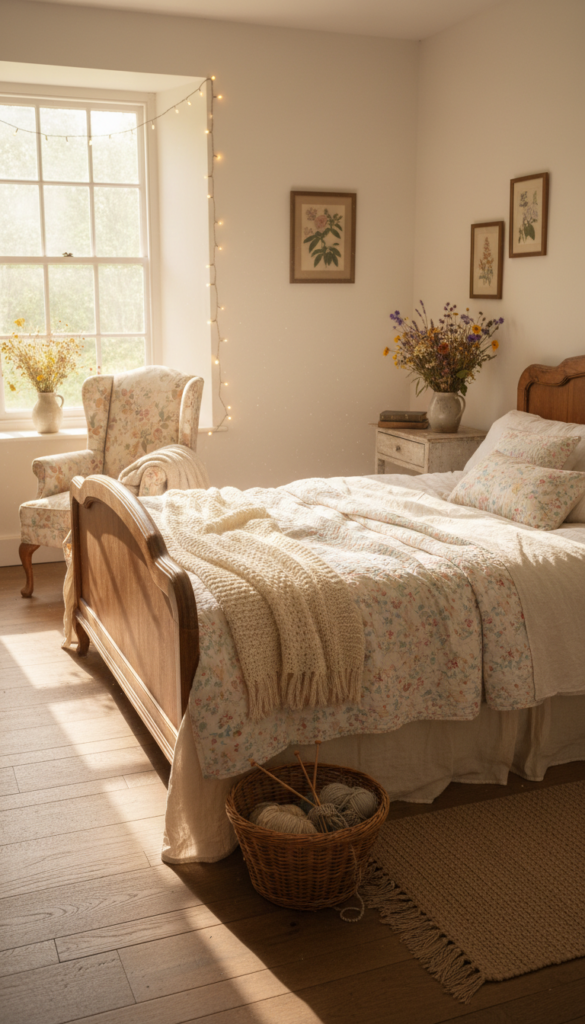
Cottagecore bedrooms never look sharp or perfectly tucked. That is the first secret.
The goal is comfort that looks lived in, not styled for a catalog.
Use cotton, linen, or muslin bedding. Slight wrinkles are good here. Flat perfection kills the warmth. Layer a plain base sheet, then add a textured quilt or floral duvet, and finish with a light throw at the foot of the bed.
Do you know, historically, rural homes layered bedding for warmth long before central heating existed. That habit became a visual language of comfort we still respond to today.
Stick to soft whites, faded florals, warm creams, or muted pastels. Nothing shiny. Nothing stiff.
Shopping List
- Linen duvet cover set in soft white
- Cotton muslin bed sheet set
- Vintage floral quilt
- Neutral tone throw blanket
- Ruffled pillow sham covers
- Washed cotton pillowcases
- Lightweight patchwork comforter
- Neutral bedspread with texture
- Floral print pillow covers
- Breathable summer blanket
- Cotton mattress topper
- Natural fiber bed skirt
- Hand stitched style quilt
- Pastel tone flat sheet
- Soft farmhouse style comforter
- Layered bedding bundle set
- Wrinkle look linen sheet set
2. Let Floral Prints Tell a Story, Not Shout
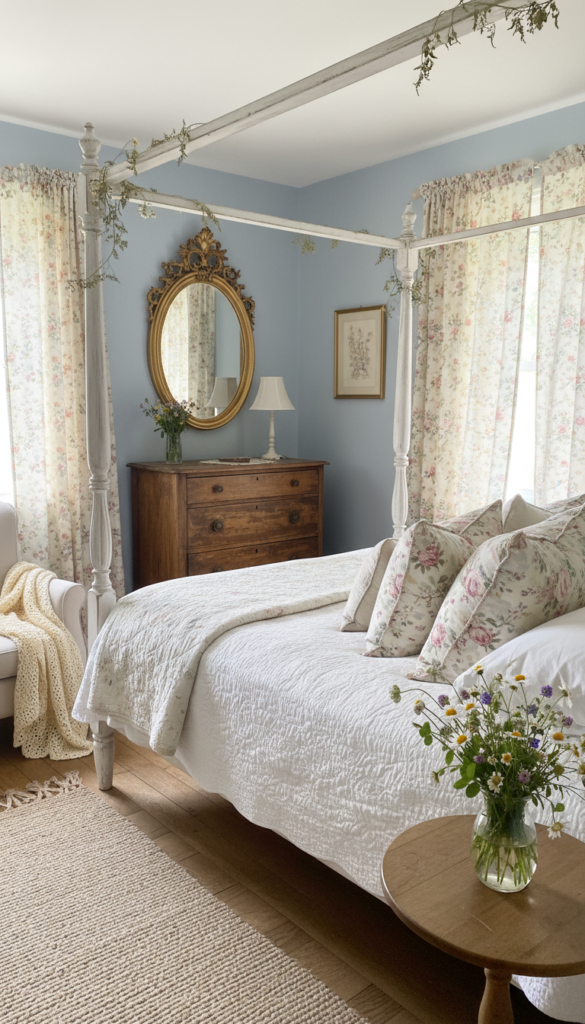
Floral patterns are everywhere in cottagecore, but there is a trick most people miss.
Small scale florals feel calmer than large bold ones. They read as vintage instead of modern.
Choose florals that look slightly faded, like they have been washed many times. Curtains, pillow covers, or even a single accent chair works well.
Interesting fact. In old countryside homes, floral fabrics were common because they hid wear and stains better than plain cloth. Practicality shaped the aesthetic before fashion did.
Balance is important. One or two floral elements are enough. Too many and the room feels busy, not cozy.
Shopping List
- Floral cotton curtain panels
- Vintage rose pillow covers
- Small floral bedsheet set
- Floral wallpaper peel and stick
- Floral accent cushion covers
- Country style floral valance
- Muted floral fabric roll
- Floral table runner for bedside
- Vintage floral wall tapestry
- Botanical floral throw blanket
- Floral chair cushion cover
- Floral lampshade cover
- Pastel floral duvet insert cover
- Mini floral wall art prints
- Vintage flower pillow shams
3. Choose Wooden Furniture With Visible Age
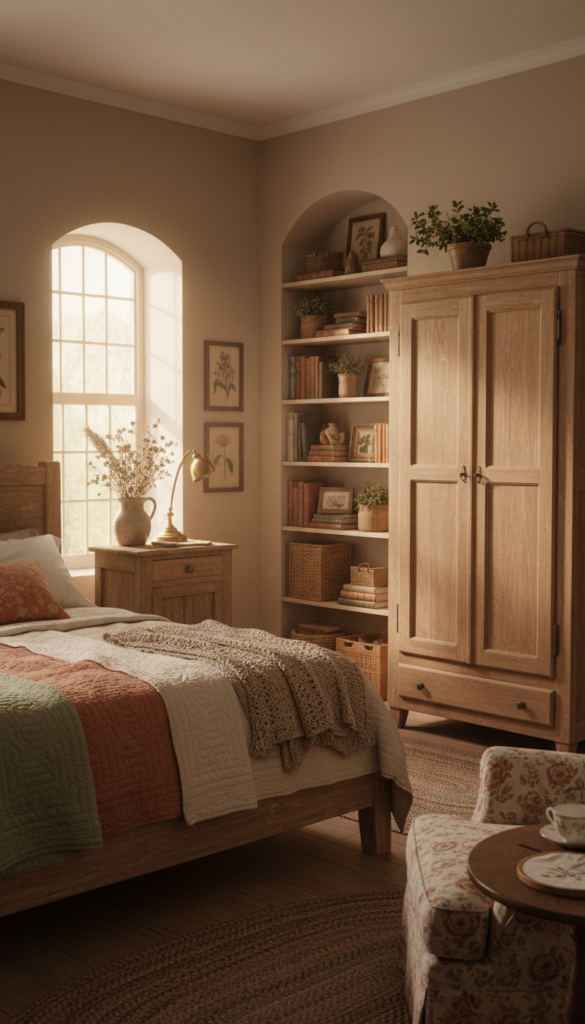
New furniture pretending to be old rarely feels right.
Cottagecore bedrooms look best with real wood pieces that show grain, knots, or minor wear. A bedside table with scratches. A wardrobe with uneven color. These details add soul.
If buying new, look for solid wood with simple designs. Avoid glossy finishes.
There is a myth that cottagecore needs expensive antiques. Not true. Even basic wooden furniture ages beautifully if the finish is matte and natural.
Let the furniture feel honest. That honesty is comforting in ways modern pieces rarely are.
Shopping List
- Solid wood bedside table
- Rustic wooden nightstand
- Wooden storage chest
- Vintage style wooden dresser
- Farmhouse wooden bench
- Antique finish wooden stool
- Wooden open shelf unit
- Rustic bedside cabinet
- Wooden blanket storage box
- Natural wood vanity table
- Wooden wall mounted shelf
- Distressed wood side table
- Wooden bookcase small size
- Country style wooden wardrobe
- Solid pine wood bed frame
4. Use Warm, Gentle Lighting Only
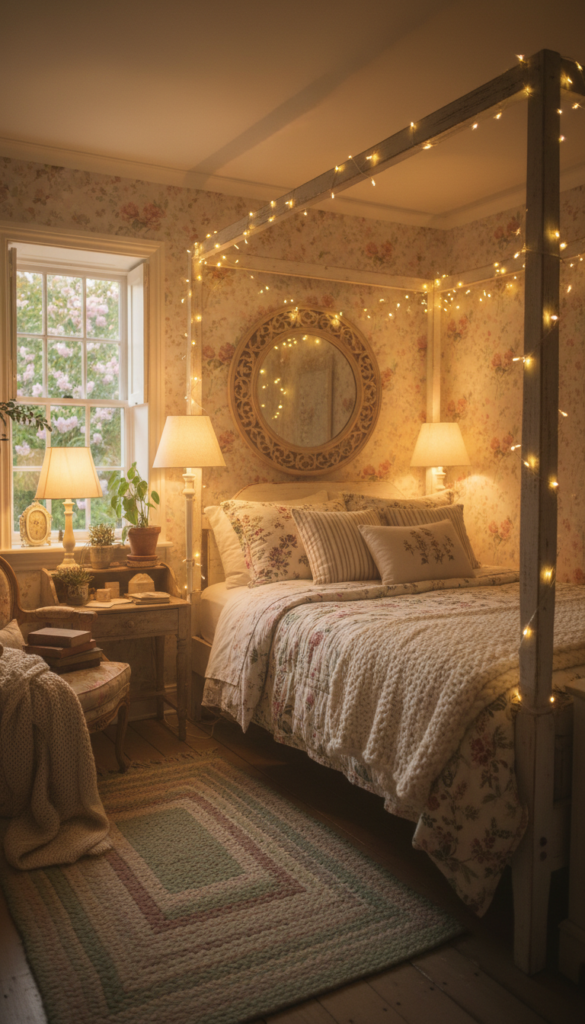
Lighting can ruin or save a cottagecore bedroom.
Overhead white lights feel harsh and modern. Avoid them when possible.
Use warm bulbs. Table lamps with fabric shades. Wall sconces. Fairy lights tucked casually, not wrapped tightly.
Do you know candlelight inspired early interior lighting layouts. Our eyes still relax under warmer tones because the brain reads it as evening safety.
The goal is glow, not brightness. Shadows are welcome here. Soft corners make the room feel deeper and calmer.
Shopping List
- Fabric shade table lamp
- Vintage bedside lamp
- Warm light fairy string lights
- Battery operated fairy lights
- Antique style lantern lamp
- Warm LED bulb pack
- Cloth lampshade floor lamp
- Candle style LED lights
- Small ceramic bedside lamp
- Warm light wall sconce
- Decorative night lamp
- Vintage oil lamp replica
- Soft glow mushroom lamp
- Ambient table light lamp
- Rustic bedside lantern
- Warm fairy lights curtain style
5. Display Vintage Inspired Wall Art Sparingly
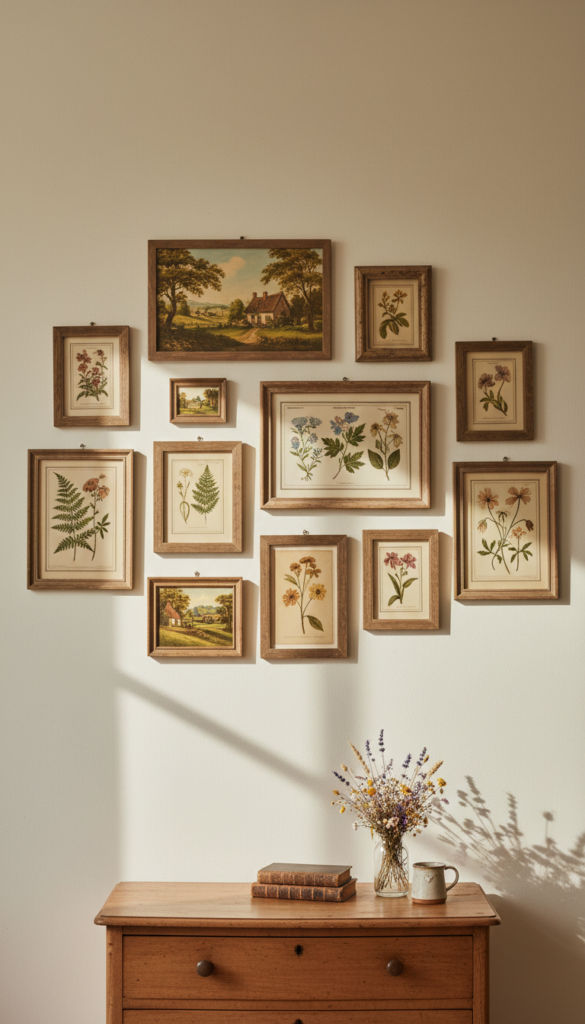
Blank walls feel cold, but crowded walls feel chaotic.
Choose a few meaningful pieces. Botanical prints. Old looking landscapes. Handwritten poetry. Pressed flowers in simple frames.
Interesting fact. Botanical illustrations became popular in the 18th century as both art and education. That blend of beauty and knowledge fits cottagecore perfectly.
Hang art slightly lower than modern standards. It creates intimacy and makes the room feel grounded.
Shopping List
- Botanical wall art prints
- Vintage landscape art poster
- Pressed flower frame
- Antique style wall frame set
- Nature illustration wall art
- Old book page wall decor
- Minimal wooden photo frames
- Countryside painting print
- Vintage art postcard set
- Classic poetry wall prints
- Herb illustration artwork
- Floral sketch wall art
- Vintage map wall print
- Rustic wall art frame
- Handwritten quote wall art
6. Add Lace, Crochet, and Handmade Textures
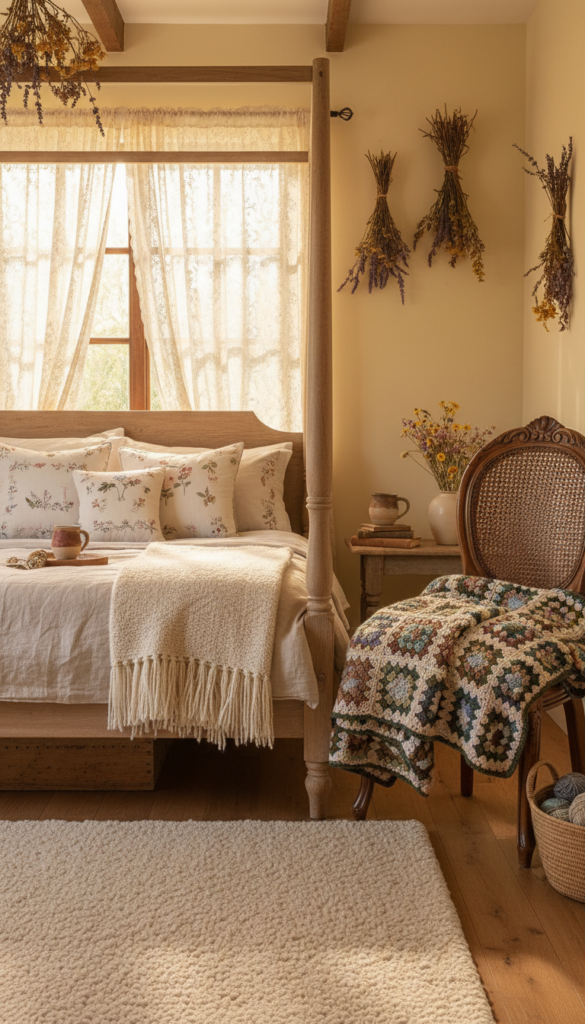
Nothing says cottagecore like handmade texture.
Lace curtains that soften sunlight. Crochet blankets folded on a chair. Embroidered pillowcases.
These details introduce patience into the room. They remind us that someone once spent time making something slowly.
There is a common myth that lace feels old fashioned in a bad way. In reality, lace diffuses light beautifully and adds softness no modern fabric can replicate.
You do not need many pieces. Even one handmade looking element changes the mood instantly.
Shopping List
- Lace curtain panels
- Crochet throw blanket
- Embroidered pillow covers
- Handmade lace table runner
- Crochet cushion cover
- Vintage lace valance
- Knitted blanket throw
- Cotton embroidered bedsheet
- Crochet chair cover
- Handmade doily set
- Lace bed skirt
- Embroidery hoop wall decor
- Crochet armrest cover
- Hand stitched pillowcase
- Vintage lace fabric roll
7. Bring Nature Indoors, Gently
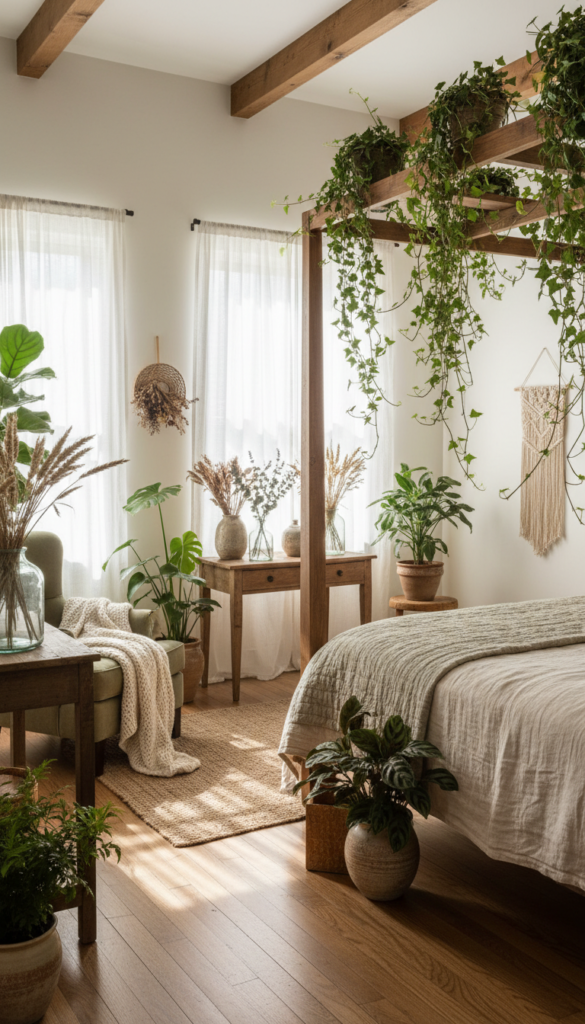
Plants are part of cottagecore, but this is not a jungle theme.
Choose a few simple plants. Ivy, ferns, dried flowers, or even branches in a vase. Fresh flowers when possible, but dried ones last longer and feel nostalgic.
Do you know dried flowers were common in homes before refrigeration and floral shops. People preserved beauty because they valued it.
Avoid plastic pots. Use ceramic, clay, or glass containers.
Nature should feel calm, not demanding.
Shopping List
- Indoor ivy plant
- Artificial fern plant
- Dried flower bouquet
- Glass flower vase
- Ceramic plant pot
- Hanging indoor plant
- Pampas grass decor
- Small terracotta pot
- Eucalyptus dried stems
- Wooden plant stand
- Indoor herb planter
- Nature inspired wall decor
- Dried lavender bundle
- Minimal clay flower vase
- Botanical plant spray
8. Use Rugs to Soften the Room
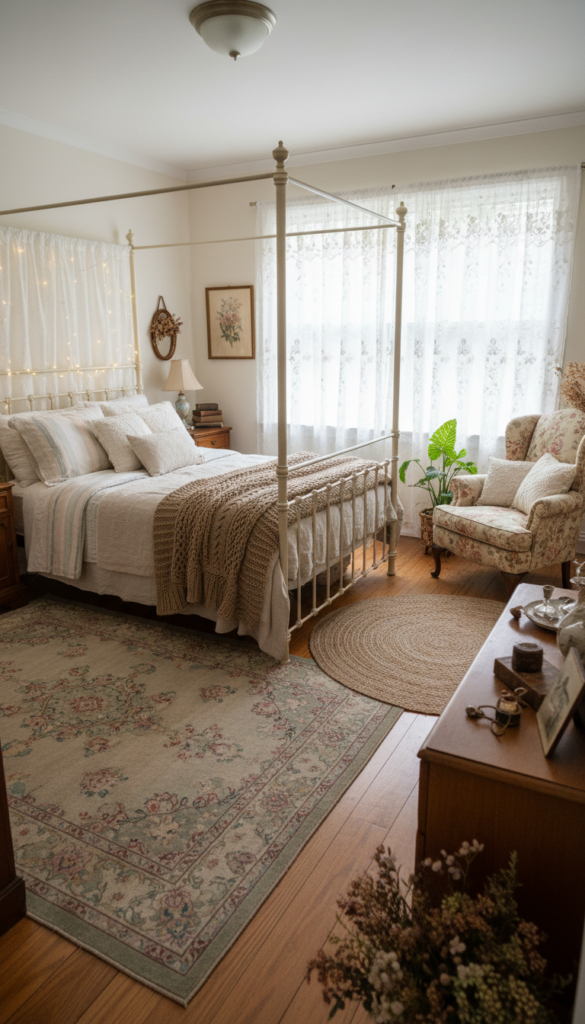
Cold floors break the cozy feeling instantly.
Layer rugs if possible. A faded floral rug under the bed. A small woven rug beside it.
Vintage style rugs with worn patterns work best. The faded look feels comforting because our brains associate it with familiarity.
Interesting detail. In rural homes, rugs were often layered for insulation. That practical habit became an aesthetic we still love.
Keep colors muted. Let the rug blend, not dominate.
Shopping List
- Faded floral area rug
- Cotton woven floor rug
- Vintage style bedside rug
- Muted pattern floor mat
- Farmhouse style rug
- Distressed look carpet
- Small round floral rug
- Neutral woven rug
- Antique inspired rug runner
- Soft bedroom floor rug
- Pastel vintage rug
- Hand loom cotton rug
- Low pile bedroom rug
- Classic pattern floor rug
- Rustic woven rug
9. Create a Reading or Rest Corner
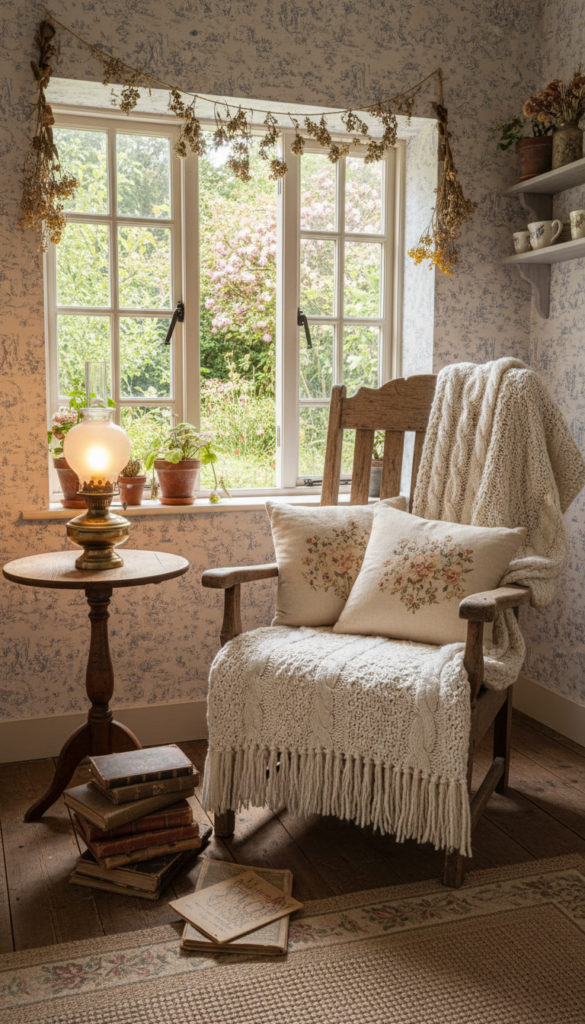
Cottagecore bedrooms are not only for sleeping.
Add a small corner that invites slow time. A chair by the window. A stool with books stacked. A lamp beside it.
This space signals rest. It tells your mind that this room is safe for slowing down.
You do not need much furniture. Just intention.
A single corner like this can change how often you actually enjoy your bedroom.
Shopping List
- Wooden accent chair
- Upholstered reading chair
- Small side table wood
- Floor reading lamp
- Soft knit throw blanket
- Decorative cushion set
- Book storage basket
- Wooden stool side table
- Vintage style footrest
- Fabric lampshade table lamp
- Window seat cushion
- Comfortable armchair cover
- Small bookshelf unit
- Lap blanket for reading
- Wooden magazine holder
10. Choose Curtains That Filter Light, Not Block It
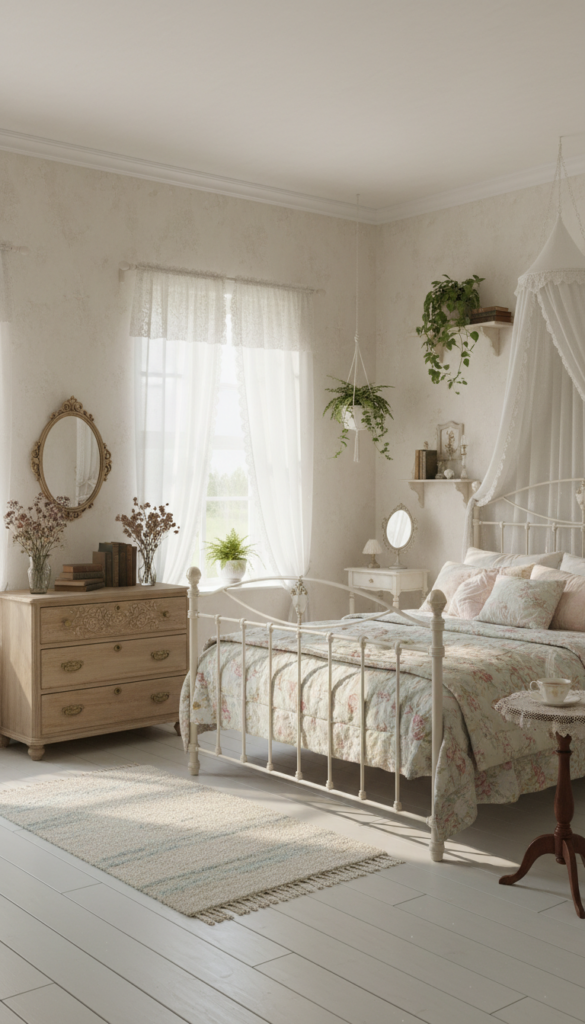
Heavy blackout curtains feel modern and closed off.
Cottagecore favors light filtering fabrics. Cotton, voile, lace.
Morning light should spill in gently. It creates a natural rhythm with the day.
Do you know early homes relied on daylight patterns to structure daily life. That connection still feels grounding today.
Let the windows breathe. Let light move.
Shopping List
- Sheer cotton curtains
- Lace window curtain panels
- Light voile curtain set
- Neutral tone sheer drapes
- Farmhouse curtain panels
- Soft white window curtains
- Vintage lace window valance
- Airy bedroom curtains
- Thin linen curtain set
- Light filtering rod pocket curtains
- Pastel cotton drapes
- Rustic style curtain tie backs
- Sheer floral curtains
- Minimal cotton window panel
- Romantic lace curtains
11. Add Personal Objects With History
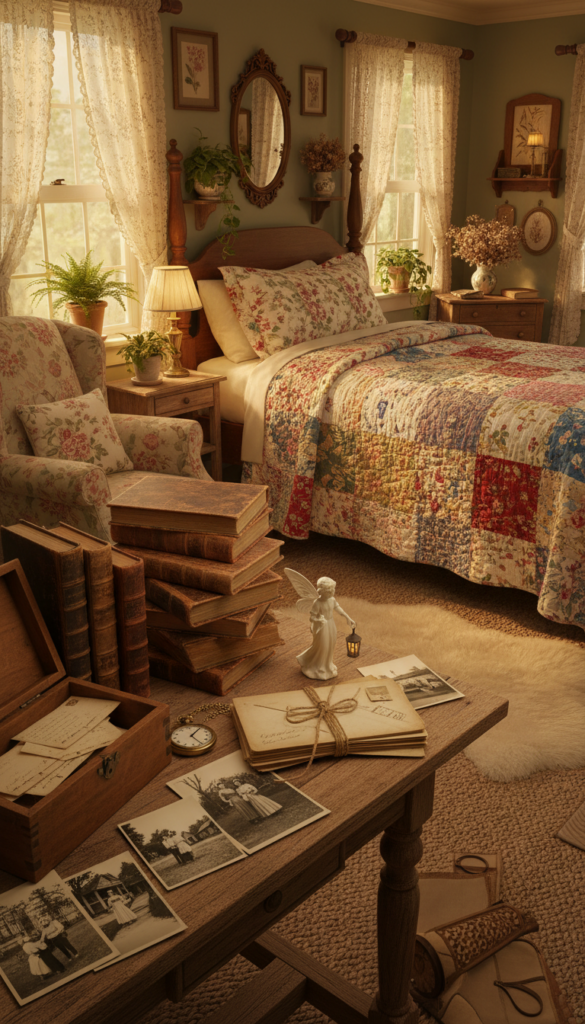
This is the most important secret.
Cottagecore bedrooms feel real because they hold personal stories. Old books. Family photographs. Letters. A trinket from travel.
Do not decorate just to match a theme. Decorate to remember.
Even one object with emotional weight changes the room from styled to lived in.
That is the difference people feel, even if they cannot explain it.
Shopping List
- Vintage hardcover books
- Antique style photo frames
- Decorative old letters set
- Wooden memory box
- Vintage trinket storage box
- Classic alarm clock
- Antique style mirror
- Rustic jewelry tray
- Old map decor sheet
- Vintage diary notebook
- Ceramic keepsake box
- Retro table clock
- Small wooden photo stand
- Vintage suitcase decor
- Old style candle holder
Conclusion
Cottagecore bedroom aesthetic cozy vintage decor is not about perfection. It is about softness, memory, and comfort layered over time.
You do not need to do everything at once. Start small. Change the lighting. Add a texture. Remove something harsh.
Let the room evolve slowly. That is the point.
A true cottagecore bedroom does not look finished. It feels like it is still being lived in. And honestly, that is what makes it beautiful.
Frequently Asked Questions (FAQs)
What colors work best for a cottagecore bedroom aesthetic cozy vintage decor?
Soft neutrals like cream, warm white, beige, sage green, dusty pink, and faded floral tones work best. Loud or sharp colors break the cozy feel.
Can a small bedroom still follow cottagecore style?
Yes, easily. Cottagecore works very well in small rooms because it focuses on softness, light, and layered textures rather than big furniture.
Do I need antique furniture for cottagecore decor?
No. Wooden furniture with simple design and a natural finish works fine. Even modern pieces can feel vintage with the right textures and colors.
Is cottagecore decor expensive to create?
Not really. Thrifted items, handmade textiles, and simple fabric changes like curtains or bedding can transform a space without high cost.
How do I keep cottagecore from looking messy?
Stick to a limited color palette and add decor slowly. Balance open space with a few meaningful pieces instead of filling every corner.