Some links in this blog are affiliate links. If you make a purchase through these links, I may receive a small commission. This helps support the site at no extra cost to you.
Black and white bedrooms often get labeled as cold or too minimal. Japandi design quietly proves the opposite. This aesthetic blends Japanese calm with Scandinavian warmth, creating spaces that feel grounded, intentional, and deeply comforting.
What makes modern Japandi black and white bedrooms so appealing is not just their look, but their philosophy. Every object has purpose. Every texture adds emotion. Nothing exists just to fill space.
Do you know that Japandi interiors are rooted in two ideas that seem opposite but work beautifully together? The Japanese concept of wabi-sabi, which celebrates imperfection, and the Scandinavian idea of hygge, which focuses on comfort and well-being. When black and white become the base palette, these ideas shine even more clearly.
This list explores ten modern Japandi bedroom interiors that balance contrast, calm, and character. Each concept shows how black and white can feel warm, modern, and deeply personal when shaped by Japandi principles.

Table of Contents

10 Modern Japandi Bedroom Aesthetic Interiors
1. Minimal Black Frame Bed With Soft White Layers
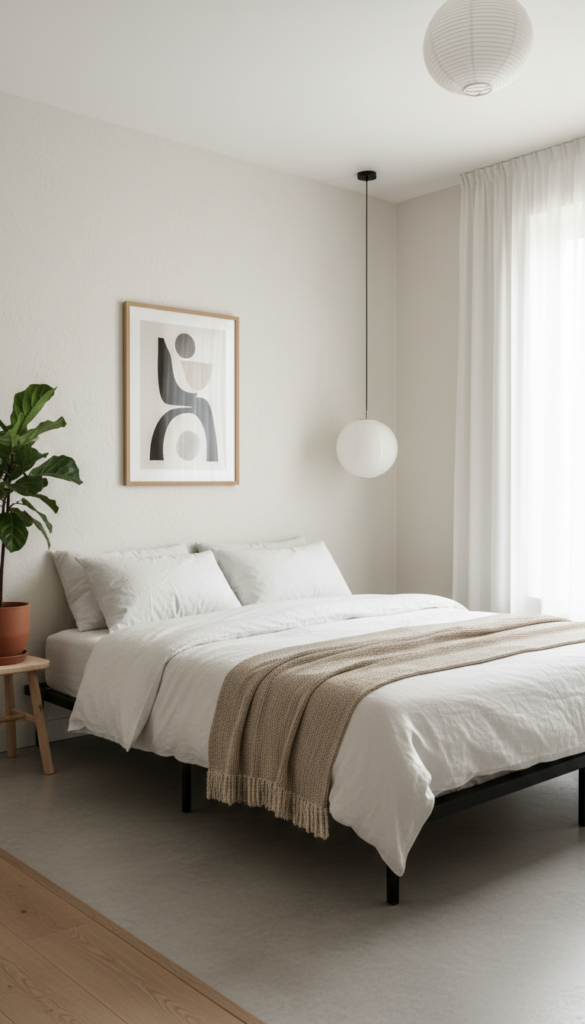
A low-profile bed with a slim black frame is a signature Japandi move. It grounds the room visually without overpowering it. Paired with soft white bedding, the contrast feels calm rather than sharp.
The key is restraint. The bedding stays simple. No heavy patterns, no loud textures. Think breathable cotton, linen, or lightly textured fabrics that fall naturally.
An interesting fact about Japandi bedrooms is that the bed is often the visual anchor, not the walls or decor. Keeping it low connects the room to the floor, reinforcing a sense of stability and restfulness.
Black accents work best here when they appear intentional. A black frame, black reading lamp, or a slim black side table is enough. Everything else stays soft, light, and inviting.
Shopping List
- Black metal platform bed frame
- White linen duvet cover set
- White cotton fitted sheet
- Minimal black bedside table
- Warm white LED bedside lamp
- Textured white throw blanket
- Neutral tone mattress topper
- Slim black wall-mounted reading light
- White ceramic bedside tray
- Natural fiber pillow set
- Minimal black alarm clock
- White fabric bed skirt
- Low-profile black bench
- Soft white area rug
- Minimalist black picture frame
- White cotton mattress protector
2. White Walls With Natural Wood and Black Accents
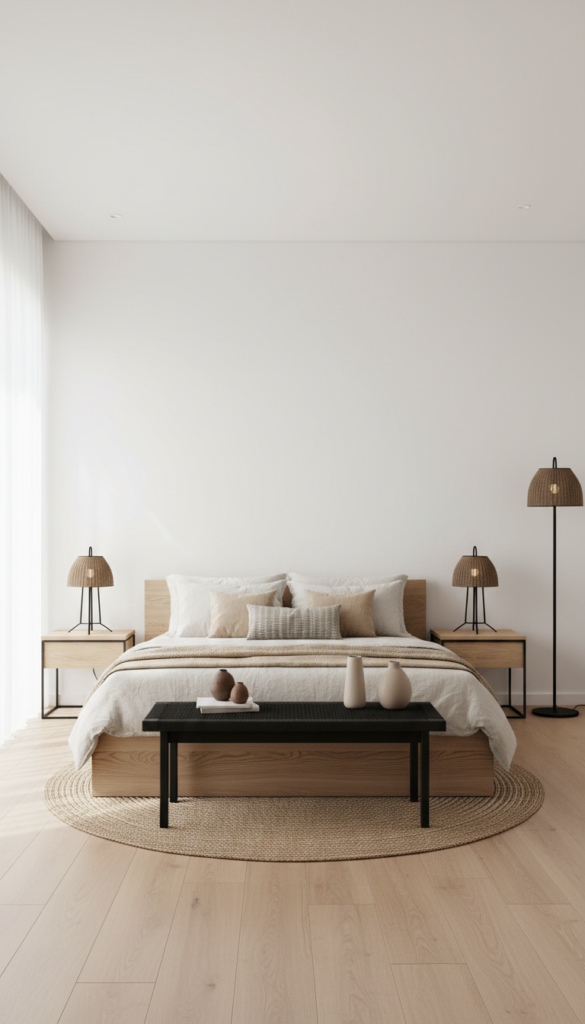
White walls are common in Japandi interiors, but they are never plain. Texture matters more than color here. Matte finishes, subtle plaster effects, or softly painted walls create depth without visual noise.
Natural wood becomes the bridge between black and white. Light oak or ash tones soften the contrast and add warmth. A wooden headboard or floating shelf can transform the entire feel of the room.
Did you know that Scandinavian interiors rely heavily on wood because of long winters and limited daylight? Japandi borrows this idea to prevent black and white rooms from feeling sterile.
Black accents should appear sparingly. Door handles, lamp bases, or thin furniture legs keep the look modern while allowing the wood to carry the warmth.
Shopping List
- Light oak wooden bed frame
- Whitewashed wooden nightstand
- Black ceramic table lamp
- Natural wood floating shelves
- White cotton curtain panels
- Black metal curtain rod
- Wood grain storage bench
- Minimal black wall hooks
- White ceramic vase
- Wooden decorative bowl
- Black metal drawer handles
- Neutral wood wall mirror
- White cotton bedspread
- Wooden floor lamp
- Black accent clock
- Natural wood tray
3. Japandi Floor Seating and Low Furniture Layout
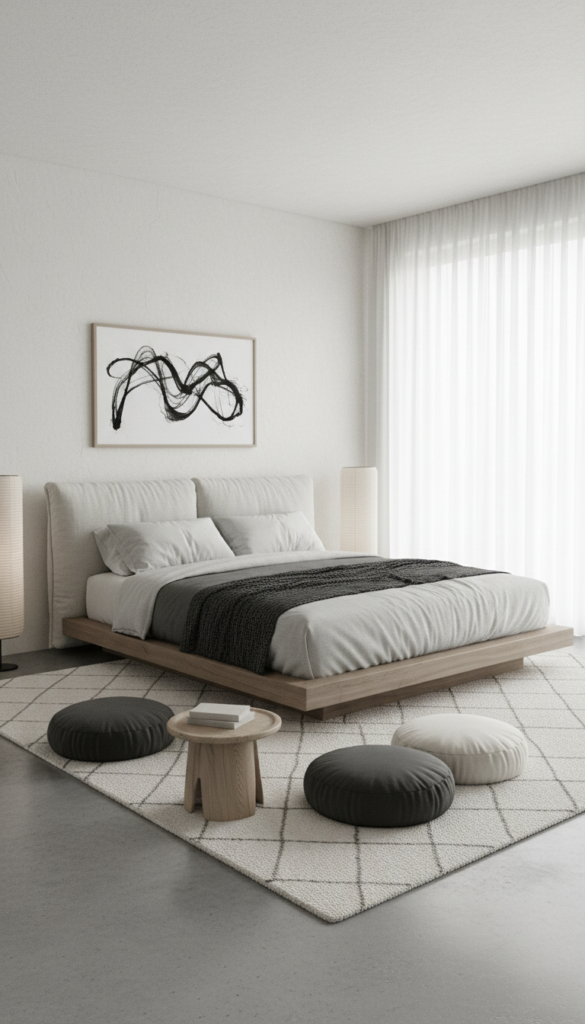
Modern Japandi bedrooms often reject bulky furniture. Instead, they favor low, grounded pieces that encourage calm movement and open space.
A low platform bed paired with floor cushions or a simple bench creates a relaxed, almost meditative layout. The black and white palette enhances this sense of clarity.
There is a common myth that floor seating is uncomfortable. In Japandi design, comfort comes from posture, simplicity, and uncluttered surroundings rather than plush excess.
Using white floors or light rugs keeps the space open. Black appears in outlines, frames, or slim furniture elements, ensuring balance without heaviness.
Shopping List
- Low platform bed base
- Floor seating cushion in neutral tone
- Tatami-style floor mat
- Low wooden side table
- Neutral woven floor rug
- Minimal black floor lamp
- White linen bedding set
- Natural fiber meditation cushion
- Low-profile storage chest
- Black metal incense holder
- Wooden tea tray
- White ceramic mug set
- Simple floor pillow covers
- Minimal wooden bench
- Black frame wall mirror
4. Black Feature Wall With Soft Japandi Balance
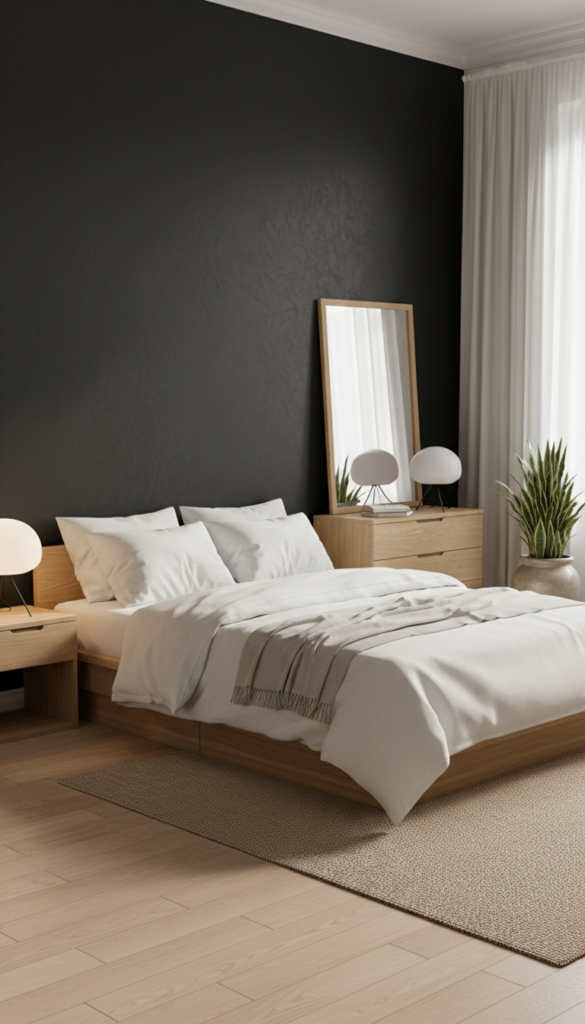
A black feature wall may seem bold, but in Japandi interiors it feels surprisingly calming. The trick lies in texture and placement.
Instead of glossy black paint, opt for matte finishes or textured surfaces. This absorbs light rather than reflecting it harshly. When placed behind the bed, the wall acts as a visual cocoon.
An interesting design insight is that darker walls can actually improve sleep by reducing visual stimulation. Japandi design embraces this idea by keeping the rest of the room light and uncluttered.
White bedding and pale wood furniture offset the dark wall, maintaining harmony rather than contrast overload.
Shopping List
- Matte black wall paint
- Low wooden bed frame
- White linen duvet insert
- Light oak bedside table
- Warm glow table lamp
- Textured white throw pillows
- Black framed wall art
- Neutral tone area rug
- Minimal wooden stool
- White ceramic lamp shade
- Black metal shelf brackets
- Soft cotton bed runner
- Natural wood wall shelf
- Minimal black candle holders
- White cotton pillowcases
5. Neutral Textiles in Black and White Tones
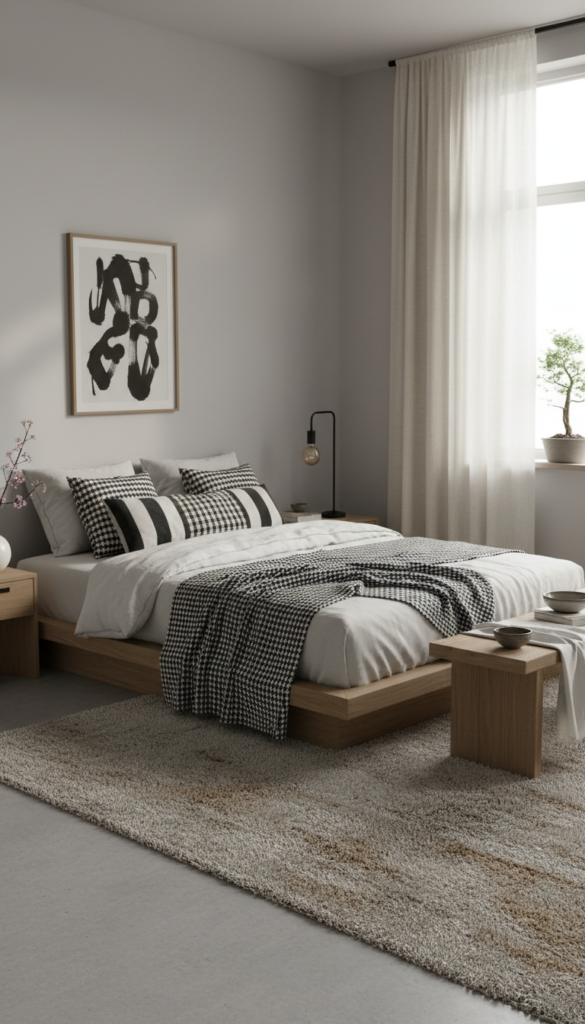
Textiles play a powerful role in Japandi bedrooms. Black and white fabrics are never sharp or graphic here. They lean toward soft contrasts and natural textures.
Think of white linen curtains that gently filter light, black throw pillows with subtle weave patterns, or neutral rugs that blend tones rather than separate them.
Do you know that Japanese interiors traditionally favor tactile materials to create emotional comfort? Japandi carries this forward by choosing fabrics that feel good to touch, not just good to see.
Layering remains minimal. One or two well-chosen textiles are enough to add depth without clutter.
Shopping List
- White linen curtain panels
- Black textured throw pillow covers
- Neutral cotton bedspread
- Woven black and white area rug
- Soft white wool throw blanket
- Natural fiber mattress pad
- Black cotton cushion covers
- White textured pillow shams
- Neutral tone bed runner
- Handwoven floor rug
- Minimal black fabric storage bin
- White cotton sheet set
- Soft knit neutral blanket
- Black linen pillowcases
- Textured cotton wall hanging
6. Japandi Lighting With Black Fixtures and Warm Glow
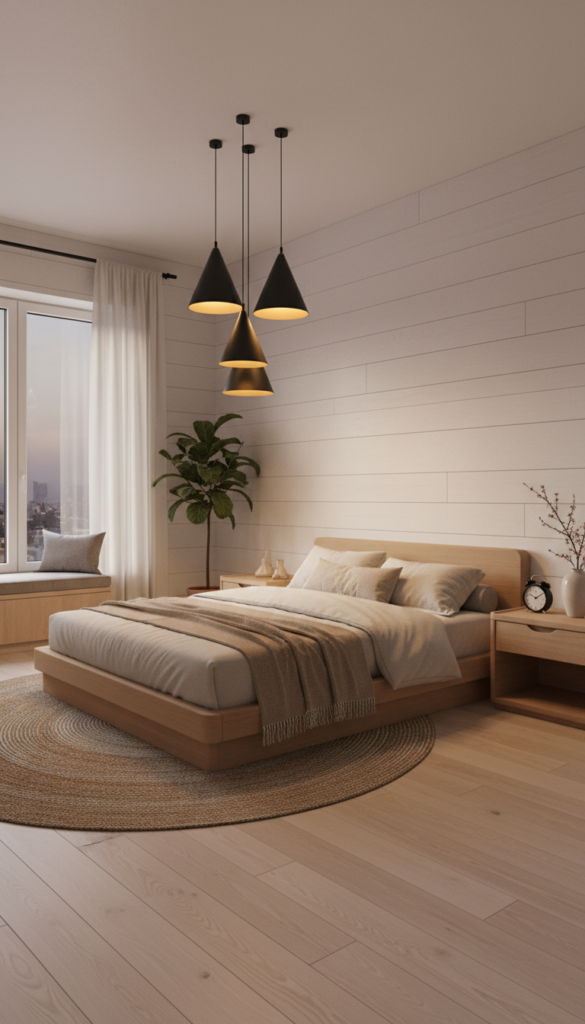
Lighting defines the mood of a Japandi bedroom. Black fixtures provide structure, while warm lighting adds softness.
Pendant lights with black frames and warm bulbs are especially popular. They create a floating effect and free up bedside space.
A common misconception is that black lighting fixtures make rooms feel darker. In Japandi interiors, they act as visual outlines, helping the light itself feel warmer and more intentional.
The glow should always feel gentle. Avoid harsh white lighting. Warm tones enhance the calming nature of the space and complement the black and white palette beautifully.
Shopping List
- Black pendant ceiling light
- Warm LED filament bulbs
- Black metal bedside lamp
- Minimal wall-mounted reading light
- Paper-style lampshade
- Black cord pendant light
- Wood base table lamp
- Soft glow night light
- Minimal black floor lamp
- Warm light dimmer switch
- Black metal lamp shade
- Neutral linen lamp cover
- Low-profile desk lamp
- Black plug-in wall sconce
- Warm tone LED strip light
7. Minimal Wall Art in Black Ink or Soft Abstract Forms
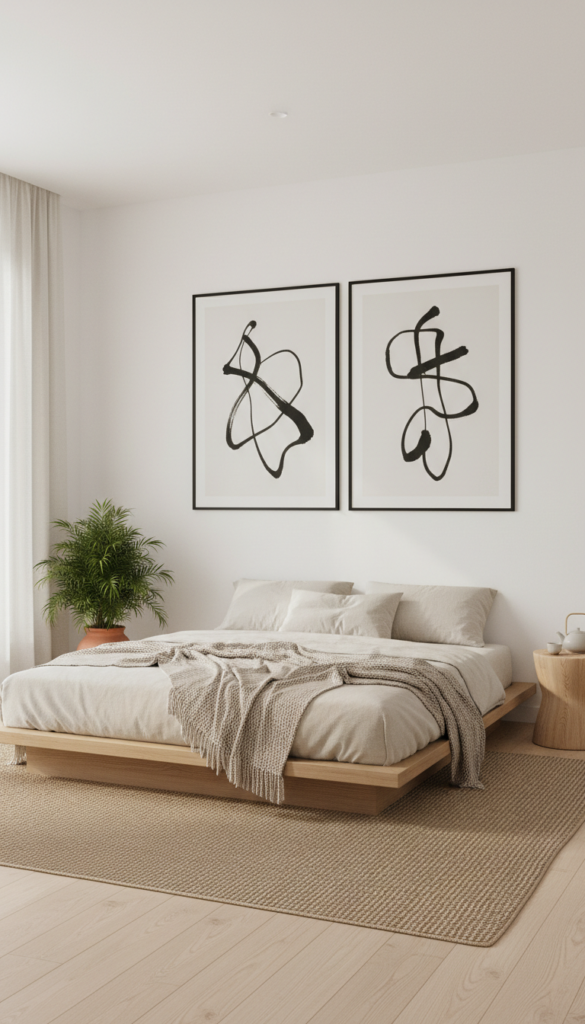
Wall art in Japandi bedrooms is subtle and meaningful. One or two pieces are enough. Black ink artwork on white backgrounds aligns perfectly with the aesthetic.
Japanese calligraphy-inspired prints or soft abstract forms add personality without noise. Frames remain thin and understated, often in black or natural wood.
Did you know that empty wall space is considered a design element in Japanese interiors? Japandi respects this idea by allowing art to breathe instead of filling every surface.
The result is a room that feels curated, not decorated.
Shopping List
- Black ink abstract wall art print
- Minimalist Japanese calligraphy artwork
- Thin black picture frame
- White textured canvas art
- Abstract line art print
- Neutral toned wall scroll
- Minimal black wooden frame
- Monochrome botanical print
- Soft abstract ink painting
- White canvas wall art
- Zen-inspired art poster
- Black and white minimalist print
- Natural wood art frame
- Abstract brushstroke artwork
- Textured neutral wall panel
8. Storage That Blends Seamlessly Into the Room
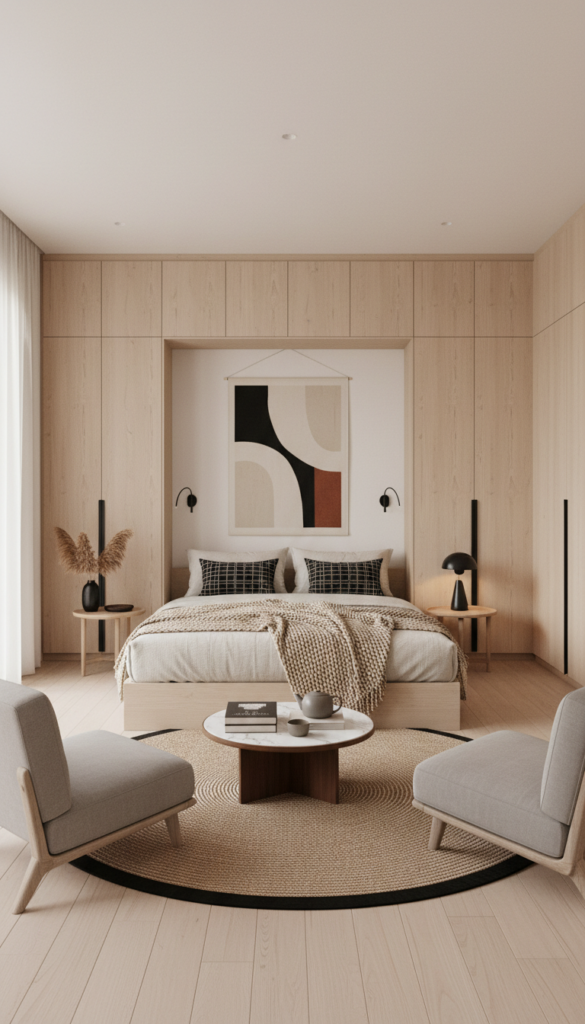
Storage in modern Japandi bedrooms is discreet. Cabinets and wardrobes often match the wall color or use natural wood tones.
Black appears only in small details such as handles or trim lines. This keeps storage functional without becoming visually dominant.
An interesting Japandi principle is that clutter disrupts mental calm. That is why storage solutions are designed to disappear rather than stand out.
Closed storage works best, maintaining clean lines and reinforcing the black and white balance.
Shopping List
- White storage wardrobe cabinet
- Natural wood dresser
- Minimal black drawer handles
- Under-bed storage boxes
- Wood finish storage bench
- White fabric storage bins
- Low-profile cabinet unit
- Hidden handle wardrobe doors
- Neutral tone organizer boxes
- Wooden nightstand with drawer
- Black metal closet hooks
- White stackable storage cubes
- Minimal shelf storage unit
- Neutral woven baskets
- Slim wood shoe cabinet
9. Japandi Plants as Organic Contrast
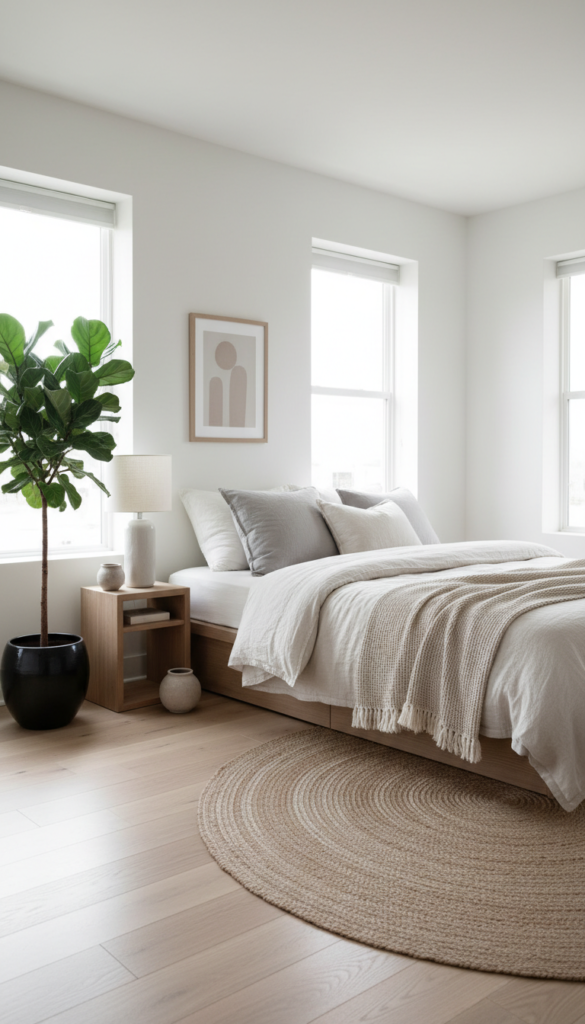
Plants bring life into black and white Japandi bedrooms. They introduce organic shapes that soften straight lines and neutral tones.
A single plant with deep green leaves can act as a focal point. Placed in a simple black or white pot, it feels intentional rather than decorative.
There is a myth that minimalist rooms lack warmth. Japandi design proves that even one natural element can completely change the emotional tone of a space.
Plants also support the Japandi focus on well-being, connecting the bedroom to nature without excess.
Shopping List
- Indoor snake plant
- Minimal black ceramic planter
- White ceramic plant pot
- Bamboo indoor plant
- Low maintenance indoor greenery
- Natural fiber plant basket
- Small bonsai style plant
- Neutral clay plant pot
- Artificial minimalist plant
- Wooden plant stand
- Ceramic watering can
- Tabletop indoor plant
- Minimal stone plant pot
- Hanging neutral planter
- Indoor air-purifying plant
10. Calm Negative Space and Intentional Emptiness
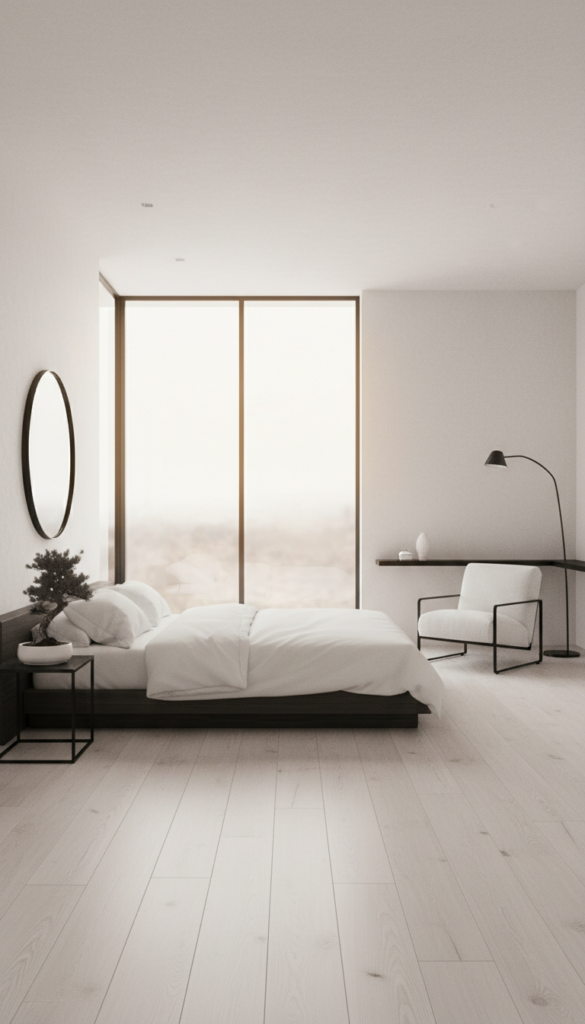
Perhaps the most important element of a Japandi black and white bedroom is what is not there. Space itself becomes part of the design.
Empty areas around furniture allow the eye to rest. This creates a sense of order and mental clarity.
In Japanese design philosophy, emptiness is not absence but potential. Japandi interiors use this idea to make bedrooms feel peaceful and open.
Black and white tones enhance this effect by removing visual distractions and letting form and texture speak.
Shopping List
- Low-profile wooden bed frame
- Minimal white bedding set
- Slim black side table
- Neutral cotton area rug
- Single black pendant light
- White ceramic bedside lamp
- Natural wood stool
- Minimal wall mirror
- Soft linen curtain panels
- Neutral tone floor mat
- Wooden decorative tray
- Minimalist clock
- Simple white pillow set
- Black metal wall hook
- Plain white wall shelf
Conclusion
Modern Japandi black and white bedrooms are not about trends or dramatic statements. They are about balance, calm, and thoughtful living.
By combining soft white surfaces, grounding black accents, natural materials, and intentional emptiness, these interiors create spaces that feel both modern and timeless.
The beauty of Japandi lies in its quiet confidence. Nothing competes for attention. Everything works together to support rest, clarity, and comfort.
If there is one lesson these ten interiors teach, it is this. A bedroom does not need more to feel complete. It needs meaning, harmony, and space to breathe.
Frequently Asked Questions (FAQs)
What is a Japandi bedroom aesthetic?
Japandi is a design style that blends Japanese simplicity with Scandinavian comfort, focusing on calm spaces, natural materials, and purposeful design.
Why is black and white popular in Japandi bedrooms?
Black adds structure and contrast, while white creates openness and light. Together, they support a balanced and peaceful atmosphere.
Can a black and white Japandi bedroom still feel warm?
Yes. Warmth comes from natural wood, soft textiles, gentle lighting, and minimal but thoughtful decor.
Is Japandi suitable for small bedrooms?
Very suitable. Low furniture, minimal clutter, and light colors help small rooms feel larger and more relaxed.
How much decor is ideal in a Japandi bedroom?
Very little. Japandi values quality over quantity, using a few meaningful pieces rather than many decorative items.