Some links in this blog are affiliate links. If you make a purchase through these links, I may receive a small commission. This helps support the site at no extra cost to you.
Step into a boutique hotel bedroom and you instantly sense it.
The calm feels intentional, the space feels layered, and every corner seems to serve a purpose without shouting for attention.
What most people do not realize is that boutique hotel bedrooms are not about luxury alone. They are about zoning.
Instead of treating the bedroom as one flat, single-use room, designers divide it into distinct experiences. Sleeping, lounging, dressing, reflecting, and even working are subtly separated, often without walls.
At home, we usually push everything against the walls and call it done. A bed, a wardrobe, maybe a chair if space allows. Boutique hotels do the opposite. They carve meaning into zones, even inside compact rooms.
The good news is that this approach is not exclusive to five-star interiors. With thoughtful planning, you can recreate the same feeling of calm, indulgence, and purpose in your own bedroom.
Below are ten bedroom zones that consistently appear in boutique hotel-style spaces, and how each one contributes to that polished, lived-in elegance.
Table of Contents
10 Bedroom Zones Similar To A Boutique Hotel
1. The Statement Sleep Zone
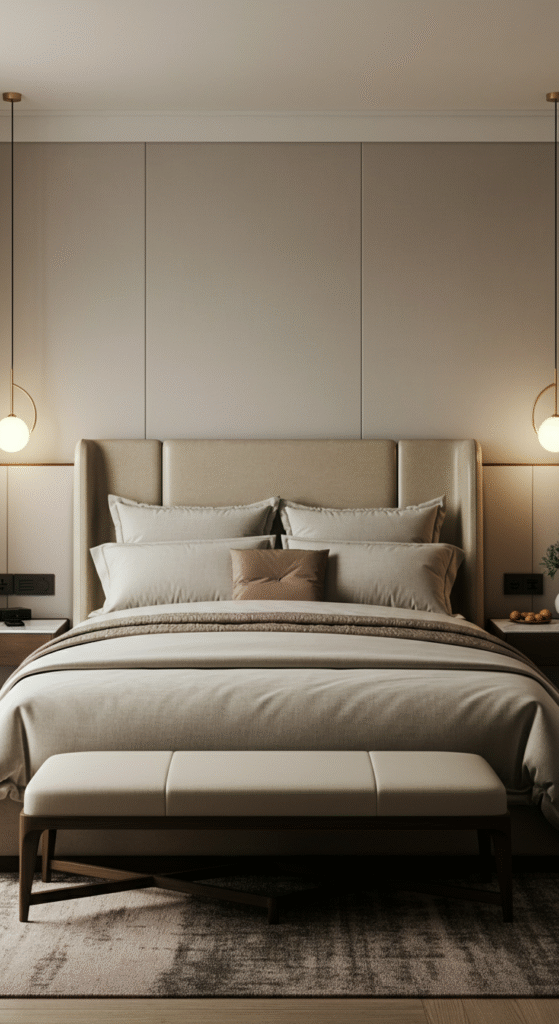
The sleep zone is the emotional anchor of a boutique hotel bedroom.
Instead of blending into the room, the bed becomes a deliberate focal point, framed, layered, and visually grounded.
Boutique hotels often center the bed with symmetry. Matching bedside tables, balanced lighting, and a strong headboard help the sleep zone feel intentional rather than accidental.
Interestingly, many boutique hotels use oversized headboards not for drama, but for comfort and visual stability. A tall or wide headboard makes the bed feel more secure and cocoon-like, even in smaller rooms.
The bedding itself is usually simple in color but rich in texture. Crisp sheets, layered duvets, and pillows arranged with restraint create a sense of quiet luxury rather than excess.
This zone works best when distractions are minimized. No clutter, no competing furniture, and no harsh lighting. The goal is rest that feels curated, not clinical.
Shopping List
- Upholstered king size bed frame with tall headboard
- Neutral luxury hotel style bedding set
- High thread count cotton bed sheets
- Hotel inspired white duvet insert
- Decorative lumbar pillow for bed
- Textured euro pillow covers
- Solid wood bedside table
- Soft close drawer nightstand
- Minimalist ceramic table lamp
- Warm light bedside reading lamp
- Low profile bed bench
- Tufted upholstered bench for bedroom
- Hotel style mattress topper
- Breathable mattress protector
- Neutral tone bed throw blanket
- Modern wall mounted bedside light
2. The Layered Lighting Zone
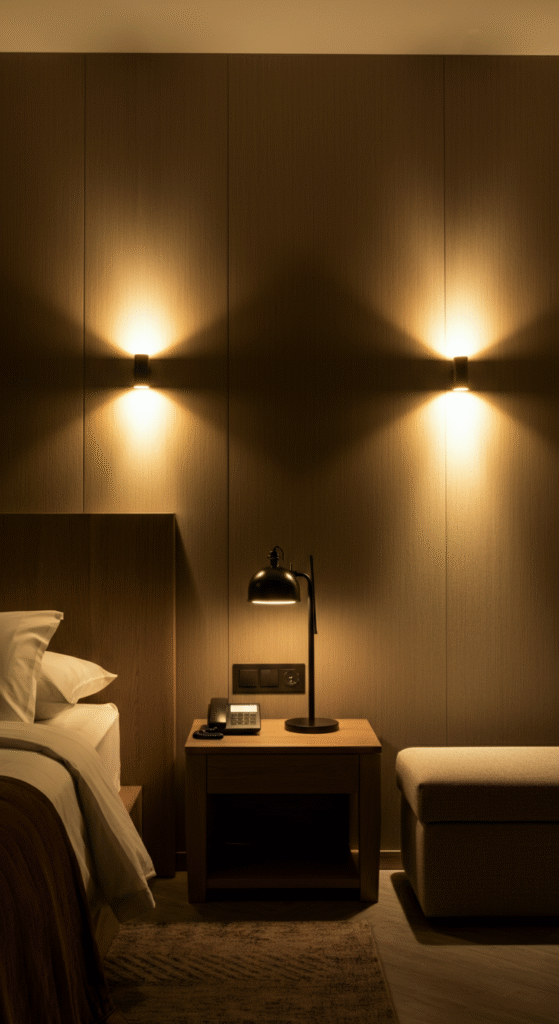
Lighting is never treated as an afterthought in boutique hotel bedrooms.
Instead of relying on one overhead light, designers create a dedicated lighting zone that supports mood, function, and rhythm.
You will often find a combination of ambient, task, and accent lighting. Soft ceiling lights provide general illumination, bedside lamps handle reading, and subtle wall or floor lights add depth.
Do you know that many boutique hotels intentionally avoid bright white lighting in bedrooms? Warm tones help signal the brain to slow down, making the room feel more inviting and restful.
Lighting zones also create visual separation without physical barriers. A pool of warm light over a chair instantly defines a lounge area, even if it sits only a few feet from the bed.
This layered approach makes the bedroom adaptable, allowing it to shift effortlessly from morning clarity to evening calm.
Shopping List
- Warm LED bedside lamps
- Wall mounted bedroom sconces
- Soft glow floor lamp for bedroom
- Dimmable ceiling light fixture
- Bedside touch control lamp
- Minimalist pendant light for bedroom
- Table lamp with fabric shade
- Ambient night light for bedroom
- Adjustable reading light
- Modern brass wall light
- Warm tone LED bulbs
- Decorative bedside lamp set
- Soft light diffuser lamp
- Hotel style accent lighting
- Minimal ceiling flush mount light
3. The Lounge or Reading Nook
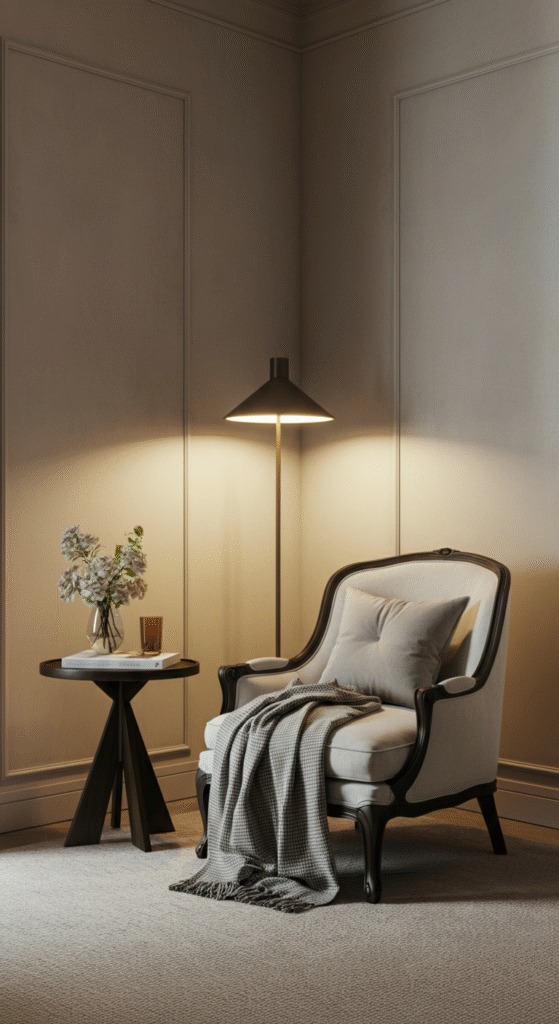
A boutique hotel bedroom almost always includes a place to sit that is not the bed.
This lounge zone is subtle but powerful. It might be a single armchair, a chaise, or a small bench paired with a side table.
The presence of a seating area changes how the bedroom is used. It becomes a space for reading, thinking, or simply unwinding without retreating under the covers.
There is a common myth that lounge seating is only practical in large bedrooms. In reality, even a compact corner can host a chair if the furniture scale is right.
Hotels often choose chairs with soft curves and tactile fabrics to contrast with the structured lines of the bed. This visual softness adds warmth and prevents the room from feeling rigid.
This zone contributes greatly to the boutique hotel feeling because it encourages lingering, not just sleeping.
Shopping List
- Accent armchair for bedroom
- Upholstered lounge chair
- Bedroom chaise lounge
- Small round side table
- Wooden accent side table
- Floor lamp for reading corner
- Soft throw blanket for chair
- Decorative cushion for armchair
- Compact bedroom coffee table
- Modern lounge stool
- Wool area rug for seating zone
- Minimalist ottoman
- Boucle fabric accent chair
- Bedroom slipper chair
- Magazine rack for bedroom
- Neutral tone floor rug
4. The Vanity or Getting-Ready Zone
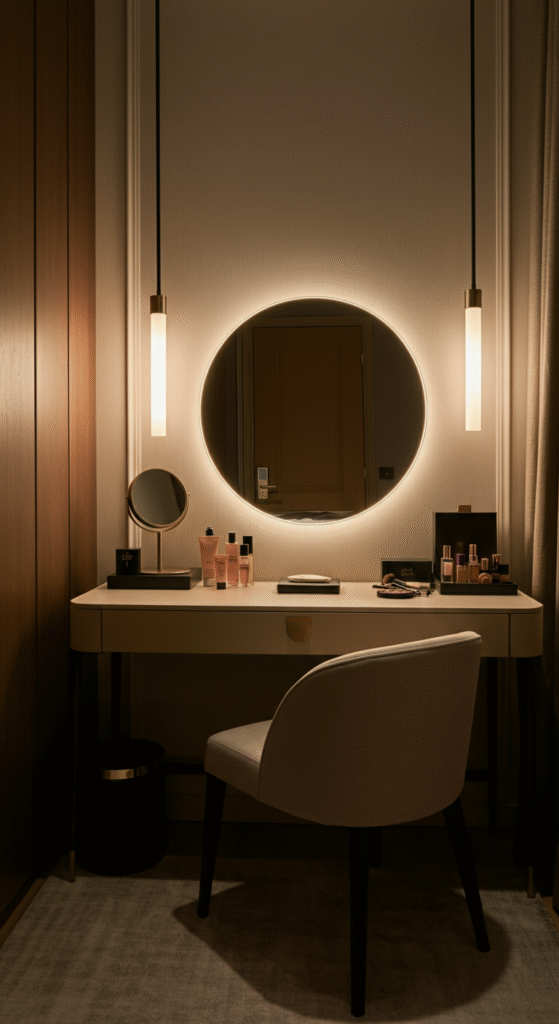
One of the most overlooked zones in home bedrooms is the vanity area.
Boutique hotels treat getting ready as a ritual, not a rushed task.
A dedicated vanity zone often includes a slim desk or console, a comfortable stool or chair, and a well-placed mirror with flattering lighting.
This zone is not always glamorous in appearance. Many boutique hotels keep it understated, blending it seamlessly into the room rather than making it feel like a separate dressing room.
An interesting fact is that mirrors in boutique hotel bedrooms are often positioned to reflect light or views, not just faces. This makes the room feel brighter and more expansive.
By separating grooming from sleeping, the bedroom feels more organized and less chaotic, especially during busy mornings.
Shopping List
- Bedroom vanity table
- Minimalist dressing table
- Round wall mirror for vanity
- LED vanity mirror light
- Upholstered vanity stool
- Modern desk chair for bedroom
- Tabletop jewelry organizer
- Decorative tray for vanity
- Soft light table lamp
- Compact makeup storage box
- Wooden vanity mirror stand
- Minimal desk organizer
- Small drawer console table
- Bedroom writing desk
- Decorative mirror frame
- Fabric cushioned stool
5. The Soft Divider Zone
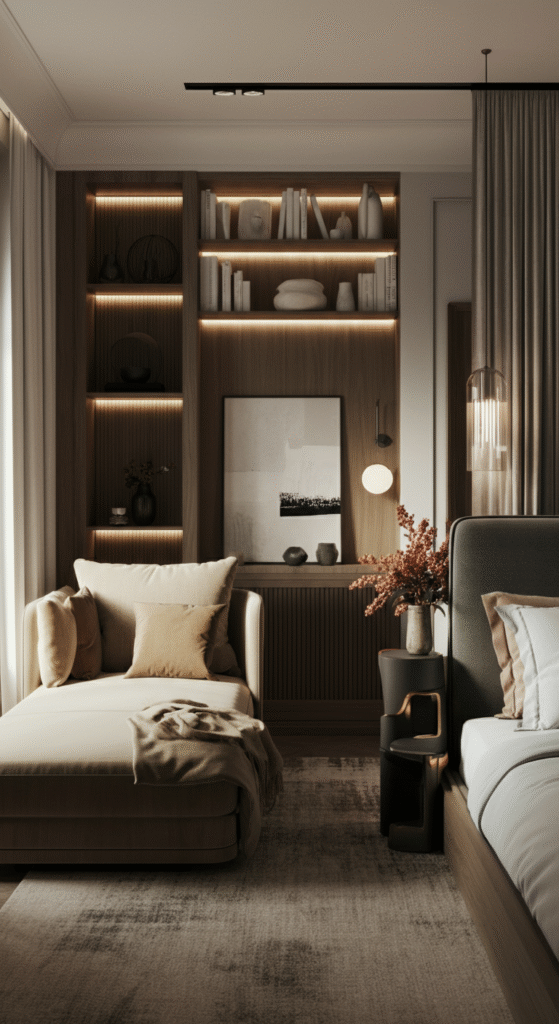
Boutique hotel bedrooms rarely rely on solid walls to define zones.
Instead, they use soft dividers to suggest separation without closing off the space.
These dividers can be area rugs, open shelving, curtains, screens, or even changes in flooring material.
Do you know that rugs are one of the most common zoning tools in hotel design? A rug under the bed defines the sleep zone, while a smaller rug near a chair marks a lounge area.
Soft dividers maintain openness while creating visual boundaries. They help the room feel layered and intentional rather than cluttered.
This approach works especially well in open-plan bedrooms or studio-style layouts where flexibility is essential.
Shopping List
- Area rug for bedroom zoning
- Large neutral bedroom rug
- Low open bookshelf divider
- Decorative folding screen
- Sheer room divider curtain
- Textured floor runner
- Open wooden shelving unit
- Minimal metal room divider
- Fabric panel divider
- Japandi style area rug
- Neutral tone carpet
- Wood slat divider panel
- Lightweight curtain rod
- Decorative screen panel
- Flat weave rug
- Modern room zoning shelf
6. The Thoughtful Storage Zone
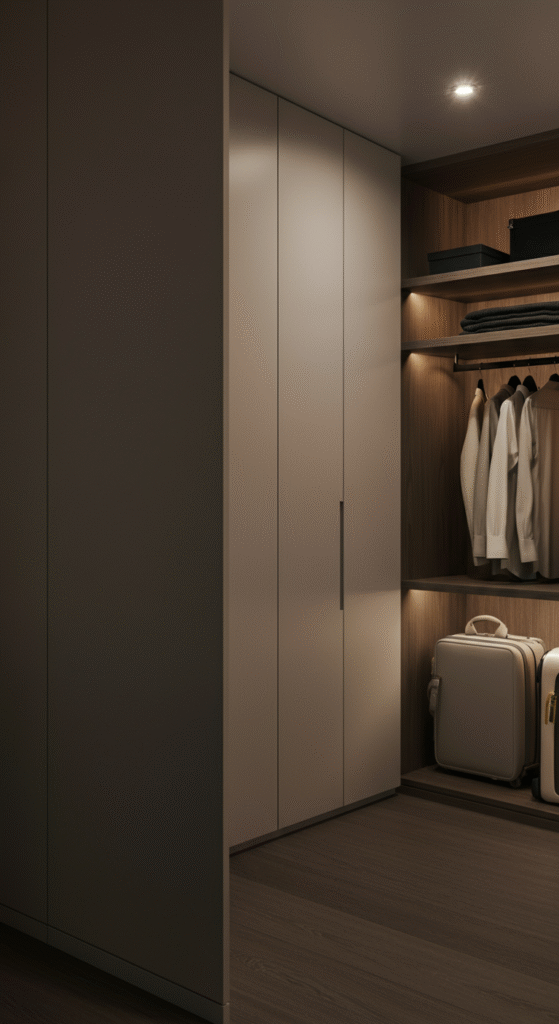
Storage in boutique hotel bedrooms is discreet and deliberate.
Instead of dominating the room, storage zones are often integrated into the architecture or furniture. Wardrobes blend into walls, benches hide compartments, and bedside tables offer concealed drawers.
The goal is to keep personal items accessible but visually quiet.
There is a design principle often used in hotels called visual rest. Too many visible objects tire the eye and disrupt relaxation. Hidden storage supports calm by reducing visual noise.
A well-planned storage zone allows the rest of the bedroom to breathe. Surfaces stay clear, textures stand out, and the overall mood feels composed.
This is one of the key reasons boutique hotel bedrooms always look tidy, even when lived in.
Shopping List
- Built-in style wardrobe cabinet
- Minimalist bedroom wardrobe
- Under bed storage drawers
- Storage bench for bedroom
- Bedside table with drawers
- Floating bedroom shelves
- Hidden storage nightstand
- Ottoman with storage
- Slim dresser cabinet
- Wooden chest of drawers
- Bed frame with storage
- Decorative storage baskets
- Closet organizer system
- Wall mounted storage cabinet
- Bedroom storage trunk
- Soft close wardrobe unit
7. The Window and View Zone
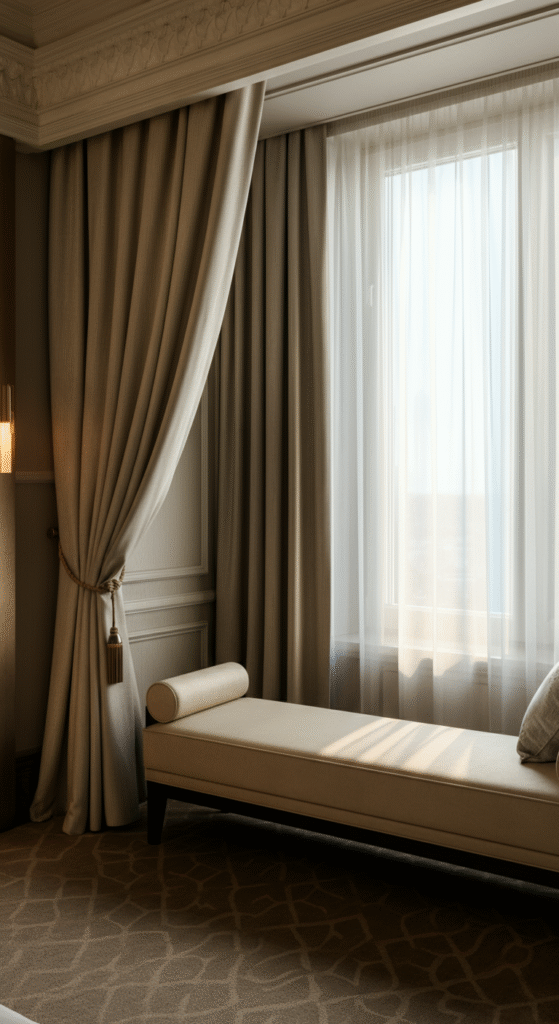
Windows are treated as features, not just sources of light.
Boutique hotels often create a zone around the window, whether through seating, drapery, or framing.
A window seat, a pair of chairs facing outward, or simply luxurious curtains can transform a basic window into an experience.
Interestingly, hotels frequently hang curtains higher and wider than the actual window. This trick makes ceilings feel taller and allows more light to enter when curtains are open.
The window zone connects the interior to the outside world, offering balance and perspective. It prevents the bedroom from feeling inward-focused or boxed in.
Even in urban settings, this zone adds depth and a sense of pause.
Shopping List
- Window bench seating
- Upholstered window seat cushion
- Sheer white curtains
- Blackout hotel style curtains
- Curtain rod set for bedroom
- Decorative curtain tiebacks
- Window side table
- Indoor plant for window area
- Lightweight lounge chair
- Floor cushion for window nook
- Soft linen drapes
- Curtain layering set
- Minimal window stool
- Textured window rug
- Neutral roller blinds
- Bedroom bench near window
8. The Sensory Texture Zone
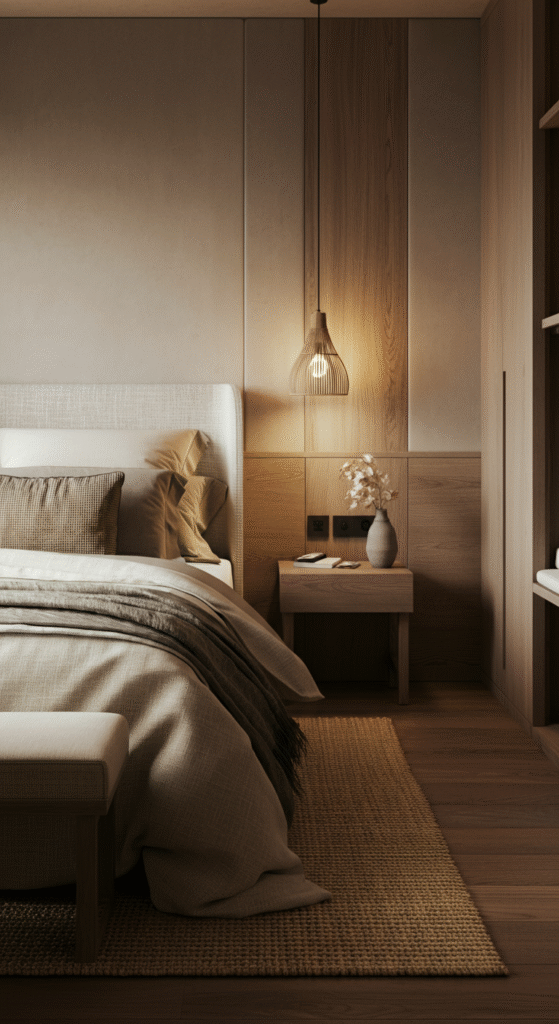
One reason boutique hotel bedrooms feel rich without being flashy is their attention to texture.
This zone is not tied to one location but layered throughout the room. Upholstered headboards, woven throws, natural wood, soft rugs, and matte finishes all play a role.
Texture adds dimension without clutter. It allows neutral palettes to feel warm and engaging rather than flat.
A lesser-known fact is that humans respond emotionally to texture before color. Soft and natural textures can subconsciously lower stress levels.
By thoughtfully layering textures, boutique hotel bedrooms create comfort that feels instinctive rather than decorative.
This zone supports relaxation on a sensory level, not just a visual one.
Shopping List
- Textured throw blanket
- Knitted bed throw
- Boucle fabric cushion cover
- Linen pillow covers
- Wool bedroom rug
- Upholstered headboard panel
- Cotton bedspread
- Velvet decorative pillows
- Natural jute rug
- Soft fabric bed runner
- Layered bedding set
- Textured fabric wall panel
- Neutral tone fabric pouf
- Woven blanket throw
- Soft microfiber comforter
- Organic cotton bedding
9. The Personal Storytelling Zone
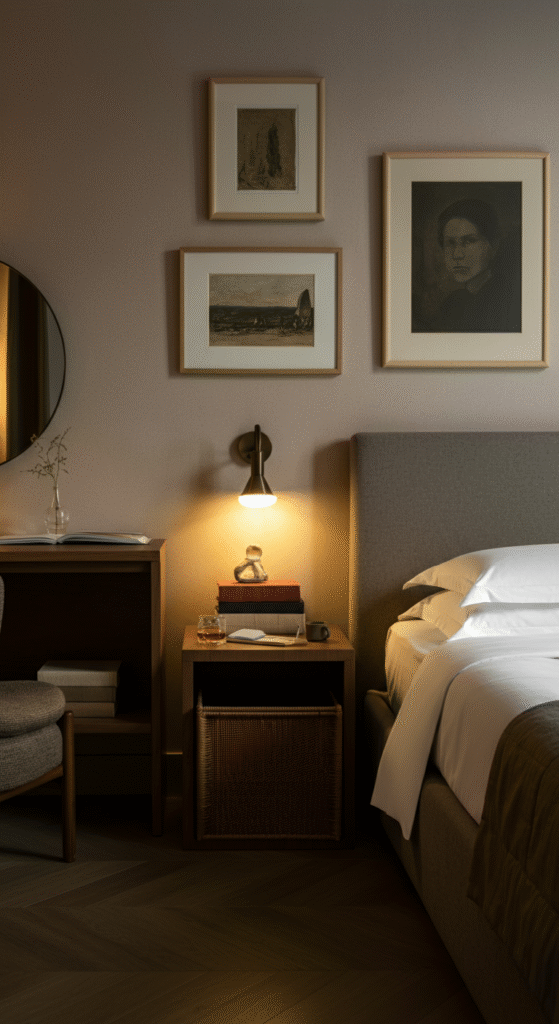
Boutique hotels are known for feeling personal, even though they serve many guests.
This effect is achieved through storytelling zones. A piece of art, a sculptural object, a stack of books, or a framed photograph adds character without overwhelming the space.
These elements are usually limited in number but chosen with intention.
There is a myth that minimalist bedrooms lack personality. Boutique hotels prove the opposite. Personality comes from curation, not quantity.
This zone makes the bedroom feel lived-in and human. It invites emotional connection and memory, which is why guests often remember how a room felt rather than how it looked.
At home, this zone is where individuality quietly shines.
Shopping List
- Abstract wall art for bedroom
- Minimal framed artwork
- Decorative table sculpture
- Hardcover coffee table books
- Decorative ceramic vase
- Wooden art object
- Bedroom wall decor set
- Floating picture ledge
- Framed photography print
- Decorative candle holder
- Minimalist wall frame
- Neutral art poster
- Sculptural decor accent
- Small tabletop decor object
- Decorative bookends
- Wall mounted art shelf
10. The Quiet Transition Zone
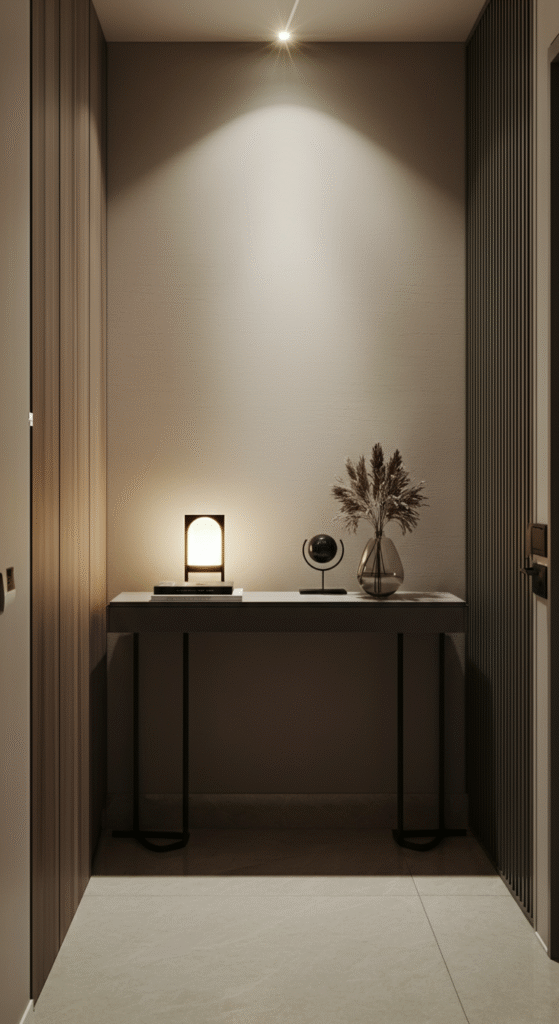
The final zone is subtle but transformative.
Boutique hotel bedrooms often include a transition area between the door and the main sleeping space. This might be a small entry nook, a console, or simply a change in lighting or flooring.
This zone acts as a buffer between the outside world and rest.
Psychologically, transitions help the mind shift gears. Moving through a calm, defined entry zone prepares you for relaxation.
Hotels use this strategy intentionally to make guests feel removed from noise, stress, and activity the moment they step inside.
Even a narrow bedroom can benefit from a transition zone if it is thoughtfully planned.
Shopping List
- Bedroom console table
- Slim entry table for bedroom
- Decorative mirror for entry zone
- Soft glow table lamp
- Entryway tray organizer
- Minimal runner rug
- Decorative bowl for console
- Wall mounted hook rack
- Ambient night light
- Floating console shelf
- Bedroom entry bench
- Neutral table decor
- Small drawer console
- Decorative wall panel
- Subtle floor lighting lamp
- Minimal accent table
Conclusion: Designing a Bedroom That Feels Like an Experience
A boutique hotel bedroom is not defined by square footage or expensive materials.
It is defined by intention.
By dividing the bedroom into meaningful zones, designers create spaces that support rest, reflection, and daily rituals without feeling crowded or forced.
Each zone serves a purpose, yet all of them flow together seamlessly.
When you apply this mindset at home, your bedroom stops being just a place to sleep. It becomes an experience.
A space that feels calm without being empty, luxurious without being loud, and personal without being cluttered.
That is the true secret behind bedrooms that feel like a boutique hotel.
Frequently Asked Questions (FAQs)
What is a bedroom zone?
A bedroom zone is a clearly defined area within the bedroom designed for a specific purpose such as sleeping, lounging, dressing, or relaxing, even without physical walls.
Why do boutique hotel bedrooms feel more calming?
They use intentional zoning, layered lighting, controlled color palettes, and minimal visual clutter to support rest and comfort.
Can small bedrooms have multiple zones?
Yes. Boutique hotels often use furniture placement, rugs, lighting, and soft dividers to create zones even in compact spaces.
Do bedroom zones require expensive furniture?
No. Zoning relies more on layout, proportion, and purpose rather than luxury materials or high-end furniture.
How many zones should a bedroom have?
There is no fixed number. Most boutique-style bedrooms function well with three to five zones depending on room size and lifestyle.