Some links in this blog are affiliate links. If you make a purchase through these links, I may receive a small commission. This helps support the site at no extra cost to you.
The way we arrange a bedroom silently shapes how we sleep, think, and reset. Long before interior design became a trend on social media, Japanese homes treated space as something to be respected rather than filled.
Scandinavian design later echoed the same belief, favoring calm, function, and light. Japandi bedroom design was born where these two philosophies met, and zoning sits at the heart of it.
Here is an interesting fact most people do not realize. In traditional Japanese homes, a bedroom was rarely a single-purpose space. Sleeping, reading, meditating, and dressing all happened in the same room, but never at the same time. The room transformed through subtle zoning rather than walls. Japandi bedrooms revive this idea in a modern, minimal way.
Zoning is not about adding furniture or partitions for decoration. It is about clarity. When each area has a purpose, the mind relaxes faster. That is why Japandi bedrooms often feel larger, quieter, and more intentional than heavily styled interiors.
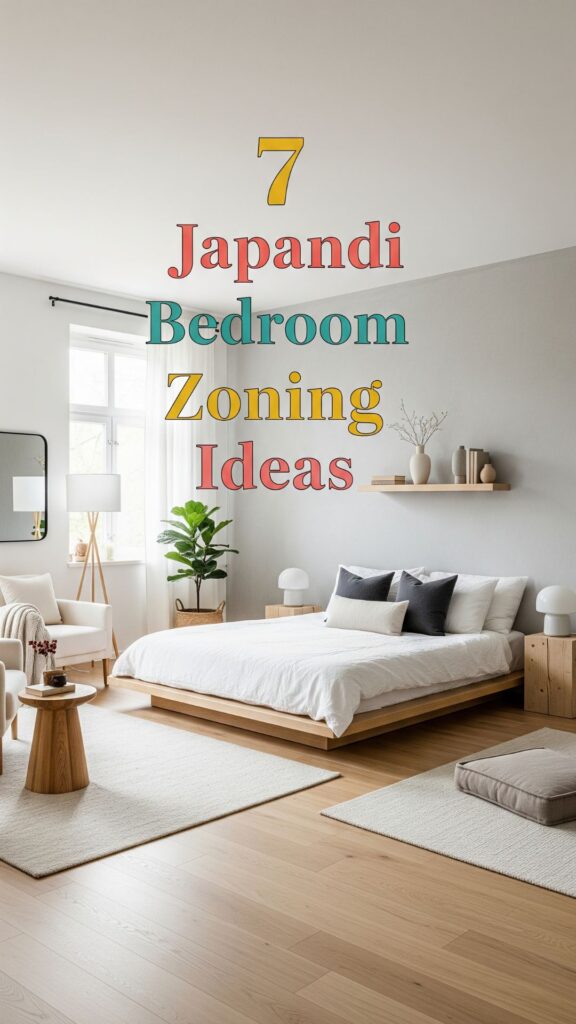
This guide explores seven bedroom zoning ideas designed specifically for Japandi bedroom design. Each idea focuses on simplicity, balance, and calm while staying practical for modern living.
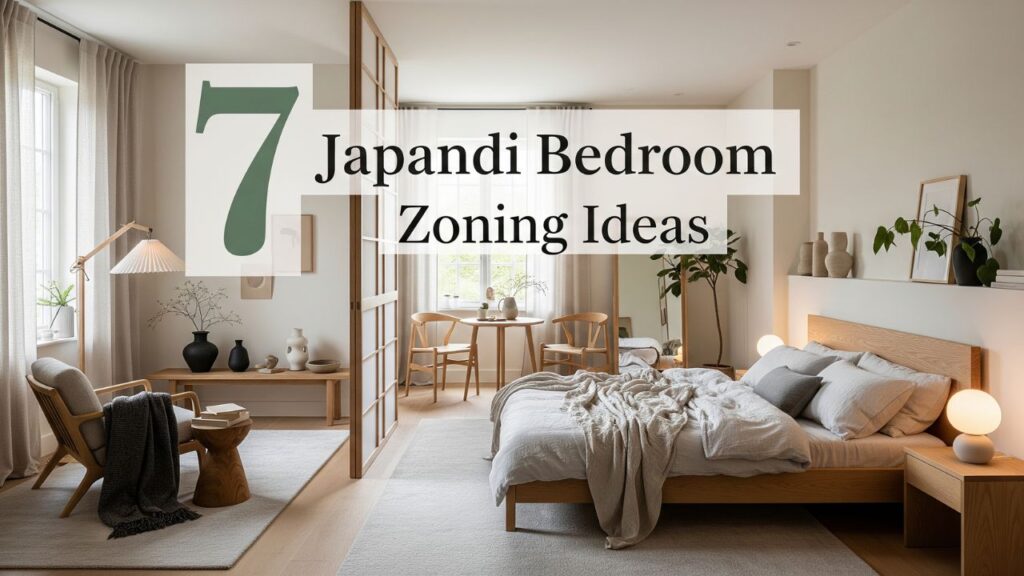
Table of Contents
7 Bedroom Zoning Ideas For Japandi Bedroom
1. Sleeping Zone Anchored With a Low Profile Bed
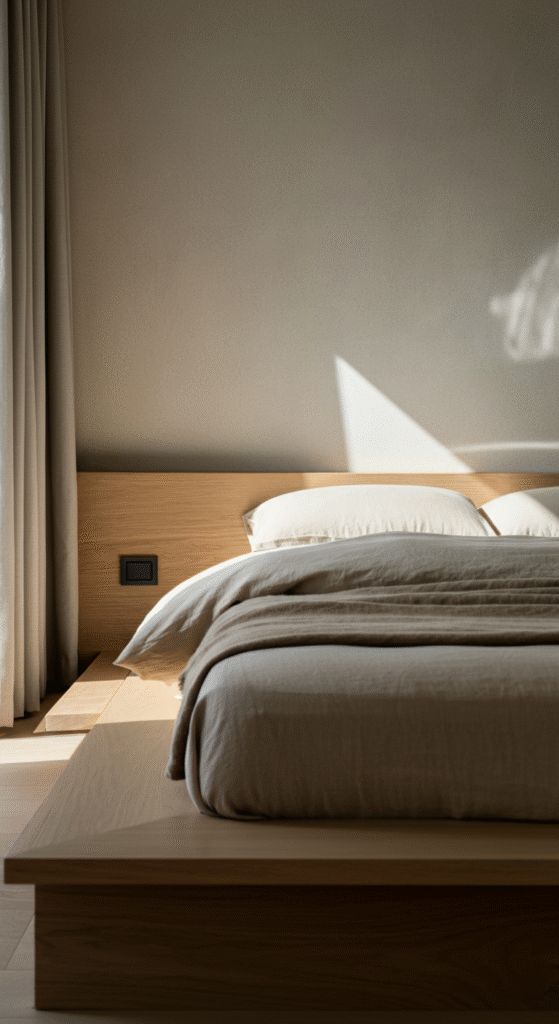
The sleeping zone is the emotional core of a Japandi bedroom. Everything else should quietly support it rather than compete for attention. A low profile bed instantly defines this zone without visual noise.
In Japandi interiors, beds sit closer to the floor to create a grounded feeling. This design choice is not just aesthetic. Being closer to the ground subtly signals safety and stability to the brain, which can improve sleep quality.
Placing the bed centrally or against a solid wall creates a natural anchor for the room. Keep the bedding neutral, layered, and textured rather than patterned. Linen, cotton, or soft wool blends fit the Japandi mindset perfectly.
Do you know that traditional Japanese futons were stored away during the day to open up floor space. While modern Japandi bedrooms usually keep the bed visible, the philosophy remains. The sleeping zone should feel light and unobtrusive rather than dominant.
Avoid clutter around the bed. One or two low bedside tables are enough. This simplicity helps the sleeping zone stand apart as a calm retreat rather than just another part of the room.
Shopping List
- Low profile solid wood platform bed frame
- Japanese style floor bed frame
- Minimalist oak wooden bed base
- Natural pine low height bed frame
- Neutral linen duvet cover set
- Stonewashed cotton bed sheet set
- Organic cotton fitted bedsheet
- Beige linen pillow cover set
- Off white textured throw blanket
- Minimalist wool bed runner
- Low wooden bedside table
- Floating wood nightstand
- Paper shade bedside table lamp
- Warm white LED bedside bulb
- Neutral tone mattress protector
- Minimalist alarm clock
- Natural wood bed slat support system
2. Reading and Relaxation Zone With Minimal Seating
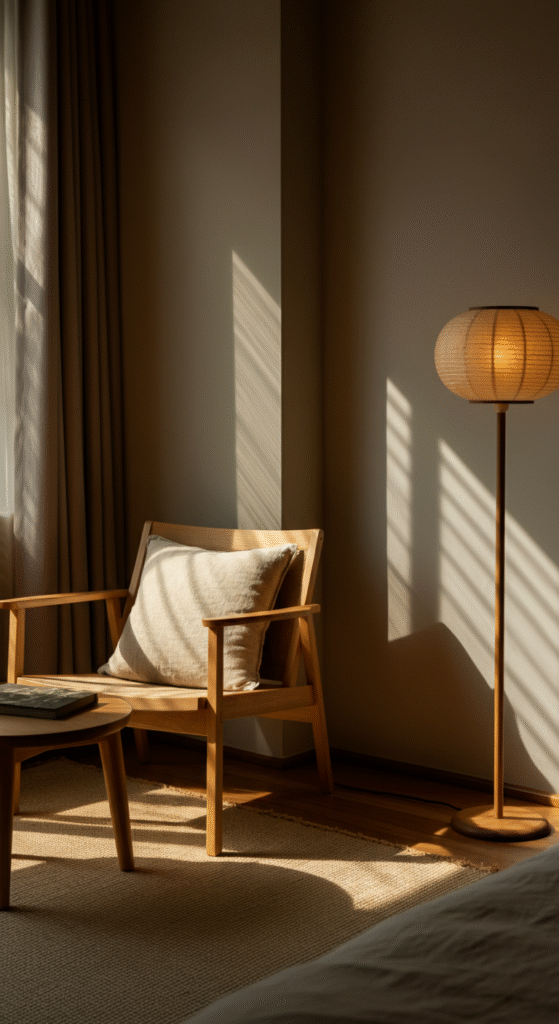
Japandi bedrooms often include a quiet corner dedicated to slowing down. This reading or relaxation zone does not need much space. It only needs intention.
A single chair with clean lines, a floor cushion, or a small bench can define this area. Position it near natural light if possible. Light in Japandi design is treated almost like a material, soft, filtered, and essential.
This zone is not meant for productivity. It is for stillness. Avoid desks or heavy shelving here. A simple side table for a book or cup of tea is enough.
An interesting myth is that minimal design feels cold or empty. In reality, Japandi design proves the opposite. When a space is not overloaded, each object feels more meaningful. This is especially true in a relaxation zone, where less visual input allows the mind to unwind.
Use texture to separate this zone subtly from the sleeping area. A soft rug, a different wood tone, or a paper-shade floor lamp can create a boundary without physical barriers.
Shopping List
- Minimalist wooden lounge chair
- Low back Japandi accent chair
- Neutral linen floor cushion
- Tatami style floor mat
- Small round wooden side table
- Paper shade floor lamp
- Warm ambient LED floor lamp
- Neutral textured area rug
- Lightweight cotton throw blanket
- Minimalist book holder stand
- Ceramic tea cup set
- Small wooden tray table
- Natural jute rug
- Scandinavian style foot stool
- Soft wool cushion cover
- Minimalist wall mounted reading light
3. Dressing Zone Defined by Natural Materials

The dressing zone in a Japandi bedroom is practical yet understated. Instead of large wardrobes dominating the room, this zone blends into the overall design.
Open wardrobes, low dressers, or built-in storage made from natural wood work well here. Keeping clothing visible but organized encourages mindful ownership. If everything is seen, people tend to keep only what they truly use.
Place this zone slightly away from the bed to maintain the calm energy of the sleeping area. Even a small visual shift, like changing the wood finish or using a vertical slatted panel, helps define the dressing space.
Do you know that in Japanese culture, order is considered a form of respect for the space itself. A tidy dressing zone aligns with this belief and reinforces the calming effect of Japandi interiors.
Lighting here should be soft but functional. Warm-toned lighting avoids harsh contrasts and keeps the room cohesive. The goal is not to spotlight clothing but to maintain harmony.
Shopping List
- Low wooden dresser cabinet
- Minimalist chest of drawers
- Open wooden wardrobe rack
- Natural bamboo clothing rack
- Wooden hanger set
- Neutral fabric storage boxes
- Under bed storage organizer
- Linen wardrobe storage bags
- Full length wooden frame mirror
- Wall mounted minimalist mirror
- Drawer divider organizer set
- Neutral fabric laundry basket
- Solid wood jewelry organizer
- Minimalist wooden valet tray
- Soft warm LED closet light
- Foldable fabric storage bins
4. Work or Writing Zone Kept Visually Light
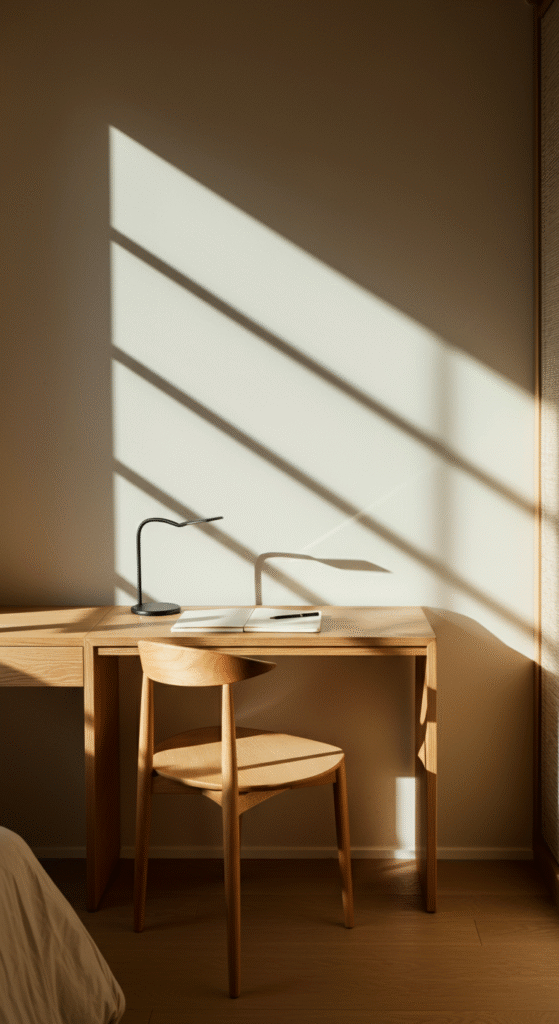
Not every bedroom includes a work area, but modern life often makes it necessary. Japandi zoning allows a small workspace without disrupting the room’s peaceful atmosphere.
The key is scale. Choose a slim desk with clean lines and natural finishes. Avoid bulky office chairs or storage units. A simple stool or wooden chair maintains visual continuity.
Position this zone near a wall or window rather than near the bed. This creates a psychological separation between rest and focus. Even if the room is small, the brain recognizes this distinction.
An interesting fact is that Japanese interiors traditionally avoided mixing rest and work activities. Modern Japandi design adapts this by visually separating zones even when physical separation is impossible.
Keep the surface almost empty. One notebook, one lamp, and perhaps a plant are enough. When work tools disappear at the end of the day, the bedroom reclaims its restful purpose.
Shopping List
- Slim wooden writing desk
- Minimalist floating desk shelf
- Simple solid wood desk chair
- Backless wooden stool
- Minimalist desk lamp
- Warm LED desk light
- Leather desk pad mat
- Neutral tone notebook set
- Wooden pen holder
- Minimalist wall shelf
- Cable management box
- Wood grain laptop stand
- Neutral fabric pin board
- Small indoor desk plant pot
- Wooden book stand
- Compact desk drawer organizer
5. Meditation or Mindfulness Zone With Open Floor Space
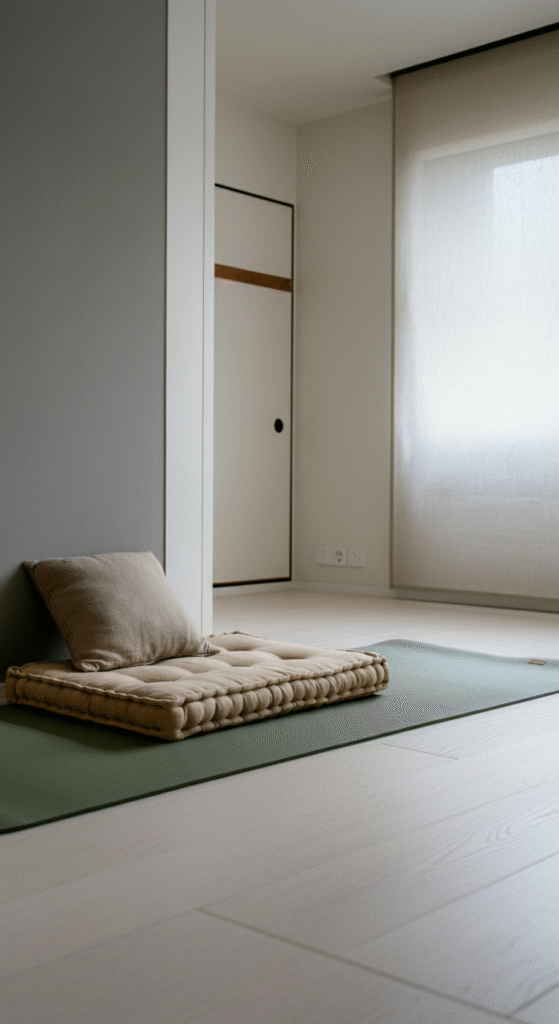
One of the most powerful zoning ideas in Japandi bedroom design is the intentional use of empty space. A meditation or mindfulness zone may appear invisible at first, but it plays a crucial role.
This zone often consists of nothing more than a clear section of floor. It may include a floor cushion, yoga mat, or low bench. The absence of furniture is what defines it.
In Japandi philosophy, empty space is not wasted space. It allows energy to flow and gives the eyes a place to rest. This idea comes directly from Japanese aesthetics, where emptiness is valued as much as form.
A common myth is that every part of a room must be filled to feel complete. Japandi design challenges this. A mindful zone reminds us that stillness has its own function.
Position this area where distractions are minimal. Soft natural light, neutral walls, and minimal decor help maintain its calming presence.
Shopping List
- Meditation floor cushion
- Neutral yoga mat
- Tatami meditation mat
- Low wooden meditation bench
- Organic cotton yoga bolster
- Minimalist incense holder
- Ceramic essential oil diffuser
- Unscented soy candle
- Natural fiber floor rug
- Mindfulness chime bell
- Wooden singing bowl set
- Neutral linen floor mat
- Japanese style zabuton cushion
- Minimalist wall art print
- Soft ambient floor lamp
- Indoor bonsai plant pot
6. Soft Divider Zones Using Light and Texture
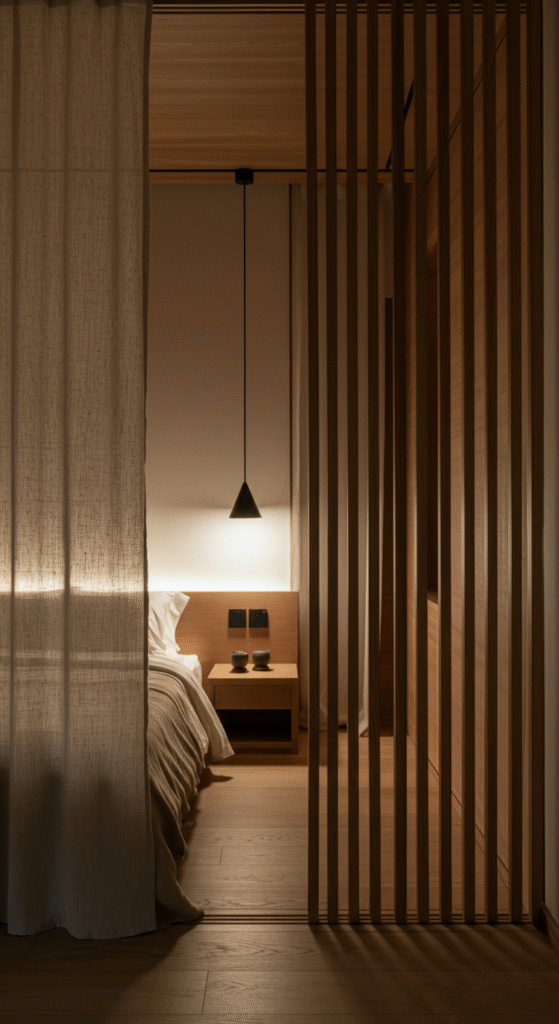
Japandi bedroom zoning rarely relies on solid walls or heavy dividers. Instead, it uses light and texture to guide movement and perception.
Sheer curtains, wooden slats, or woven screens can separate zones without blocking airflow or light. These elements introduce rhythm and depth while staying true to minimalism.
Lighting also plays a role in zoning. A pendant light over the bed, a floor lamp in the reading corner, and subtle ambient lighting near storage areas create invisible boundaries.
Do you know that Scandinavian design emphasizes light due to long dark winters, while Japanese design emphasizes shadow and softness. Japandi blends both by using light as a zoning tool rather than a focal point.
This approach keeps the bedroom flexible. Zones can shift or overlap without the room feeling rigid or confined.
Shopping List
- Sheer linen curtain panels
- Neutral cotton room divider curtain
- Wooden slat room divider
- Bamboo folding screen
- Ceiling mounted curtain track
- Minimalist curtain tiebacks
- Textured area rug
- Layered neutral floor rugs
- Soft pendant ceiling light
- Warm ambient LED strip lighting
- Paper lantern pendant light
- Fabric panel wall divider
- Natural jute room separator
- Minimalist wall sconce light
- Light wood panel wall decor
7. Window and Nature-Focused Zone for Visual Calm
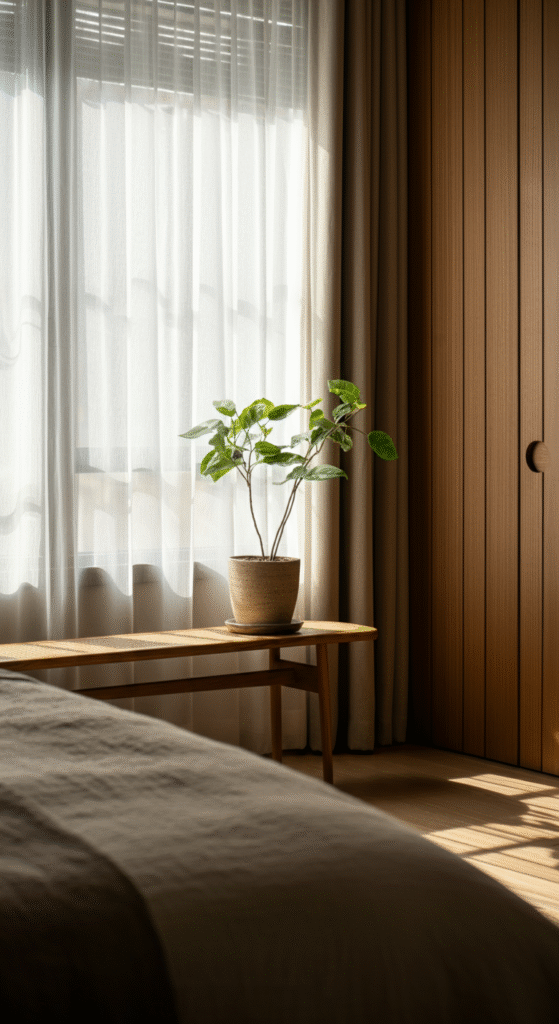
The final zoning idea centers around the window area. In Japandi bedrooms, windows are more than sources of light. They are visual anchors that connect the interior to nature.
Keep this zone uncluttered. A simple bench, low plant, or nothing at all allows the outside view to become part of the design. Even in urban settings, the sky, trees, or changing light add calm movement.
Placing a seating or meditation area near the window strengthens this connection. Natural light enhances textures and materials, making the room feel alive without added decor.
An interesting fact is that Japanese architecture often frames nature like artwork. Japandi bedrooms continue this tradition by treating windows as intentional zones rather than leftover space.
Avoid heavy curtains or bold colors here. Light, breathable fabrics maintain softness and preserve the natural rhythm of day and night.
Shopping List
- Low wooden window bench
- Minimalist bench cushion
- Indoor potted plant set
- Ceramic plant pot
- Bamboo plant stand
- Sheer white curtain panels
- Linen curtain drapes
- Neutral roman blinds
- Wooden window shelf
- Small indoor tree planter
- Minimalist watering can
- Natural fiber window rug
- Lightweight floor cushion
- Wooden tray for window seating
- Soft daylight filtering curtain rod
- Neutral tone planter basket
Conclusion
Japandi bedroom zoning is not about trends or strict rules. It is about thoughtful living. Each zone supports a specific activity while contributing to a larger sense of calm and balance.
By defining spaces for sleeping, relaxing, dressing, working, and reflecting, the bedroom becomes more than just a place to rest. It becomes a retreat designed around intention rather than excess.
The beauty of Japandi zoning lies in its flexibility. These ideas can be adapted to large master bedrooms or compact urban apartments. The principles remain the same, simplicity, function, and respect for space.
When zones are clear, the mind follows. And in a world filled with constant noise and distraction, a well-zoned Japandi bedroom offers something rare, a place that truly allows you to slow down.
Frequently Asked Questions (FAQs)
What is bedroom zoning in Japandi design
Bedroom zoning in Japandi design means subtly dividing the bedroom into functional areas like sleeping, relaxing, and dressing using layout, furniture, light, and textures instead of walls.
Is bedroom zoning suitable for small Japandi bedrooms
Yes. Japandi zoning works especially well in small bedrooms because it relies on minimal furniture, open space, and visual separation rather than bulky partitions.
What colors work best for Japandi bedroom zones
Soft neutrals such as beige, warm white, taupe, muted grey, and natural wood tones help different zones feel connected while still defined.
Do Japandi bedrooms need physical dividers for zoning
No. Japandi design prefers light-based zoning, rugs, furniture placement, or texture changes instead of solid dividers.
Can a Japandi bedroom include a work or study zone
Yes, as long as the workspace is visually light, minimal, and positioned away from the bed to maintain a calm sleep environment.