Some links in this blog are affiliate links. If you make a purchase through these links, I may receive a small commission. This helps support the site at no extra cost to you.
Imagine entering a bedroom where silence feels designed, not accidental.
The air feels lighter, the space feels slower, and every object seems to have a reason for being there.
Japanese inspired Zen bedroom decor is not about luxury or decoration in the usual sense.
It is about intention, balance, and calm living expressed through space.
Rooted in centuries old Japanese philosophy, Zen interiors focus on simplicity, natural materials, and visual quietness.
In today’s overstimulated world, this style offers something rare. Mental rest through physical design.
A Japanese Zen bedroom does not chase trends.
It creates an environment where sleep deepens, stress softens, and clarity grows.
Below are eight carefully explained Japanese inspired bedroom Zen decor ideas that bring serenity into modern interiors without feeling empty or cold.

Table of Contents

8 Japanese Inspired Bedroom Zen Decor
1. Low Platform Beds for Grounded Calm

The low bed is one of the most recognizable elements of Japanese bedroom design.
Inspired by traditional futon sleeping arrangements, it brings the body closer to the ground.
This grounding effect is not only visual but psychological.
Lower furniture subconsciously reduces tension and creates a feeling of stability.
Low platform beds often feature clean lines and natural wood finishes.
There are no tall headboards or decorative carvings competing for attention.
Do you know
In traditional Japanese homes, sleeping close to the floor was believed to align the body with the earth, promoting balance and better rest.
A low bed also opens up vertical space.
This makes even small bedrooms feel airy and uncluttered.
When paired with neutral bedding and minimal accessories, the bed becomes a calm anchor rather than a dominant object.
This design choice encourages better sleep by reducing visual noise before rest.
Shopping List
- Low profile wooden platform bed frame
- Japanese style floor bed frame
- Minimalist low bed frame with slats
- Solid wood platform bed base
- Low height upholstered bed frame
- Bamboo platform bed frame
- Tatami bed frame with slats
- Modern low profile bed frame
- Natural wood king size platform bed
- Queen size minimalist floor bed frame
- Low platform bed frame with headboard
- Futon style low bed frame
- Scandinavian low profile bed
- Walnut finish low bed platform
- Low bed frame with center support
- Eco-friendly pine wood bed frame
- Simple wooden bed frame queen
- Low profile metal platform bed
- Solid oak platform bed frame
- Minimalist low bed frame twin
2. Neutral and Earth Toned Color Palettes

Color plays a quiet but powerful role in Zen inspired bedrooms.
Japanese interiors avoid harsh contrasts and bright saturation.
Soft neutrals like beige, off white, warm grey, and muted brown dominate the space.
These tones mirror natural elements like sand, stone, and wood.
Earth tones help slow the mind.
They do not demand attention or trigger emotional spikes.
An interesting fact
In Japanese aesthetics, subtle color variation is valued more than bold color statements. Slight shifts in tone are seen as more refined.
Using layered neutrals allows depth without chaos.
For example, pairing a warm cream wall with light oak flooring and linen bedding creates harmony.
Avoid pure white, which can feel stark.
Instead, choose warm whites that feel organic and lived in.
This restrained palette supports relaxation and reinforces the Zen principle of balance.
Shopping List
- White linen duvet cover set
- Beige cotton fitted bedsheet
- Light grey minimalist pillow covers
- Neutral tone throw blanket
- Off white blackout curtains
- Matte white ceramic bedside lamp
- Light oak wood bedside table
- Neutral abstract wall art print
- Soft beige area rug
- Minimalist upholstered bench
- Cream textured cushion covers
- Neutral color bed skirt
- Wood grain photo frame set
- Soft taupe mattress protector
- Warm white LED bedside bulb
- Neutral fabric storage basket
- Simple white alarm clock
- Sand colored wool throw
- Beige linen curtains
- Light mocha pillow shams
3. Natural Materials That Age Gracefully

Japanese Zen decor prioritizes materials that feel honest and tactile.
Wood, cotton, linen, bamboo, stone, and paper are central to this style.
These materials connect the interior to nature, even in urban homes.
They also age beautifully, gaining character over time rather than looking worn out.
Wooden bed frames with visible grain, linen curtains that soften with use, and woven mats underfoot all contribute to sensory calm.
Did you know
In Japanese philosophy, materials that show age are respected. This concept, known as wabi sabi, values imperfection and natural wear.
Avoid synthetic finishes and glossy surfaces.
Matte textures absorb light gently and reduce glare, making the room feel quieter.
Natural materials also regulate temperature and moisture better.
This creates a more comfortable sleeping environment throughout the year.
Shopping List
- Bamboo floor mat
- Handwoven jute area rug
- Solid wood bedside tray
- Hemp fiber bed throw
- Linen curtain panels
- Ceramic vase set
- Stone incense holder
- Natural wood wall shelves
- Organic cotton throw pillow
- Reclaimed teak wood bench
- Bamboo fiber storage baskets
- Cotton canvas floor cushion
- Wabi sabi ceramic tea set
- Hand carved wooden decor bowl
- Stoneware table lamp
- Seagrass woven storage bins
- Raw edged wood accent shelf
- Natural cork bulletin board
- Driftwood decorative piece
4. Shoji Screens and Soft Light Diffusion

Light in a Zen bedroom is never harsh.
Traditional Japanese interiors use shoji screens to filter sunlight rather than block it.
Shoji screens are made of translucent paper and wood frames.
They allow light to pass through softly, creating a calming glow.
In modern bedrooms, this effect can be recreated using fabric panels, rice paper lamps, or sheer curtains.
The goal is diffusion, not darkness.
A lesser known insight
Soft lighting reduces cortisol levels in the evening, helping the body prepare for sleep more naturally.
Avoid bright ceiling lights or exposed bulbs.
Instead, use floor lamps, table lamps, or concealed lighting with warm tones.
Light becomes part of the decor rather than a functional afterthought.
This approach transforms the bedroom into a restorative space rather than just a sleeping area.
Shopping List
- Shoji room divider screen
- Rice paper sliding door panel
- Japanese style paper lantern floor lamp
- Soft glow table lamp with rice paper shade
- Warm LED string lights with fabric cover
- Translucent privacy screen panel
- Rice paper hanging room divider
- Frosted glass bedside lamp
- Minimalist paper tube light fixture
- Soft white plug in wall sconce
- Adjustable paper floor lamp
- Wood and rice paper window panel
- Dimmable warm LED desk lamp
- Soft diffused pendant lamp
- Japanese paper shade ceiling fixture
- Vintage style paper floor lamp
- Fabric covered soft light lamp
- Natural reed floor lamp
- Soft ambient LED floor uplight
5. Minimal Furniture with Clear Purpose

Japanese Zen bedrooms follow a simple rule.
If an object has no purpose, it does not belong.
Furniture is kept minimal, both in quantity and form.
Each piece serves a clear function and nothing more.
A low bed, a small bedside table, perhaps a bench or floor cushion.
That is often enough.
Interesting cultural note
Traditional Japanese rooms were multipurpose. Furniture was often movable or stored away to keep spaces flexible and uncluttered.
Bulky wardrobes and oversized dressers disrupt the visual flow.
Instead, built in storage or concealed solutions maintain calm continuity.
Furniture placement also matters.
Open pathways and balanced spacing allow energy to move freely through the room.
This simplicity creates mental ease.
The eye rests, and the mind follows.
Shopping List
- Low minimalist nightstand
- Floating wall shelf set
- Under bed storage boxes
- Slim chest of drawers neutral finish
- Compact dressing table with stool
- Foldable Japanese floor chair
- Simple bench seat natural wood
- Minimalist wardrobe organizer set
- Neutral fabric storage ottoman
- Slim profile shoe cabinet
- Small bamboo bookshelf
- Minimal bedside organizer caddy
- Plain wooden stool side table
- Low profile TV stand natural wood
- Simple utility chest with drawers
- Neutral cube storage shelf
- Basic clothes valet stand
- Under bed shoe organizer
- Minimal side table with drawer
- Low modern console table
6. Nature Inspired Decor Elements

Nature is not referenced indirectly in Zen bedrooms.
It is invited inside.
Simple elements like indoor plants, stone bowls, ceramic vases, or wooden trays bring organic presence.
These items should feel natural, not decorative for decoration’s sake.
Plants with soft shapes and slow growth are preferred.
They introduce life without overwhelming the space.
Do you know
In Japanese culture, even a single branch arranged thoughtfully can hold more meaning than an elaborate floral display.
Avoid symmetry and perfection.
Nature is asymmetrical, and Zen decor reflects that truth.
A small stone placed on a wooden surface or a handcrafted ceramic piece can act as a visual pause.
These elements encourage mindfulness without distraction.
Shopping List
- Indoor peace lily plant
- Bonsai tree starter kit
- Japanese maple bonsai
- Ceramic succulent planters
- Natural stone zen garden tray
- Moss terrarium kit
- Mini bamboo plant in planter
- Handmade clay pot set
- River rock pebble collection
- Wooden plant stand
- Driftwood sculpture piece
- Dried pampas grass bundle
- Zen sand and rock meditation set
- Reclaimed wood candle holder
- Decorative river stone coasters
- Natural sisal hanging planters
- Live air plant display
- Botanical wall art prints
- Terracotta incense burner set
7. Decluttered Surfaces and Hidden Storage
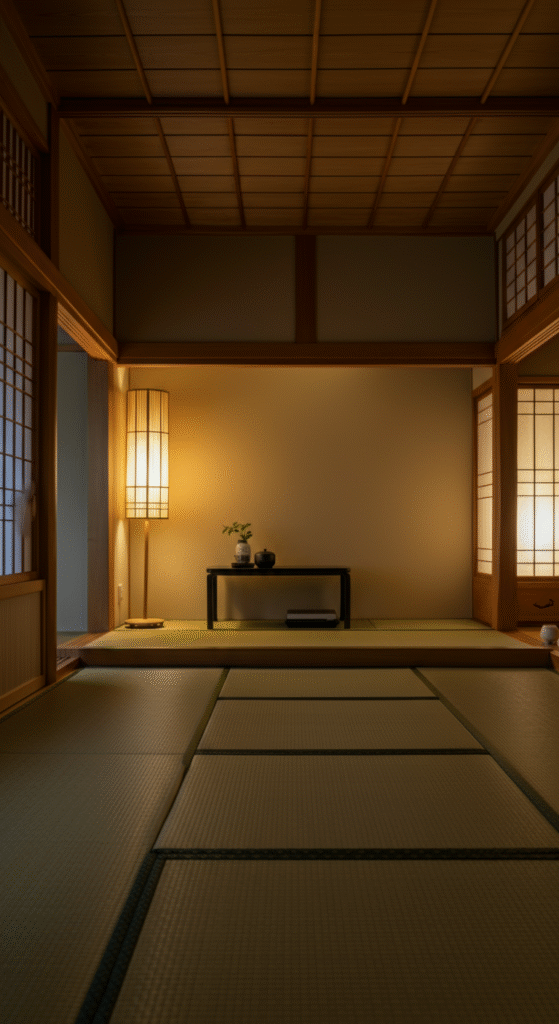
Clutter is the opposite of Zen.
Japanese inspired bedrooms focus heavily on clear surfaces and visual order.
Nightstands hold only essentials.
Floors remain open and breathable.
Storage is hidden whenever possible.
Drawers, sliding panels, and under bed storage keep belongings out of sight.
Psychological insight
Studies show that visual clutter increases stress levels even when people believe they have adapted to it.
By removing excess items, the bedroom becomes a place of rest rather than stimulation.
This supports better sleep quality and emotional regulation.
Decluttering is not about minimalism as a trend.
It is about creating space for stillness and reflection.
Shopping List
- Under bed rolling storage drawers
- Foldable fabric drawer bins
- Stackable clear storage boxes
- Canvas closet storage bag set
- Bedside table with hidden compartment
- Modular drawer organizer set
- Closet hanging shelf organizer
- Minimal storage bench with lid
- Slim under bed shoe drawers
- Plastic storage container set
- Neutral woven storage crates
- Bedroom closet rod extender
- Under bed sweater storage bag
- Vacuum seal storage bags set
- Foldable storage cube organizers
- Neutral linen shoe storage rack
- Desk drawer organizer trays
- Underbed file storage box
- Stackable wardrobe storage drawers
8. Balanced Symmetry with Organic Imperfection
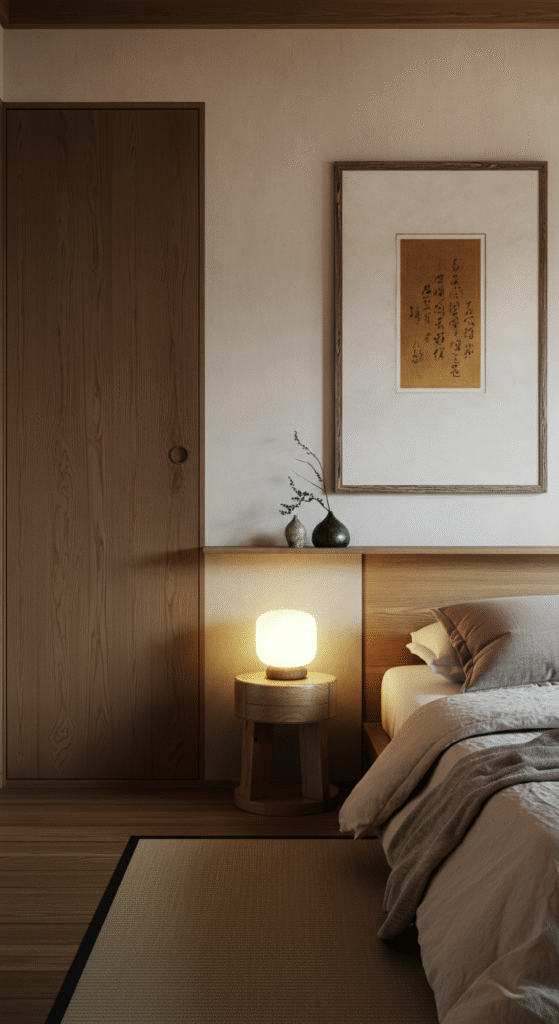
While Zen decor values balance, it does not rely on strict symmetry.
The aim is harmony, not mirror images.
A bedside lamp on one side and a floor cushion on the other can still feel balanced.
What matters is visual weight, not exact placement.
This approach prevents the room from feeling rigid or staged.
It feels lived in and human.
Cultural note
Japanese design embraces imperfection as a sign of authenticity. Perfect symmetry is often seen as unnatural.
Textures, shapes, and spacing work together to create calm movement.
Nothing feels forced, yet everything feels intentional.
This subtle balance encourages emotional comfort and a sense of belonging within the space.
Shopping List
- Asymmetrical wood wall art set
- Hand thrown ceramic bowl
- Set of mismatched linen pillows
- Organic shaped stone bookends
- Handcrafted jute wall hanging
- Driftwood framed mirror
- Textured clay planters
- Natural slate tray set
- Hand hammered metal candle holders
- Organic cotton floor pouf
- Raw edge wood serving board
- Hand dyed neutral tapestry
- Natural fiber macrame plant hanger
- Ceramic tea light holder set
- Earth tone mixed fiber throw
- Handwoven seagrass wall art
- Handmade ceramic wall tiles
- Organic teak wood sculpture
- Rustic linen table runner set
Conclusion
A Japanese inspired Zen bedroom is not defined by how much it contains.
It is defined by how little it demands from the mind.
Through low beds, natural materials, muted colors, and intentional simplicity, the bedroom becomes a place of restoration.
It supports rest not only for the body but also for thought and emotion.
Zen decor teaches that calm is not added.
It is revealed by removing what does not belong.
When design aligns with mindfulness, the bedroom transforms into a sanctuary.
A quiet space where sleep deepens, mornings feel lighter, and peace becomes part of daily living.
Frequently Asked Questions (FAQs)
What defines a Japanese Zen bedroom style
It focuses on simplicity, natural materials, muted colors, and a clutter free layout that promotes calm and balance.
Are Japanese Zen bedrooms suitable for small rooms
Yes. Low furniture, minimal decor, and open floor space make small bedrooms feel larger and more peaceful.
Do Zen bedrooms always use floor beds
Not always, but low platform beds are preferred because they create a grounded and relaxed atmosphere.
Which colors work best for Zen bedroom decor
Soft neutrals like beige, warm white, light grey, and natural wood tones work best for a serene feel.
Is Zen decor the same as minimalism
No. Zen decor focuses on harmony and mindfulness, while minimalism focuses mainly on reducing items.