Some links in this blog are affiliate links. If you make a purchase through these links, I may receive a small commission. This helps support the site at no extra cost to you.
What if the calmest bedroom you’ll ever create doesn’t come from buying more things but actually removing most of them? Sounds a bit surprising at first, right.
Japandi style does that. It brings together the warm coziness of Scandinavian design and the grounded simplicity of Japanese aesthetics so your bedroom feels light, peaceful, and honestly a little healing after a long day.
A Japandi bedroom isn’t about making your space look perfect. It is more about how it makes you feel every time you wake up or lie down at night. A place where your eyes rest easily, the light flows softly, and the layout feels natural.
Do you know many traditional Japanese homes are arranged based on movement energy so the room never feels visually noisy. This design approach creates a comfort you don’t fully notice but you definitely feel.
Below you’ll find carefully explained Japandi bedroom setup ideas. Each section covers layout, function, styling, and the small details that bring calmness into everyday living. You can use these ideas for small rooms, large rooms, rented homes, or even a guest bedroom you want to transform into something soothing.
Take your time, let each idea sink in, and picture how your bedroom can shift into a slow and simple sanctuary.

Table of Contents
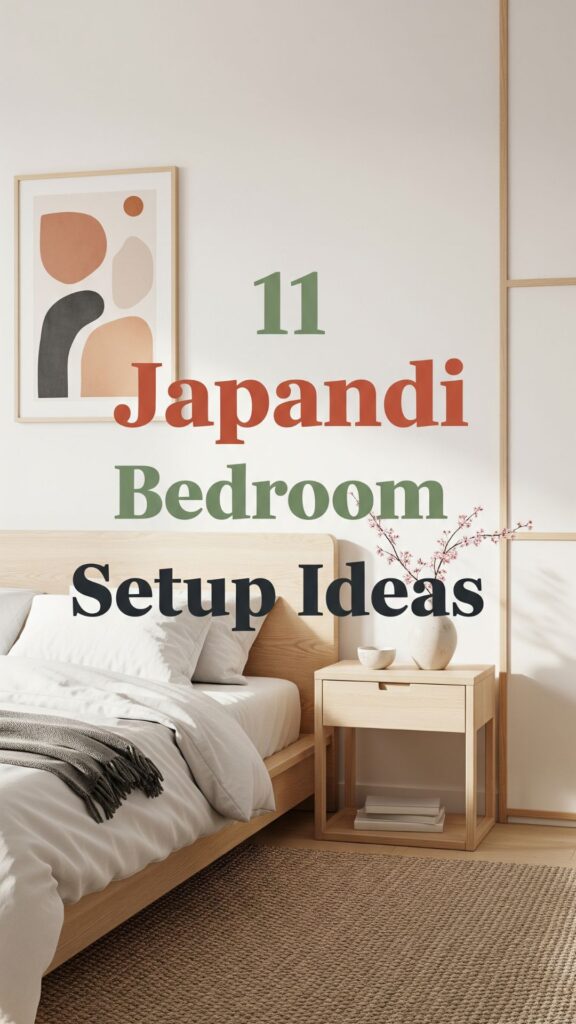
11 Japandi Bedroom Setup Ideas Layout
1. Low Bed Layout that Brings Your Eye Line Down
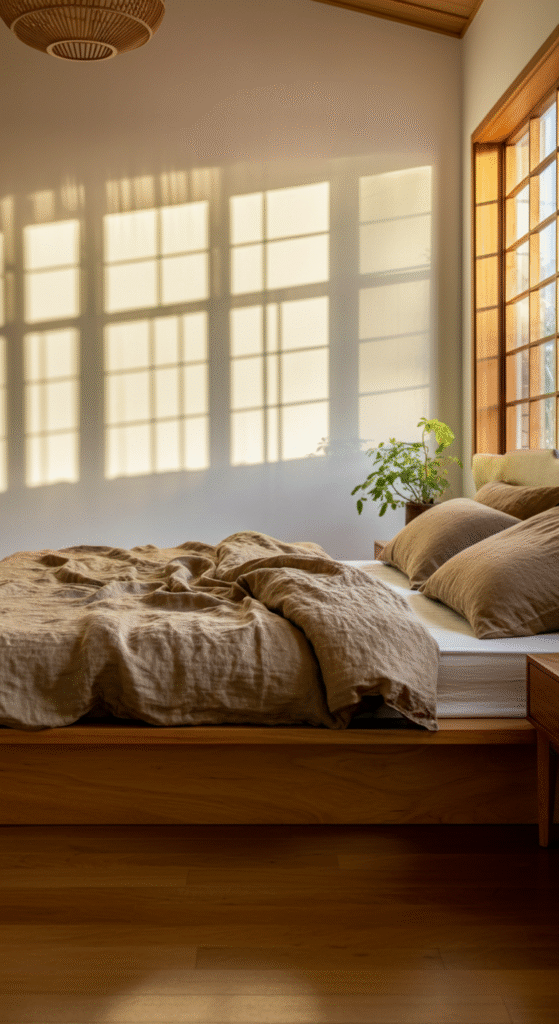
A classic Japandi bedroom begins with a low bed frame or a simple platform bed. Keeping the bed low grounds the room. When the largest furniture piece stays closer to the floor, the whole room appears bigger, quieter, and more balanced.
Do you know the reason Japanese beds are low is rooted in tradition where people often slept on tatami mats. Because of this, rooms naturally developed a peaceful visual rhythm that modern Japandi interiors still keep.
Choose a wooden platform or even a low futon-style bed. Keep bedding soft and simple, maybe two pillows max, and avoid heavy headboards. This creates horizontal calmness where the room stops feeling top heavy.
Shopping List
- Low wooden platform bed frame
- Japanese futon mattress
- Minimalist slatted wood bed base
- Linen duvet cover set
- Organic cotton bedsheet set
- Neutral throw blanket linen blend
- Low height Japanese style headboard
- Scandinavian style low nightstand
- Wooden platform tatami base
- Nordic minimal bed pillows
- Natural foam mattress topper
- Beige linen pillow shams
- Minimalist cotton quilt
- Rattan low bedside lamp
- Wooden floor tray table
- Soft neutral rug low pile
- Minimal Japanese floor cushion
- Natural wood bedside organizer
- Handwoven linen bedspread
2. Decluttered Layout with Open Pathways
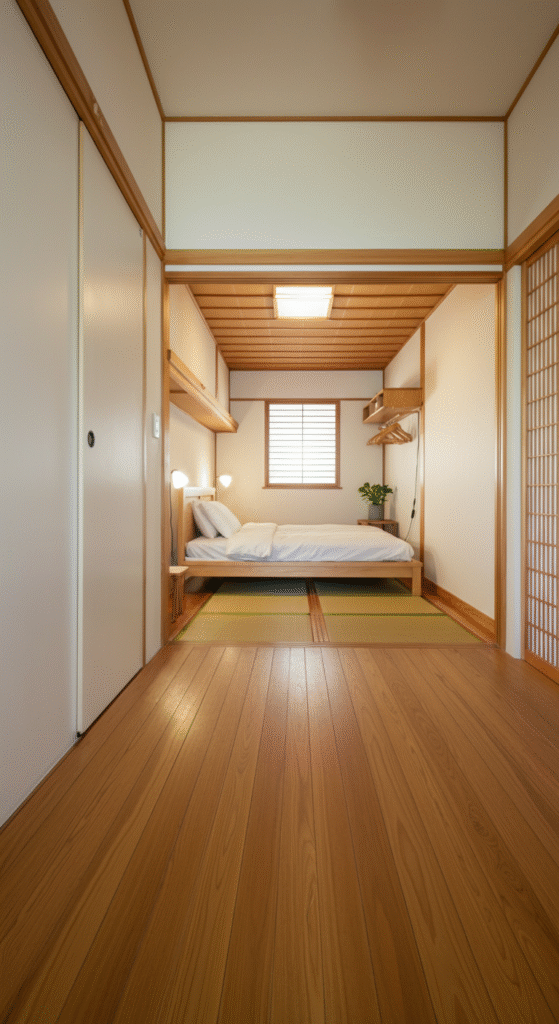
A Japandi room thrives on open, easy movement. Your bed shouldn’t feel trapped between heavy furniture. Instead, leave clear walking lines from the door to the bed and from the bed to the wardrobe.
Interesting fact. Studies show that people feel mentally lighter in rooms where pathways stay open because the brain processes fewer obstacles.
Try rearranging existing furniture so the largest items sit along the walls, giving more breathing room in the center. If something doesn’t add value, remove it. Even removing one unnecessary side table can completely change how the room feels.
Shopping List
- Minimalist wooden dresser with clean lines
- Slim bedside table with hidden storage
- Scandinavian open shelf unit
- Underbed storage boxes linen fabric
- Cotton storage baskets with handles
- Neutral fabric laundry hamper
- Scandi wall mounted shelf
- Japanese wooden folding screen
- Minimalist clothes rail rack
- Hidden cable organizers beige
- Flat woven hallway rug
- Neutral felt storage cubes
- Scandi style bench with storage
- Bamboo wall hooks
- Low profile wardrobe organizer
- Slim profile floor lamp
- Compact bamboo bedside caddy
- Minimalist wall clock silent
- Neutral color blackout curtains
3. Neutral Color Palette with Soft Contrast
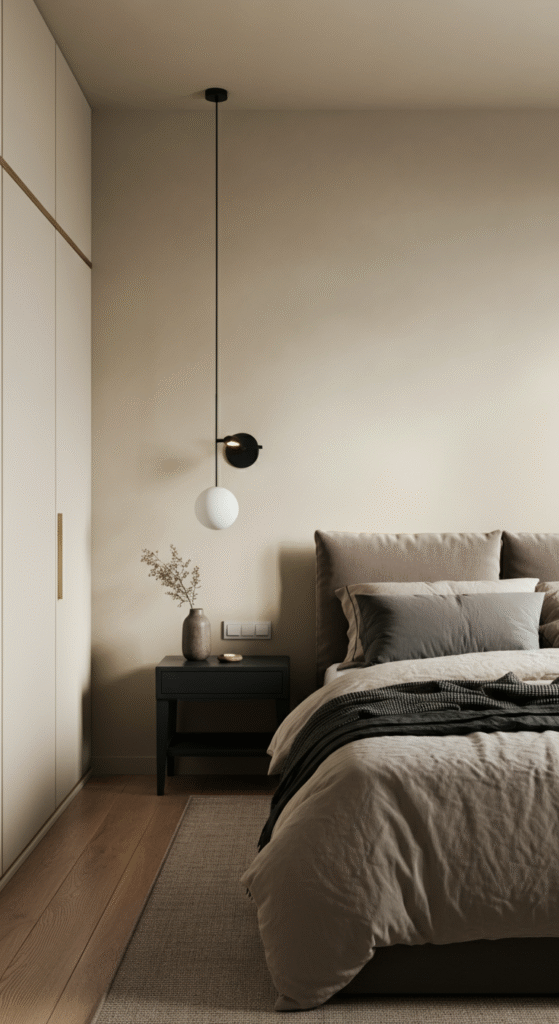
Japandi bedrooms depend on quiet, neutral hues. Think soft whites, sand, warm beige, oak brown, stone greys, and sometimes muted charcoal for a gentle contrast.
In small rooms, lighter palettes increase airiness. But Japandi isn’t afraid of shadow. A single darker shade, like deep grey bedding or a dark wood nightstand, helps anchor the layout without overwhelming it.
Myth. People assume Japandi means only white and beige. But the truth is the style loves depth through natural wood tones and subtle warm shadows.
Stick to 3 main colors across furniture, flooring, and fabrics to maintain harmony.
Shopping List
- Beige linen bedding set
- Stone grey cotton duvet cover
- Charcoal throw blanket waffle knit
- Sand colored blackout curtains
- Warm white LED bedside lamp
- Light wood bedside table
- Cream colored wool rug
- Taupe cushion covers
- Off white muslin curtains
- Grey organic bedsheet set
- Neutral tone area rug soft texture
- Ivory comforter lightweight
- Matte black nightstand lamp
- Natural wood picture frames
- Beige ottoman upholstered
- Minimalist ceramic vase white
- Warm grey quilt set
- Stone toned pillow set
- Clay colored bed throw
4. Natural Materials that Feel Warm to Touch
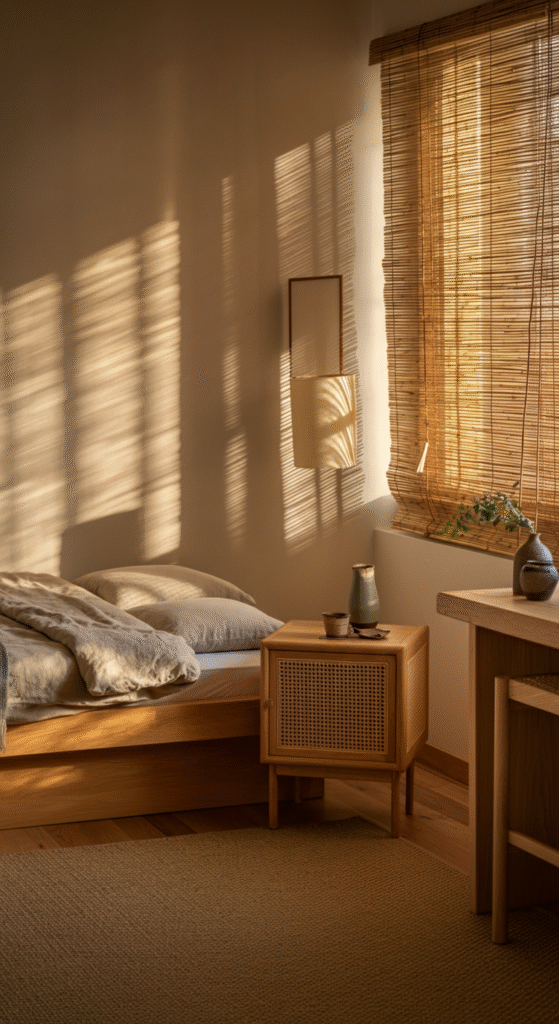
Your Japandi bedroom layout becomes more inviting when you choose wood, bamboo, linen, cotton, rattan, and natural stone textures. These add warmth and create a sensory experience.
A wooden bed frame paired with a linen throw produces a layered, soft feeling without visual clutter. Rattan bedside lamps or bamboo blinds work beautifully because they scatter light gently.
Do you know texture in Japandi is extremely intentional. The aim is to engage touch and sight without adding loud patterns.
Keep plastic and glossy materials minimal to maintain the calm aesthetic.
Shopping List
- Bamboo window blinds
- Rattan bedside lamp
- Solid oak nightstand
- Handwoven jute rug
- Linen sheet set premium quality
- Cotton muslin throw
- Rattan storage basket
- Natural wood clothing rail
- Handcrafted ceramic bowl
- Cork side table
- Linen blackout curtains
- Bamboo pendant lamp
- Wooden incense holder
- Organic cotton quilt
- Wool blend cushion covers
- Handwoven seagrass basket
- Wooden textured wall decor
- Cedarwood drawer organizers
- Japanese tatami mat
5. Minimal Decorative Layout with Meaningful Pieces Only
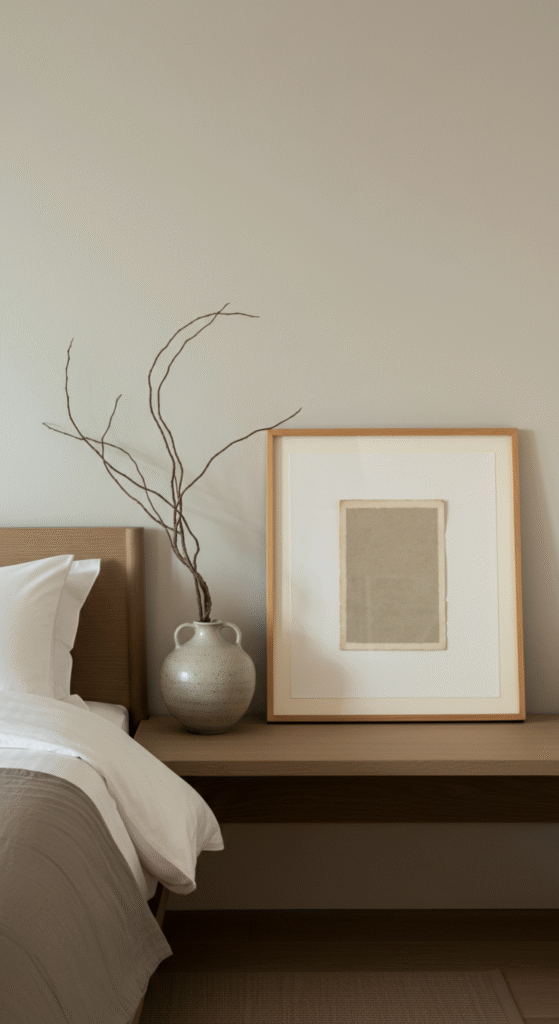
Decor in a Japandi bedroom focuses on quality over quantity. A single statement vase with dried branches can create more visual poetry than ten small decorations.
Your layout should highlight a few meaningful items: a framed print, a handmade ceramic bowl, or a small bonsai on a low side table.
Interesting fact. Japanese philosophy embraces the idea of Ma, which means the beauty of empty space. This space is not about nothingness. It actually helps the remaining items become more noticeable and loved.
Try placing decor in odd numbers to create a natural, unforced composition.
Shopping List
- Handcrafted ceramic vase
- Framed minimalist line art print
- Small bonsai plant kit
- Neutral toned stone tray
- Scandinavian glass candle holder
- Matte ceramic sculpture
- Japanese wall art scroll
- Minimalist clock modern design
- Wooden incense burner
- Single stem dried pampas
- Simple metal frame photo stand
- Nordic style wooden tray
- Matte black planter pot
- Neutral ceramic bowl
- Soft beige wall hanging textile
- Minimalist table lantern
- Tiny clay bud vase
- Calming room diffuser set
- Aesthetic wooden pedestal stand
6. Soft Lighting Layout with Multiple Low-Level Sources
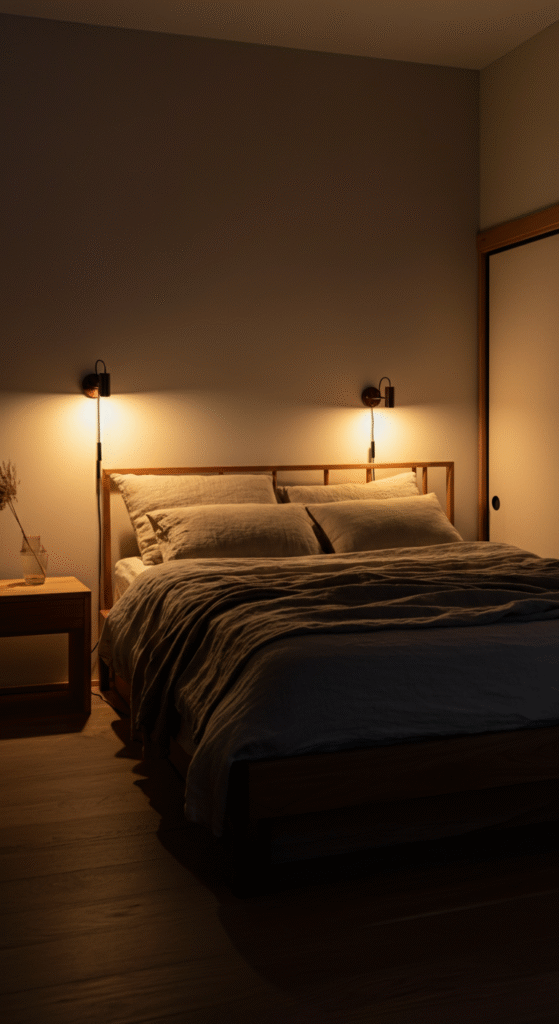
Lighting shapes the entire mood. Japandi bedrooms avoid bright ceiling lights that feel harsh. Instead, the layout uses soft, low-placed lighting.
Use bedside lamps, floor lamps, wall sconces, or even small table lanterns. These create warm pockets of light that mimic sunrise and sunset, promoting a natural rhythm.
If your room has big windows, let daylight be a star. Sheer curtains keep light diffused, which makes the room feel gentle and calm.
Do you know low lights reduce visual tension, helping your mind unwind faster at night.
Shopping List
- Scandinavian floor lamp warm glow
- Soft ambient table lamp fabric shade
- Japanese lantern lamp
- Bedside dimmable LED lamp
- Wall mounted sconce warm white
- Paper shade bedside lamp
- Wooden base table lamp
- Battery operated soft light lantern
- Warm white fairy string lights
- Rattan floor lamp
- Rice paper pendant lamp
- Minimalist bedside reading lamp
- Low glow LED night lamp
- Neutral tone lampshade replacement
- Natural wood diffuser lamp
- Warm white Edison bulbs
- Touch dimming bedside lamp
- Soft illumination LED candles
- Japandi style lantern light
7. Balanced Symmetry that Feels Unforced
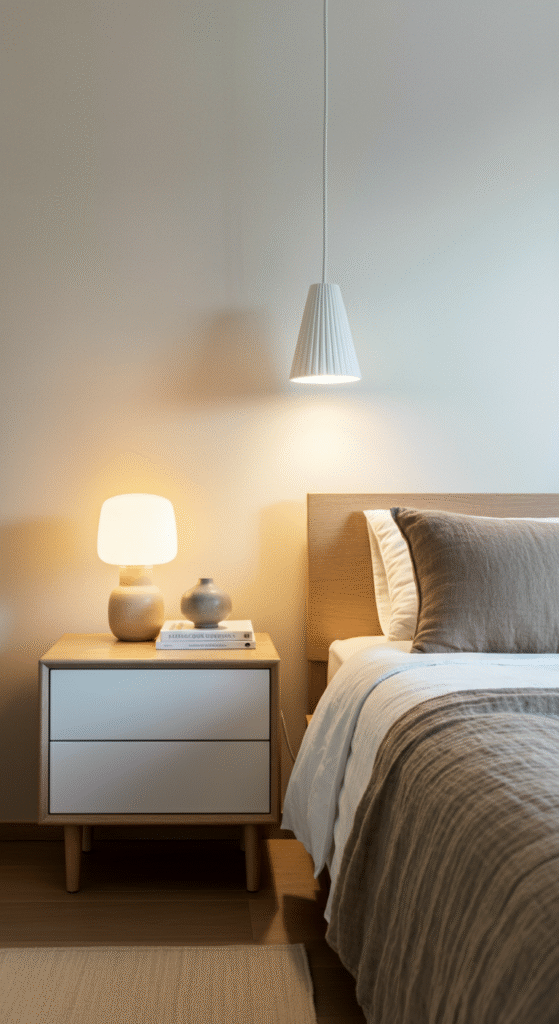
Symmetry is a key layout tool in Japandi bedrooms, but not the perfect, rigid symmetry of hotel rooms. It’s more like soft balance.
For example, place matching nightstands on both sides of the bed but let the decor differ slightly. Or have two lamps with small design variations. This keeps the room grounded without feeling overly planned.
Interesting fact. Scandinavian design uses symmetry for comfort, while Japanese design uses asymmetry for natural flow. Japandi merges both.
It helps your room look tidy even when you keep things simple.
Shopping List
- Matching wooden nightstands
- Matching linen pillow set
- Twin ceramic bedside lamps
- Set of neutral pillow covers
- Pair of framed minimalist prints
- Twin rattan baskets
- Dual woven wall hangings
- Pair of small potted plants
- Matching bedside trays
- Set of symmetrical photo frames
- Pair of tall ceramic vases
- Twin cotton throws
- Neutral tone lamp pair
- Matching bed cushions
- Set of symmetrical candle holders
- Minimalist bedside matching stools
- Twin bamboo vases
- Paired nightstand organizers
- Dual tone woven baskets
8. Built-in Storage or Hidden Storage Layout
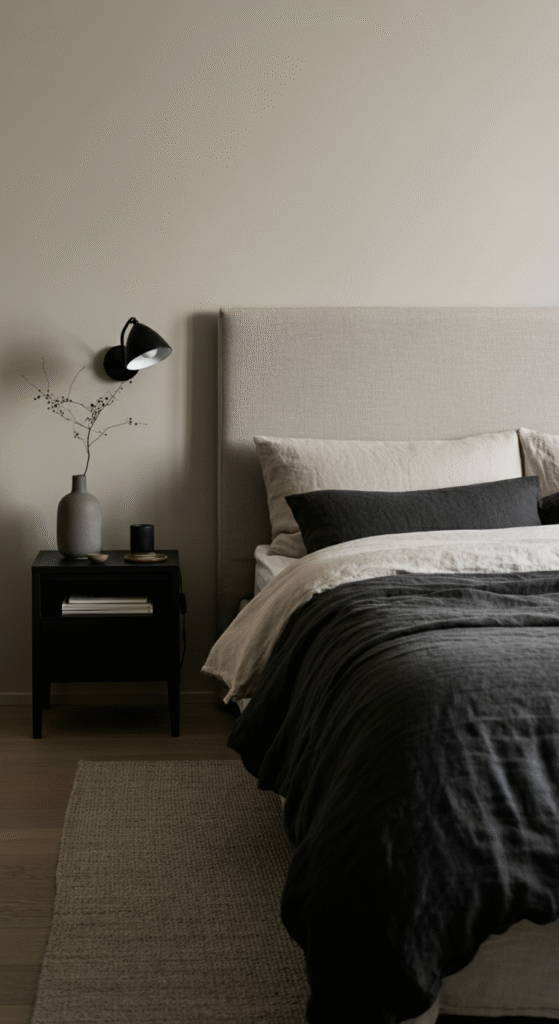
A clutter free bedroom relies on storage that disappears visually. Japandi bedrooms often use built-in wardrobes, under-bed drawers, or storage benches placed at the foot of the bed.
If built-ins aren’t possible, opt for clean lined wooden cabinets with smooth fronts and neutral finishes.
Myth. Some people think Japandi means no storage at all. Actually, storage is essential. It just stays invisible so the space feels calm.
A simple storage layout reduces morning rush stress and nighttime messiness.
Shopping List
- Underbed wooden drawers
- Hidden compartment bedside table
- Scandinavian wardrobe organizer
- Neutral slim drawer dividers
- Fabric underbed zip storage
- Wooden storage bench
- Minimalist closet hanging organizer
- Vacuum sealed clothing bags
- Linen storage cube with lid
- Neutral felt drawer organizer
- Scandi shoe rack with doors
- Sealed storage baskets natural fiber
- Flat lid storage box wood
- Minimalist jewelry storage tray
- Stackable beige storage containers
- Soft close drawer inserts
- Slim rolling cart for closet
- Neutral closet shelf dividers
- Hidden storage ottoman
9. Soft Textile Layers Without Overcrowding
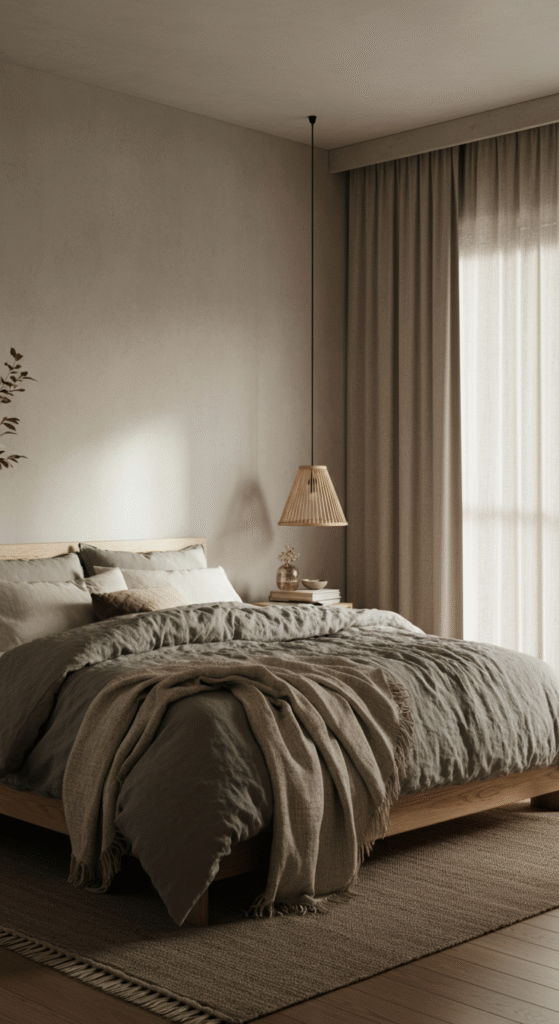
Textiles make the space softer but always in moderation. Use a cozy linen duvet, a cotton bedsheet, a lightweight throw, and one area rug.
The layout looks balanced when textiles sit in three zones: the bed, the floor, and maybe one chair or bench.
Do you know Scandinavian culture uses textiles for warmth while Japanese design uses them for visual softness. Combining both gives a warm minimalism effect.
Avoid bold prints. Stick to textures like waffle knit, muslin, or brushed cotton.
Shopping List
- Linen duvet cover natural tone
- Soft cotton bedspread
- Lightweight muslin throw blanket
- Waffle knit blanket beige
- Wool blend area rug
- Linen cushion covers
- Organic cotton sheet set
- Soft brushed cotton throw
- Neutral quilt cover set
- Warm textured floor rug
- Handwoven cotton bed runner
- Cream knit blanket chunky
- Feather filled pillows
- Beige boucle cushion
- Stone washed linen pillowcase
- Textured cotton bed cover
- Neutral tone floor cushion
- Handwoven wool rug
- Scandi style knitted pillow
10. Nature Inspired Layout with Plants and Organic Shapes
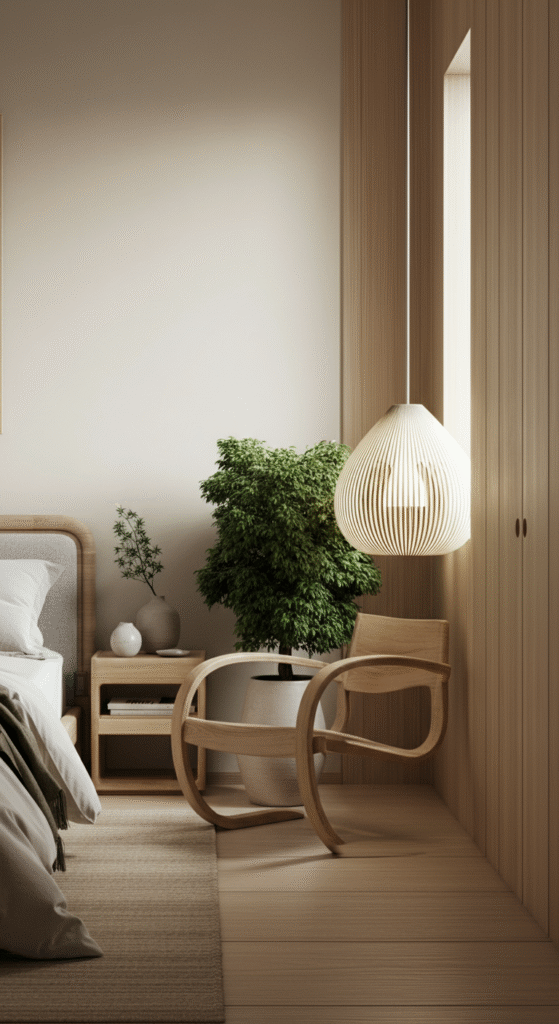
Nature plays a quiet role in Japandi spaces. Add one or two plants to bring freshness. Good options include snake plants, bamboo palms, or a simple eucalyptus stem in a tall vase.
Organic shapes break the straight lines of furniture, helping the room feel more natural.
Interesting fact. Plants reduce indoor stress levels and help the brain regulate calm, so even a tiny plant can shift the mood of the room.
Place plants near windows or on low stools to complement the room layout.
Shopping List
- Bamboo palm indoor plant
- Snake plant live pot
- Eucalyptus stem artificial set
- Terracotta planter pot
- Organic shaped ceramic vase
- Low wooden plant stool
- Neutral clay planter
- Rattan plant stand
- Olive tree artificial
- Bonsai tree starter kit
- Hand carved wooden bowl
- Rounded edge bedside table
- Organic shaped wall mirror
- Natural fiber hanging planter
- Japanese stone garden decor
- Curved accent chair
- Live monstera plant
- Minimalist plant mister
- Natural woven plant basket
11. Purposeful Layout Focused on Slow Living
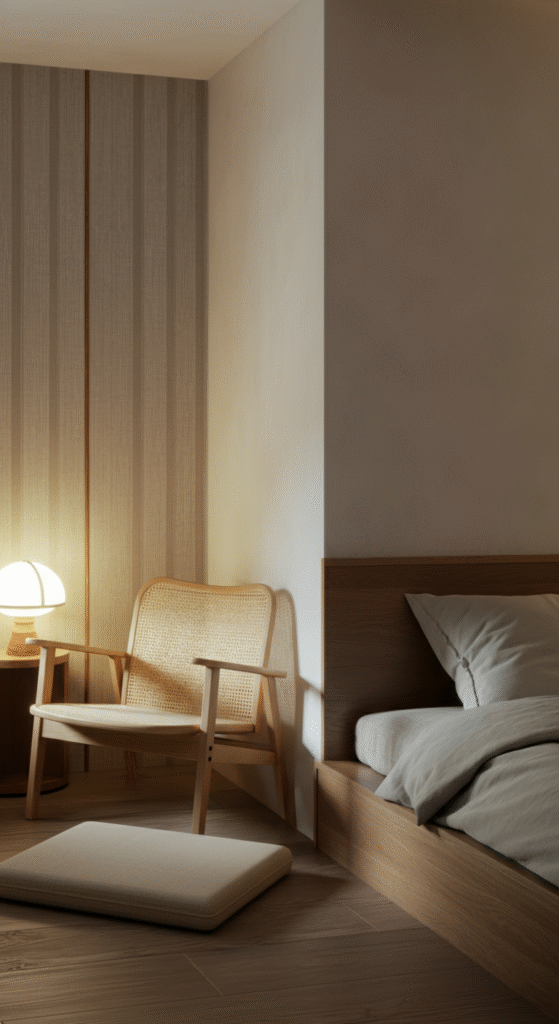
A Japandi bedroom doesn’t rush you. Every layout choice is about creating peace. Keep one reading corner with a floor cushion or a small wooden chair. Add a low side table for your book or tea.
If space allows, leave a small empty zone in the room. Empty space is a form of decor in Japandi. It lets your mind breathe.
Do you know many people say their sleep quality improves when the bedroom layout reduces stimulation. Japandi achieves that effortlessly through simplicity and grounding elements.
Let the room reflect intention rather than decoration.
Shopping List
- Low wooden reading chair
- Floor cushion meditation style
- Scandi side table small
- Japanese tea set ceramic
- Minimal bookshelf narrow
- Soft cotton robe
- Neutral indoor slippers
- Warm linen blanket for reading
- Small ceramic mug hand thrown
- Wooden incense kit
- Slow living journal notebook
- Neutral tone rug for reading area
- Bamboo tray table
- Minimalist alarm clock
- Grounding floor lamp
- Mindfulness wall art print
- Soft cotton floor mat
- Simple reading light warm glow
- Calm aroma diffuser set
Conclusion
A Japandi bedroom is more than a pretty interior style. It’s a personal retreat built on calmness, warm touches, and thoughtful layout choices. When Scandinavian comfort joins Japanese simplicity, you get a space that feels soothing even on stressful days. The beauty lies in details that don’t fight for attention. Light that falls softly. Furniture that sits low and steady. Textures that feel warm and honest.
As you explore these 11 Japandi bedroom setup ideas, take what fits your lifestyle. The goal isn’t to copy a magazine image. It’s to create a room where your mind knows it can rest the moment you walk in. Slow living begins with the space you come home to every night, and your bedroom is the best place to start shaping that peace.
Frequently Asked Questions (FAQs)
What is Japandi bedroom style?
Japandi mixes Japanese minimalism and Scandinavian warmth to create a calm, simple, and balanced bedroom.
Is Japandi good for small bedrooms?
Yes. Its low furniture, neutral colors, and open layouts make small rooms look bigger and cleaner.
What colors work best in Japandi bedrooms?
Soft neutrals like beige, cream, sand, oak brown, and muted greys.
Do I need expensive furniture for Japandi style?
Not at all. The focus is on natural materials, simple forms, and functional pieces.
Can I add decor in Japandi bedrooms?
Yes, but keep it minimal. Use meaningful items like ceramics, dried branches, or a single framed artwork.