Some links in this blog are affiliate links. If you make a purchase through these links, I may receive a small commission. This helps support the site at no extra cost to you.
A Japandi bedroom has this quiet charm that kind of pulls you in before you realise it. It feels modern, but not loud. Warm, but still clean. It’s that rare mix people keep saving on Pinterest without even knowing why the mood hits so right. If you’ve ever stepped into a space that instantly slowed your mind down a bit, that’s the whole energy of Japandi design.
This style blends Scandinavian calmness with Japanese restraint. Think soft wood tones, natural textures, low-height furniture, and a sense of intentional living. What makes it interesting is how predictable it looks at first glance yet how deeply soothing it feels when you break it down.
And here’s a fun fact many people don’t know: the Japandi trend actually rose fast because both cultures share the same purpose in design, which is quiet beauty shaped through usefulness.
Below are 11 Japandi bedroom design looks worth saving, studying, and maybe even recreating if you’re in the mood for a little home refresh. Each idea is simple enough to try yet detailed enough to inspire a full makeover.

Table of Contents

11 Japandi Bedroom Modern Design
1. Japandi Bedroom With Soft Neutral Palette
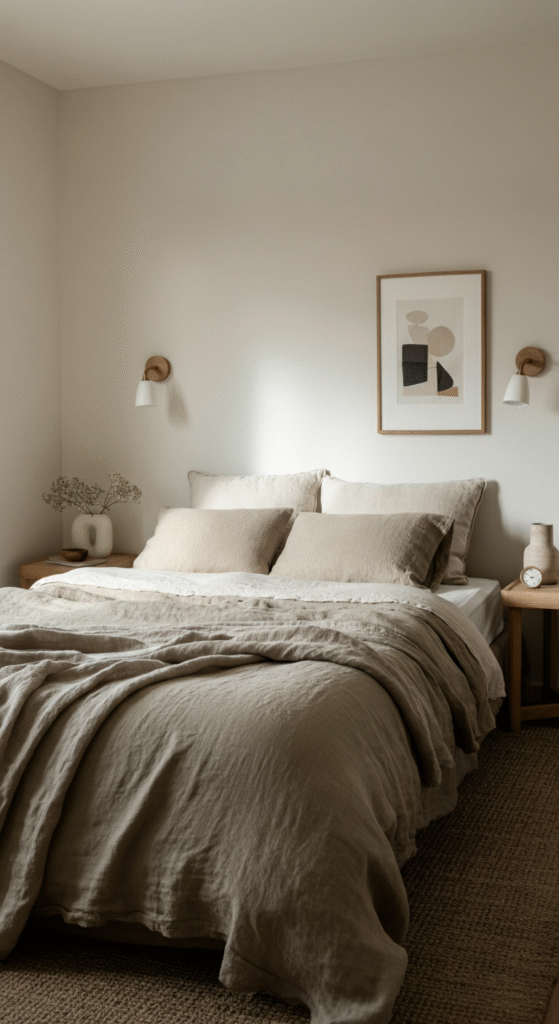
A Japandi bedroom usually starts with a palette that feels almost weightless. Soft beige, oat tones, pale brown, warm white, and muted grey work together to create a gentle balance. The trick is not to match everything too perfectly. A slight variation in neutrals gives depth without creating visual noise.
Do you know that Japanese interiors often follow a principle called shibui, which means understated beauty. This colour style reflects that. Scandinavian homes similarly rely on neutrals to emphasise comfort. When both meet, the result is a room that feels pure, airy, and incredibly modern without trying too hard.
Add soft cotton bedding, a wool throw, and a rug in a similar shade family. The palette itself does most of the work so you don’t need a lot of accessories.
Shopping List
- Beige linen duvet covers
- • Warm white cotton sheets
- • Neutral tone pillowcase sets
- • Light grey wool throw blanket
- • Oatmeal-tone blackout curtains
- • Cream shag throw pillow
- • Minimal wall art in neutral tones
- • Soft beige floor cushions
- • Natural woven storage baskets
- • Warm white table lamps
- • Light oak floating shelves
- • Neutral area rugs
- • Stone-finish vases
- • Textured beige cushion covers
- • Soft grey knitted blankets
- • Cotton waffle bedspread
- • Bamboo laundry basket
- • Lightweight muslin curtains
2. Low Platform Bed Look
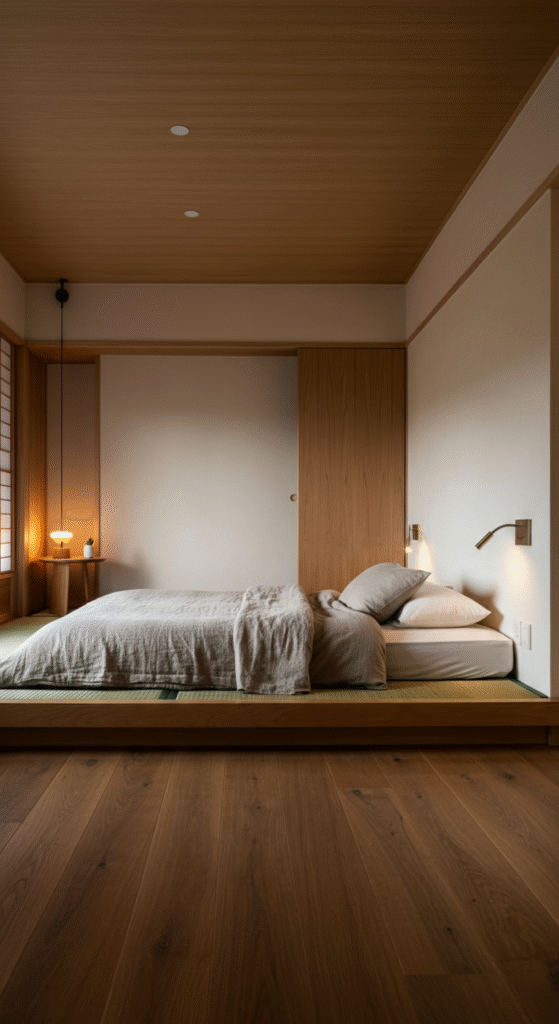
Japandi bedrooms love low furniture. It instantly gives the room a grounded feel, making it seem calmer and more open. Low platform beds or futon-style frames keep the eye line horizontal, which makes the room feel larger even if you’re working with a compact space.
An interesting fact here is that traditional Japanese homes use low bedding not just for aesthetics but to stay connected to natural energy flow. Scandinavian design also avoids bulky beds to keep movement free and easy around the room.
Pair your low bed with layered linens, simple cushions, and slim bedside tables to keep the vibe light.
Shopping List
- • Low Japanese futon bed frames
- • Solid wood platform bed
- • Minimalist tatami mats
- • Floor-level nightstands
- • Low wooden benches
- • Thin cotton futon mattress
- • Linen fitted sheets
- • Minimal bed slats
- • Low profile bedside lamps
- • Bamboo floor mats
- • Frame-less mattresses
- • Compact wooden end tables
- • Low back accent chairs
- • Minimalist wall sconces
- • Neutral tone body pillows
- • Low headboard frames
- • Japanese floor cushions
3. Mix of Wood Textures
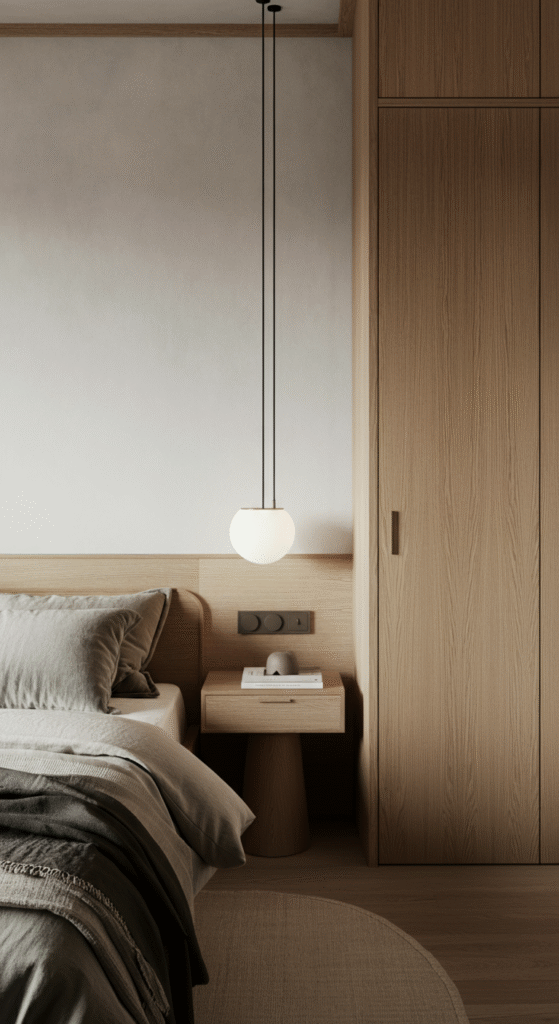
One of the most beautiful elements in a Japandi bedroom is the natural wood mix. Instead of doing one shade everywhere, the look becomes richer with light ash wood, honey oak, and pale walnut tones working together.
A common myth is that you must stick to one wood finish for a clean bedroom, but Japandi proves it wrong. Actual balance appears when different natural textures feel like they belong to the same story.
Use wood in the bed frame, side tables, accent chair, wardrobe doors, or ceiling beams if you have them. Each tone will add a new layer of warmth.
Shopping List
- • Ash wood side tables
- • Oak nightstands
- • Walnut dresser sets
- • Bamboo storage boxes
- • Slatted wood wall panels
- • Woven rattan baskets
- • Wooden picture frames
- • Light wood clothing rack
- • Solid pine bed frame
- • Acacia wood bench
- • Mixed wood coat hangers
- • Natural wood mirror frame
- • Wooden plant stands
- • Oak floating wall shelf
- • Cedar storage chest
- • Multi-tone wood tray
- • Wooden slat room dividers
- • Teak bedside table
4. Minimalist Bedding Layers

The bedding in Japandi rooms looks simple, but it’s carefully thought through. Think natural fabrics, cotton, linen, muslin, or bamboo textiles. The layers create softness without too much fluff.
Scandinavian homes lean toward layered comfort while Japanese homes lean toward minimalism. Japandi bedding sits perfectly in the middle. It looks warm but not crowded, clean but not cold.
Choose breathable fabrics that fall naturally, avoid shiny materials, and stick to neutral shades so the whole setup feels like a calm cocoon.
Shopping List
- • Stonewashed linen bedding
- • Soft waffle-weave blankets
- • Organic cotton duvets
- • Lightweight quilt sets
- • Neutral tone throw blankets
- • Linen pillow shams
- • Soft knit bed throws
- • Japanese buckwheat pillows
- • Cotton muslin quilts
- • Minimal cotton bed skirts
- • Linen blend comforters
- • Pure white duvet inserts
- • Textured cotton throws
- • Breathable bamboo bedding
- • Neutral tone knitted quilts
- • Natural fibre pillow inserts
5. Decluttered Nightstand Setup

Nightstands in Japandi bedrooms are intentionally simple. A small lamp, a plant, maybe one book. That’s it. When clutter is gone, your mind slows down. It’s honestly surprising how much this small change affects sleep quality.
Do you know that both Japanese and Scandinavian design mindfully remove unnecessary objects to avoid mental strain. A tidy nightstand is more than just aesthetic; it supports your quiet time.
Go for slim wooden tables, a single ceramic tray, or a glass vase with greenery as your accent.
Shopping List
- • Compact wooden nightstands
- • Ceramic table lamps
- • Soft glow LED bedside lamps
- • Minimal trinket trays
- • Small potted indoor plants
- • White noise machines
- • Neutral ceramic planters
- • Glass vases
- • Wooden bedside organizer
- • Simple alarm clocks
- • Slim phone charging docks
- • Bamboo tissue box covers
- • Minimalist coasters
- • Natural soy candles
- • Matte finish table clocks
- • Ceramic storage bowls
- • Minimal wall-mounted shelves
6. Accent Lighting That Feels Soft and Warm
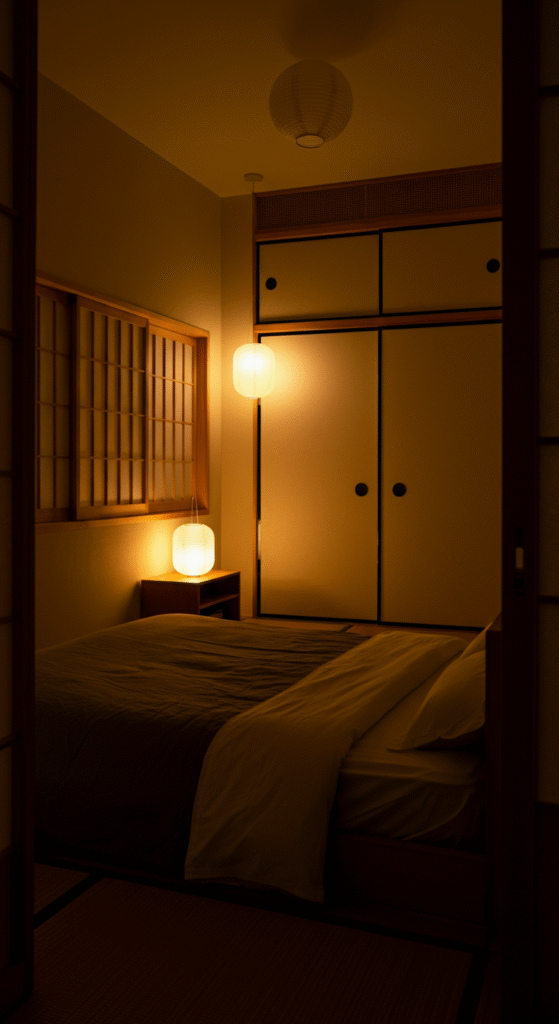
Lighting is a huge part of Japandi design. Instead of sharp white lights, choose warm, soft glows. Paper lantern lamps, rice paper pendants, or wooden-framed lamps help create that signature gentle light that feels peaceful.
A fun fact: Japanese lanterns date back centuries, used for meditation rooms and tea houses. Scandinavian homes prefer warm ambient lighting to survive darker winters. When you combine both ideas, your bedroom becomes a place that truly feels like a slow evening.
Use layered lighting like floor lamps, table lamps, and diffused ceiling lights for a cozy look.
Shopping List
- • Japanese paper lanterns
- • Rice paper pendant lights
- • Warm LED bulb sets
- • Wooden table lamps
- • Soft glow floor lamps
- • Shoji-style lamps
- • Fabric shade bedside lamps
- • Minimalist warm wall sconces
- • Dimmable bedside lights
- • Rattan pendant lights
- • Warm amber night lamps
- • Linen shade lamps
- • Soft glow LED strips
- • Wooden base reading lamps
7. Nature Inspired Decor Elements
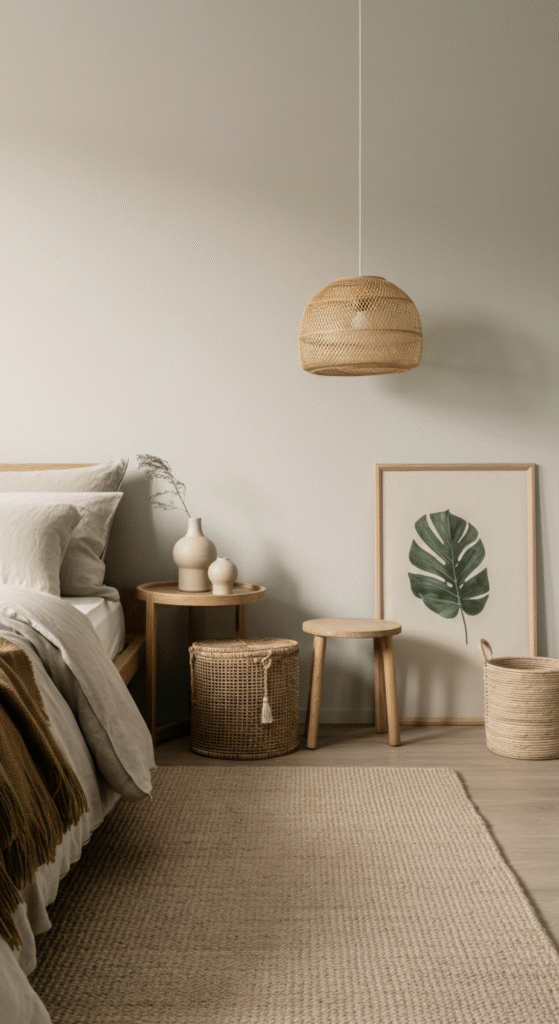
Japandi bedrooms love bringing nature indoors. Plants are a big part of this, but the idea is not to overload. One statement plant or two small ones can be more powerful than a whole cluster.
You can also add woven baskets, a jute rug, bamboo trays, ceramic vases, stone pieces, or handmade pottery that feels raw but polished.
A myth people often believe is that Japandi means absolutely empty rooms, but the truth is it means intentional rooms. You choose decor that actually supports the calm, not decor that fills space.
Shopping List
- • Real indoor plants
- • Ceramic handmade vases
- • Stone table decor
- • Bamboo trays
- • Natural jute baskets
- • Linen-wrapped storage boxes
- • Cotton macrame wall hangings
- • Terracotta planters
- • Rattan wall mirrors
- • Pampas grass bunches
- • Wooden plant stands
- • Woven seagrass bowls
- • Natural clay pottery
- • Organic textured rugs
- • Driftwood style decor pieces
8. Soft Scandinavian Rugs for Warmth
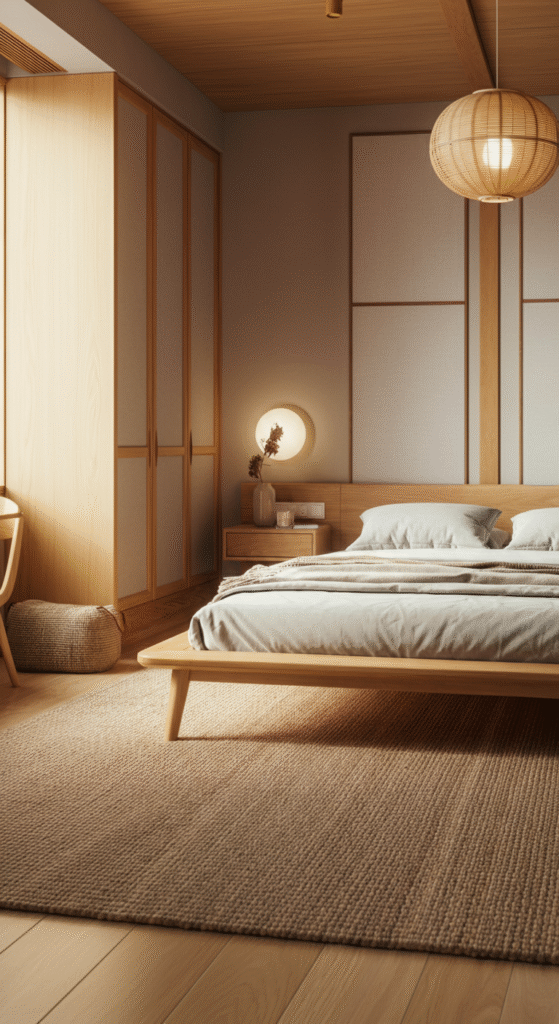
A plush Scandinavian rug gives warmth to the clean Japanese layout. The mix helps the room feel inviting without losing its modern calm. Choose rugs with subtle patterns or completely plain textures.
This is especially helpful if your bedroom has wooden floors since a soft rug anchors the bed visually. The result is something modern yet incredibly cozy.
Natural fibre rugs like wool, cotton, or jute fit perfectly with Japandi aesthetics.
Shopping List
- • Wool Scandinavian rugs
- • Natural jute area rugs
- • Cotton flat-weave rugs
- • Minimal geometric neutral rugs
- • Shag beige rugs
- • Wool blend bedside runners
- • Handwoven Scandinavian mats
- • Off-white textured rugs
- • Muted stripe pattern rugs
- • Round jute rugs
- • Soft grey wool carpets
- • Neutral boho rugs
- • Low-pile Scandinavian rugs
- • Beige braided rugs
- • Cotton neutral bedside mats
9. Sliding Doors or Partition Screens
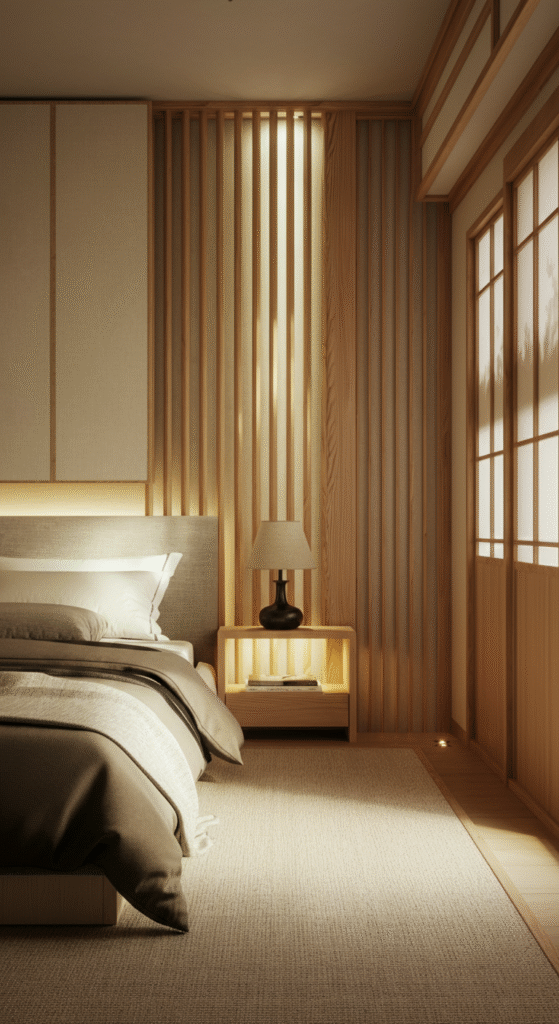
A great Japandi detail many people save from Pinterest is the sliding door concept. This can be a wooden sliding wardrobe door, a Japanese shoji-style screen, or even a slatted wood divider.
Sliding elements free up space and help the room feel more open. The design also adds a unique modern touch that feels premium but understated.
Do you know that sliding doors in Japanese homes reduce unnecessary movement and noise, creating a peaceful environment. That’s why they blend beautifully in a modern bedroom setup.
Shopping List
- • Shoji sliding door panels
- • Wooden slat room dividers
- • Frosted glass sliding doors
- • Bamboo folding screens
- • Minimal sliding wardrobe doors
- • Japanese-style lattice screens
- • Wooden track rails
- • Shoji paper repair kits
- • Panel track blinds
- • Oak sliding room partitions
- • Scandinavian slatted screens
- • Wooden barn-style sliding door
- • Folding privacy screens
- • Minimalist dividers
- • Wooden wall partitions
10. Soft Curves Instead of Sharp Edges
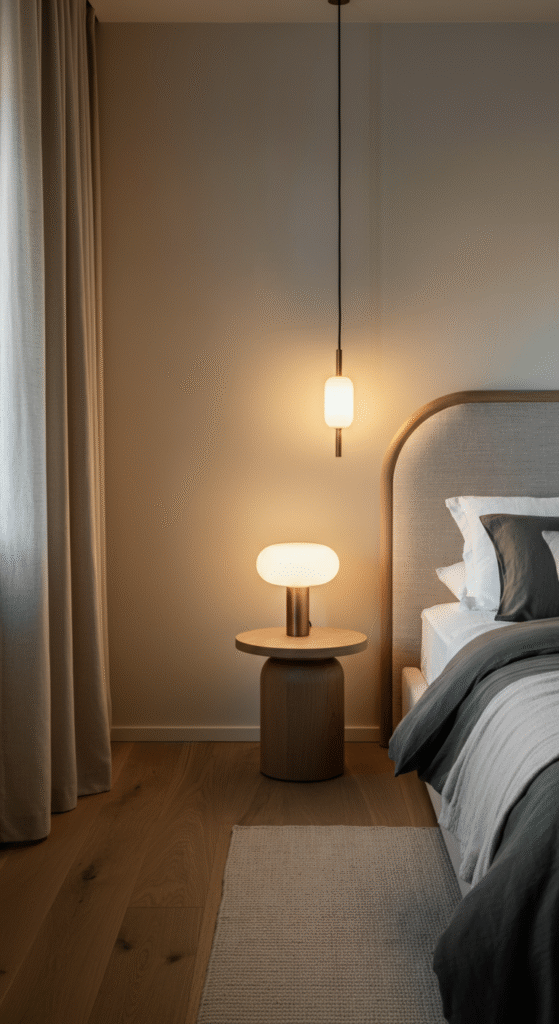
Japandi interiors often balance straight lines with subtle curves. You’ll see arched lamps, rounded chairs, curved headboards, bowl-shaped decor, and soft-edge tables. These curves soften the minimal layout and make the bedroom feel more human, not too rigid.
This comes from Scandinavian design, which often uses rounded furniture to increase comfort. It’s a small shift but the effect on the room’s personality is huge.
Use curved wood decor, cotton ottomans, or minimal arches to bring this balance.
Shopping List
- • Curved wooden headboards
- • Rounded edge bedside tables
- • Soft curve accent chairs
- • Circular ottomans
- • Arch-shaped mirrors
- • Round wooden coffee tables
- • Curved wall shelves
- • Upholstered curved benches
- • Soft edge nightstands
- • Oval bedside lamps
- • Bowl-shaped ceramic decor
- • Arched floor lamps
- • Round jute poufs
- • Rounded wooden stools
- • Minimal curved dressers
11. A Calm Space for Mindfulness

The final look is more of a feeling than a furniture piece. A Japandi bedroom always leaves room for a quiet corner. This might be a reading chair, a meditation cushion, a floor lamp corner, or simply empty space near the window.
There’s an interesting fact here. Japanese philosophy treasures the idea of ma, which means the beauty of an empty place. Scandinavian design values hygge, the warmth of a cozy moment. Together, they create a zone that feels peaceful and very modern.
This mindful corner becomes the heart of the room without adding anything loud.
Shopping List
- Meditation floor cushions
- • Japanese zabuton mats
- • Low reading chairs
- • Bamboo floor lamp
- • Neutral throw blankets
- • Minimal side table
- • Soft linen cushions
- • Wabi sabi ceramic cups
- • Wooden incense holders
- • Essential oil diffusers
- • Cotton floor rugs
- • Low height stool
- • Natural woven poufs
- • Cozy reading light
- • Minimalist plant pot
- • Neutral tone armchair
- • Linen covered cushion pads
Conclusion
A Japandi bedroom is more than just an aesthetic trend. It’s a lifestyle that teaches you the value of clarity, calmness, natural elements, and thoughtful living. When you blend Japanese minimalism with Scandinavian warmth, you get a room that supports rest, reflects balance, and feels timeless even as trends shift.
These 11 modern Japandi looks give you a deeper sense of how simple choices can completely transform a bedroom. Whether you adopt just one idea or build your full bedroom around this style, the result will always feel intentional and soothing. It’s a look worth saving because it doesn’t just decorate a room; it changes how the room makes you feel.
Frequently Asked Questions (FAQs)
What is a Japandi bedroom style?
It’s a mix of Japanese minimalism and Scandinavian warmth, creating a calm, modern, and natural bedroom look.
Are Japandi bedrooms expensive to create?
Not always. Most elements are simple materials like wood, cotton, and neutral decor, so you can build it slowly on any budget.
What colors work best in a Japandi bedroom?
Soft neutrals like beige, oat, warm white, muted grey, and natural wood tones fit the style perfectly.
Do Japandi rooms have to be minimal?
They focus on intention, not emptiness. You keep only what adds comfort or calm, nothing extra.
What kind of furniture fits Japandi design?
Low platform beds, wooden pieces, simple side tables, soft-edge furniture, and items made from natural materials.