Some links in this blog are affiliate links. If you make a purchase through these links, I may receive a small commission. This helps support the site at no extra cost to you.
Combining a kitchen and living room into a single open space offers incredible opportunities for social connection and light. However, without distinct zones, these areas can quickly feel cluttered or undefined. The secret lies in creating visual separation while maintaining a cohesive flow between the culinary workspace and the relaxation zone.

Whether you are working with a compact apartment or a spacious home, the right layout and decor choices can make all the difference. By using smart furniture placement, lighting, and color, you can design a functional space that feels both unified and organized. Here are nine unique ideas to master the open-concept look.
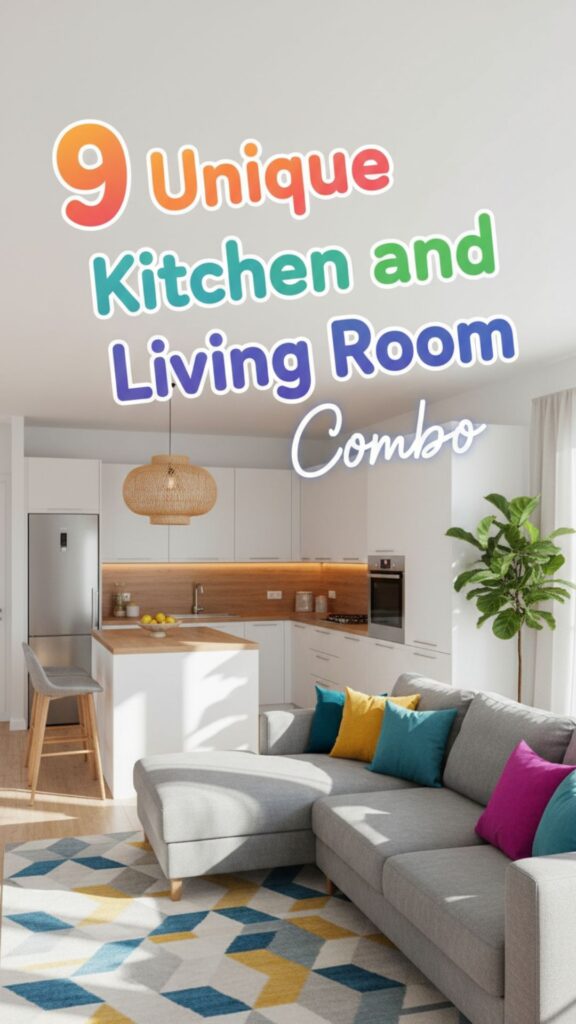
1. Define Zones with Rugs
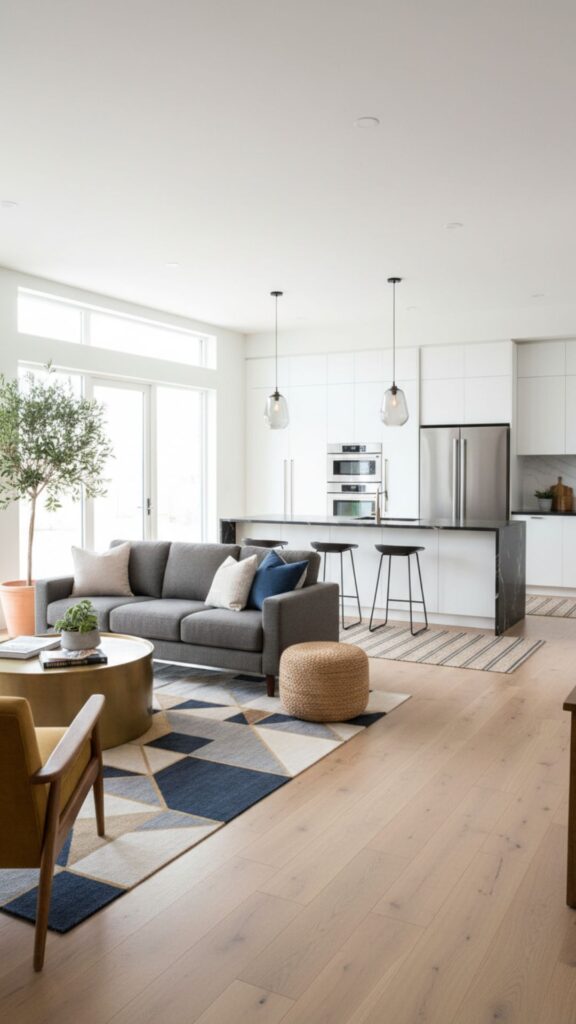
Using area rugs is the easiest way to ground your living space without building walls. A large, plush rug instantly tells the eye where the “living room” begins and the “kitchen” ends.
How To Get The Look:
- Choose a rug large enough for all sofa legs to sit on.
- Opt for low-pile or washable runners in the kitchen for easy cleaning.
- Ensure the colors complement your kitchen cabinetry.
Shopping List
- Large geometric area rug
- Washable kitchen runner
- Jute area rug
- Non slip rug pad
- Boho living room rug
- Persian style rug
- Grey wool rug
- Braided floor runner
- Modern abstract rug
- Shag area rug
- Outdoor indoor rug
- Round jute rug
- Blue accent rug
2. The Sofa Divider
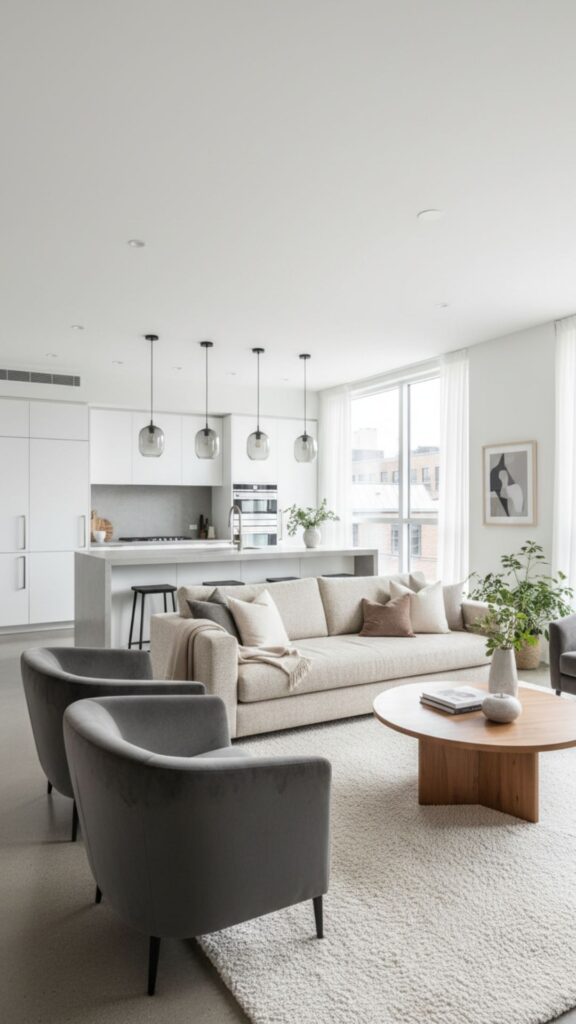
Float your sofa in the middle of the room with its back facing the kitchen. This creates a physical barrier that implies a hallway or walkway behind it, clearly separating the two functions.
How To Get The Look:
- Use a sectional or a sofa with a straight back.
- Place a console table behind the sofa for added storage and style.
- Keep the sightlines open by choosing low-profile furniture.
Shopping List
- L shaped sectional sofa
- Slim console table
- Sofa table with storage
- Low profile modern sofa
- Velvet sofa couch
- Narrow entryway table
- Decorative table lamps
- Small decorative bowls
- Coffee table books
- Rectangular ottoman
- Mid century sofa
- Console table decor
3. Cohesive Color Palette
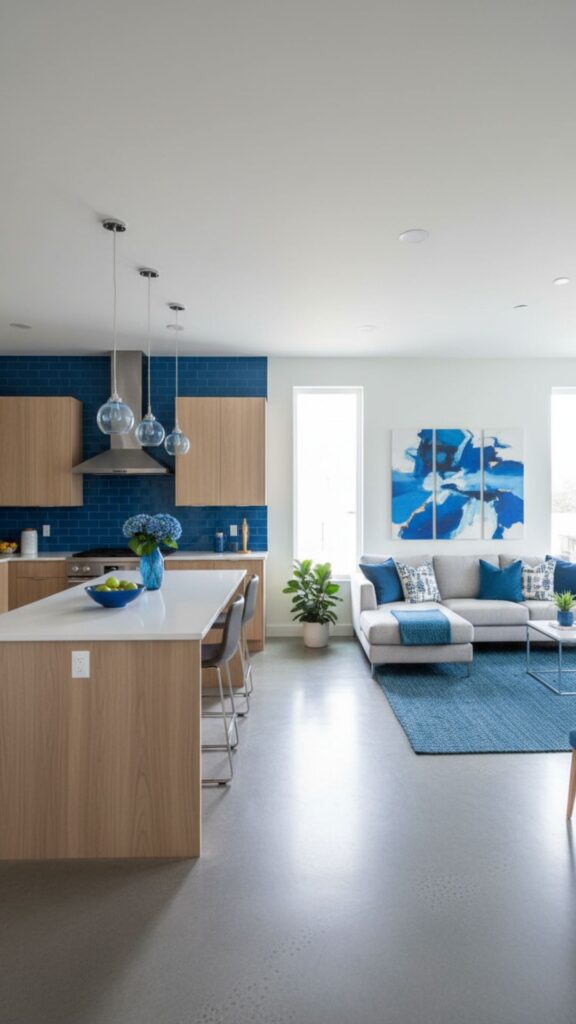
To prevent the room from feeling disjointed, carry a specific accent color from the kitchen into the living area. If you have blue kitchen cabinets, use blue throw pillows or curtains in the lounge.
How To Get The Look:
- Pick one main neutral and two accent colors.
- Repeat the accent color in at least three places in the room.
- Match metal finishes (e.g., gold lighting in both rooms).
Shopping List
- Velvet throw pillows
- Ceramic vase set
- Gold cabinet handles
- Gold floor lamp
- Linen curtains
- Decorative throw blanket
- Wall art prints
- Table runner
- Accent chair
- Decorative tray
- Kitchen towels set
- Colored fruit bowl
4. The Statement Island
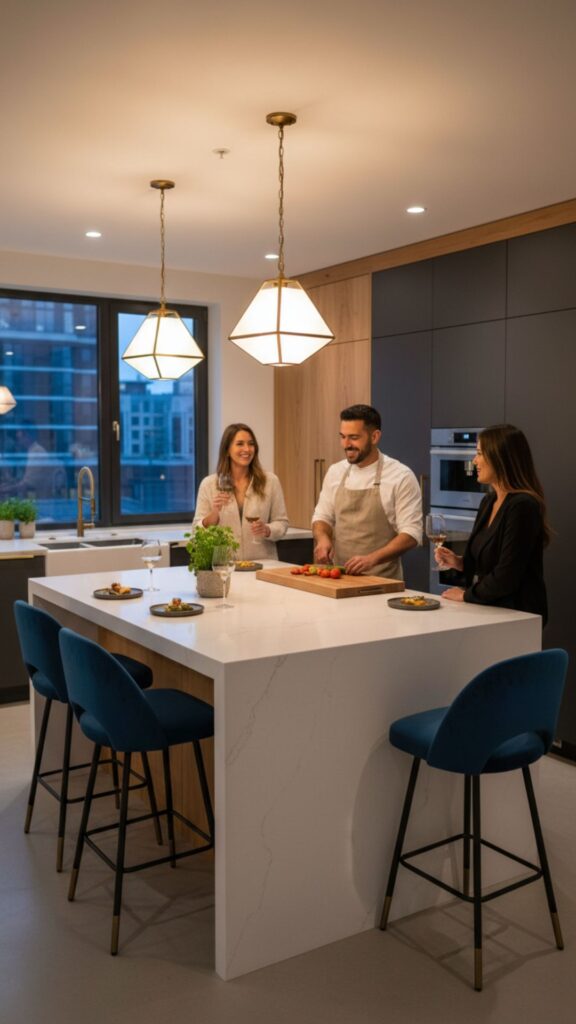
Use your kitchen island as the bridge between the two spaces. By adding stylish seating, it becomes a social hub that allows people to sit and chat with the cook without crowding the kitchen.
How To Get The Look:
- Choose bar stools that match the living room furniture style.
- Install statement pendant lighting above the island.
- Keep the island surface clutter-free.
Shopping List
- Modern bar stools
- Swivel counter stools
- Industrial pendant light
- Glass pendant lighting
- Marble pastry board
- Wooden fruit bowl
- Upholstered bar chairs
- Island centerpiece
- Rattan counter stools
- Modern chandelier
- Kitchen island cart
- Minimalist vase
5. Lighting Layers
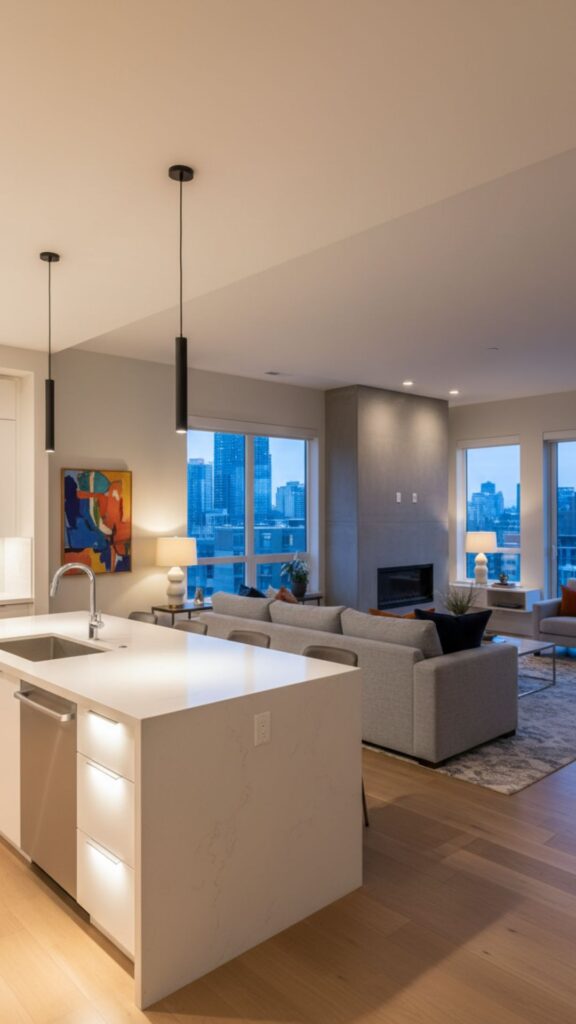
Lighting is a powerful zoning tool. While the kitchen needs bright, cool task lighting, the living area benefits from warm, soft ambient lighting.
How To Get The Look:
- Install dimmer switches to control the mood.
- Use floor lamps in corners to define the living room perimeter.
- Ensure style consistency across fixtures (e.g., all matte black).
Shopping List
- Dimmable smart bulbs
- Arc floor lamp
- Under cabinet lighting
- Track lighting kit
- Table lamp ceramic
- Industrial floor lamp
- Smart dimmer switch
- LED strip lights
- Recessed lighting retrofit
- Rattan pendant light
- Modern wall sconce
6. The Dining Bridge
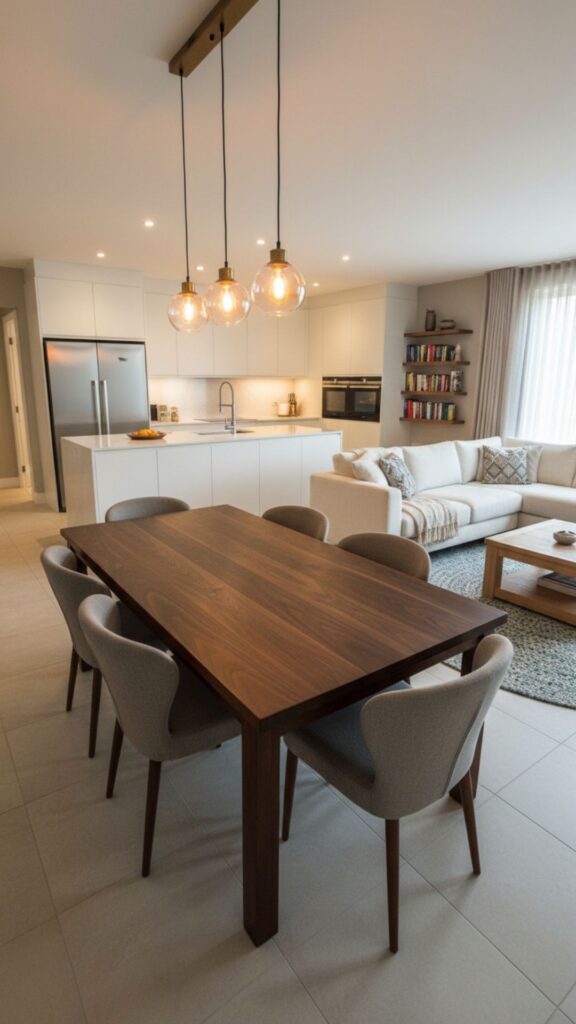
If you don’t have an island, place a dining table between the kitchen and the sofa. This acts as a transitional zone that buffers the noise and bustle of the kitchen from the relaxation area.
How To Get The Look:
- Use a round table to improve traffic flow.
- Anchor the table with a distinct light fixture.
- Keep chairs low-profile to maintain open sightlines.
Shopping List
- Round dining table
- Mid century dining set
- Tulip table
- Dining room chandelier
- Wishbone chairs
- Small space dining set
- Farmhouse dining table
- Upholstered dining chairs
- Placemat set
- Glass dining table
- Bench seating dining
7. Vertical Greenery
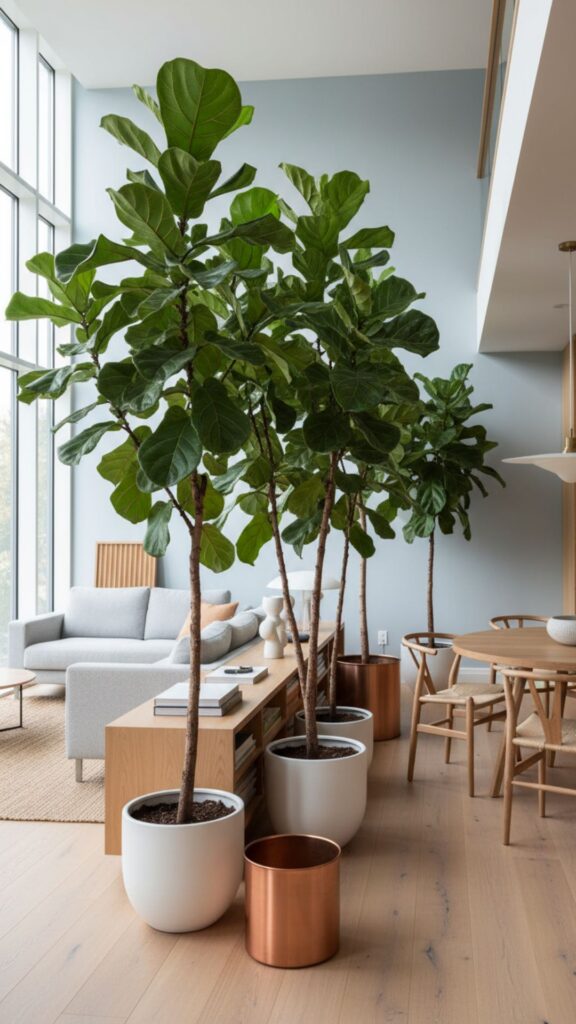
Plants add life and softness to a room, breaking up the hard lines of appliances and cabinetry. Tall plants can also serve as semi-transparent room dividers.
How To Get The Look:
- Place a tall fiddle leaf fig or snake plant at the edge of the kitchen zone.
- Use hanging planters above the transition area.
- Group smaller plants on shelves to connect the spaces.
Shopping List
- Artificial fiddle leaf fig
- Large plant pot
- Macrame plant hanger
- Indoor plant stand
- Succulent pots
- Hanging planter indoor
- Snake plant live
- Wall planter indoor
- Mid century plant stand
- Herb garden kit
- Tall artificial plant
8. Consistent Flooring
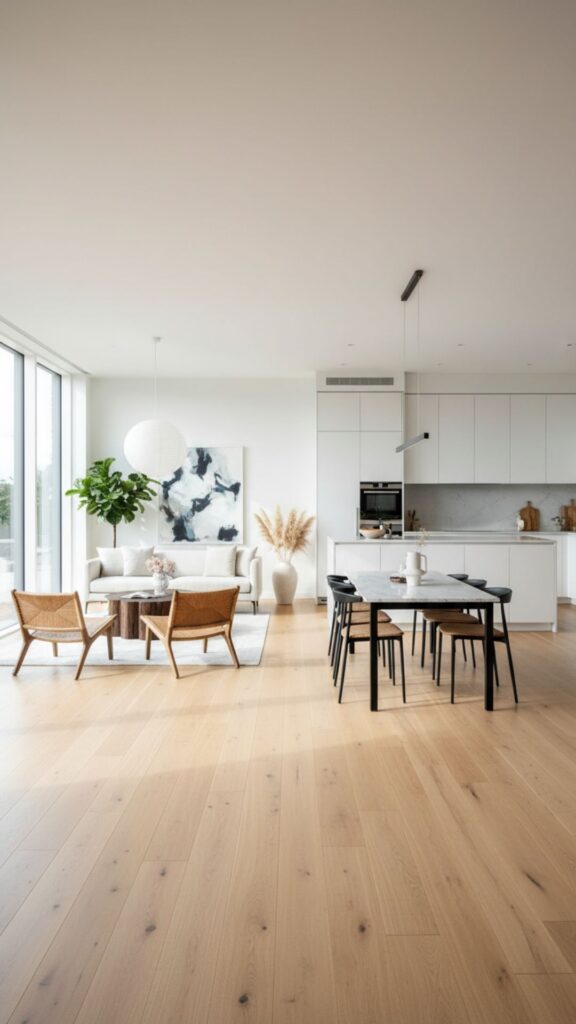
While rugs define zones, the base flooring should ideally be consistent. Continuous wood, tile, or laminate makes the overall footprint feel much larger and more unified.
How To Get The Look:
- Avoid splitting flooring materials in the middle of the open space.
- If changing flooring is impossible, use a large rug to bridge the gap.
- Keep floor trim consistent throughout.
Shopping List
- Peel and stick floor tile
- Laminate flooring tools
- Area rug gripper
- Floor transition strip
- Wood floor cleaner
- Vinyl plank flooring
- Floor mop system
- Bamboo floor mat
- Floor scratch repair kit
- Baseboard molding
9. Gallery Wall Flow
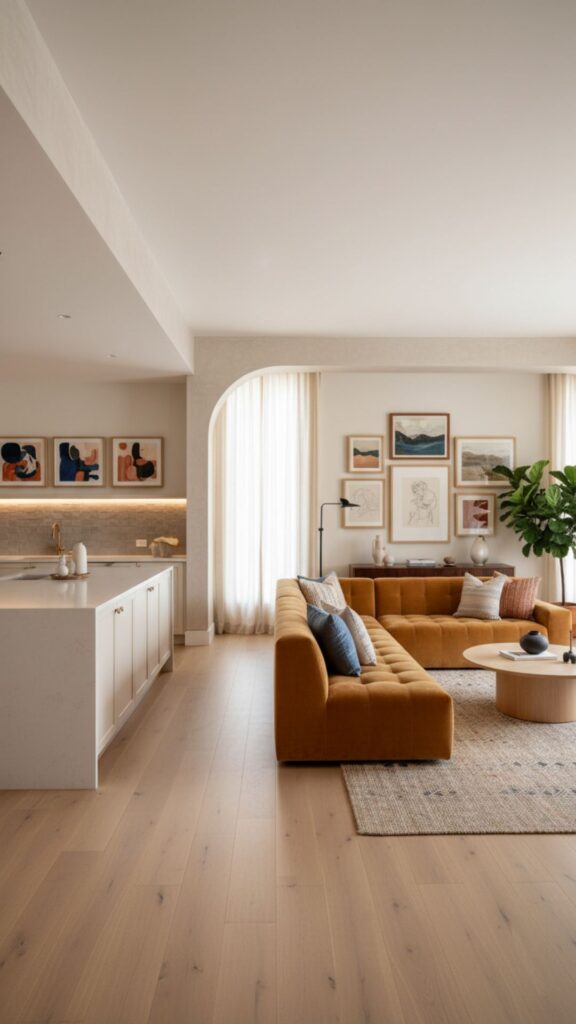
Create a sense of continuity by extending your art collection from the living room into the kitchen or dining area. This draws the eye across the entire length of the room.
How To Get The Look:
- Use matching frames for a cohesive look.
- Hang art on the far wall of the kitchen to add depth.
- Mix kitchen-themed art with abstract pieces.
Shopping List
- Gallery wall frame set
- Abstract wall art
- Kitchen wall decor
- Command picture hangers
- Floating shelves
- Canvas art set
- Black picture frames
- Modern wall clock
- Art print set
- Metal wall art
- Large mirror for wall
Bringing It All Together
Combining a kitchen and living room doesn’t mean sacrificing style or organization. By using these visual tricks—like placing sofas strategically, utilizing rugs, and maintaining color continuity—you can create a space that feels expansive yet cozy. The goal is to design a home that supports your lifestyle, allowing you to cook, relax, and entertain in harmony.
Frequently Asked Questions (FAQs)
1. How do I manage kitchen smells in an open plan?
Invest in a high-quality range hood with strong suction power to capture odors at the source. Additionally, using textiles that are easy to wash (like slipcovers and washable rugs) prevents smells from lingering in the living area.
2. Can I use different paint colors for the kitchen and living room?
It is generally better to stick to one main wall color to maintain flow and make the space feel larger. If you want contrast, consider an accent wall or use different shades of the same color family rather than two clashing colors.
3. How do I reduce noise from the kitchen?
Soft furnishings are your best friend here. Heavy curtains, plush rugs, and upholstered furniture help absorb sound. You can also look for “quiet” appliances, specifically dishwashers and washing machines with low decibel ratings.
4. What is the best furniture layout for small combo rooms?
In small spaces, push the sofa against a wall rather than floating it, or use a small round dining table as a buffer. Ensure you leave clear walkways (at least 3 feet wide) so traffic doesn’t get bottlenecked between the stove and the sofa.
5. Should the kitchen cabinets match the living room furniture?
They don’t need to match perfectly, but they should coordinate. If your kitchen has modern, sleek white cabinets, a rustic farmhouse dining table might look out of place. Try to match the “weight” and era of the furniture to the cabinetry style.