Some links in this blog are affiliate links. If you make a purchase through these links, I may receive a small commission. This helps support the site at no extra cost to you.
There is something undeniably charming about a kitchen garden. Even if you don’t live in a sprawling cottage in the English countryside, you can still capture that warm, earthy aesthetic right in your own backyard—or even on a windowsill. A kitchen garden isn’t just practical for growing your own herbs and vegetables; it’s a design choice that brings texture, scent, and a sense of slow living to your home.
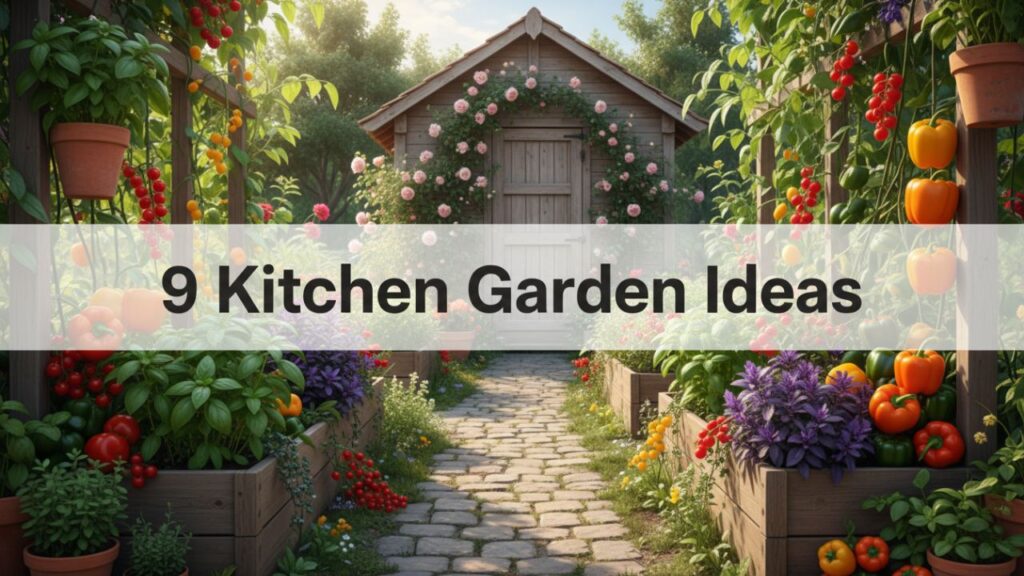
Whether you have acres of land or a tiny balcony, these nine ideas will help you cultivate a space that feels lush, productive, and incredibly cozy.
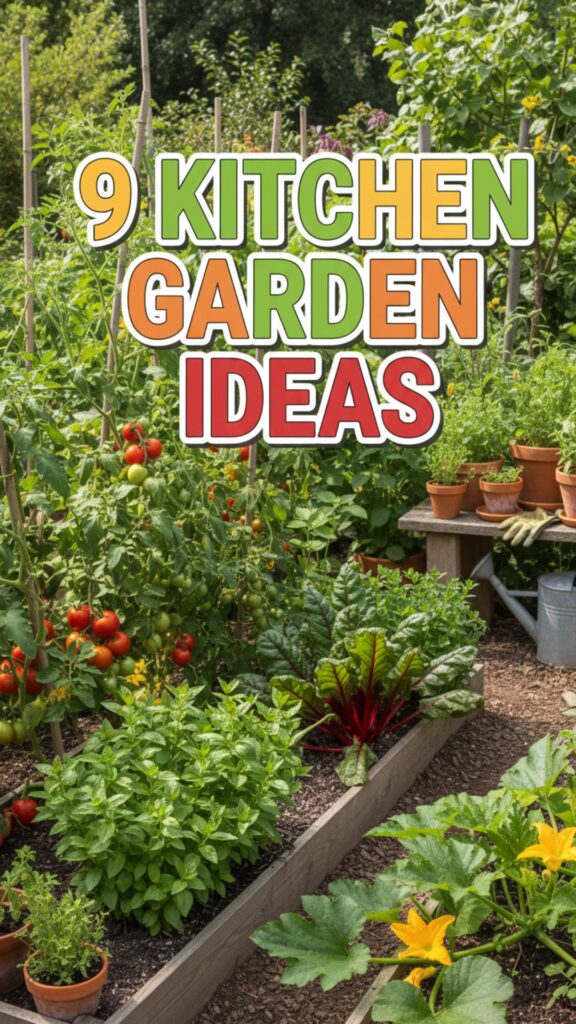
1. The Classic Potager Layout
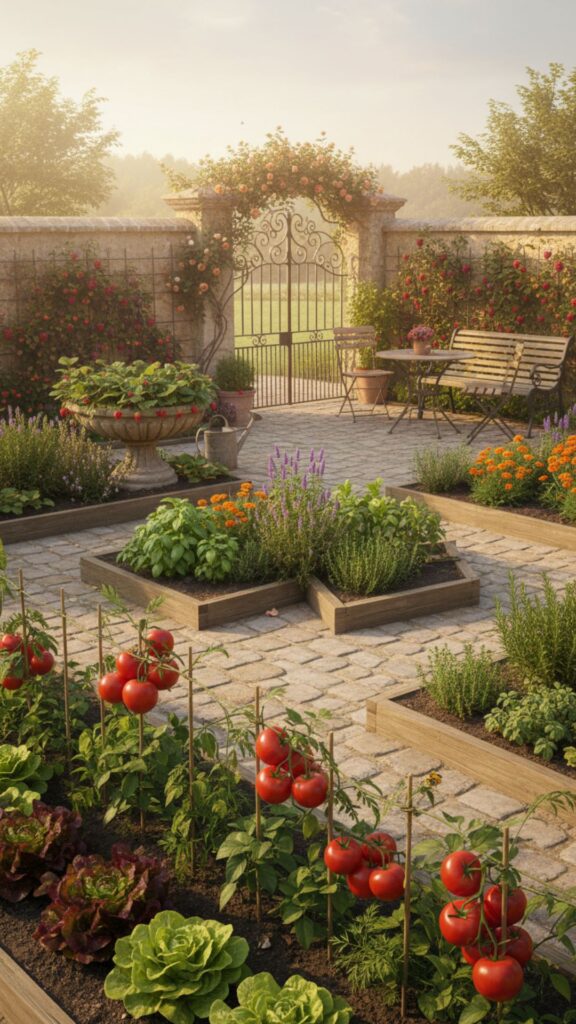
A potager is a traditional French kitchen garden that intermingles vegetables, fruits, flowers, and herbs. It is designed to be beautiful as well as edible. By using geometric beds and pathways, you create a sense of order that looks stunning throughout the seasons.
How To Get The Look:
- Create symmetrical raised beds using timber or woven willow.
- Plant flowers like marigolds or nasturtiums alongside your vegetables to add pops of color and deter pests.
- Use gravel or brick for pathways between beds to keep mud at bay and add rustic texture.
Shopping List
- Raised Garden Bed Kit
- Woven Willow Edging
- Marigold Seeds
- Nasturtium Seeds
- Garden Pathway Gravel
- Red Clay Bricks
- Heirloom Vegetable Seeds
- Rustic Garden Bench
- French Garden Decor
- Boxwood Hedges
2. Vertical Herb Walls
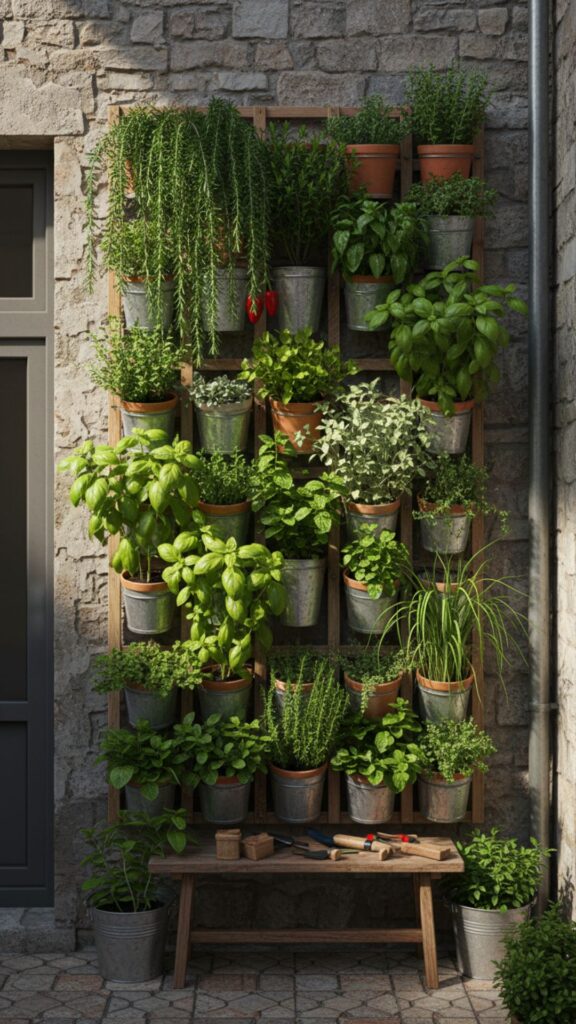
If floor space is tight, look up. Vertical gardening is a fantastic way to grow a wide variety of herbs without sacrificing square footage. It creates a lush “living wall” effect that feels instantly cozy and intimate.
How To Get The Look:
- Install a wooden trellis or a hanging pocket organizer on a sunny wall.
- Use terracotta pots with hooks to hang individual herbs like basil, thyme, and rosemary.
- Label your herbs with slate or wooden markers for a quaint, organized touch.
Shopping List
- Vertical Garden Planter
- Wall Mounted Trellis
- Hanging Planter Pockets
- Small Terracotta Pots
- Pot Hangers Hooks
- Herb Garden Markers
- Slate Plant Labels
- Live Herb Plants
- Outdoor Wall Art
- Watering Can with Spout
3. Rustic Woven Structures
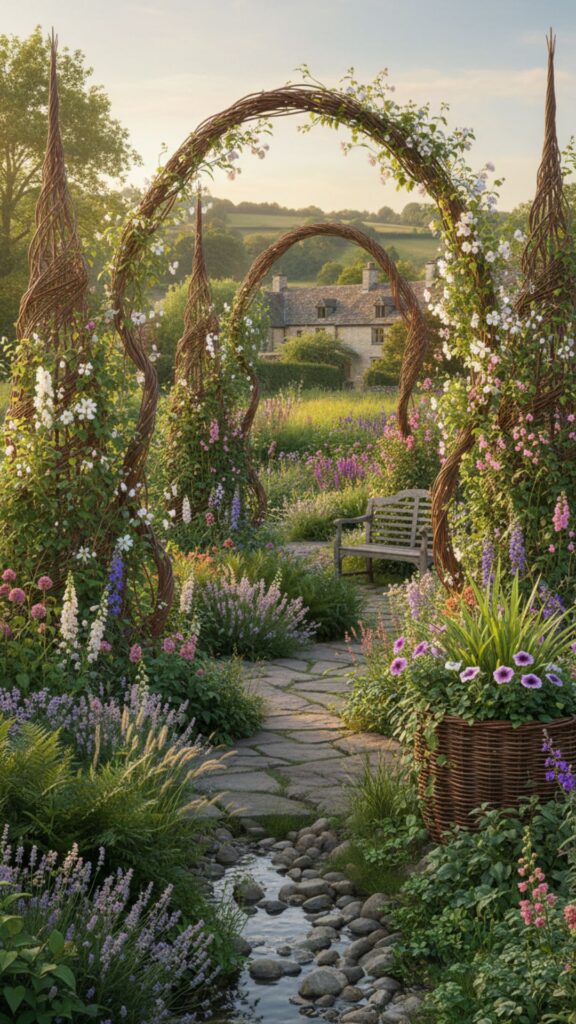
Adding height to your garden draws the eye upward and makes the space feel more enclosed and private. Woven structures made from natural materials like willow or hazel blend seamlessly into a countryside aesthetic.
How To Get The Look:
- Build or buy a woven obelisk to support climbing beans or sweet peas.
- Use hazel hurdles as natural fencing or windbreaks around delicate plants.
- Create a simple archway over a path for climbing roses or cucumbers to drape over.
Shopping List
- Willow Garden Obelisk
- Hazel Hurdles Fencing
- Bamboo Garden Stakes
- Natural Garden Twine
- Wooden Garden Arch
- Climbing Rose Plant
- Runner Bean Seeds
- Sweet Pea Seeds
- Wicker Garden Basket
- Rustic Garden Trellis
4. Repurposed Vintage Containers
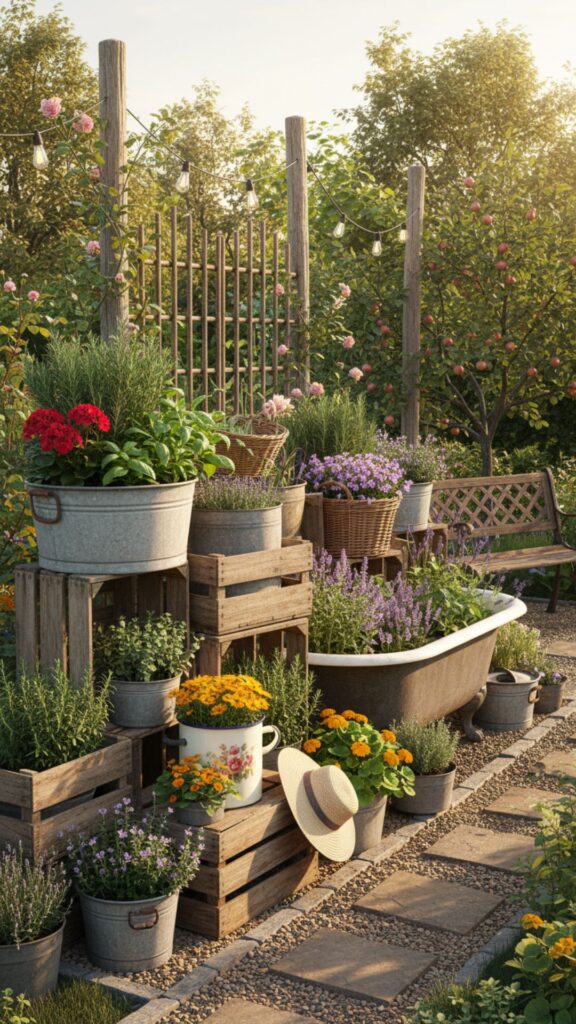
Nothing says “countryside charm” quite like galvanized steel tubs or old wooden crates filled with vibrant greens. Using vintage items as planters adds character and history to your garden space.
How To Get The Look:
- Scour flea markets for old zinc washtubs, watering cans, or wooden apple crates.
- Drill drainage holes in the bottom before filling them with high-quality potting soil.
- Group containers of different sizes together to create a tiered, abundant look.
Shopping List
- Galvanized Steel Planter
- Vintage Wooden Crate
- Zinc Watering Can
- Antique Style Planters
- Cordless Drill
- Organic Potting Mix
- Salad Greens Seeds
- Strawberry Plants
- Container Garden Fertilizer
- Rustic Plant Stand
5. The Pollinator Patch
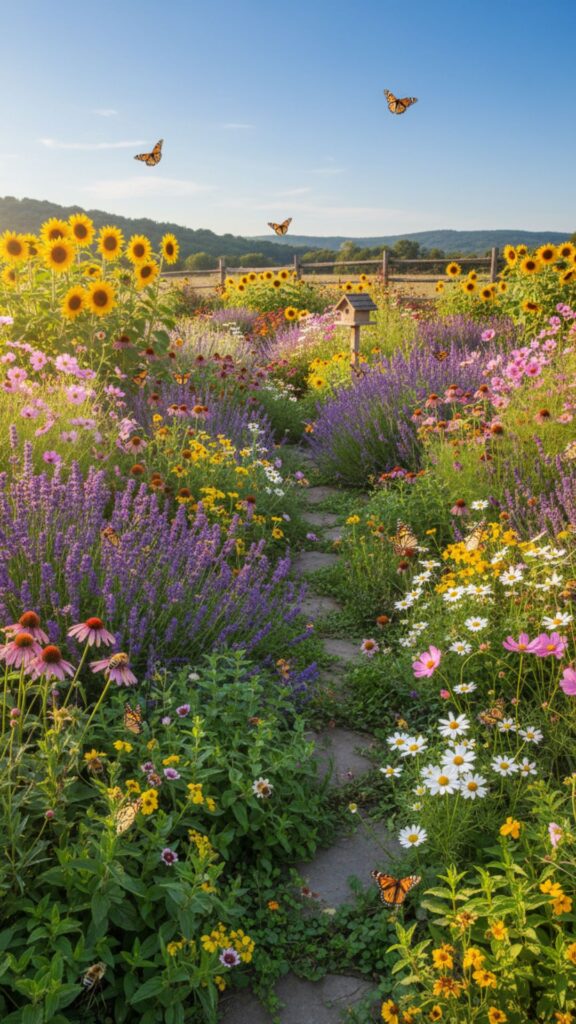
A cozy countryside garden is buzzing with life. Dedicating a section specifically for bees and butterflies not only helps the ecosystem but ensures your vegetables get pollinated.
How To Get The Look:
- Plant wildflower mixes that include poppies, cornflowers, and cosmos.
- Include bee-friendly herbs like lavender, borage, and chives.
- Install a small insect hotel to provide shelter for beneficial bugs.
Shopping List
- Wildflower Seed Mix
- Lavender Plants
- Borage Seeds
- Chive Seeds
- Insect Hotel
- Bee House
- Butterfly Bush
- Garden Bird Bath
- Pollinator Garden Sign
- Cosmos Seeds
6. Cozy Seating Nooks
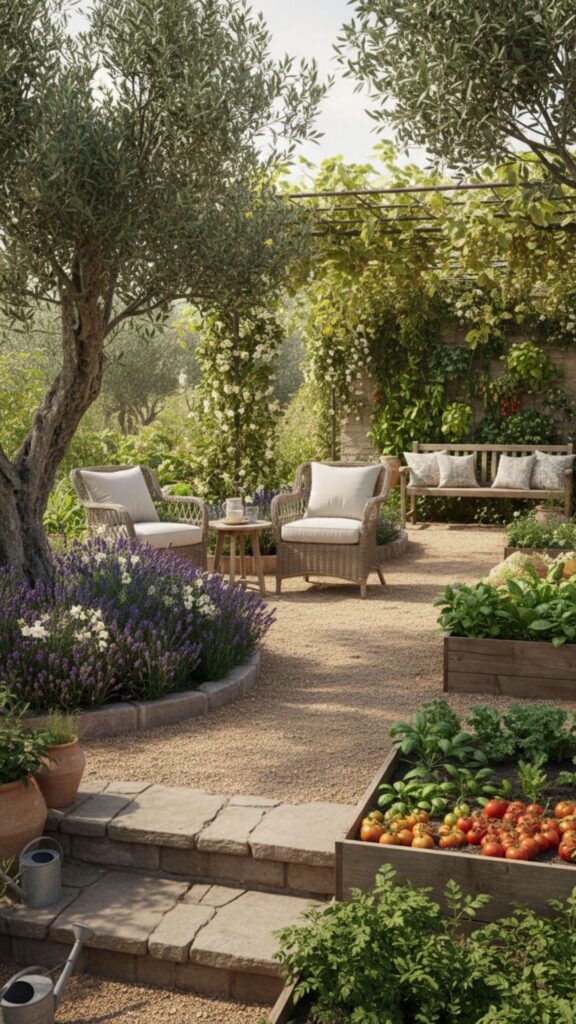
A kitchen garden should be enjoyed, not just worked in. Carving out a small space to sit with a cup of tea allows you to appreciate your hard work and enjoy the scents of your herbs.
How To Get The Look:
- Place a wrought iron bistro set in a quiet corner of the garden.
- Add softness with weather-resistant cushions in gingham or floral prints.
- Position your seating near fragrant plants like jasmine or mint for a sensory experience.
Shopping List
- Bistro Table Set
- Outdoor Seat Cushions
- Gingham Outdoor Pillows
- Outdoor Rug
- Solar Garden Lanterns
- Ceramic Garden Stool
- Jasmine Plant
- Mint Plant
- Outdoor Throw Blanket
- Garden Side Table
7. Incorporate a Cold Frame
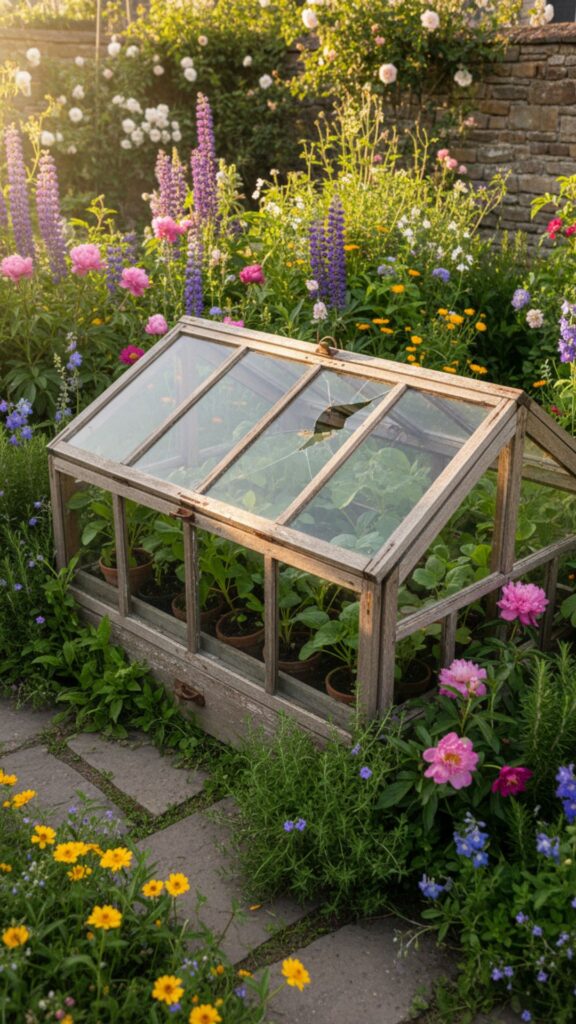
Extend your growing season and add a touch of vintage utility with a cold frame. These glass-topped boxes act like mini-greenhouses, protecting seedlings from frost and looking incredibly charming.
How To Get The Look:
- Use reclaimed windows to build a DIY cold frame over a wooden box.
- Paint the wood in soft sage green or cream for that classic cottage vibe.
- Use it to harden off seedlings in spring or grow salad greens late into autumn.
Shopping List
- Cold Frame Greenhouse
- Reclaimed Window Sash
- Sage Green Exterior Paint
- Cream Exterior Paint
- Heavy Duty Hinges
- Garden Thermometer
- Seed Starting Trays
- Plant Frost Protection
- Mini Greenhouse
- Garden Trowel
8. Edible Flower Borders
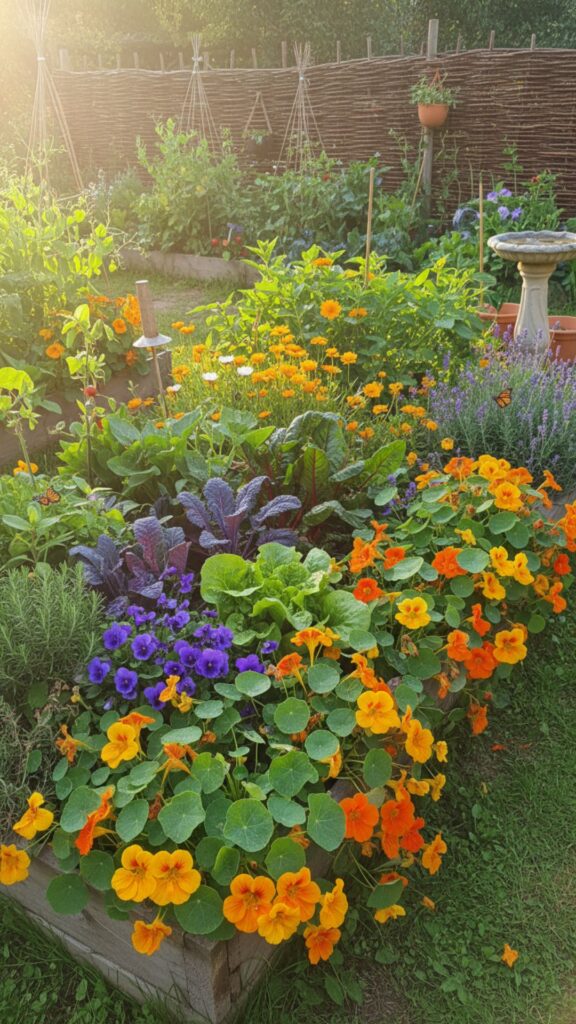
Blur the lines between vegetable patch and flower garden by planting edible blooms. They soften the edges of raised beds and add a romantic, overgrown feel that is quintessentially cottage-core.
How To Get The Look:
- Line pathways with chives, violas, or calendula.
- Allow herbs like cilantro and dill to flower—their blooms are delicate and attract beneficial insects.
- Harvest the flowers to garnish salads and cakes for a farm-to-table dining experience.
Shopping List
- Viola Seeds
- Calendula Seeds
- Chive Plants
- Cilantro Seeds
- Dill Seeds
- Pansy Seeds
- Borage Plants
- Edible Flower Seed Kit
- Garden Snips
- Harvest Basket
9. Stone and Brick Accents
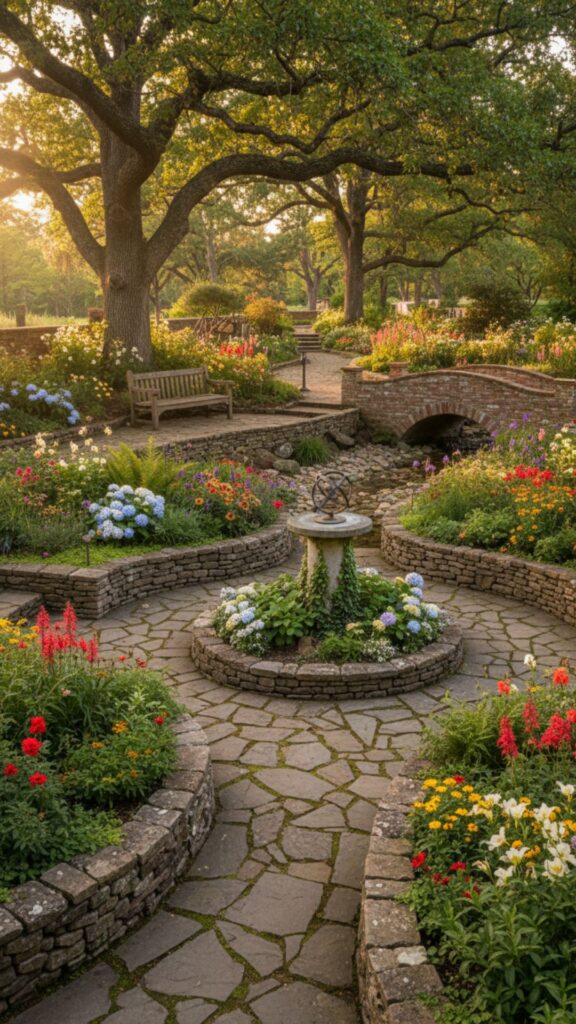
Natural hardscaping materials ground the garden and give it a sense of permanence. Weathered stone and brick look like they have been there for decades, instantly adding that “established estate” feel.
How To Get The Look:
- Create a focal point with a simple stone birdbath or sundial.
- Use reclaimed bricks to edge your garden beds instead of modern plastic edging.
- Incorporate large river stones or rocks around the base of containers to add varied textures.
Shopping List
- Stone Birdbath
- Garden Sundial
- Landscape Edging Bricks
- River Rocks for Garden
- Concrete Garden Statue
- Stepping Stones
- Faux Stone Edging
- Cast Iron Boot Scraper
- Slate Garden Decor
- Moss Spores for Stone
Start Your Cozy Garden Journey
Creating a cozy kitchen garden isn’t about perfection; it’s about cultivation. It’s a space that evolves with the seasons and reflects your personal taste. By incorporating natural materials, vintage finds, and a mix of beautiful and edible plants, you can create a slice of countryside heaven right outside your door.
Frequently Asked Questions (FAQs)
1. What plants are best for a beginner kitchen garden?
Start with herbs like basil, mint, and chives, along with easy vegetables like lettuce, radishes, and zucchini. These provide quick harvests and are generally forgiving of minor mistakes.
2. How much sun does a kitchen garden need?
Most vegetables and herbs thrive in full sun, meaning at least 6 to 8 hours of direct sunlight per day. If you have a shady spot, focus on leafy greens like spinach and kale, which tolerate less light.
3. Can I have a kitchen garden in an apartment?
Absolutely! Window boxes and vertical planters are perfect for apartments. Focus on high-yield, compact plants like cherry tomatoes, peppers, and herbs that grow well in containers.
4. How do I keep pests away naturally?
Companion planting is a great natural defense. Marigolds deter nematodes and beetles, while aromatic herbs like rosemary and mint can confuse pests. You can also use physical barriers like netting for birds and insects.
5. Do I need expensive tools to start?
Not at all. A few basics like a hand trowel, pruning shears, and a watering can are all you need to get started. You can often find great vintage tools at thrift stores that work perfectly well.