Some links in this blog are affiliate links. If you make a purchase through these links, I may receive a small commission. This helps support the site at no extra cost to you.
Designing a green home goes beyond solar panels and energy-efficient appliances. The materials under your feet play a massive role in your home’s ecological footprint. The kitchen, often the hub of the house, sees heavy foot traffic, spills, and dropped pots, requiring flooring that is resilient yet sustainable.
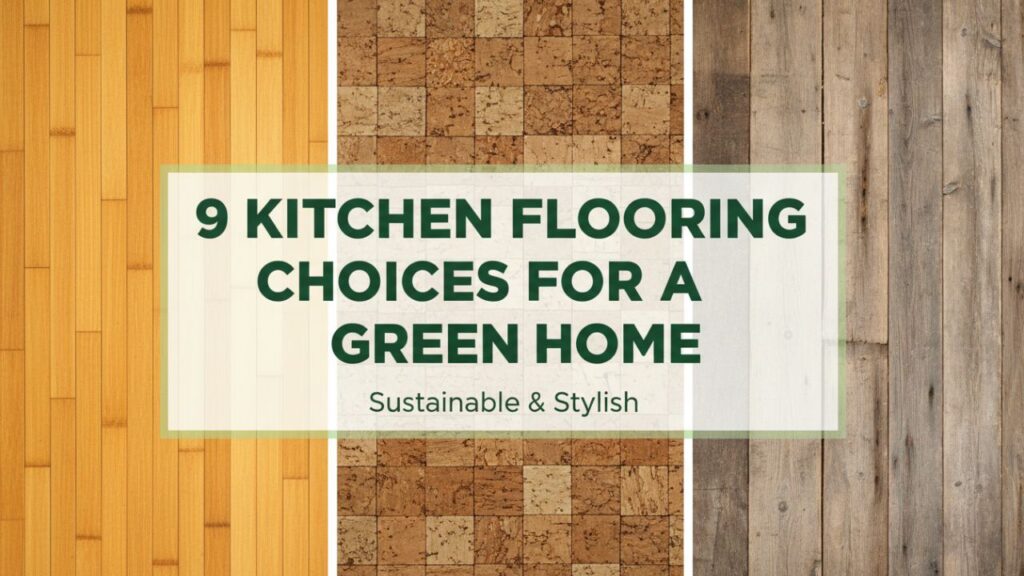
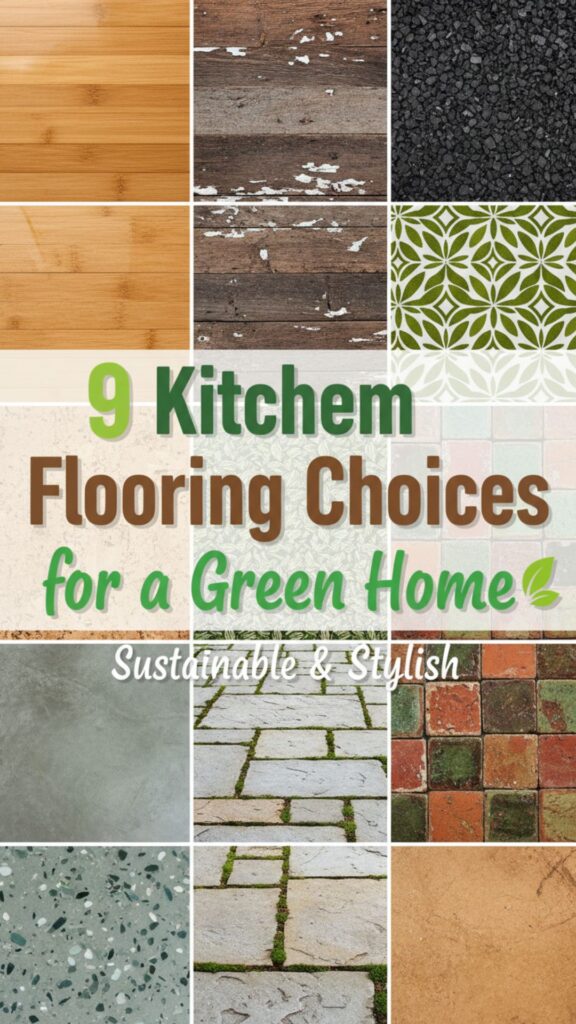
Choosing the right material means balancing durability with environmental impact. You want something that resists moisture and wear without releasing harmful VOCs (volatile organic compounds) into your indoor air. Fortunately, modern innovations offer plenty of stylish options that are kind to the planet. Here are nine sustainable choices to transform your kitchen.
1. Bamboo
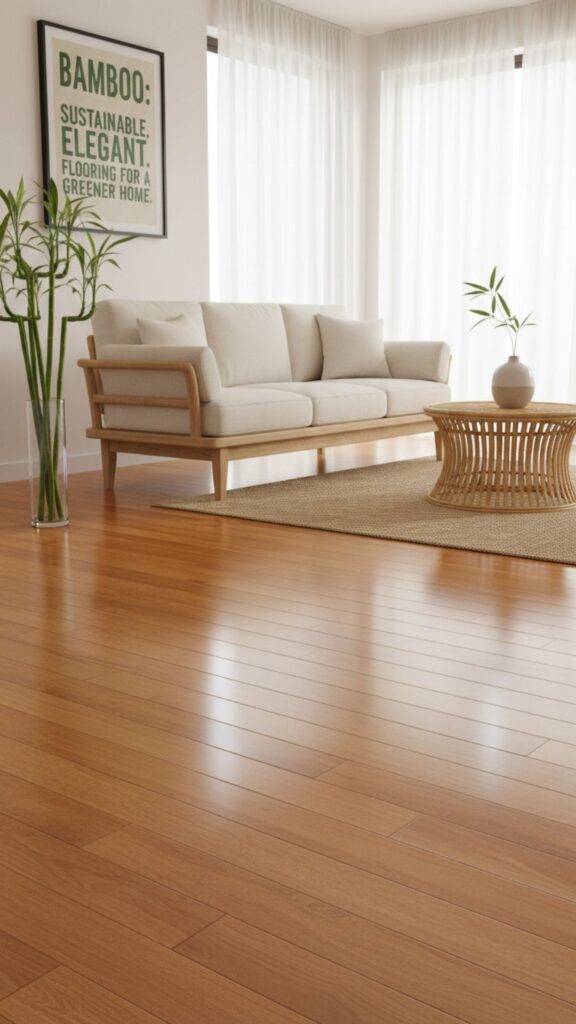
Bamboo is technically a fast-growing grass, not wood, making it a highly renewable resource. It reaches maturity in three to five years, compared to decades for traditional hardwood trees. It offers the warm look of wood with impressive durability.
How To Get The Look:
- Choose “stranded” bamboo for the hardest, most durable option.
- Opt for natural, light blonde tones to brighten small kitchens.
- Select wide planks for a modern, airy aesthetic.
Shopping List
- Bamboo flooring planks
- Bamboo floor cleaner
- Natural bamboo rug
- Bamboo kitchen mat
- Bamboo flooring adhesive
- Scratch repair kit for bamboo
- Bamboo molding trim
- Eco friendly floor mop
- Bamboo floor wax
- Sustainable area rugs
2. Cork
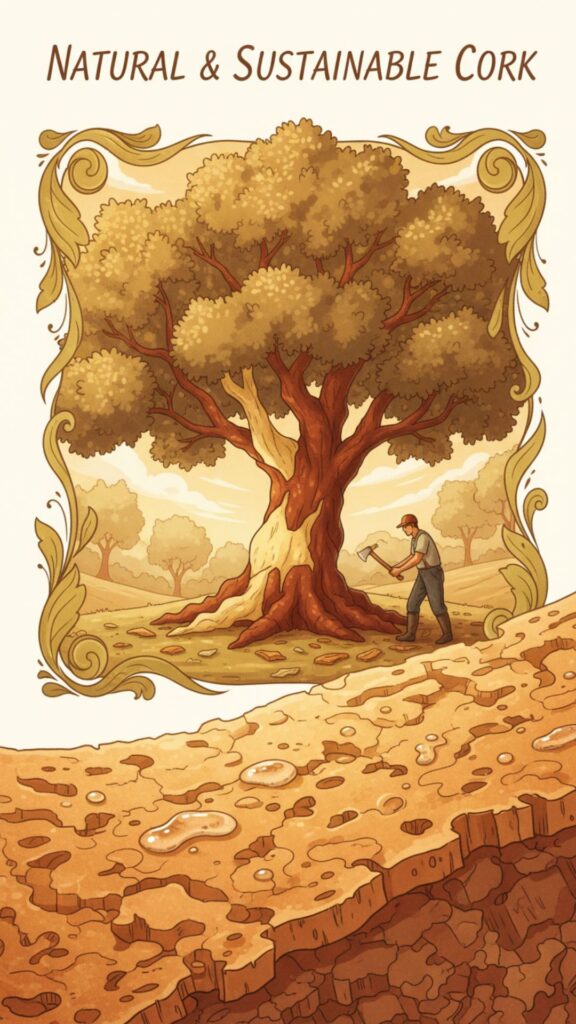
Harvested from the bark of the cork oak tree without killing the tree, cork is biodegradable and renewable. It contains suberin, a waxy substance that repels insects and mold, and its cellular structure provides a soft cushion underfoot—perfect for long cooking sessions.
How To Get The Look:
- Use cork tiles for easy DIY installation.
- Seal the cork properly to ensure water resistance in the kitchen.
- Experiment with darker stained cork for a richer, sophisticated vibe.
Shopping List
- Cork flooring tiles
- Cork underlayment
- Cork sealer
- Floating cork floor planks
- Natural cork mats
- Cork adhesive
- Soft step flooring
- Cork wall tiles
- Water based polyurethane
- Cork floor cleaner
3. Reclaimed Hardwood
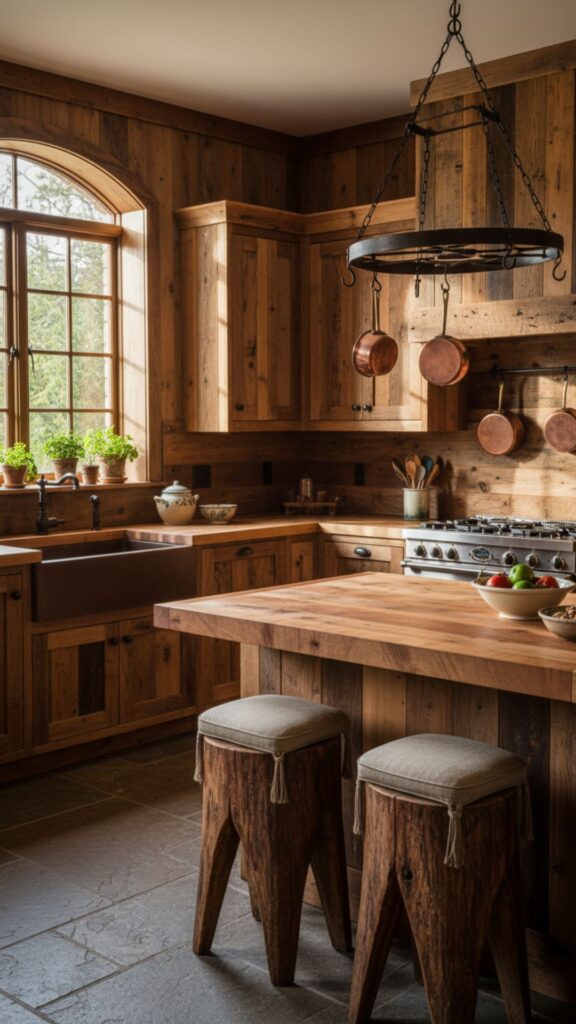
Instead of cutting down new trees, reclaimed wood repurposes lumber from old barns, factories, or homes. It prevents waste and adds instant character and history to your kitchen that new wood simply cannot replicate.
How To Get The Look:
- Leave some imperfections visible to highlight the wood’s history.
- Mix plank widths for a rustic, farmhouse appeal.
- Finish with a matte sealant to keep the look raw and natural.
Shopping List
- Reclaimed wood planks
- Barn wood flooring
- Reclaimed wood peel and stick
- Wood floor restorer
- Rustic floor runner
- Distressed wood flooring
- Antique wood wax
- Wood putty for repairs
- Hardwood floor polish
- Salvaged wood decor
4. Linoleum
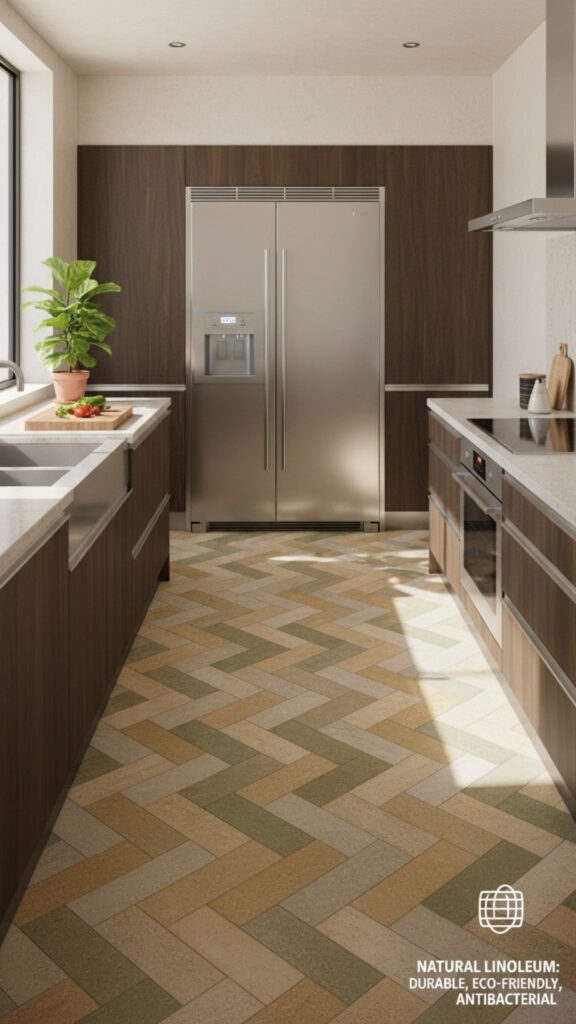
Often confused with vinyl, true linoleum is made from natural materials like solidified linseed oil, pine rosin, wood flour, and jute. It is biodegradable, anti-bacterial, and incredibly long-lasting (up to 40 years).
How To Get The Look:
- Choose vibrant colors to create a retro or mid-century modern aesthetic.
- Use sheet linoleum for a seamless look that is easy to clean.
- Create custom patterns by cutting different colored tiles.
Shopping List
- Marmoleum flooring
- Linoleum tiles
- Linoleum floor cleaner
- Linoleum adhesive
- Natural floor polish
- Sheet linoleum
- Floor roller tool
- Linoleum repair kit
- Eco friendly floor stripper
- Natural jute rug
5. Recycled Glass Tile
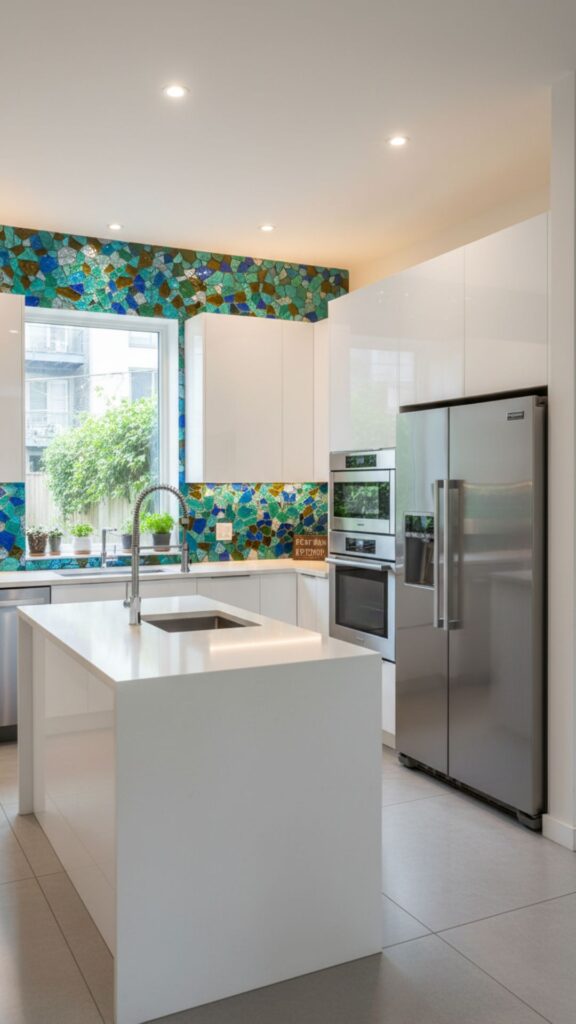
These stunning tiles are crafted from post-consumer glass bottles and jars. They are non-porous, meaning they won’t absorb kitchen spills or harbor bacteria, and they reflect light beautifully to make spaces feel larger.
How To Get The Look:
- Use mosaic patterns for a focal point or border.
- Select jewel tones like emerald or cobalt for a dramatic kitchen floor.
- Pair with simple cabinetry to let the floor shine.
Shopping List
- Recycled glass tiles
- Glass mosaic floor tile
- Glass tile grout
- Glass tile cutter
- Non slip glass treatment
- Blue glass tiles
- Green glass tiles
- Glass tile sealer
- Grout float
- Tile spacers
6. Polished Concrete
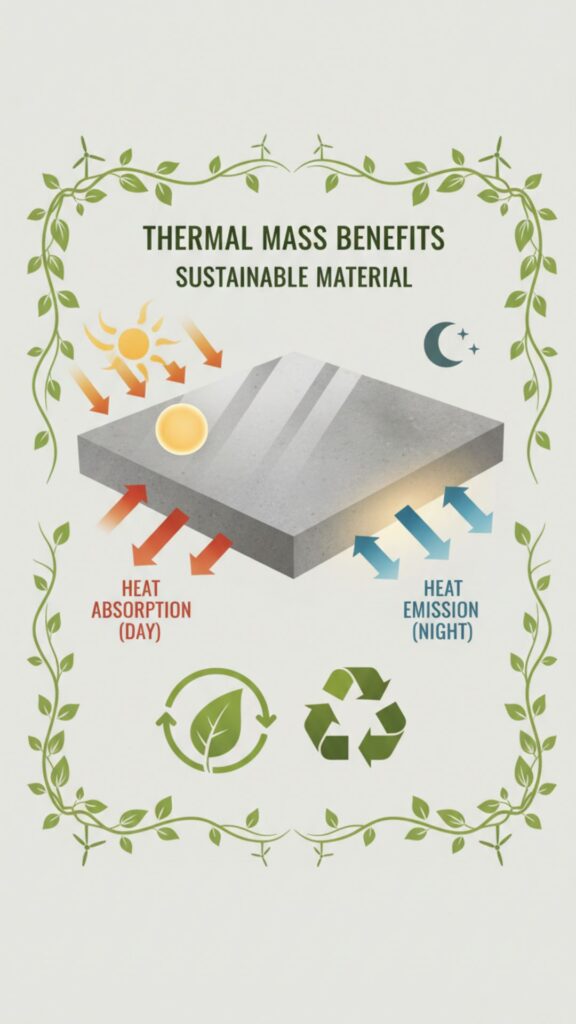
Concrete is often already present as the subfloor in many homes. Polishing and sealing it eliminates the need for new materials. It is incredibly thermal-efficient, absorbing heat during the day and releasing it at night.
How To Get The Look:
- Add eco-friendly aggregate or recycled glass chips into the mix before polishing.
- Use low-VOC sealers to maintain indoor air quality.
- Soften the industrial look with large, natural fiber rugs.
Shopping List
- Concrete floor sealer
- Concrete stain
- Concrete polisher pads
- Concrete floor wax
- Industrial floor mop
- Concrete cleaner
- Anti fatigue kitchen mat
- Concrete crack filler
- Concrete overlay mix
- Non slip floor additive
7. Natural Stone (Travertine)
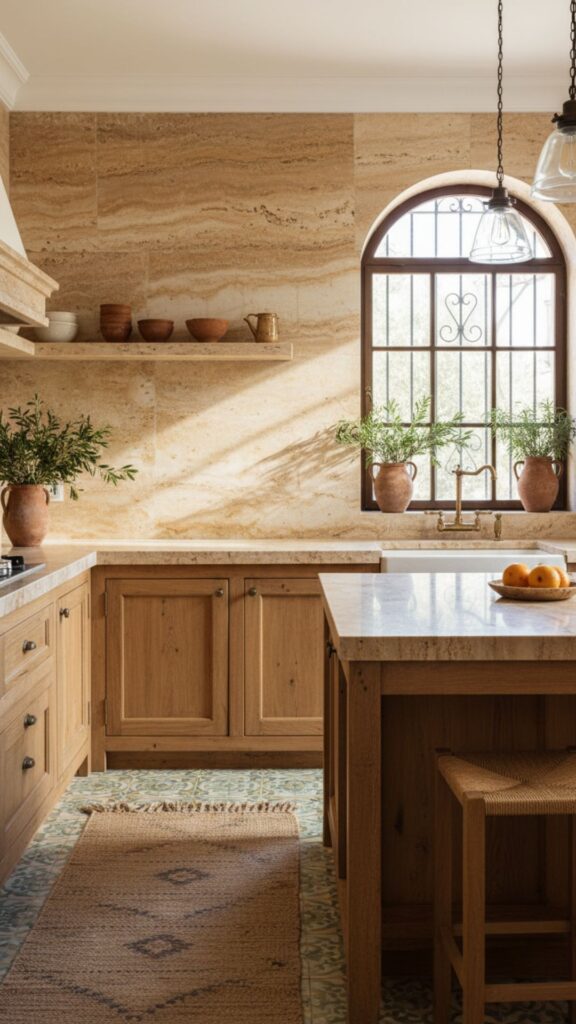
Stone is a natural product of the earth, requiring no synthetic manufacturing. Travertine, a type of limestone, is durable and offers a classic, earthy texture. It stays cool in the summer, which is a bonus for hot kitchens.
How To Get The Look:
- Choose honed or tumbled finishes for better slip resistance.
- Stick to large format tiles to minimize grout lines.
- Use varying shades of beige and tan for a warm, Mediterranean feel.
Shopping List
- Travertine tiles
- Natural stone sealer
- Stone floor cleaner
- Travertine paver
- Stone grout
- Heavy duty knee pads
- Stone tile cutter
- Neutral pH cleaner
- Limestone tiles
- Stone enhancing sealer
8. Recycled Rubber
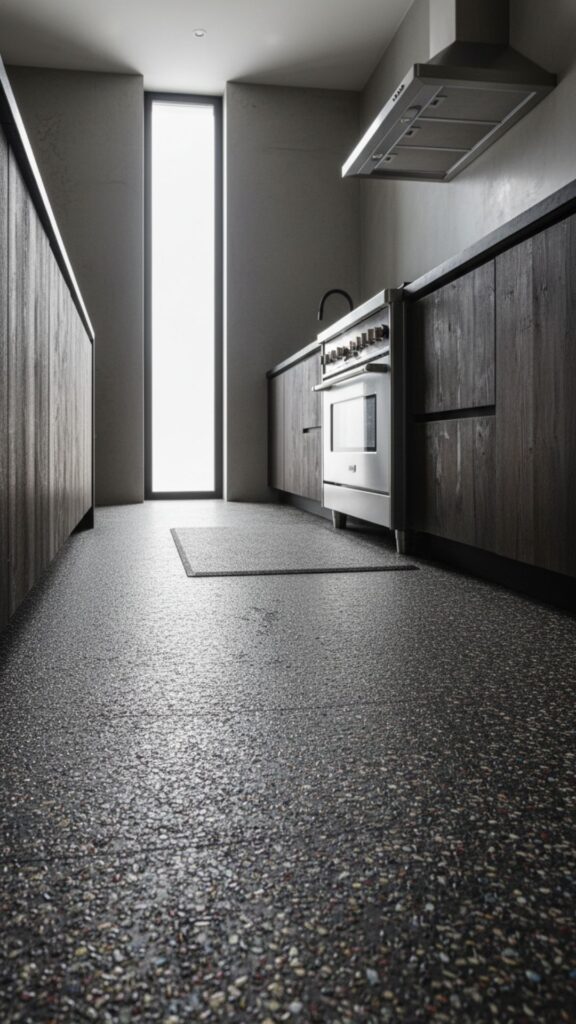
Originally designed for commercial spaces or gyms, recycled rubber flooring (often made from old tires) is making its way into residential kitchens. It is water-resistant, durable, and provides excellent shock absorption.
How To Get The Look:
- Select solid colors for a sleek, contemporary look.
- Look for “confetti” patterns that hide dirt and crumbs well.
- Use interlocking tiles for an easy, glue-free installation.
Shopping List
- Rubber floor tiles
- Rubber flooring rolls
- Interlocking rubber mats
- Rubber floor cleaner
- Double sided floor tape
- Utility knife
- Rubber trim edging
- Heavy duty rubber mat
- Recycled tire flooring
- Gym floor tiles
9. Terrazzo
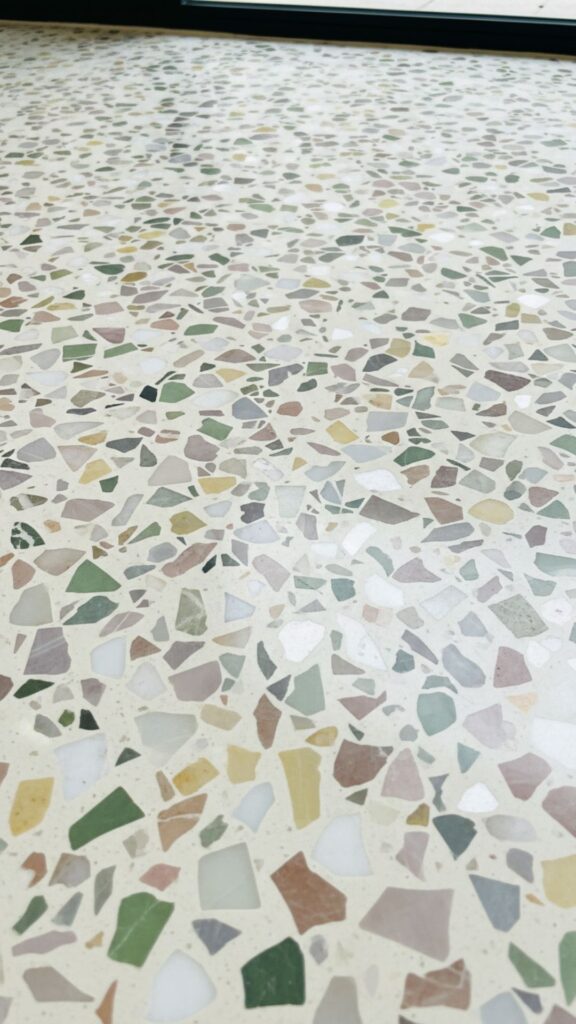
Traditional terrazzo consists of chips of marble, quartz, granite, or glass poured with a cementitious binder. Modern eco-friendly versions use recycled glass and epoxy resins free of VOCs. It is incredibly durable and can last a lifetime.
How To Get The Look:
- Go bold with large-aggregate chips for a trendy, maximalist look.
- Choose a neutral base color to keep the floor from overwhelming the room.
- Use terrazzo tiles instead of poured-in-place for easier residential installation.
Shopping List
- Terrazzo floor tiles
- Terrazzo contact paper
- Peel and stick terrazzo
- Stone and tile sealer
- Terrazzo pattern rug
- Floor tile adhesive
- Terrazzo repair kit
- Cement tile sealer
- Tile leveling system
- Trowel for tile
Steps Toward a Greener Kitchen
Your choice of flooring affects both the style of your home and the health of the environment. Whether you prefer the warmth of reclaimed wood or the industrial chic of polished concrete, there is a sustainable option that fits your design vision.
By investing in these eco-friendly materials, you create a space that is beautiful, durable, and aligned with a healthier planet.
Frequently Asked Questions (FAQs)
1. Is eco-friendly flooring more expensive than traditional flooring?
It varies. Materials like bamboo and linoleum can be comparable to or cheaper than hardwood. However, reclaimed wood and terrazzo can be pricier due to the sourcing and manufacturing processes involved.
2. Can I install these floors myself?
Bamboo, cork tiles, and linoleum planks are generally DIY-friendly. Options like polished concrete, poured terrazzo, or large-format stone usually require professional installation to ensure longevity and proper sealing.
3. Are these floors easy to clean?
Most are very low maintenance. Linoleum, sealed concrete, and bamboo can be cleaned with simple, pH-neutral cleaners. Avoid harsh chemicals, which can strip natural sealants and damage eco-friendly materials.
4. Is bamboo flooring water-resistant?
Bamboo is more water-resistant than traditional hardwood, but it is not waterproof. Spills should be wiped up quickly to prevent warping or staining, similar to how you would treat oak or maple floors.
5. Does cork flooring fade in sunlight?
Yes, like many natural wood products, cork can fade if exposed to direct, intense sunlight for prolonged periods. Using curtains, blinds, or UV-protective window film can help preserve the color of your cork floors.