Some links in this blog are affiliate links. If you make a purchase through these links, I may receive a small commission. This helps support the site at no extra cost to you.
A calm bedroom is honestly becoming a luxury these days, and somehow Japandi style keeps showing up like that one friend who always brings peace wherever they walk in.
When you mix the soft minimalism of Japanese interiors with the warm coziness of Scandinavian design, your space starts looking like a breath of fresh air. Then you add the color green, and the whole thing becomes a quiet little sanctuary of healing.
There is something funny about bedroom trends. They come and go, but Japandi stays. Maybe because people are tired of chaos and want something that feels like a deep exhale after a busy day.
A green Japandi bedroom is not just a pretty Pinterest moment. It is a lifestyle choice that invites rest, clarity, and a sense of organic balance. Honestly, it feels like nature whispering inside your home.
So here we go. This is the list of the eight best Japandi style bedroom green aesthetic ideas that actually make your bedroom look calm, fresh, and purposeful. Each one is practical and still beautiful enough for your next Pinterest upload.
Table of Contents
8 Japandi Style Bedroom Green
1. Soft Sage Walls With Natural Wood Accents
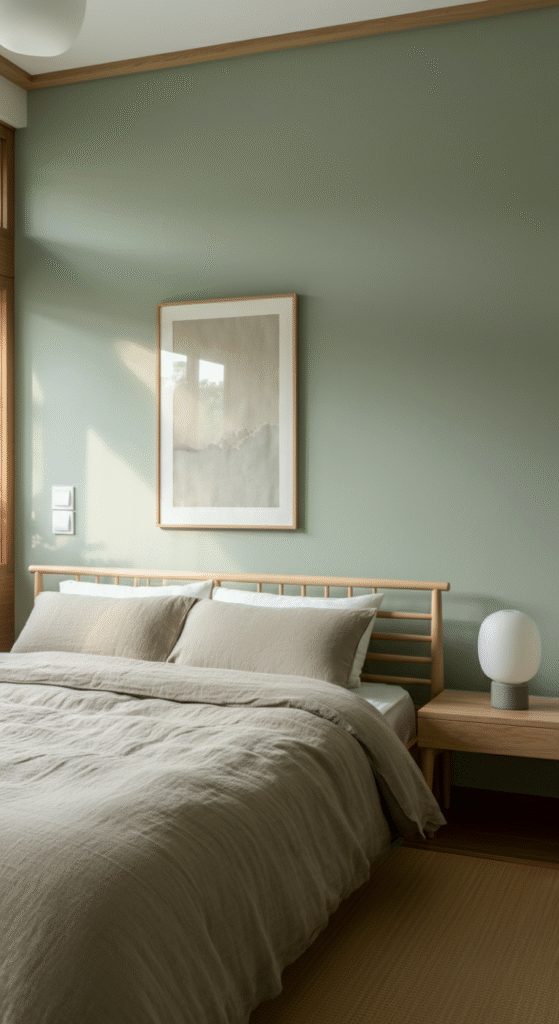
There is something magical about sage green. It feels like you washed your walls with morning mist. In Japandi style, sage becomes the star color because it blends well with both Japanese minimal tone and Scandinavian warmth.
When you pair sage walls with natural wood accents, the room gets an earthy balance. Oak, pine, and ash wood look particularly clean and light with green. If you keep the furniture lines simple, the entire space feels grounded.
Interesting fact. A research by the University of Sussex showed that the color green can reduce stress levels and sharpen focus. That might explain why sage in a bedroom feels so relaxing.
Use a matte finish on the wall. Shiny walls do not fit the Japandi theme. Keep the furniture shape predictable and calm. No heavy carvings. No loud textures. Just soft surfaces that feel like peace.
2. Green Textured Bed Linen For Subtle Contrast
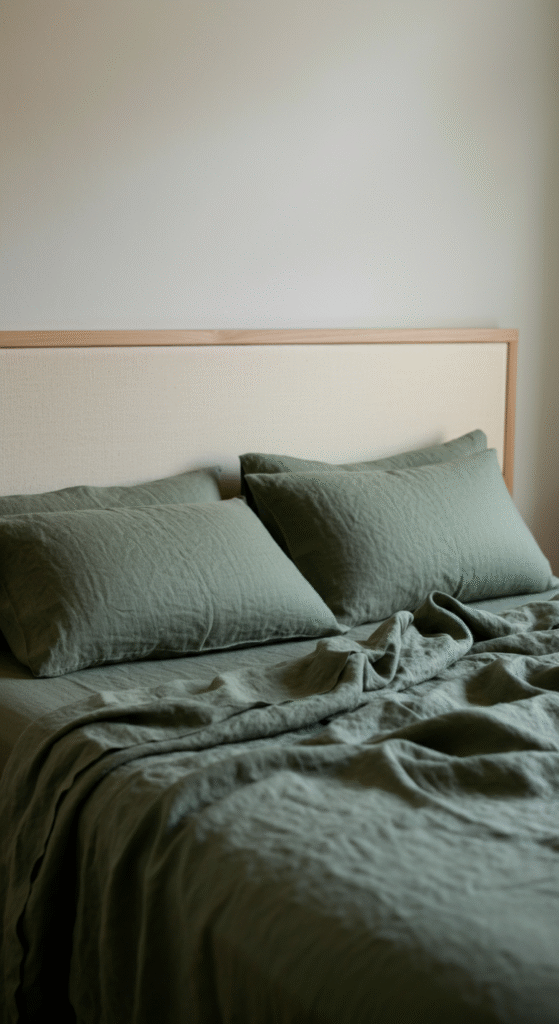
Japandi style does not like flashy patterns. However, the trick is to bring texture instead of prints. A green textured duvet cover or washed linen bedsheet creates a cozy contrast without breaking the minimal vibe.
Think about this. Scandinavian interiors love comfort. Japanese interiors love order. When you combine them, your bedding becomes a soft bridge between both traditions.
Choose fabrics like:
linen
cotton voile
stone washed cotton
These give that slightly crumpled but stylish look. It feels very lived in, very organic, and very Pinterest worthy.
Do you know that linen naturally gets softer with every wash? This makes it perfect for Japandi bedrooms because the worn in look actually makes the room feel more authentic.
3. Minimal Green Ceramic Decor Pieces
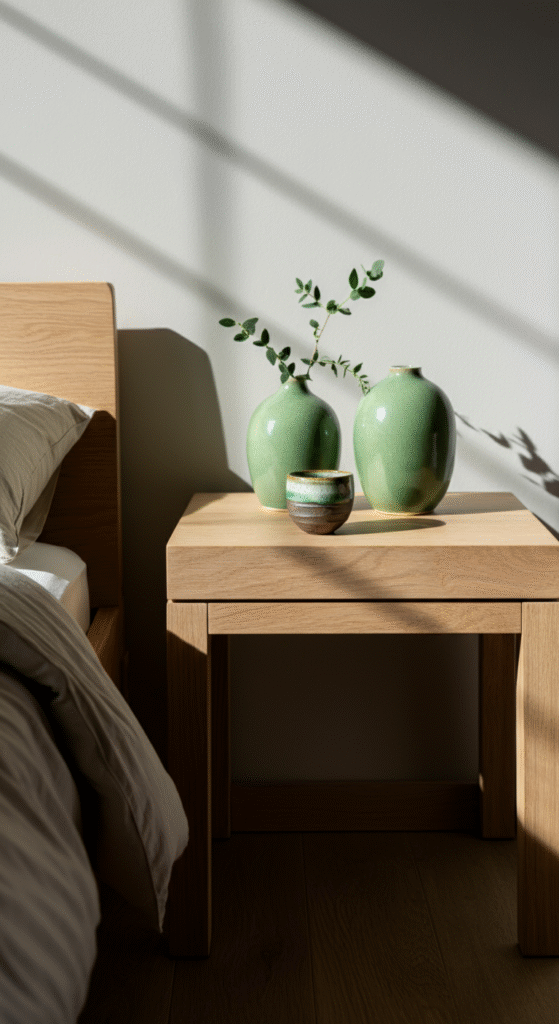
Ceramic objects are like little sculptures that sit quietly in your room. They add personality without shouting for attention. When you choose green toned ceramics, the whole bedroom gets a soft organic rhythm.
You can add things like:
small vases
planters
tea bowls
decorative trays
But keep it minimal. Japandi style does not like overcrowding. One or two good pieces can speak louder than ten average ones.
There is also a cultural truth behind this. In Japanese wabi sabi philosophy, beauty lies in imperfection. A slightly uneven ceramic vase or a handmade looking bowl brings soul to a space. Scandinavian design also respects craftsmanship, so ceramics perfectly match the aesthetic.
4. Deep Forest Green Curtains For Calm And Privacy
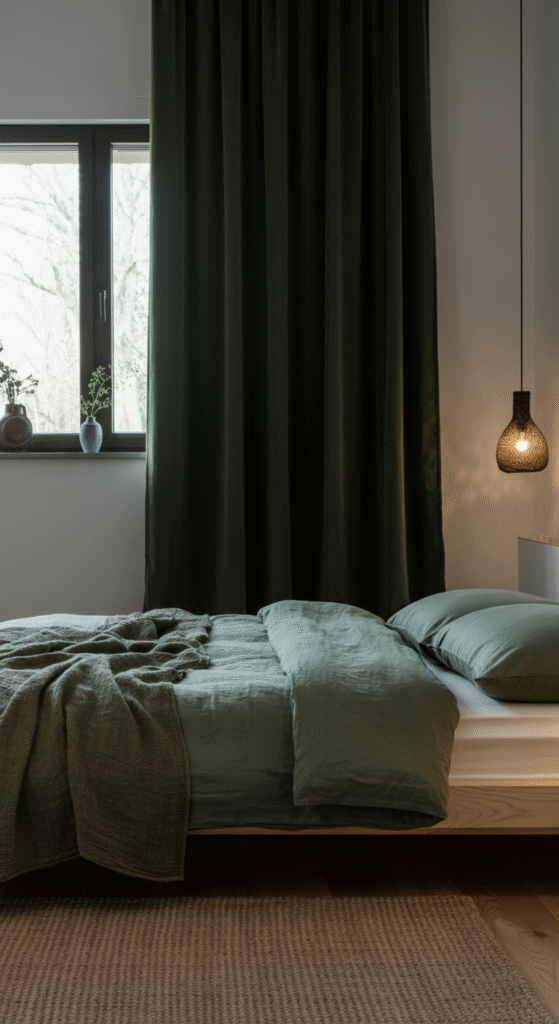
If you want a deeper visual weight in your bedroom, forest green curtains are the smartest choice. They create a soft contrast against lighter walls like beige, off white, or sage.
This trick makes the room look layered without clutter. Japandi does not always mean pale colors. Sometimes deeper tones create the right amount of grounding.
A small tip that most people miss. Choose curtains in a heavier fabric. Lightweight fabrics can look too flimsy for Japandi interiors. Thick curtains also block out light better, which is helpful if you want a good sleep routine.
Myth. Many people believe dark green makes a room look smaller, but the truth is, when used in curtains or soft furnishings, it adds depth instead of shrinking the space.
5. Olive Green Floor Rug To Anchor The Whole Space
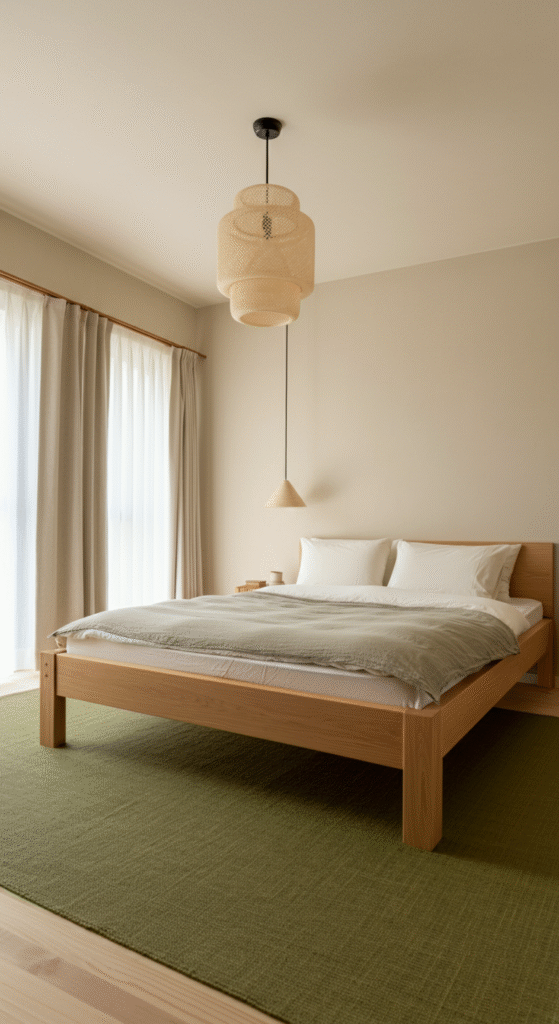
Every Japandi bedroom needs one element that ties the entire room together. A rug in olive green or moss green does that effortlessly.
A rug anchors the furniture. It stops the room from looking empty. It adds warmth under your feet during mornings. And visually, it spreads the green aesthetic without overpowering anything.
Choose rugs made of:
jute
cotton
woven wool
Avoid super thick shaggy rugs because they feel too Nordic and not Japanese. You want something simple, straight, and soft.
Do you know. Historically, Japanese rooms used tatami mats that offered comfort and grounding. Scandinavian homes used wool rugs for warmth. The Japandi rug style is like meeting in the middle.
6. Add Indoor Plants For Freshness And Soft Movement
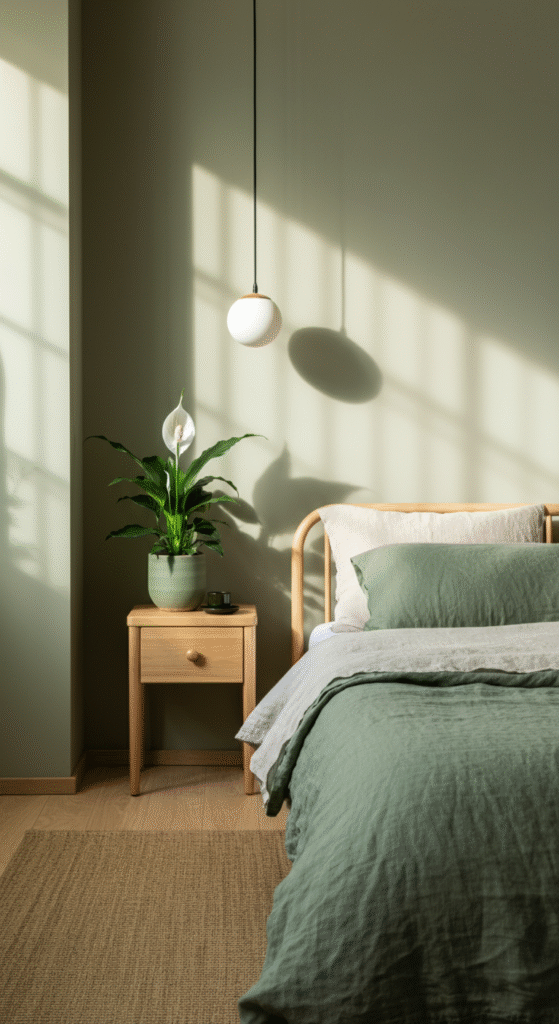
Plants in a Japandi bedroom feel natural, not forced. They bring life into the room. But choose them wisely. Not every indoor plant suits this aesthetic.
Some perfect choices include:
snake plant
ZZ plant
jade plant
peace lily
pothos
fern
money plant
Use simple ceramic or clay pots in muted tones. Avoid very shiny pots. Keep the shapes minimal.
Plants do two important things in Japandi interiors. They create movement with their leaves, and they also clean the air. Bedrooms with plants feel calmer and more breathable. There is a reason people say green brings harmony. Our minds actually relax when we see organic shapes.
Interesting fact. Indoor plants can boost your oxygen level slightly and reduce dust. This helps you sleep better and wake up fresher.
7. Light Green Artwork Or Wall Prints

If you want personality without breaking the calmness, green toned artwork is the safest path. Look for prints that show nature scenes, brush style illustrations, or geometric minimalist art.
Sometimes even one large artwork above the bed looks cleaner than having many small frames. Japandi embraces empty space. It sees emptiness not as lack, but as breathing room.
Choose frames in natural wood, black, or white. These three colors fit the Japandi palette perfectly.
There is a soft psychological effect too. Green in visuals gives the feeling of balance and renewal. It reminds you of forests, morning breeze, and open fields. So even a simple abstract green artwork can make your bedroom feel more alive.
8. Soft Ambient Lighting With Green Tones Around
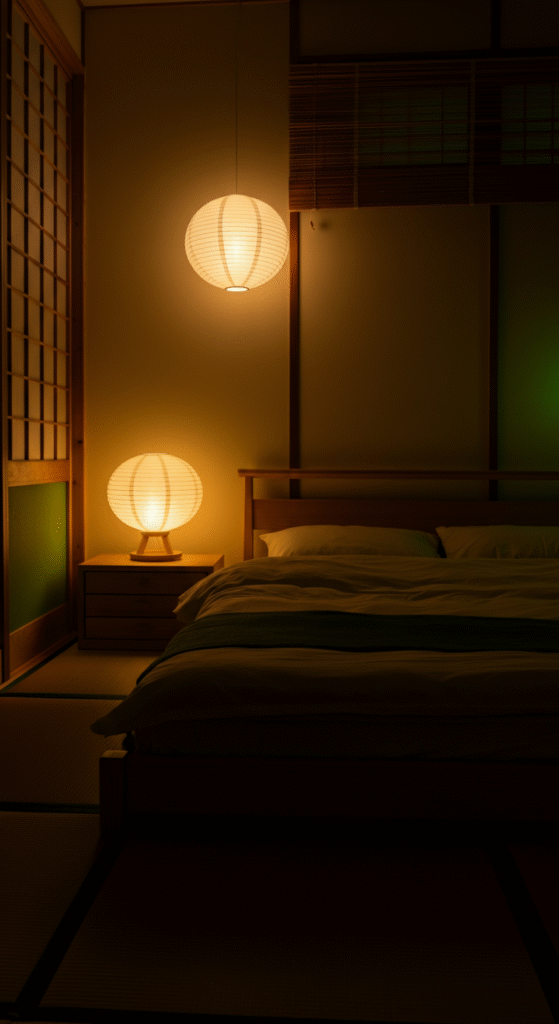
Lighting is the heart of Japandi design. If you get this wrong, even the most expensive decor will look flat. In a green aesthetic bedroom, lighting is what makes everything feel cozy.
Use warm yellow bulbs. Use soft diffused lamps. Use wooden or paper lampshades when possible.
Here is a fun little trick. Add a soft green tinted lamp or LED hue under the bed or near the corners. Not bright green. Very soft. It creates a dreamy atmosphere at night.
Interesting fact. Japanese lanterns traditionally used paper to spread light softly across the room. Scandinavian design meanwhile focuses on creating hygge through warm lighting. So ambient lighting is not something you compromise with in a Japandi bedroom.
Conclusion
A Japandi style green bedroom is not just about making your room pretty. It is more like creating a mini retreat inside your home. It feels calming, earthy, and intentional. The green tones balance your mind. The minimal elements let you breathe. The natural textures make your space feel grounded.
When you combine Japanese simplicity with Scandinavian comfort, the bedroom becomes a place where your thoughts slow down. You wake up lighter. You sleep deeper. And honestly, you feel a little bit more human in a world that keeps moving too fast.
Try even two or three of these ideas and your room will start shifting in a beautiful way. Japandi is not complicated. It is just mindful. And a green aesthetic brings that final touch of peace that most of us need these days.
Frequently Asked Questions (FAQs)
Is green a good color for a Japandi bedroom?
Yes, green works beautifully because it brings a calm, nature inspired feel that matches both Japanese minimalism and Scandinavian coziness.
Which shade of green fits Japandi style the most?
Sage, olive, and moss green are the most popular because they feel soft, earthy, and easy on the eyes.
Do plants fit into Japandi bedroom decor?
They fit perfectly. Simple, low maintenance plants like snake plant or ZZ plant enhance the natural balance of the room.
Can I mix dark green with light wood?
Yes, this contrast actually looks elegant and grounded. Dark green elements pair very well with ash, pine, and oak woods.
Is Japandi style expensive to create?
Not really. The style focuses on minimal items, natural textures, and simple design, which means you can achieve the look without buying too much.