Some links in this blog are affiliate links. If you make a purchase through these links, I may receive a small commission. This helps support the site at no extra cost to you.
In a world where we’re constantly surrounded by the hustle and bustle of daily life, the concept of creating a serene, calming space to escape to becomes all the more important. Japanese interior design, known for its simplicity, tranquility, and natural beauty, offers the perfect solution for those seeking a peaceful haven right at home.
But, do you know that the Japanese approach to bedroom decor is more than just minimalism? It’s rooted in a philosophy of balance, comfort, and respect for nature.
Many people think that Japanese-inspired bedrooms are all about empty spaces and sparsely furnished rooms, but that’s not quite the case. A Japanese bedroom makeover focuses on creating a harmonious blend of comfort, utility, and aesthetic appeal—without overwhelming the senses. It’s about finding the right elements that encourage relaxation and mindfulness.
Are you ready to transform your bedroom into a Japanese-inspired sanctuary? Here are 8 must-have elements that will give your bedroom a true Japanese makeover and elevate the way you experience sleep, relaxation, and meditation.

Table of Contents
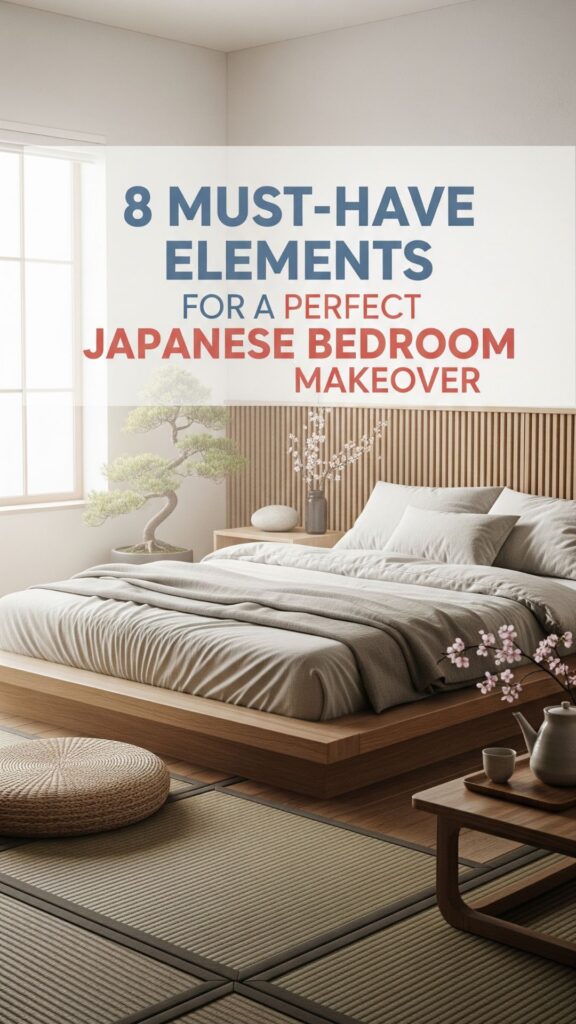
8 Must-Have Elements for Bedroom Japanese Makeover
1. Futon Bed – The Heart of Japanese Comfort

In traditional Japanese homes, futon beds are essential for achieving the right balance of comfort and space efficiency. The futon, a thin, soft mattress, is designed to be laid directly on tatami mats on the floor, giving the room a cozy yet grounded feel. Unlike Western-style beds, the futon can be easily rolled up and stored away during the day, freeing up valuable space for other activities.
Did you know? In Japan, it’s customary to sleep on futons because they help promote better posture by aligning the body with the floor. This is especially important for Japanese culture, where the concept of body alignment is deeply ingrained in daily life, even in activities like tea ceremonies or martial arts.
2. Tatami Mats – A Foundation of Tranquility
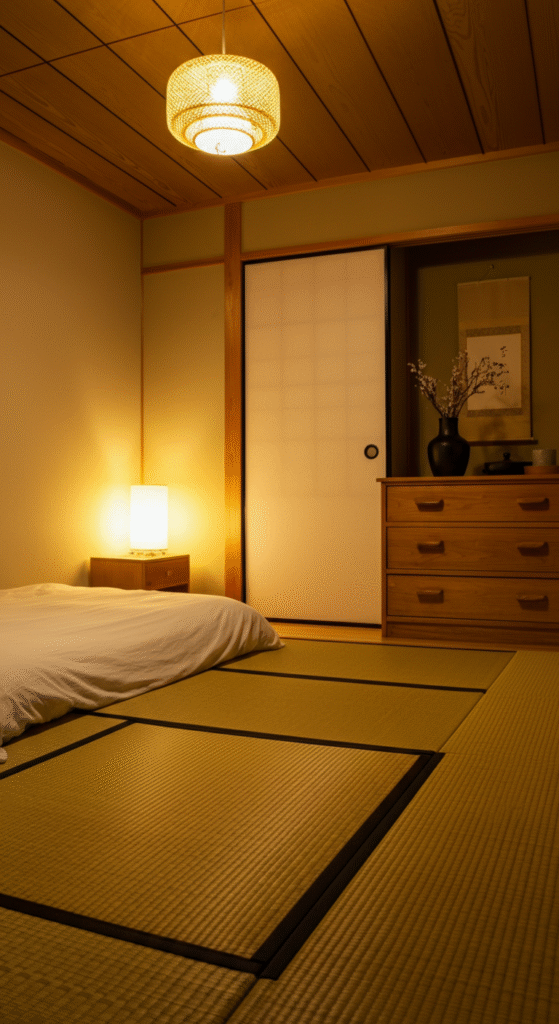
Tatami mats, made from rice straw and covered with woven rush grass, are a quintessential part of Japanese bedrooms. These mats offer a soft, natural surface that adds warmth and texture to the room. They’re also highly practical, keeping the floor cool in summer and warm in winter, and contribute to a healthy living environment by absorbing moisture.
Fun Fact: Traditionally, the size of a room in a Japanese home is measured in tatami mat units, called “jo.” A typical bedroom might be 6-8 tatami mats in size, ensuring that the space is perfectly balanced and efficient.
3. Shoji Screens – The Symbol of Lightness and Openness

No Japanese bedroom makeover is complete without the iconic shoji screens. These sliding doors, made of wooden frames and rice paper, let in soft, diffused natural light, creating a calm and airy atmosphere. Shoji screens also serve as dividers, giving you the flexibility to create distinct zones in your bedroom without obstructing the flow of light.
Myth Buster: While many believe shoji screens are fragile, they are actually quite durable. The rice paper used in these screens is specially treated to withstand wear and tear, making them a practical choice for everyday use in the bedroom.
4. Neutral Color Palette – The Art of Subtlety
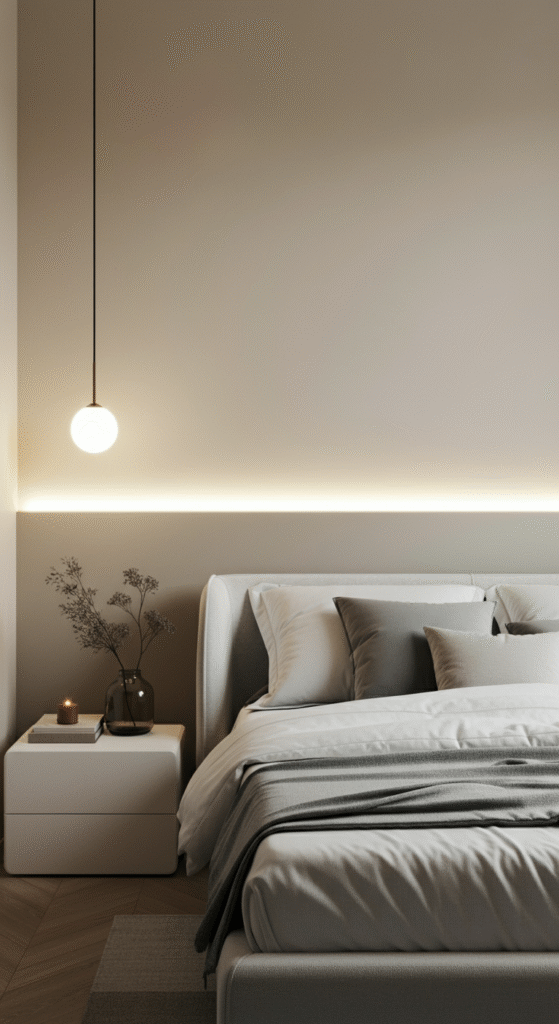
Japanese interior design thrives on the art of subtlety, and this is reflected in the color scheme of the bedroom. Neutral shades like soft whites, beiges, and muted grays create a peaceful environment, allowing the mind to unwind and rejuvenate after a long day. These tones also make the space feel more expansive and airy, which is ideal for smaller rooms.
Did you know? The Japanese believe that colors have a direct impact on mood. Soft, earthy tones like light wood, stone, and pastel greens are favored because they help promote tranquility and mental clarity. It’s no wonder that these colors are staples in any Japanese-inspired bedroom.
5. Minimalist Furniture – Beauty in Simplicity

One of the core principles of Japanese design is minimalism. In a Japanese bedroom, less is more. Furniture pieces are often low to the ground and simple in design, creating an uncluttered, streamlined aesthetic. Think low wooden dressers, simple nightstands, and compact seating that serve functional purposes without drawing attention away from the overall serenity of the room.
Interesting Fact: The minimalist approach in Japanese interiors stems from Zen philosophy, which emphasizes the importance of empty space to encourage focus and mindfulness. By keeping furniture to a minimum, the room feels less busy and more open to calm and introspection.
6. Natural Materials – Connecting with the Earth

In Japanese interior design, natural materials such as wood, bamboo, stone, and cotton are used extensively to bring the beauty of nature indoors. These materials evoke a sense of harmony and connect the space with the natural world. Wooden furniture, bamboo blinds, stone vases, and organic cotton bed linens are all excellent choices for a Japanese bedroom.
Myth Buster: Some people think that natural materials in a bedroom can look rustic or outdated. However, when used thoughtfully, these materials can create a modern, chic, and sophisticated aesthetic that’s timeless and inviting.
7. Indoor Plants – Bringing Nature Inside
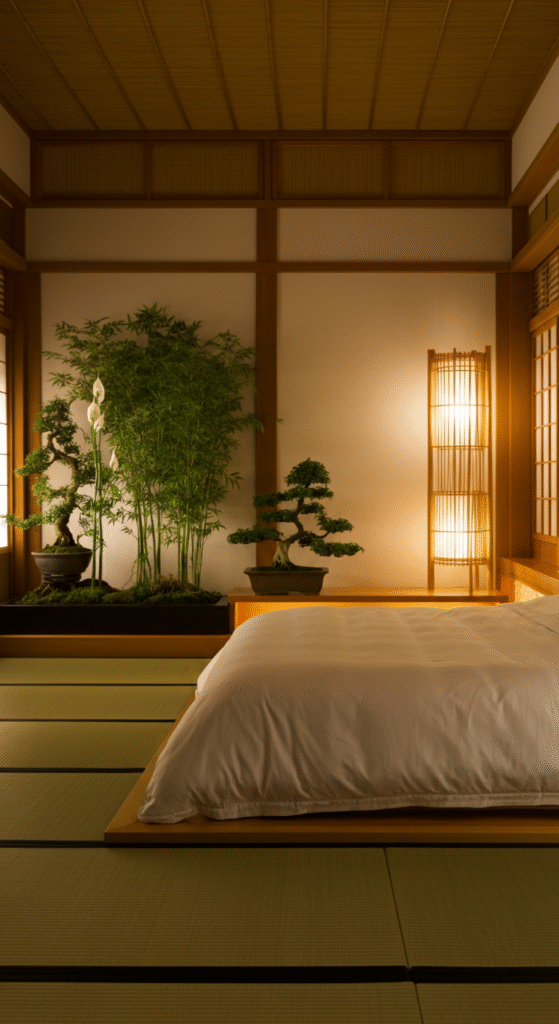
Incorporating plants into your Japanese bedroom is another great way to bring the calming effect of nature into your space. Indoor plants like bonsai trees, bamboo, or peace lilies not only enhance the room’s aesthetic but also purify the air and promote a sense of well-being.
Did you know? The Japanese practice of “Shinrin-yoku,” or forest bathing, emphasizes the healing power of being surrounded by nature. By adding plants to your bedroom, you can tap into the calming and restorative benefits of nature, even if you’re in the middle of a bustling city.
8. Soft Lighting – The Key to Creating Mood

Lighting plays a significant role in Japanese bedrooms. Soft, ambient lighting is preferred over harsh, overhead lights. Paper lanterns, low-hanging pendant lights, and candles can be used to create a warm, inviting glow that encourages relaxation. The goal is to avoid overstimulating the senses with bright lights and instead focus on creating an atmosphere of peace and calm.
Fun Fact: In Japan, the concept of “light quality” is just as important as the amount of light. The soft, diffused glow from paper lanterns or shoji screens is seen as soothing for both the eyes and the soul, helping to create an ideal environment for sleep.
Conclusion: Creating Your Japanese-Inspired Bedroom Sanctuary
A Japanese bedroom makeover is more than just a design trend—it’s a holistic approach to creating a space that nurtures your mind, body, and spirit.
By incorporating these eight key elements—futon beds, tatami mats, shoji screens, neutral color palettes, minimalist furniture, natural materials, indoor plants, and soft lighting—you can transform your bedroom into a serene, peaceful sanctuary.
Do you want to wake up every day in a space that encourages relaxation, mindfulness, and comfort? By embracing the timeless principles of Japanese design, you’ll not only create a beautiful bedroom but also foster a deeper connection with your environment.
It’s all about finding balance, simplicity, and a true sense of peace—exactly what you deserve in your sanctuary.
Frequently Asked Questions (FAQs)
What is a futon bed, and why is it popular in Japanese design?
A futon bed is a thin, foldable mattress that sits directly on the floor. It’s popular in Japanese design for its simplicity, space-saving benefits, and its ability to promote proper posture during sleep.
Why are tatami mats used in Japanese bedrooms?
Tatami mats are made of rice straw and provide a soft, natural surface for sitting and sleeping. They help maintain a comfortable temperature and are an essential part of creating a calming atmosphere.
What are shoji screens, and how do they enhance a bedroom?
Shoji screens are sliding doors made of wooden frames and rice paper. They allow soft, diffused light into the room, creating a serene and peaceful environment while acting as room dividers.
What colors are best for a Japanese-inspired bedroom?
Neutral colors like soft whites, beiges, and muted grays work best. These tones promote tranquility, make the space feel larger, and align with the Japanese principle of simplicity.
Can I add plants to a Japanese bedroom?
Yes! Indoor plants like bonsai trees, bamboo, or peace lilies are ideal for adding a touch of nature, enhancing the aesthetic, and improving air quality, all while promoting calmness.