Some links in this blog are affiliate links. If you make a purchase through these links, I may receive a small commission. This helps support the site at no extra cost to you.
Most Christmas embroidery posts recycle the same old snowflakes, gingerbread men, reindeer heads, and overused “Merry & Bright” quotes.
People pin them, save them, maybe even stitch them—but nothing about them feels fresh anymore.
So here’s the truth: if your embroidery doesn’t stop the scroll, it disappears.
This list gives you seven patterns that don’t exist in the mainstream market. Patterns your audience hasn’t seen, patterns that feel modern, bold, nostalgic, and sometimes a little strange—in the best way possible.
Before we dig in, here’s something interesting:
Did you know that most viral embroidery pins explode not because they’re perfect, but because they show something people didn’t expect to see stitched? Unusual subject, surprising contrast, or storytelling elements built into the design—these outperform classic designs every single time.
This post taps directly into that psychology.
Let’s break down seven Christmas embroidery patterns that stand out in a sea of basic holiday stitches.

Table of Contents
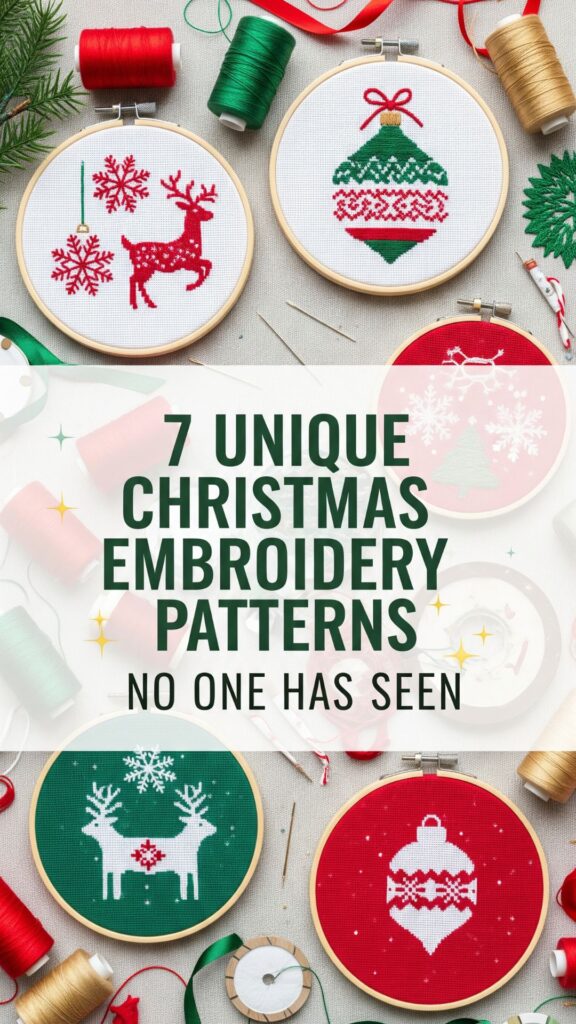
7 Unique Christmas Embroidery Patterns
Christmas Pattern 1: The Vintage Toy Shelf Scene
Most people embroider a single toy—a teddy bear, a rocking horse, or a doll.
This pattern flips the script.
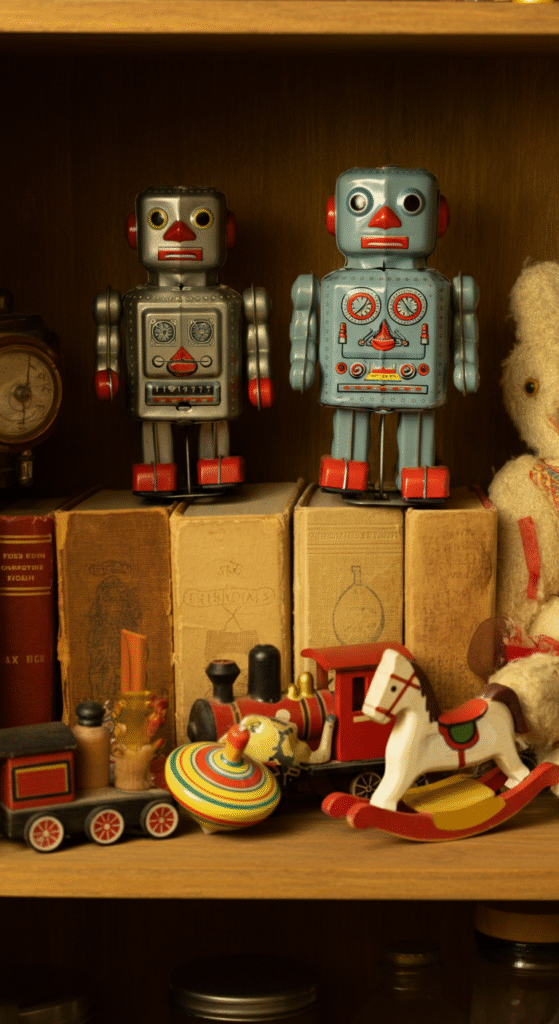
Imagine a detailed shelf packed with old-school toys from the 1950s to 1980s: wooden trains, tin robots, spinning tops, and a worn-out stuffed rabbit. The entire piece looks like a still-frame from a grandmother’s attic or a forgotten childhood memory.
The charm comes from the clutter.
Not messy clutter—storytelling clutter.
Every toy on the shelf tells a tiny story, and the more the viewer looks, the more they discover.
Interesting fact: Studies on nostalgia show that people respond more emotionally to “collections” of familiar small objects than to a single object. That’s partly why multi-element embroidery scenes go viral—they trigger more memory points.
This pattern stands out because it captures an entire childhood, not a single moment.
Christmas Pattern 2: The Midnight Forest With Hidden Creatures

Winter forest patterns are classic, but they’re also predictable.
This pattern goes darker, more mysterious, and far more unique.
Picture a deep midnight-blue woodland with tall, thin pine silhouettes.
Now layer subtle hidden animals into the shadows—a fox barely visible, an owl camouflaged in the branches, a pair of glowing eyes peeking from behind a tree.
It feels like a Christmas storybook nobody has written yet.
Two things make this pattern powerful:
- Contrast – You’re stitching light on dark instead of dark on light.
- Discovery – Viewers stare longer because they’re trying to find every creature.
Did you know: Retention on Pinterest skyrockets for “hidden detail” artwork. People stay longer, save more, and re-pin because the content feels interactive.
This pattern creates that effect effortlessly.
Christmas Pattern 3: The Architectural Winter Village Blueprint

Forget the “cute village with snow” aesthetic—this one takes a technical approach.
Think of:
Blueprint lines
Architect-style strokes
Minimalist outlines
Engineered precision
Now apply this to a Christmas village.
The houses aren’t fluffy or whimsical—each is clean, crisp, and structured like a real architectural sketch. Add tiny details like icicles marked with dotted lines or trees drawn in drafting strokes.
This style hits two unique audiences:
People who love minimalism
People obsessed with satisfying linework
It’s almost like you’re stitching a build-your-own winter town.
Myth you should know: Many beginners assume complex linework is difficult to embroider. In reality, blueprint-style patterns are some of the easiest because they rely on consistent single stitches and controlled spacing—no complicated textures needed.
That makes this pattern great for beginners who want something that looks advanced.
Christmas Pattern 4: The Storybook Nutcracker Battle Scene

Every year, people stitch nutcrackers standing stiffly in a row.
Boring.
This pattern captures the dramatic battle scene from the story—something almost no one embroiders.
Elements include:
Marching toy soldiers
A swirling snowstorm background
The Mouse King with detailed armor
The Nutcracker mid-swing
Broken candy canes scattered like battlefield debris
The result? Pure movement.
Embroidery rarely captures action, so this instantly pops.
A lesser-known detail:
The Nutcracker ballet was originally considered a failure when it premiered.
But today, it represents Christmas magic more than almost any holiday story. That’s why this rare pattern—showing the action instead of the stillness—stands out emotionally and visually.
Christmas Pattern 5: Cosmic Christmas Night Sky Constellations
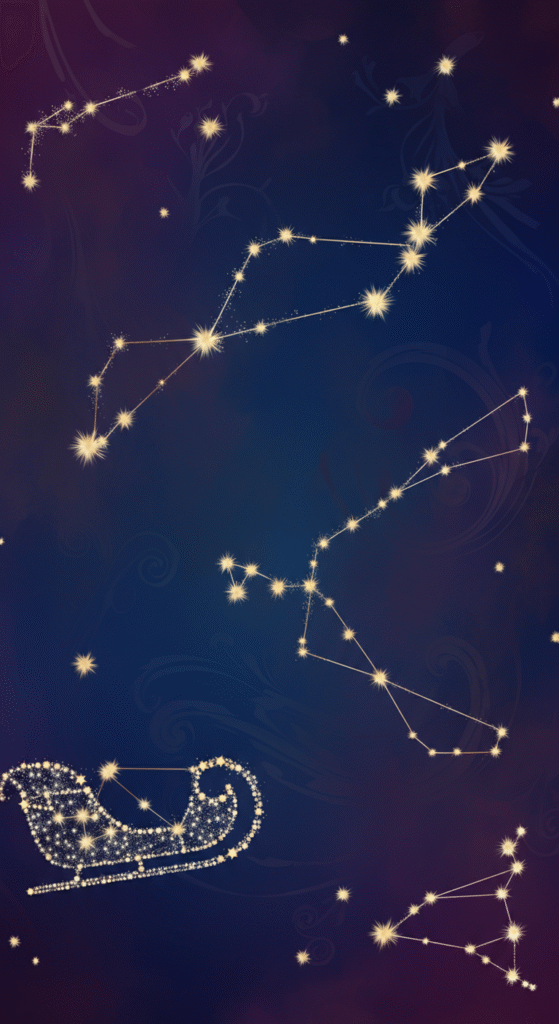
This one blends astronomy with Christmas—a combination almost nobody uses.
Imagine stitching:
Orion with a Santa hat
Cassiopeia shaped like a sleigh
A star-cluster forming a Christmas tree outline
The North Star highlighted with metallic thread
Subtle galaxy swirls done in French knots
It feels modern, dreamy, and extremely pin-able.
Why this works:
- It taps into the global fascination with space.
- It modernizes Christmas beyond the usual red-and-green palette.
Interesting fact:
Early sailors navigating during winter holidays used the same constellations we see today. In some old maritime journals, Christmas Eve was described as “the night when the sky looked closest to home.”
This tiny historical detail makes the cosmic theme stronger and more meaningful.
Christmas Pattern 6: The Cozy Kitchen Baking Chaos Pattern
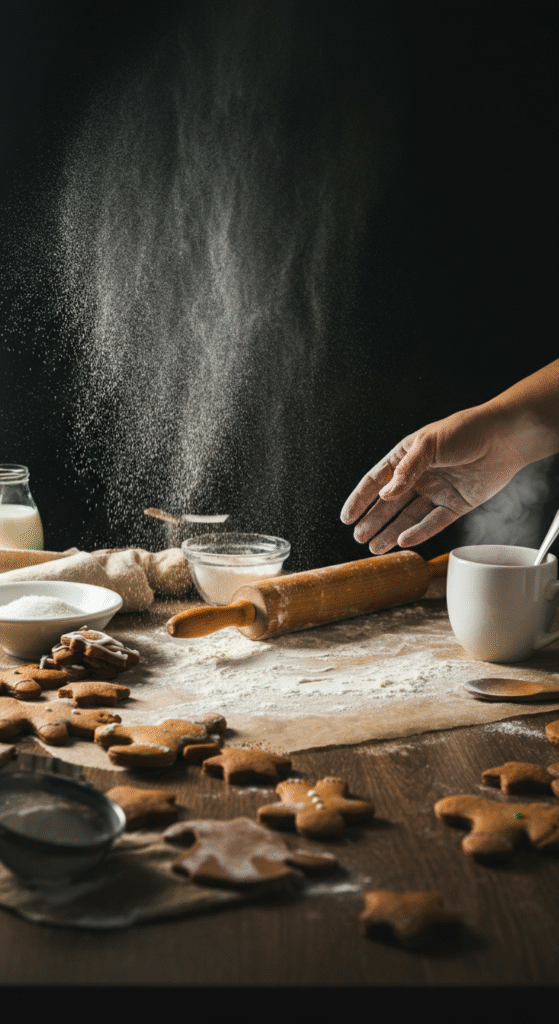
This is one of the most relatable scenes you can stitch—and weirdly, barely anyone does it.
Think:
Flour clouds in the air
Rolling pin on the counter
Sugar sprinkled everywhere
Gingerbread cookies half-iced
A child’s hand accidentally smudging the dough
Milk bowl tipping over
It’s imperfect. It’s chaotic. It’s real.
People connect with scenes that feel like a memory instead of a fantasy.
What makes this pattern Pinterest-gold is the micro-details—tiny cookie crumbs, knife marks on the chopping board, steam rising from a cup of cocoa.
Do you know:
Psychologists say people feel more nostalgic toward “messy memories” than perfect ones. That’s why holiday cookie chaos hits harder than a pristine Christmas kitchen.
Embroidery thrives on emotion, and this one serves it raw.
Christmas Pattern 7: Retro 90s Christmas Living Room Aesthetic
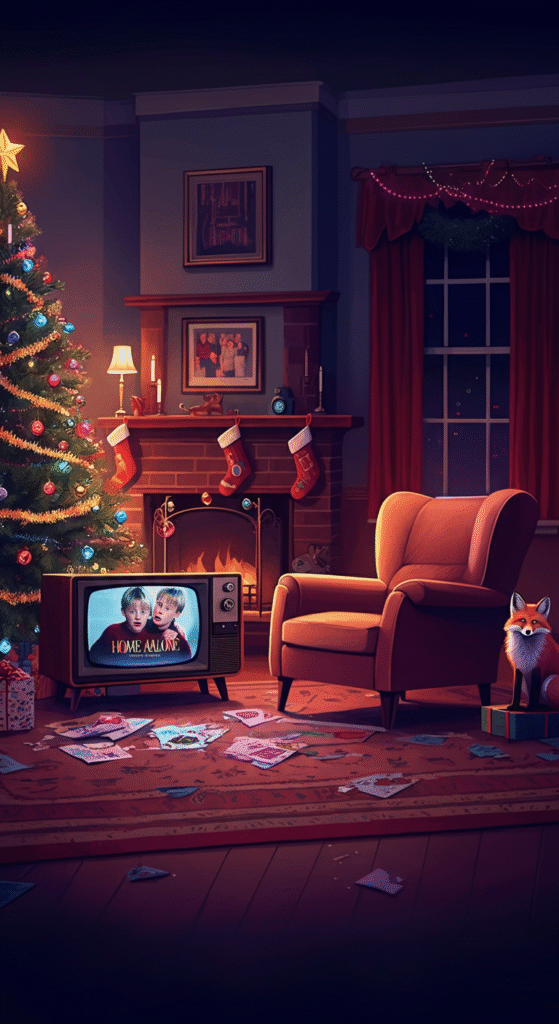
The 90s are trending everywhere—fashion, interiors, reels, TikTok…
Why not embroidery?
This pattern recreates an authentic 90s Christmas living room. Details include:
Old box-style TV
A VHS tape labeled “Home Alone”
Colorful tangled lights
Stockings with geometric prints
The classic bulky armchair
A tree with those oddly shiny tinsel strips
Wrapping paper in loud patterns
The entire scene feels like childhood for anyone born between 1985 and 2000.
Why the pattern stands out:
It taps into shared nostalgia—the kind of nostalgia that doesn’t require explanation.
Here’s something fascinating:
In a study on visual memory, researchers found that people are more emotionally attached to “ugly Christmas decor” from their childhood than the polished, magazine-style decor of today.
This explains why retro designs repeatedly go viral—they feel like home.
This embroidery pattern captures that exact warmth.
Conclusion
Most Christmas embroidery patterns follow a predictable formula: bright colors, cute characters, and the same motifs repeated every year. But that isn’t what gets attention anymore—uniqueness does.
Patterns that tell a story, carry nostalgia, hide small surprises, or break traditional rules are the ones people save, share, and eventually stitch.
These seven designs don’t just look different—they feel different.
They carry emotion, narrative, memory, and novelty.
They give your audience something they’ve never seen, something worth pausing for, something worth pinning.
If you want your Christmas embroidery to stand out in a saturated world, these are the patterns that actually move people. Not because they’re complicated, but because they say something.
Frequently Asked Questions (FAQs)
How do I make my Christmas embroidery patterns look unique?
Focus on storytelling details, unexpected subjects, and scenes that feel nostalgic or emotionally recognizable.
Which embroidery pattern style gets the most saves on Pinterest?
Patterns with hidden elements or interactive details tend to get longer viewer attention and higher saves.
Are complex embroidery scenes difficult for beginners?
Not always. Blueprint-style or outline-based scenes look advanced but use simple, repeatable stitches.
Why does nostalgic embroidery perform so well?
People emotionally connect with childhood memories, retro objects, and familiar holiday chaos more than polished scenes.
What materials help Christmas embroidery stand out?
Metallic threads, deep-toned fabrics, and layered textures create contrast and make the design more visually striking.