Some links in this blog are affiliate links. If you make a purchase through these links, I may receive a small commission. This helps support the site at no extra cost to you.
Bringing the beach home is about more than just seashells and blue paint; it starts from the ground up. A truly coastal kitchen feels airy, relaxed, and durable enough to handle sandy feet and wet swimsuits. The right flooring sets the tone for the entire room, acting as the canvas for your crisp whites, sandy beiges, and oceanic blues.
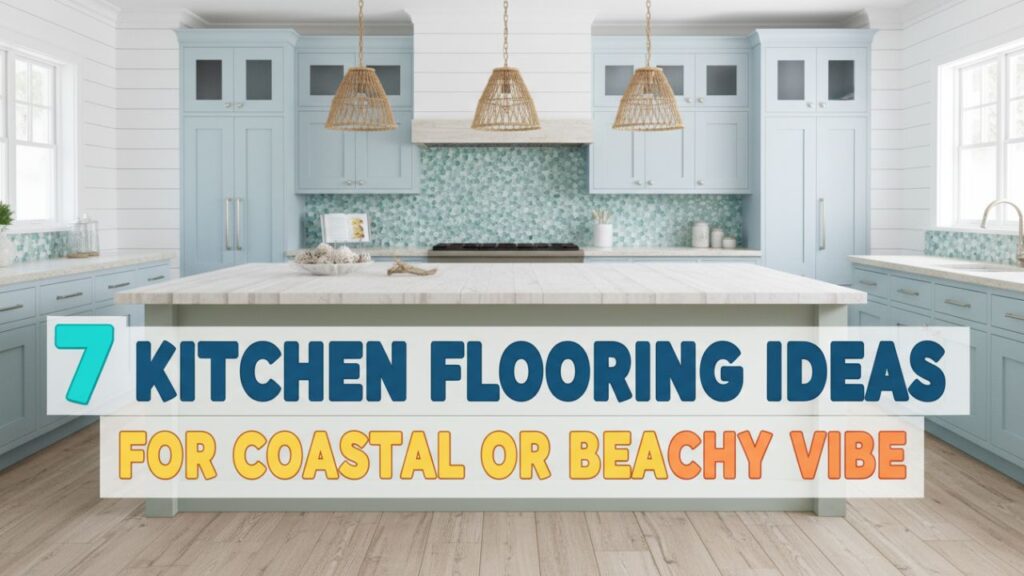
Whether you want the rustic charm of a seaside cottage or the sleek look of a modern Hamptons estate, your floor needs to bridge the gap between style and function. Here are seven flooring ideas that capture that breezy, effortless coastal aesthetic.
1. Whitewashed Wood Planks
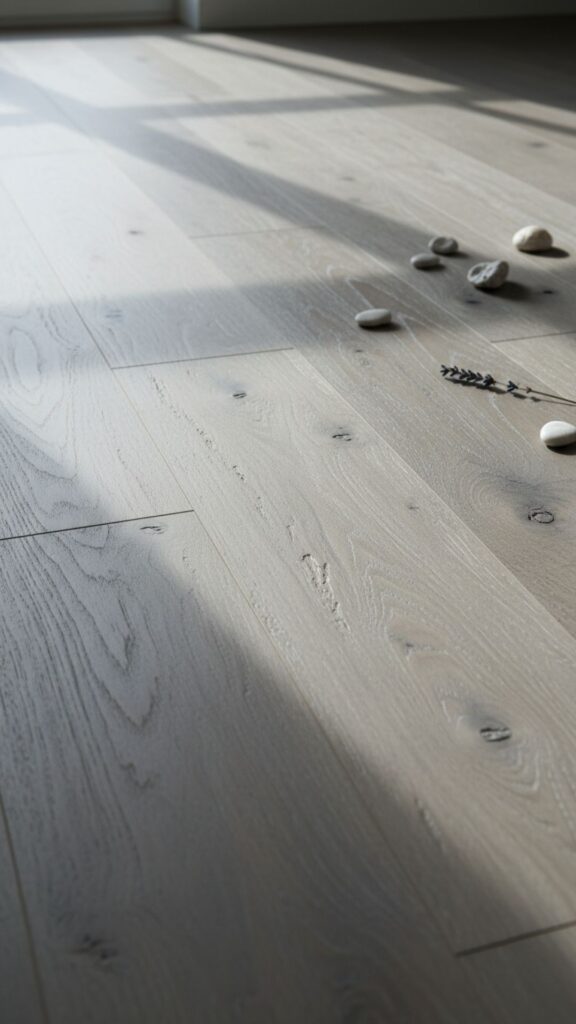
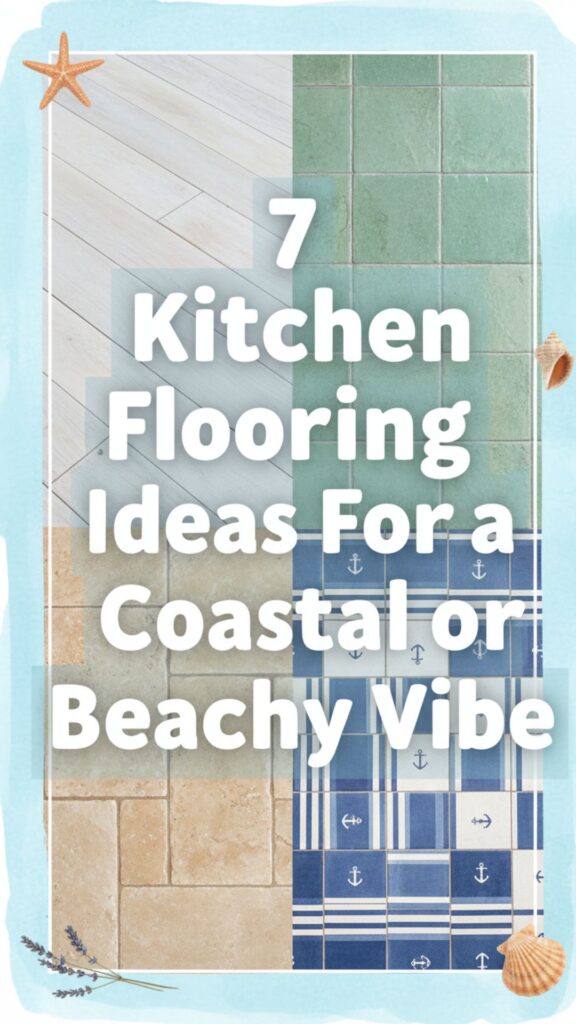
Nothing screams “beach house” quite like whitewashed wood. This style mimics the look of driftwood that has been bleached by the sun and salt air. It instantly brightens up a kitchen, making small spaces feel larger and more inviting.
How To Get The Look:
- Opt for matte finishes rather than high-gloss to keep the vibe casual.
- Choose wide planks to enhance the rustic, open feel.
- Look for “wire-brushed” textures that hide scratches and add character.
Shopping List
- Whitewashed wood flooring
- White oak flooring samples
- Peel and stick wood planks white
- Coastal kitchen rugs
- Distressed wood floor cleaner
- White wood contact paper
- Driftwood home decor
- Matte floor finish
- Wide plank laminate flooring
- Beachy floor mats
2. Sandy-Toned Luxury Vinyl Plank (LVP)
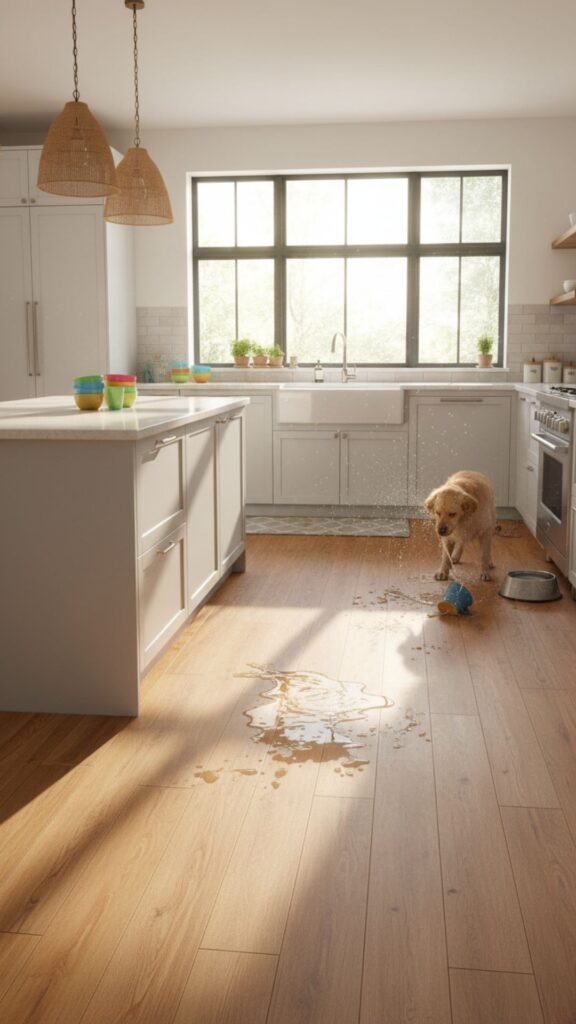
If you love the look of hardwood but fear water damage from wet swimsuits, Luxury Vinyl Plank is your hero. LVP in sandy blonde or warm beige tones offers the visual warmth of wood with complete waterproof durability. It is soft underfoot and incredibly easy to clean.
How To Get The Look:
- Select a “rigid core” vinyl for maximum durability in high-traffic areas.
- Stick to lighter, warmer wood tones like honey oak or maple.
- Ensure the planks have a realistic grain pattern for authenticity.
Shopping List
- Luxury vinyl plank flooring waterproof
- Vinyl floor installation kit
- Beige vinyl flooring
- Waterproof kitchen mats
- Vinyl plank cutter
- Blonde wood vinyl flooring
- Underlayment for vinyl flooring
- Scratch resistant flooring
- Natural fiber rugs
- Floor mops for vinyl
3. Patterned Encaustic Cement Tile

For a kitchen that needs a pop of personality, encaustic tiles are a fantastic choice. Often featuring geometric patterns in ocean blues and crisp whites, these tiles add a Mediterranean or exotic island flair. They are cool to the touch, which is perfect for hot summer days.
How To Get The Look:
- Use patterns featuring navy, teal, or sky blue.
- Keep the rest of the kitchen (cabinets and walls) relatively neutral to let the floor shine.
- Seal cement tiles properly to prevent staining from kitchen spills.
Shopping List
- Encaustic cement tiles
- Blue and white floor tiles
- Patterned floor stencils
- Tile sealer matte finish
- Peel and stick floor tile patterned
- Mediterranean kitchen decor
- Tile grout cleaner
- Geometric floor tiles
- Blue kitchen accessories
- Tile leveling system
4. Large Format Limestone or Travertine
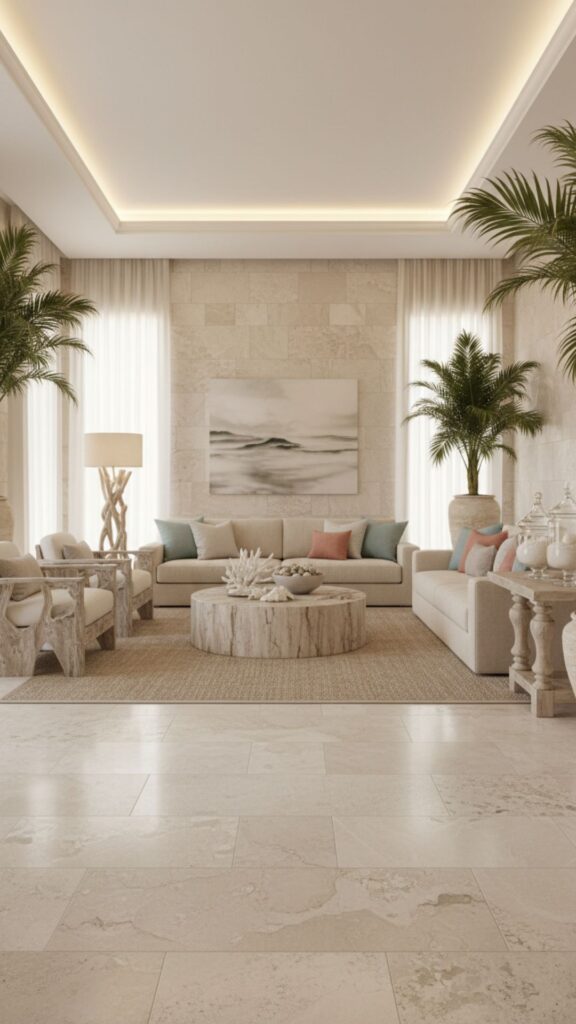
Natural stone flooring brings the texture and color of the beach indoors. Limestone and travertine come in beautiful hues of cream, sand, and soft gray. The natural variation in the stone adds an organic, earthy element that feels incredibly grounded and sophisticated.
How To Get The Look:
- Choose a “honed” or “tumbled” finish rather than polished to avoid slipping.
- Use large format tiles (12×24 or larger) to minimize grout lines.
- Pair with linen textures and woven baskets for a complete look.
Shopping List
- Travertine floor tiles
- Limestone flooring tiles
- Natural stone sealer
- Stone floor cleaner
- Beige stone tiles
- Grout for stone tile
- Woven kitchen runner
- Tumbled stone tile
- Seagrass baskets
- Natural stone polish
5. Herringbone Wood Layout
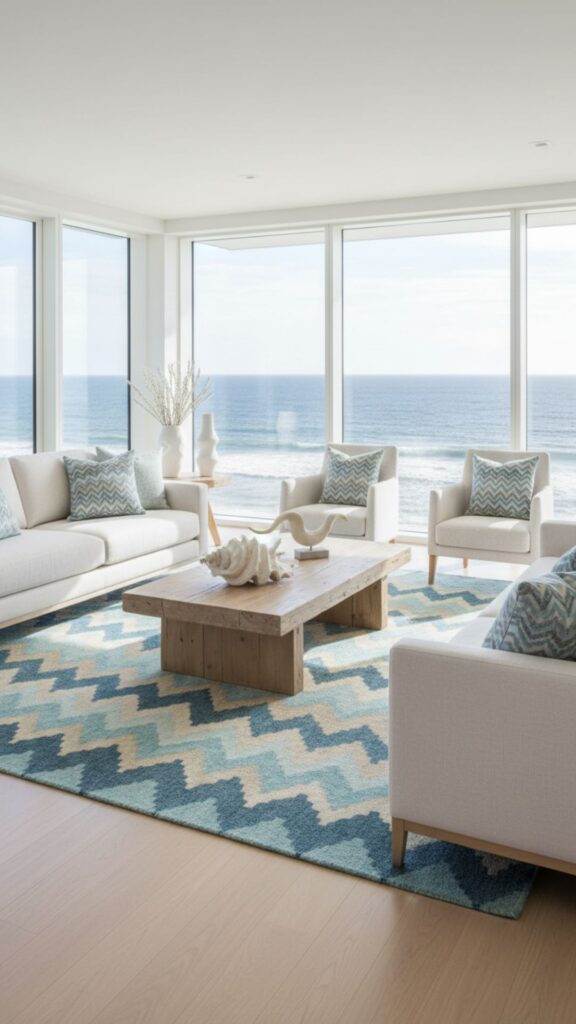
If you want a coastal vibe that leans more modern and elegant, install your wood (or wood-look) flooring in a herringbone pattern. The zig-zag design mimics the movement of waves and adds a sophisticated architectural detail to the room without feeling stuffy.
How To Get The Look:
- Use lighter wood tones like ash or white oak to keep it airy.
- Keep the plank width relatively narrow to make the pattern pop.
- Ensure the installation runs parallel to the longest wall or the main light source.
Shopping List
- Herringbone wood flooring
- Engineered hardwood herringbone
- Wood floor adhesive
- Parquet flooring
- White oak herringbone
- Herringbone tile stencil
- Flooring knee pads
- Wood floor polish
- Modern coastal decor
- Flooring spacers
6. Grey-Washed Wide Planks
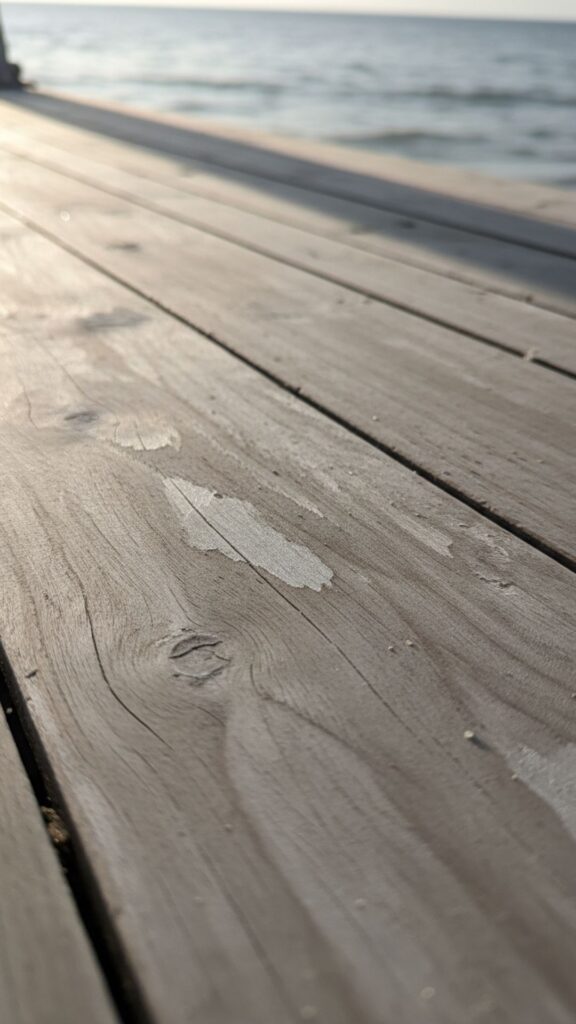
Grey-washed flooring mimics the silver patina of aged boat decks or boardwalks. It is an excellent neutral base that works well with both warm and cool color palettes. It feels contemporary yet weathered, hiding dust and sand exceptionally well.
How To Get The Look:
- Look for planks with significant color variation for a natural look.
- Matte finishes are essential here; shiny grey floors can look artificial.
- Pair with white cabinetry and chrome or brushed nickel hardware.
Shopping List
- Grey wood flooring
- Grey vinyl plank flooring
- Peel and stick grey wood
- Grey laminate flooring
- Silver wood stain
- Grey kitchen rugs
- Barnwood flooring
- Flooring installation tools
- Weathered wood finish
- Modern farmhouse flooring
7. Wood-Look Porcelain Tile
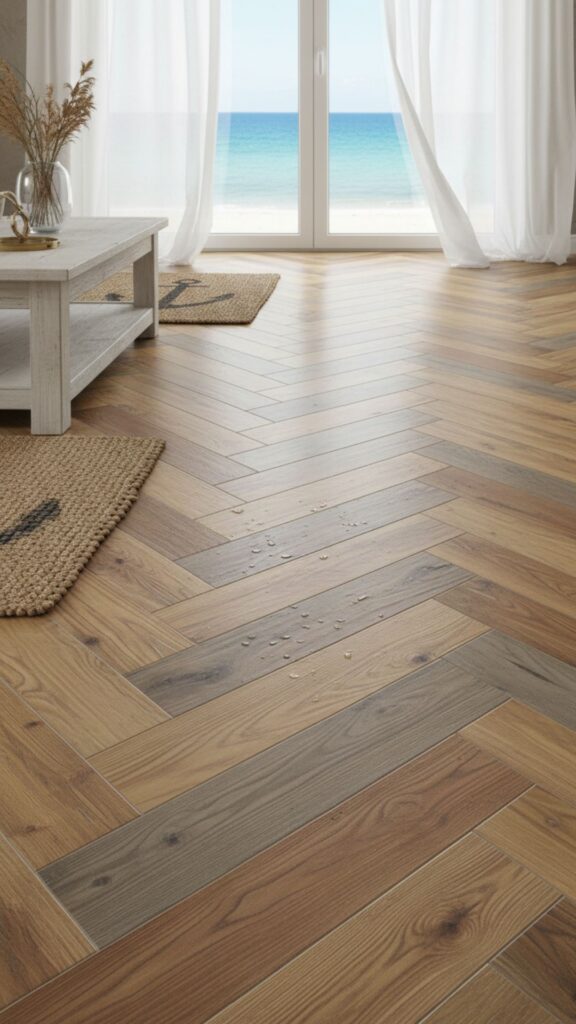
This is the ultimate practical choice for a beach home. You get the aesthetic warmth of wood with the heavy-duty durability of porcelain tile. It is completely waterproof, scratch-resistant, and won’t warp in humid coastal environments.
How To Get The Look:
- Choose rectified tiles, which allow for extremely thin grout lines, making the floor look like continuous wood.
- Use a grout color that matches the darkest tone in the “wood” grain to create a seamless shadow effect.
- Lay them in a random offset pattern to mimic real hardwood installation.
Shopping List
- Wood look porcelain tile
- Tile mortar
- Wood look floor tile grey
- Tile cutter manual
- Grout float
- Tile spacers 1/8 inch
- Sanded grout
- Porcelain tile cleaner
- Driftwood tile
- Tile saw wet
Bringing the Ocean Breeze Indoors
Choosing the right flooring is about balancing the practical needs of a kitchen with the relaxed, effortless spirit of the coast. Whether you choose the durability of porcelain tile or the organic warmth of real whitewashed oak, the goal is to create a space where you can kick off your sandals and relax.
By focusing on light tones, matte textures, and natural materials, you can transform your kitchen into a seaside sanctuary no matter how far you live from the waves.
Frequently Asked Questions (FAQs)
1. What is the most durable flooring for a beach house kitchen?
Porcelain tile and Luxury Vinyl Plank (LVP) are generally considered the most durable. Both are waterproof and scratch-resistant, making them ideal for handling sand, water, and high foot traffic.
2. Can I use real hardwood in a coastal kitchen?
Yes, but proceed with caution. Engineered hardwood is better than solid hardwood for coastal environments because it handles humidity changes better. Always wipe up spills immediately to prevent warping.
3. What colors work best for coastal flooring?
Light, airy tones work best. Think sandy beiges, whitewashed greys, crisp whites, and light natural oaks. These colors hide sand well and reflect light to keep the room bright.
4. Is tile too cold for a coastal home?
Tile can be cool underfoot, which is often a benefit in hot coastal climates. If you are concerned about warmth in the winter, consider installing radiant floor heating underneath your stone or porcelain tiles.
5. How do I protect my floors from sand scratches?
Sand acts like sandpaper on flooring finishes. Place mats at every entry point to trap sand before it enters the kitchen, and sweep or vacuum frequently to prevent scratching.