Some links in this blog are affiliate links. If you make a purchase through these links, I may receive a small commission. This helps support the site at no extra cost to you.
Have you ever walked into a room and felt an instant sense of calm? If you have, chances are it was a space influenced by Japanese design principles. Imagine a bedroom where simplicity meets functionality, and every item has a purpose.
Japanese-style modern bedrooms blend minimalism with tranquility, creating a serene oasis perfect for rest and rejuvenation. But it’s not just about the furniture—there’s an art to creating these spaces that bring balance and harmony.
In this post, we’ll explore 7 incredible bedroom designs that incorporate Japanese-inspired elements with a modern twist. These designs are not just aesthetically pleasing, they’re practical too, offering a space that nurtures both the body and mind.
Whether you’re redesigning your space or simply looking for some inspiration, you’ll want to see these ideas that seamlessly combine ancient traditions with modern living.

Table of Contents

7 Best Inspiring Bedroom Japanese Style Modern Designs
1. Zen Minimalism: The Key to Tranquil Bedrooms
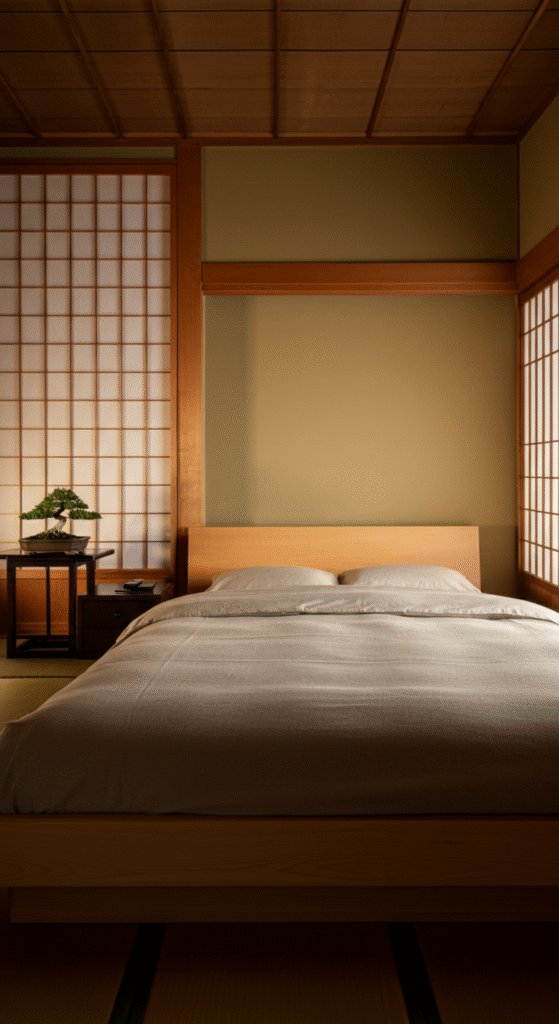
Japanese bedrooms are known for their minimalist approach. The idea is simple: less is more. A minimalist design is perfect for creating a peaceful sanctuary that avoids clutter and distractions. The focus here is on clean lines, open spaces, and natural materials.
How to Achieve Zen Minimalism:
- Neutral Color Palette: Whites, beige, and soft grays dominate Japanese interiors. These colors promote relaxation and calmness.
- Low Furniture: A traditional Japanese futon or a low-profile bed allows for a closer connection to the ground, grounding the space and encouraging a sense of serenity.
- Simple Accessories: Limit decorative items to a few meaningful pieces. A single art piece or a small bonsai tree can become a focal point without overwhelming the space.
Did You Know?
The Japanese concept of “Wabi-Sabi” embraces imperfections. Instead of perfect symmetry, the beauty lies in the irregularities, such as uneven edges on wood or handmade ceramics. Incorporating this philosophy into your bedroom design can add a sense of authenticity and depth.
2. Tatami Mats: A Traditional Touch in Modern Homes
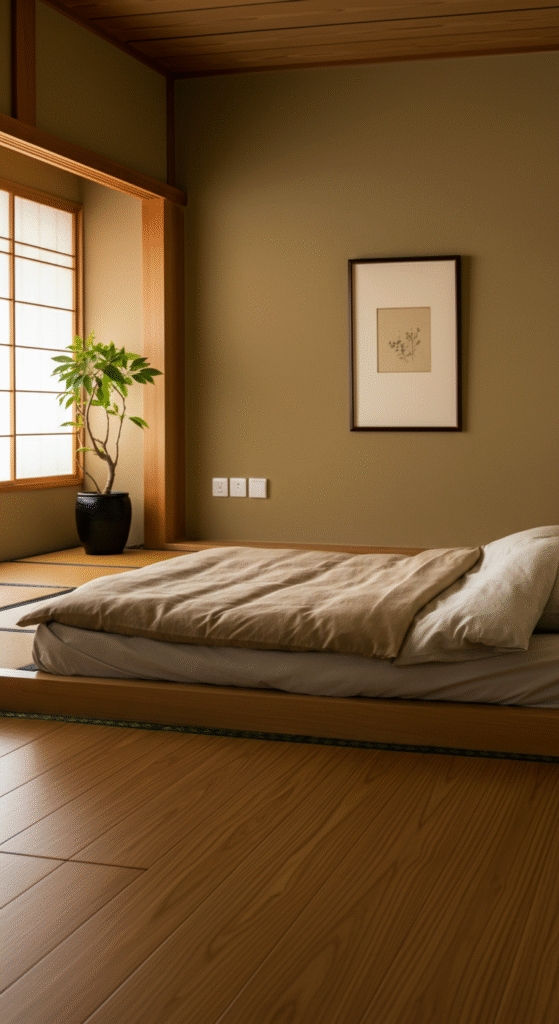
Tatami mats are a classic element of Japanese interiors. These woven straw mats are used on the floor and are typically covered with a soft, quilted cover. They create a cozy, natural feel and are often used as the base for futons in traditional Japanese homes.
How to Use Tatami Mats in Your Bedroom:
- Layer Over Hardwood Floors: Place tatami mats over existing hardwood or concrete floors for texture and warmth.
- Use as a Base for Low Beds: Combine tatami mats with a simple, low-profile platform bed to enhance the room’s minimalist appeal.
- Create Defined Zones: If your bedroom has a multi-functional design, use tatami mats to demarcate different areas of the space.
Interesting Fact:
Tatami mats are not only comfortable but are also part of Japanese culture. They’re designed to breathe, providing a natural air filtration system. This allows them to regulate temperature and humidity, making them ideal for bedroom spaces where comfort is a priority.
3. Sliding Doors: The Perfect Space-Saving Solution

One of the most iconic elements of Japanese design is the sliding door, or shoji. These doors are made of wood and paper, allowing natural light to filter into the space while providing privacy when needed.
How to Incorporate Sliding Doors:
- Create Dividing Walls: Use sliding doors to separate different sections of the bedroom, such as a workspace or a dressing area, without taking up valuable space.
- Allow Natural Light: Shoji screens allow soft, diffused light to fill the room, enhancing the feeling of openness while maintaining privacy.
- Add a Futuristic Twist: While traditional shoji screens are made of paper, modern designs use frosted glass, which keeps the space light and airy while offering more durability.
Myth Debunked:
Some people think sliding doors are only suitable for traditional homes. However, modern versions of sliding doors are incredibly sleek and can fit perfectly into contemporary spaces, making them just as functional as they are stylish.
4. Natural Materials: Bringing the Outdoors In
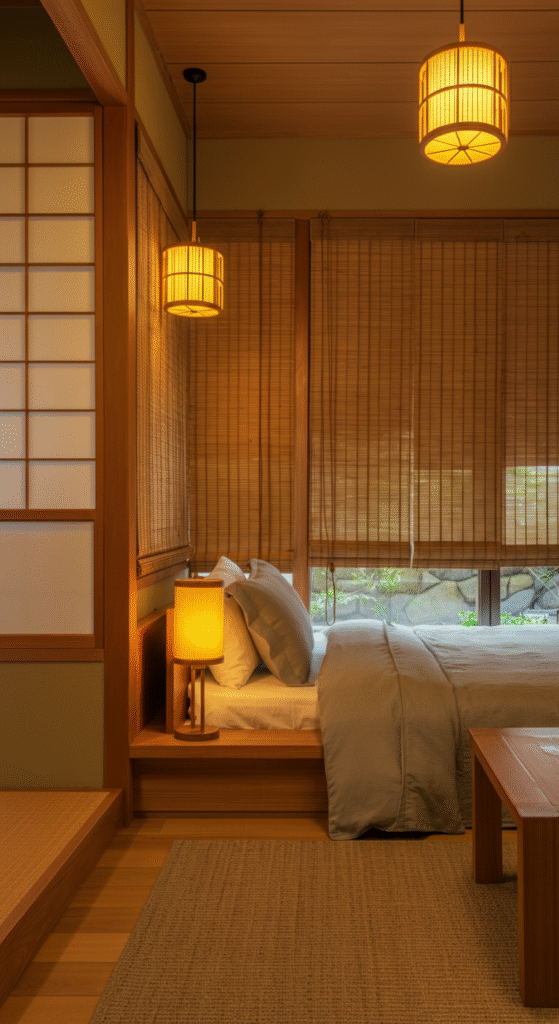
Japanese design embraces nature in every element of the space. Wood, bamboo, paper, and stone are commonly used to bring the natural world into the bedroom. These materials not only look beautiful but also contribute to the overall peaceful atmosphere.
Ways to Incorporate Natural Materials:
- Wooden Furniture: A solid wood bed frame or nightstand adds warmth and texture to your bedroom. Choose wood that has a natural finish to maintain the authentic Japanese aesthetic.
- Bamboo Accents: Bamboo blinds, shelves, or even wall art add an organic touch to the room, evoking a sense of nature’s simplicity.
- Stone Decor: Consider stone sculptures or water features for a calming effect. Small, smooth stones in a decorative tray can be placed on the nightstand as a subtle nod to Japanese tradition.
Did You Know?
In Japan, the art of creating “Kintsugi,” or the repair of broken pottery with gold, is seen as a way to embrace the beauty of imperfections. This concept is often reflected in Japanese interiors, where even the smallest flaws are celebrated for the story they tell.
5. Neutral & Earthy Tones: The Heart of Japanese Color Palettes

Japanese design is deeply rooted in the beauty of nature, and the color palette used in the bedroom reflects that. Soft, earthy tones mimic the natural environment, creating a calm, harmonious vibe that’s ideal for a restful night’s sleep.
How to Use Neutral & Earthy Tones:
- Opt for Soft Beige or Taupe Walls: These colors offer a soothing backdrop for the rest of your design elements.
- Dark Wood Accents: Pair lighter tones with dark wood for contrast. This could include wooden furniture, beams, or even a dark wooden accent wall.
- Accents in Green: Adding touches of green through plants or soft fabrics mimics the beauty of nature and brings a refreshing element to your space.
Myth:
Some people believe that bold colors can add energy to a room. While this may be true for some spaces, Japanese-inspired bedrooms thrive on muted tones that encourage relaxation and peace. The goal is not to energize the room, but to foster calm and restfulness.
6. Feng Shui-Inspired Layouts for Balance

Feng Shui, the ancient Chinese practice of arranging spaces to promote harmony, plays a significant role in Japanese bedroom design. The layout of your furniture, the direction in which your bed faces, and the positioning of various items can influence the energy of the room.
Tips for Creating a Feng Shui-Inspired Bedroom:
- Position the Bed for Stability: Ideally, your bed should be placed against a solid wall, with a clear view of the door but not directly in line with it. This positioning is thought to provide a sense of security and control.
- Keep the Room Free of Clutter: Feng Shui emphasizes the importance of a clutter-free environment. Use storage wisely and keep only the items that truly serve a purpose.
- Add Natural Elements: Incorporate plants, crystals, or water features to enhance the flow of positive energy.
Interesting Fact:
In Japan, the direction in which you sleep is considered significant for health and well-being. For instance, sleeping with your head pointing north is believed to bring balance and tranquility to the mind.
7. Soft Lighting: Setting the Mood for Relaxation

Lighting plays a crucial role in any bedroom, but it’s especially important in Japanese-inspired designs. The right lighting can enhance the serenity of the space and create an ambiance that encourages relaxation.
How to Create Soft Lighting in Your Bedroom:
- Paper Lanterns: Traditional paper lanterns or soft LED lights give off a warm, ambient glow that’s perfect for evening relaxation.
- Floor Lamps: Place a floor lamp in the corner of the room for an elegant, modern touch. The soft light it gives off adds warmth without being too harsh.
- Dimmer Switches: Install dimmer switches so you can control the intensity of your lighting depending on the time of day or the mood you want to set.
Did You Know?
Japanese homes traditionally have “Akari” lights—paper lanterns designed to soften and diffuse the light. These lanterns not only provide gentle illumination but also symbolize the passage of time, as they are often used during specific festivals and events.
Conclusion
Japanese-style modern bedroom designs blend the old and new, combining timeless elements with contemporary flair.
Whether you’re drawn to the minimalist charm of Zen design, the natural elegance of tatami mats, or the peace-promoting effects of Feng Shui, there’s a Japanese-inspired bedroom style for every taste and preference. By focusing on natural materials, calming colors, and simple, functional design, you can create a bedroom that promotes tranquility, rest, and overall well-being.
So, are you ready to transform your space into a serene sanctuary? With the inspiration from these 7 stunning designs, your bedroom could soon be your favorite place to unwind, recharge, and find balance. Happy decorating!
Frequently Asked Questions (FAQs)
What is a Japanese-inspired bedroom design?
A Japanese-inspired bedroom combines minimalist design with natural elements. It focuses on simplicity, tranquility, and balance, using neutral colors, low furniture, and natural materials like wood and bamboo.
How can I make my bedroom feel like a Japanese Zen space?
To create a Zen-inspired bedroom, keep the space clutter-free, use low-profile furniture, incorporate neutral tones, and add natural materials like wood and tatami mats. Soft lighting and minimal decoration also enhance the peaceful ambiance.
Are tatami mats necessary in a Japanese-style bedroom?
While not mandatory, tatami mats add authenticity to a Japanese-inspired space. They provide comfort, warmth, and a connection to nature, creating a relaxed, earthy feel.
Can modern furniture work in a Japanese-style bedroom?
Yes! Modern furniture can blend seamlessly with Japanese design elements. Opt for simple, functional, and low-profile pieces that complement the minimalist aesthetic.
What role does lighting play in Japanese bedroom design?
Lighting is crucial in Japanese interiors, with soft, ambient lighting creating a calm, relaxing atmosphere. Paper lanterns, dimmer switches, and floor lamps help set the right mood for rest and relaxation.