Some links in this blog are affiliate links. If you make a purchase through these links, I may receive a small commission. This helps support the site at no extra cost to you.
The bedroom is no longer just a place to sleep.
For many people, it has become a private retreat where the day begins and ends with intention.
Do you know that in traditional Japanese culture, rooms were designed to serve multiple purposes throughout the day, including rest, reflection, and mindful movement?
This philosophy blends naturally with Scandinavian ideas of comfort, simplicity, and warmth, which together form what we now call Japandi style.
Creating a yoga space in your bedroom using Japandi home decor is not about adding more things.
It is about removing distractions and shaping an environment that supports calm breathing, gentle movement, and mental clarity.
In this long-form guide, you will find seven thoughtfully designed bedroom yoga space ideas inspired by Japandi principles.
Each idea is practical, calming, and adaptable to different bedroom sizes, making it ideal for Pinterest-style inspiration while staying rooted in real-life use.

Table of Contents

7 Bedroom Yoga Space Ideas for Japandi Decor
1. Minimal Floor Yoga Corner With Natural Materials
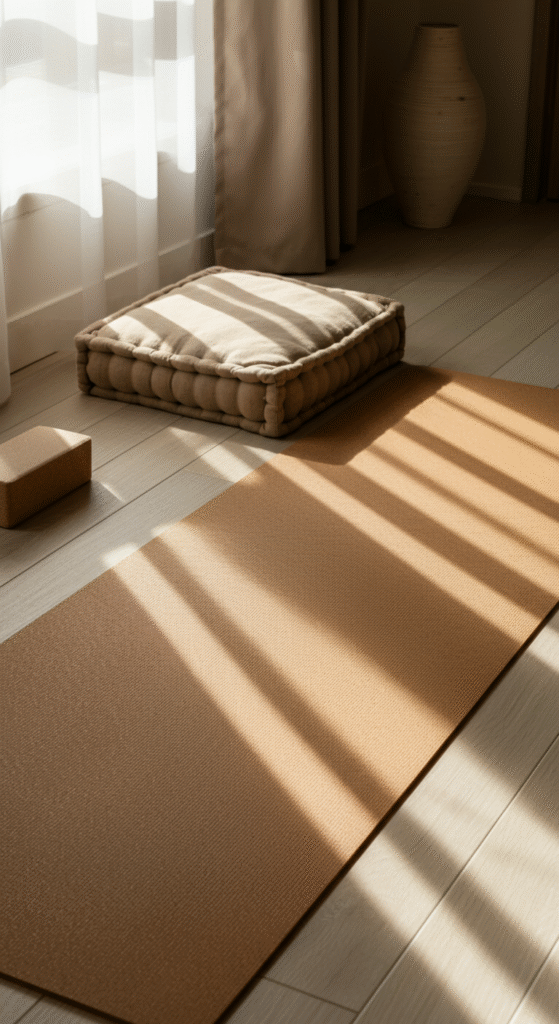
A Japandi bedroom yoga space often begins at floor level.
Instead of raised platforms or bulky furniture, the focus stays close to the ground.
Choose a quiet corner of your bedroom and keep it intentionally open.
A neutral-toned yoga mat made from natural rubber, cork, or cotton blends well with Japandi aesthetics.
Low-profile elements like a woven floor cushion, a linen bolster, or a folded cotton blanket add comfort without clutter.
Wooden flooring or a simple jute rug beneath the mat enhances warmth and texture.
Do you know that practicing yoga closer to the floor can improve grounding and balance?
Many traditional yoga practices favored earth-level movement to strengthen stability and focus.
Avoid adding storage units here.
The empty space itself becomes part of the design, encouraging mindfulness even before the practice begins.
This type of yoga corner works especially well in small bedrooms because it requires no permanent setup.
When not in use, the mat can be rolled away, restoring the room to its restful function.
Shopping List
- Natural cork yoga mat
- Organic cotton yoga mat
- Handwoven jute floor rug
- Meditation floor cushion cotton
- Foldable yoga blanket
- Eco friendly yoga bolster
- Natural rubber yoga mat
- Tatami style floor mat
- Low profile yoga knee pad
- Wooden yoga block set
- Linen meditation pillow
- Minimal yoga mat carrier
- Non slip neutral yoga mat
- Cotton yoga strap
- Floor seating meditation mat
- Handloom cotton throw blanket
- Soft wool yoga shawl
2. Soft Neutral Color Palette for Mental Clarity
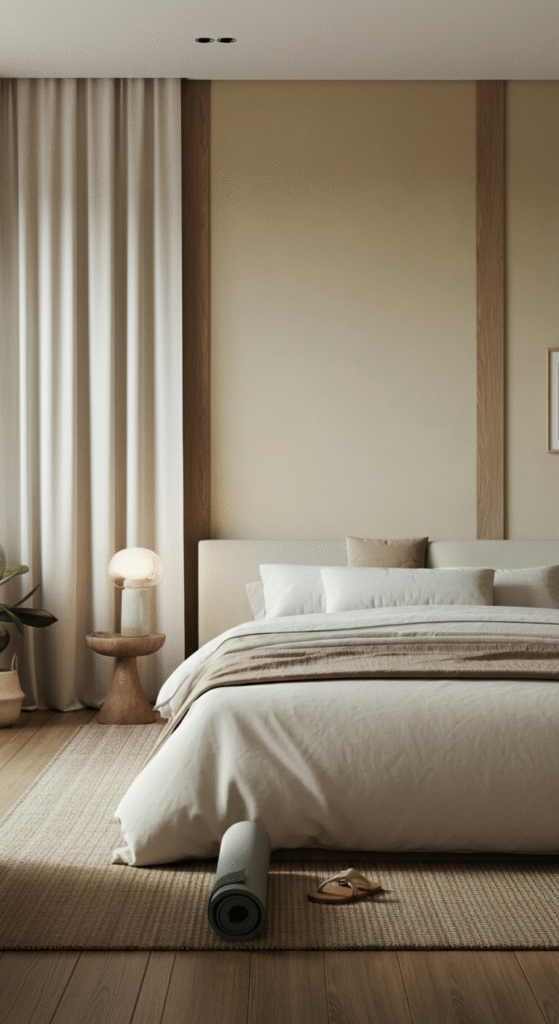
Color plays a silent but powerful role in how the body responds to a space.
Japandi interiors rely on soft, muted shades that calm the nervous system.
For a bedroom yoga space, focus on tones like warm beige, clay, sand, soft gray, or off-white.
These colors reflect light gently and reduce visual noise.
Walls in subtle earthy shades create a sense of openness.
If repainting is not an option, fabric elements like curtains, bed linens, or yoga blankets can introduce these tones naturally.
An interesting fact is that overly bright or high-contrast colors can increase mental alertness, which is not ideal for slow yoga or meditation.
Japandi palettes support parasympathetic relaxation, helping the body settle more easily into breathwork.
Keep patterns minimal.
Solid colors or very subtle textures align better with the philosophy of simplicity and balance.
This color approach also allows the yoga space to blend seamlessly with the rest of the bedroom, making it feel intentional rather than separate.
Shopping List
- Beige yoga mat
- Warm gray yoga mat
- Neutral tone meditation cushion
- Linen yoga mat towel
- Cream cotton throw blanket
- Minimal bedspread neutral shade
- Soft beige blackout curtains
- Neutral area rug
- Light sand yoga bolster
- Off white meditation pillow
- Warm tone bed sheet set
- Neutral yoga storage basket
- Muted tone floor cushions
- Natural dye yoga mat
- Soft textured cotton blanket
- Minimal bedroom wall art neutral
3. Low Wooden Furniture to Maintain Visual Flow
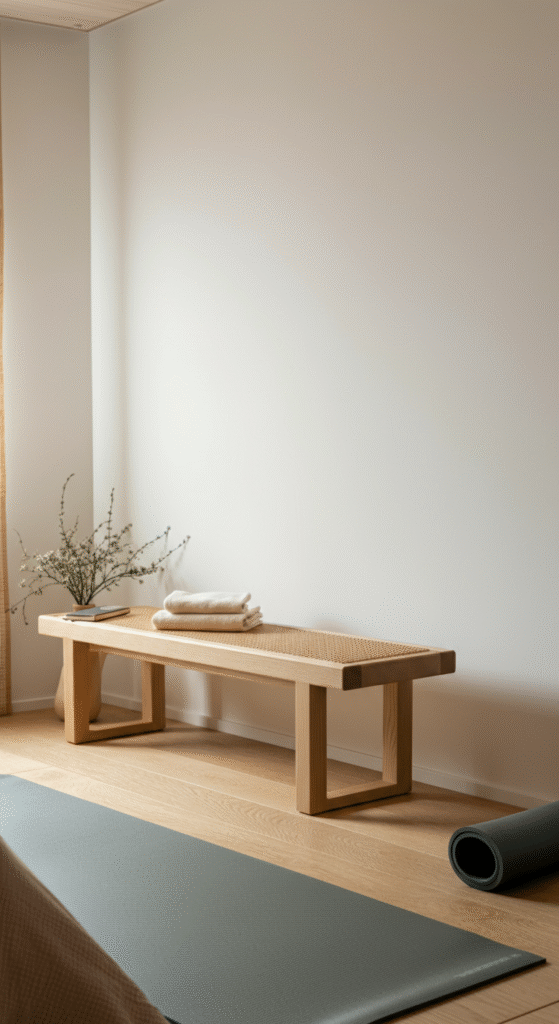
Japandi style values low furniture because it keeps sightlines open and the room feeling spacious.
This principle works beautifully when creating a bedroom yoga area.
Opt for a low wooden bench or stool near your yoga space.
It can be used for seated stretches, meditation, or simply as a surface for folded blankets.
Natural wood tones like oak, ash, or walnut add warmth without overpowering the room.
The grain of the wood becomes a subtle decorative element.
Do you know that Japanese interiors traditionally avoided tall furniture to promote harmony and movement within a room?
This design choice supports both physical flow and mental ease.
Avoid glossy finishes.
Matte or lightly oiled wood feels more organic and calming.
Keep furniture multipurpose.
A single low bench can replace multiple items, staying true to Japandi’s less-is-more philosophy while keeping the yoga space functional.
Shopping List
- Low wooden meditation bench
- Solid wood yoga stool
- Bamboo yoga bench
- Minimal wooden bedside bench
- Low height teak stool
- Wooden floor sitting bench
- Japanese style wooden bench
- Oak wood meditation seat
- Low wooden side table
- Minimal wooden platform bench
- Natural finish yoga bench
- Compact wooden seating bench
- Scandinavian wood stool
- Foldable wooden meditation bench
- Wooden yoga prop stand
4. Gentle Natural Light and Soft Shadow Play
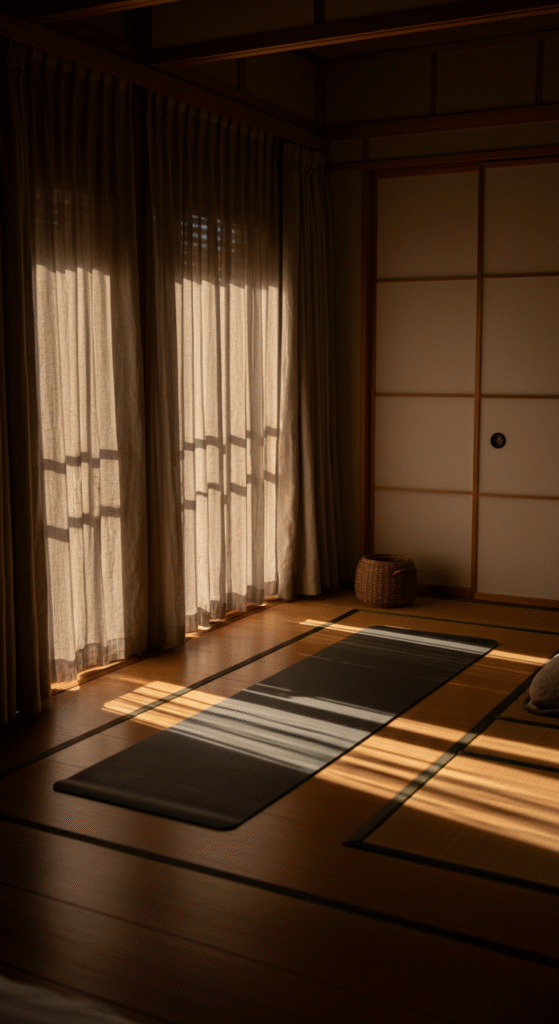
Lighting can completely change how a yoga space feels.
In Japandi bedroom decor, light is soft, diffused, and never harsh.
Position your yoga mat near a window if possible.
Natural daylight enhances mood and helps regulate the body’s internal clock.
Use sheer linen or cotton curtains to filter sunlight rather than block it.
This creates a gentle glow and soft shadow patterns that feel calming during practice.
In the early morning or evening, warm ambient lighting works best.
A paper-shade floor lamp or a small bedside lamp with a warm bulb provides enough illumination without overstimulation.
There is a common myth that brighter light leads to better focus.
In yoga, softer light actually supports inward awareness and breath control.
Avoid overhead lights during practice.
Directional or low-level lighting maintains a peaceful atmosphere and keeps the bedroom yoga space aligned with Japandi aesthetics.
Shopping List
- Sheer linen curtains
- Cotton sheer window panels
- Paper shade floor lamp
- Warm light bedside lamp
- Rice paper table lamp
- Natural fiber window blinds
- Soft glow LED bulb warm tone
- Minimal floor lamp neutral
- Bedside reading lamp warm light
- Japanese paper lantern lamp
- Wood base table lamp
- Soft ambient night lamp
- Neutral lamp shade fabric
- Natural light filtering curtains
- Minimal window curtain rods
5. Thoughtful Use of Natural Textures and Fabrics
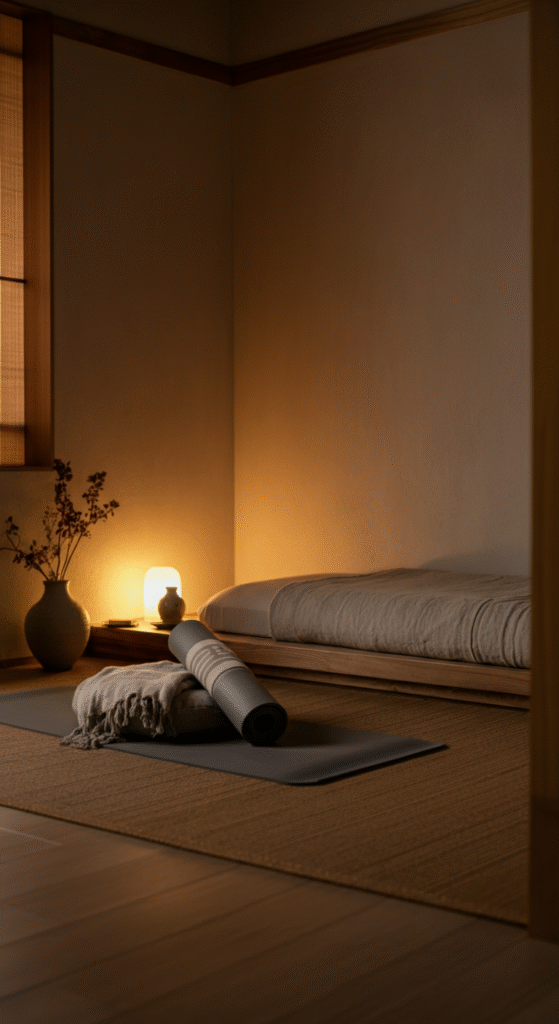
Texture adds depth to minimal spaces without introducing clutter.
Japandi decor relies heavily on tactile materials that feel natural and calming.
In your bedroom yoga area, layer textures subtly.
A linen yoga mat towel, a cotton throw, or a wool cushion can transform the space.
Natural fabrics regulate temperature better than synthetic ones.
This makes long yoga sessions more comfortable, especially during meditation or savasana.
Wood, ceramic, clay, and stone elements can also be included sparingly.
A simple ceramic bowl for holding mala beads or a stone tray for small essentials fits well within the theme.
An interesting fact is that textured surfaces stimulate sensory awareness in a gentle way.
This can deepen mindfulness during yoga without distracting the mind.
Keep textures neutral in color to avoid visual overload.
The goal is to create a space that feels grounding, not decorative.
Shopping List
- Linen yoga mat towel
- Organic cotton throw blanket
- Wool meditation cushion
- Textured cotton floor pillow
- Handwoven fabric yoga blanket
- Natural fiber yoga strap
- Soft muslin yoga wrap
- Linen bed runner
- Cotton yoga bolster cover
- Natural texture area rug
- Waffle weave blanket
- Stoneware ceramic bowl
- Clay incense holder
- Handmade ceramic tray
- Neutral fabric storage bin
- Textured linen cushion cover
6. Indoor Plants for Calm Energy and Balance
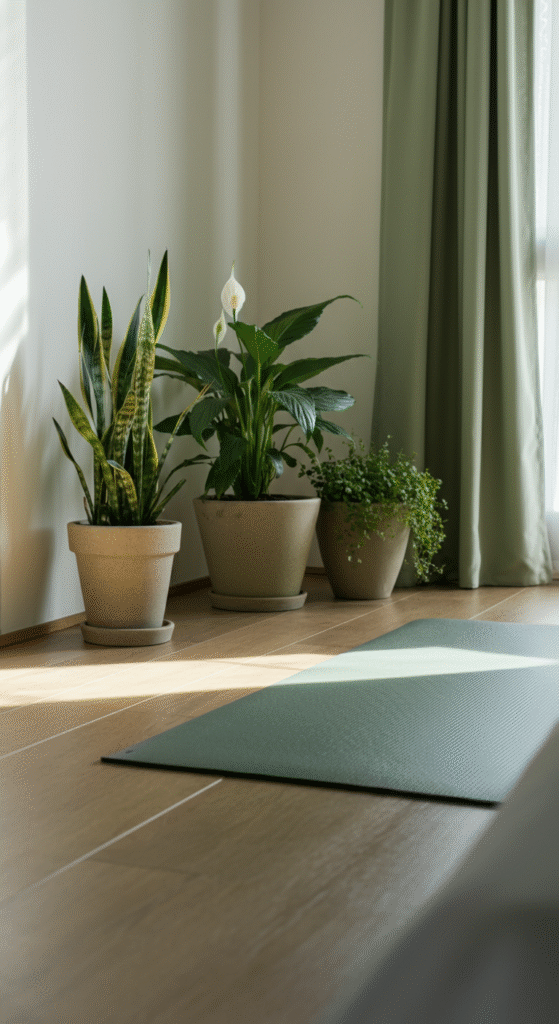
Plants are one of the most effective ways to bring life into a Japandi bedroom yoga space.
They connect the indoors with nature, which is central to both Japanese and Scandinavian design philosophies.
Choose plants with clean shapes and calming energy.
Options like snake plants, fiddle leaf figs, peace lilies, or bonsai-style plants work well.
Place the plant near your yoga mat but not directly in the way.
It should feel present without becoming a focal distraction.
Do you know that indoor plants can improve air quality and reduce stress levels?
This makes them especially beneficial in a space dedicated to breathwork and movement.
Avoid using too many plants.
One or two well-chosen plants are enough to maintain balance and visual harmony.
Simple clay or ceramic planters in neutral tones keep the look cohesive and grounded.
Shopping List
- Snake plant indoor
- Peace lily plant
- Fiddle leaf fig plant
- Low light indoor plant
- Ceramic plant pot neutral
- Minimal clay planter
- Indoor bonsai plant
- Small potted bamboo
- Air purifying indoor plant
- Modern ceramic planter
- Plant stand wooden
- Self watering plant pot
- Minimalist plant pot set
- Bedroom friendly indoor plants
- Indoor greenery decor
- Neutral tone plant pots
7. Clutter-Free Storage With Intentional Objects Only
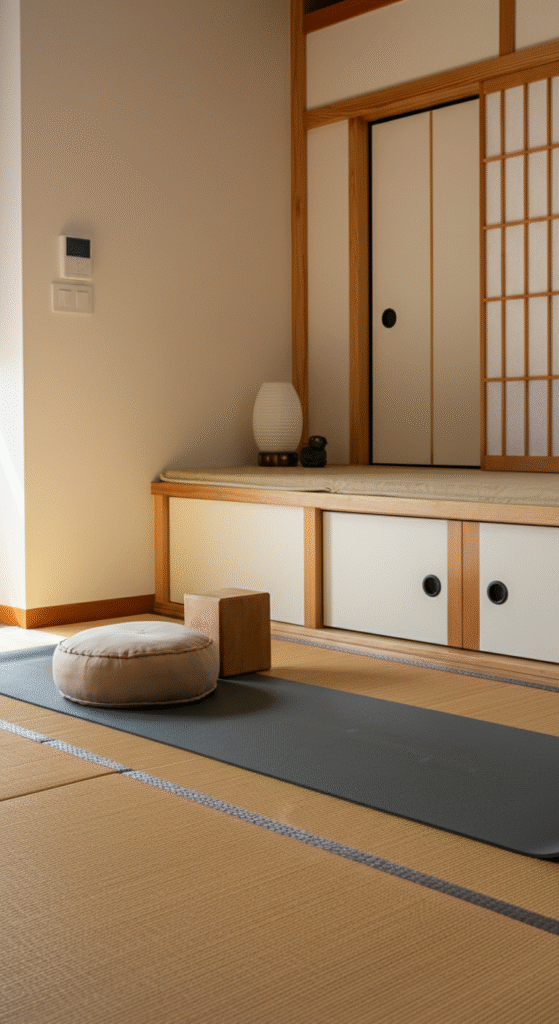
A true Japandi bedroom yoga space feels open and uncluttered.
Storage should exist, but it should remain discreet and purposeful.
Use hidden storage options like under-bed boxes or fabric bins in natural tones.
Only store yoga essentials that you actually use.
Keep visible objects to a minimum.
A single meditation cushion, a folded blanket, or a wooden block is often enough.
There is a popular misconception that spiritual spaces need symbolic objects everywhere.
In Japandi design, meaning comes from restraint rather than abundance.
If you include meaningful items, choose just one or two.
This could be a handmade ceramic piece, a simple incense holder, or a personal object that represents calm.
The absence of clutter helps the mind settle faster, making each yoga session feel more intentional and restorative.
Shopping List
- Under bed storage box fabric
- Neutral yoga storage basket
- Foldable storage ottoman
- Minimal fabric storage bins
- Yoga mat storage bag
- Hidden storage bench
- Cotton rope storage basket
- Wooden storage crate
- Neutral drawer organizers
- Yoga prop storage case
- Soft fabric storage cubes
- Minimal bedroom organizer box
- Meditation cushion storage bag
- Slim yoga mat holder
- Natural fiber storage basket
- Low profile storage trunk
Conclusion
A bedroom yoga space inspired by Japandi home decor is not about perfection or expensive design choices.
It is about creating a calm, balanced environment that supports your physical and mental well-being.
By focusing on simplicity, natural materials, soft light, and intentional design, you can transform even a small bedroom corner into a personal sanctuary.
Each of these seven ideas works together to create harmony rather than distraction.
The beauty of Japandi style lies in its quiet strength.
When applied thoughtfully, it allows your yoga practice to become a natural extension of daily life rather than a separate routine.
Your bedroom can be more than a place to rest.
With mindful design, it can become a space where balance, breath, and stillness come together effortlessly.
Frequently Asked Questions (FAQs)
What is a Japandi bedroom yoga space?
It is a calm yoga area in the bedroom that blends Japanese minimalism with Scandinavian warmth and simplicity.
Can I create a yoga space in a small bedroom?
Yes, a simple corner with a yoga mat and minimal accessories works well even in small bedrooms.
What colors are best for a Japandi yoga space?
Soft neutrals like beige, off-white, warm gray, and earthy tones are ideal for a calming effect.
Do I need special furniture for a bedroom yoga area?
No, low wooden furniture or no furniture at all is enough for a functional yoga space.
Are plants necessary in a Japandi yoga space?
Plants are optional, but one or two natural plants can enhance calmness and air quality.