Some links in this blog are affiliate links. If you make a purchase through these links, I may receive a small commission. This helps support the site at no extra cost to you.
Japanese minimalism meets Bohemian warmth—it’s a match made in design heaven. This fusion, often called “Japandi,” blends the rustic, laid-back vibe of boho decor with the clean lines and intentionality of traditional Japanese aesthetics. The result? A bedroom that feels like a sanctuary. It’s not just about looking good; it’s about creating a space that breathes.
If you are looking to transform your sleeping quarters into a retreat that feels both curated and cozy, you don’t need a total renovation. A few thoughtful additions can completely shift the energy of the room. Here are seven essential items to nail that boho-Japanese aesthetic.
Table of Contents
7 Bedroom Aesthetic Japan Items
1. Low-Profile Platform Bed
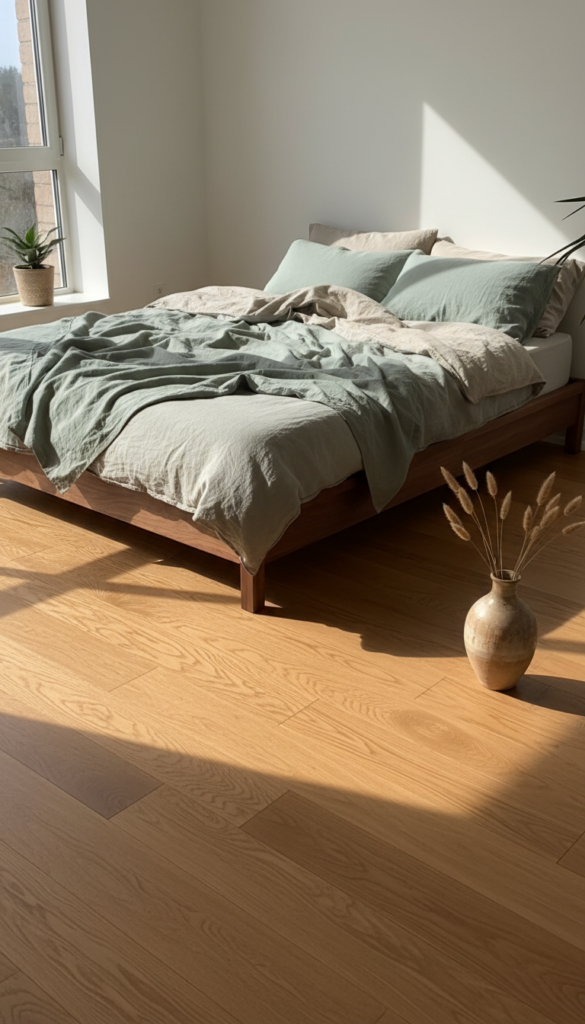
The centerpiece of any Japanese-inspired room is a bed that sits close to the earth. In traditional Japanese culture, sleeping on the floor (on tatami mats) grounds you. For a boho twist, opt for a low-profile wooden platform bed. Look for raw, natural wood finishes that highlight the grain—imperfect and beautiful. This lowers your center of gravity and makes your ceilings feel higher, creating an airy, open atmosphere.
Shopping List
2. Rice Paper Lighting (Akari Style)
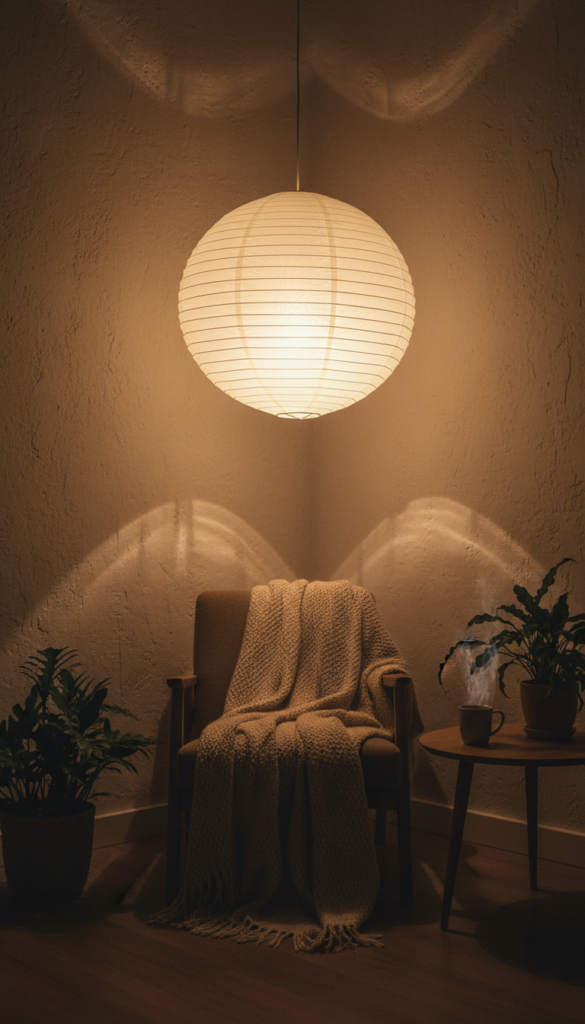
Harsh overhead lighting is the enemy of zen. Replace standard fixtures with paper lanterns or Akari-style lamps. These delicate sculptures diffuse light through washi paper, casting a warm, moon-like glow that softens every corner of the room. The organic, often asymmetrical shapes fit perfectly with the bohemian love for natural materials.
Shopping List
3. Tatami or Igusa Grass Rugs
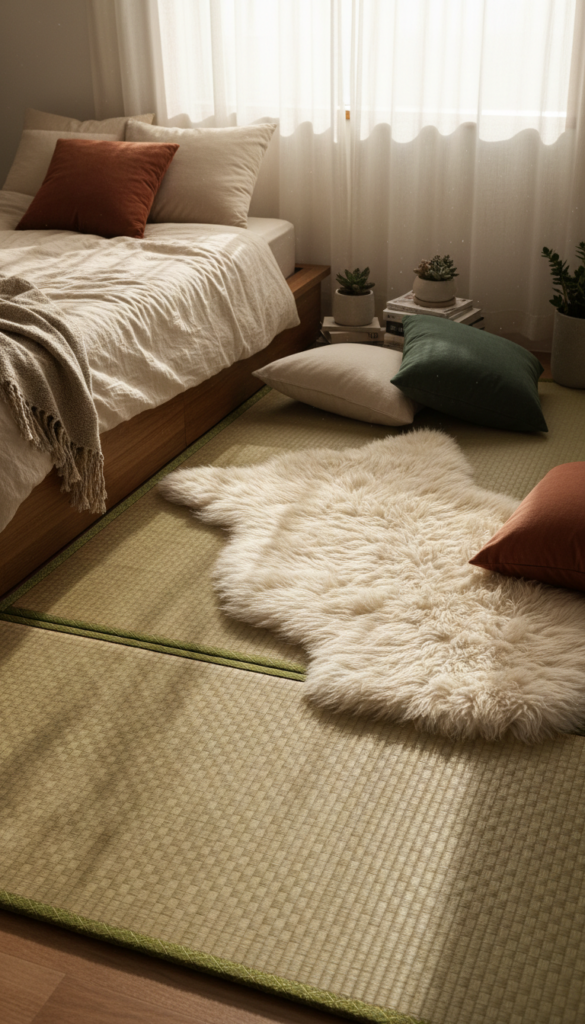
Texture is everything in a boho space. Incorporate the scent and feel of nature with a Tatami mat or an Igusa grass rug. These sustainable mats add an earthy, straw-like aroma to the room and feel cool underfoot. Layer a plush, small sheepskin or woven boho rug on top to soften the look and add that eclectic, layered vibe.
Shopping List
4. Noren Door Curtains
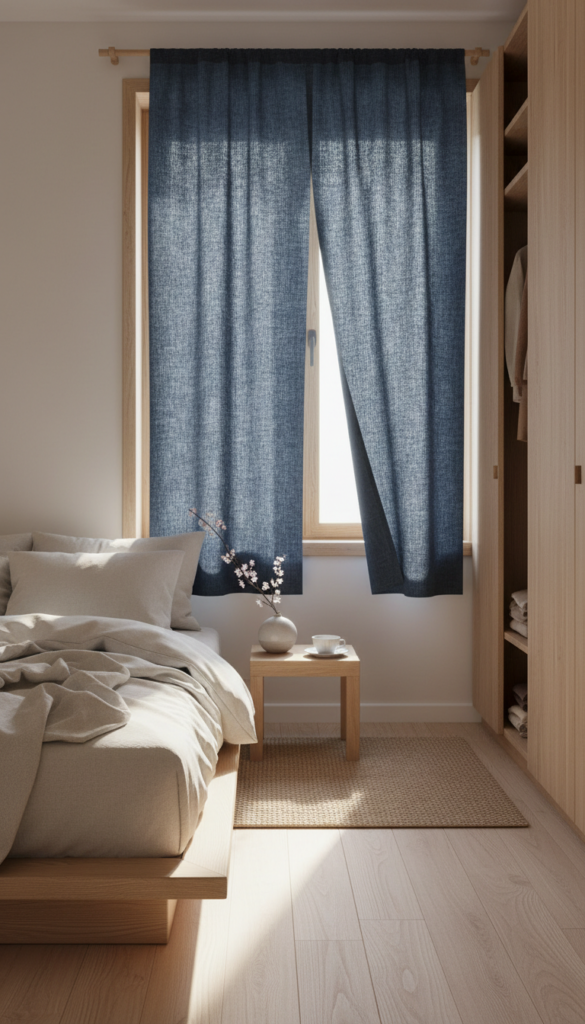
Noren curtains are traditional Japanese fabric dividers hung in doorways or windows. They usually feature a split down the middle. To bring in the boho element, look for Noren made of heavy linen or unbleached cotton in earthy tones like terracotta, indigo, or beige. They add privacy without closing off the flow of air and energy (Qi).
Shopping List
5. Floor Cushions (Zabuton Style)

Embrace the “low living” lifestyle. Zabuton are Japanese cushions used for sitting on the floor. For a boho twist, swap traditional silk covers for textured fabrics like boucle, velvet, or woven wool. Stack them in a corner to create a casual reading nook that invites you to lounge near the ground.
Shopping List
6. Imperfect Ceramics (Wabi-Sabi)

Wabi-sabi is the Japanese philosophy of finding beauty in imperfection. Decorate your shelves or bedside tables with hand-thrown ceramics. Look for vases or bowls that are slightly asymmetrical, textured, or glazed in earthy, matte colors. Fill them with dried pampas grass or eucalyptus—a classic boho touch.
Shopping List
7. Wooden Room Divider (Shoji Screen)
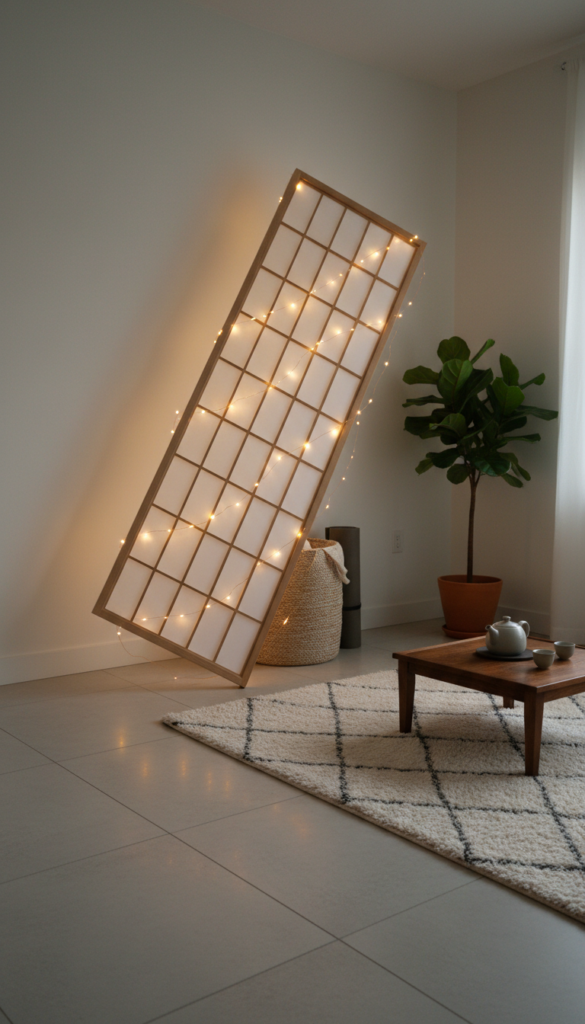
Create distinct zones in your bedroom with a Shoji screen. These translucent paper and wood screens provide privacy while letting light filter through. To keep it boho, drape a vintage throw blanket over one corner or weave some fairy lights through the lattice. It creates a dreamy, intimate vibe perfect for a bedroom.
Shopping List
Create Your Sanctuary
Blending Japanese structure with Bohemian ease creates a space that feels timeless. It’s not about cluttering your room with “stuff,” but selecting items that bring peace, texture, and a connection to nature. Start with one or two of these elements, and watch your bedroom transform into a personal retreat.
Frequently Asked Questions (FAQs)
1. What is the difference between Japandi and Boho style?
Japandi is a hybrid style. Japanese design focuses on minimalism, clean lines, and functionality. Boho (Bohemian) focuses on layers, textures, and a relaxed, eclectic vibe. Japandi blends the two: it’s cleaner than pure Boho, but warmer and cozier than pure Japanese minimalism.
2. Can I use color in a Japanese-Boho bedroom?
Yes, but keep it grounded. Stick to an earth-tone palette. Think warm clay, sage green, oatmeal, charcoal, and indigo. Avoid neon or overly bright primary colors to maintain the zen atmosphere.
3. Do I have to sleep on the floor for this aesthetic?
Not at all. While floor sleeping is traditional in Japan, a low-profile platform bed gives you the same visual effect without sacrificing the comfort of a modern mattress.
4. What plants work best for this look?
Focus on structural or trailing plants. A Bonsai tree is a classic Japanese choice. For a boho mix, try a Monstera (Swiss Cheese Plant) or a trailing Pothos in a macrame hanger. Kokedama (moss ball plants) are also a perfect blend of both styles.
5. Is this style expensive to achieve?
It doesn’t have to be. Both Wabi-sabi and Boho celebrate the old and imperfect. You can find great ceramic pieces at thrift stores, or use simple DIY solutions like hanging unbleached fabric as curtains. The focus is on simplicity and natural materials, not luxury price tags.