Some links in this blog are affiliate links. If you make a purchase through these links, I may receive a small commission. This helps support the site at no extra cost to you.
Does your bedroom feel more like a chaotic storage unit than a sanctuary? We spend a third of our lives sleeping, yet our bedrooms often get the least design attention. If you’re tossing and turning at night, the color of your walls might be the culprit.

Nature-inspired colors are proven to lower heart rates and reduce stress. By mimicking the calming hues of the natural world—forest greens, ocean blues, and sandy beiges—you can transform your sleeping space into a restorative retreat. Whether you crave the moody atmosphere of a dense forest or the airy lightness of a beach at sunrise, there is a palette here for you.
Ready to wake up feeling refreshed? Here are 11 nature-inspired painting ideas to help you achieve the peaceful sleep you deserve.
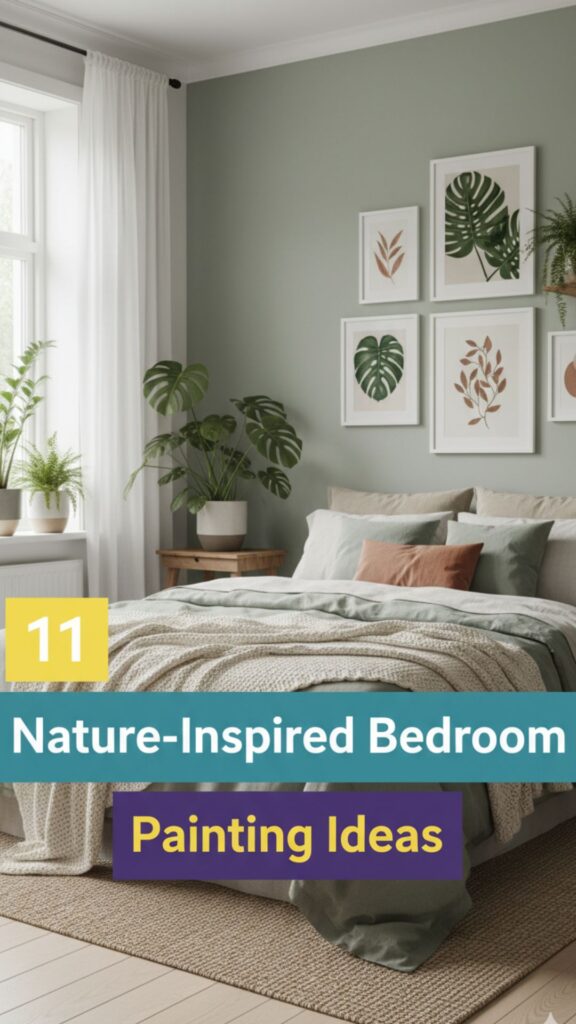
1. Misty Forest Green
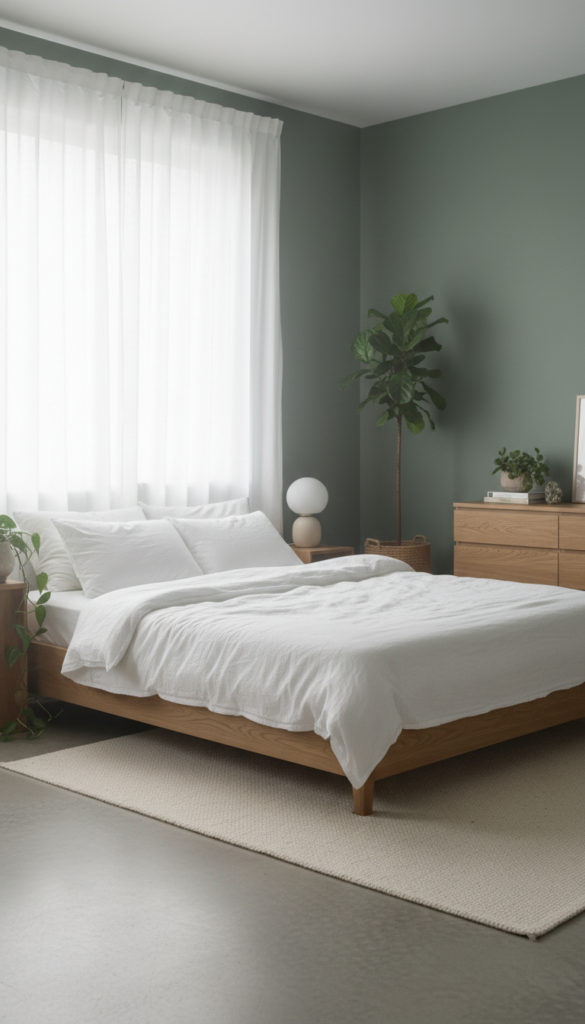
Embrace the tranquility of a foggy morning in the woods. This soft, muted green brings a sense of renewal and growth without being too vibrant for a sleep environment. It pairs beautifully with natural wood tones and white linens.
How To Get The Look:
- Opt for a sage or moss green with gray undertones.
- Use matte paint to absorb light and create a cozy vibe.
- Accessorize with wooden furniture and leafy plants.
Shopping List
- Sage green paint
- Matte finish paint
- Wooden bedside table
- Artificial potted plant
- White duvet cover
- Natural wood frame
- Woven basket
- Green throw pillow
- Area rug beige
- Ceramic vase
2. Ocean Breeze Blue
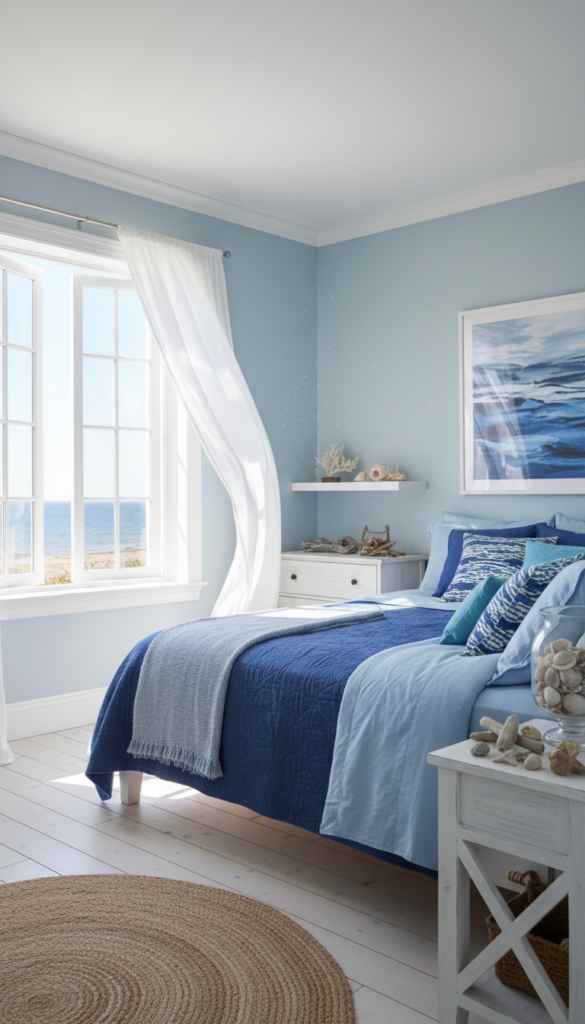
There is nothing quite as soothing as the rhythm of the ocean. A light, airy blue captures the essence of clear skies and calm waters. This shade helps to visually expand small rooms while promoting a feeling of serenity.
How To Get The Look:
- Choose a pale blue with cool undertones.
- Combine with crisp white trim for a fresh, nautical feel.
- Layer with different shades of blue in your bedding.
Shopping List
- Pale blue paint
- White trim paint
- Blue bedding set
- Sheer white curtains
- Nautical decor
- Blue throw blanket
- Sea glass lamp
- Coastal wall art
- Jute rug
- White accent chair
3. Warm Sand Beige

For a neutral look that feels grounded and earthy, look to the beach. Warm beige tones mimic the sand and create a cozy, enveloping atmosphere. It is the perfect backdrop for colorful accents or a monochromatic scheme.
How To Get The Look:
- Select a beige or tan with warm, yellow undertones.
- Use textured fabrics like linen and wool to add depth.
- Add pops of terracotta or soft brown.
Shopping List
- Beige interior paint
- Linen sheets
- Wool throw blanket
- Terracotta vase
- Rattan headboard
- Textured wall art
- Brown leather pillow
- Beige blackout curtains
- Wooden floor lamp
- Cream area rug
4. Midnight Sky Indigo
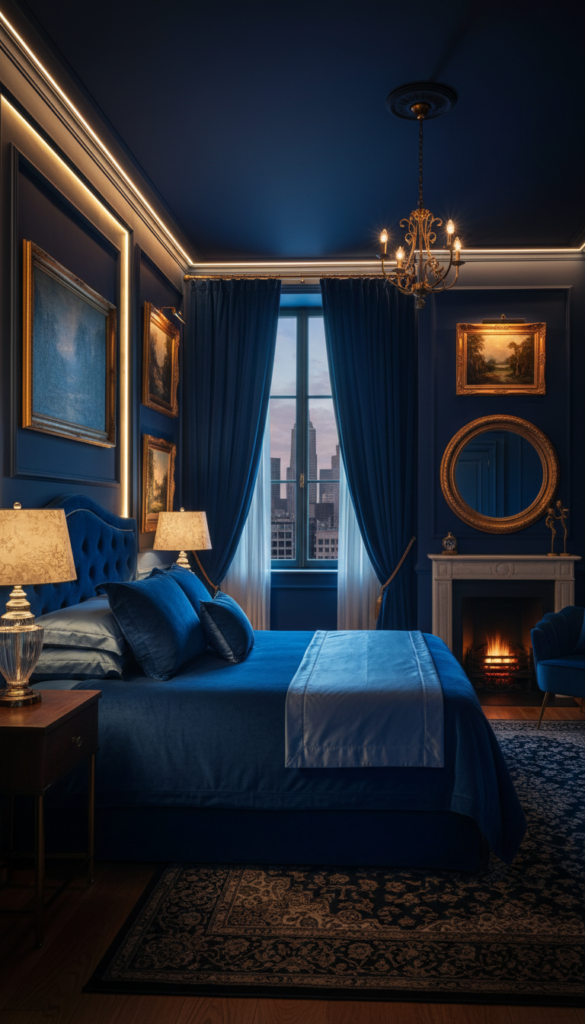
Create a cocoon-like effect with deep indigo. This dark, moody color simulates the night sky, naturally signaling to your brain that it is time to wind down. It creates a striking contrast when paired with metallic accents.
How To Get The Look:
- Go bold with a deep navy or midnight blue.
- Balance the darkness with warm lighting and gold fixtures.
- Use velvet textures for a touch of luxury.
Shopping List
- Navy blue paint
- Gold wall sconce
- Velvet throw pillow
- Warm light bulb
- Gold mirror
- White faux fur rug
- Indigo bedding
- Brass picture frame
- Star projector
- Dark wood dresser
5. Lavender Field Purple
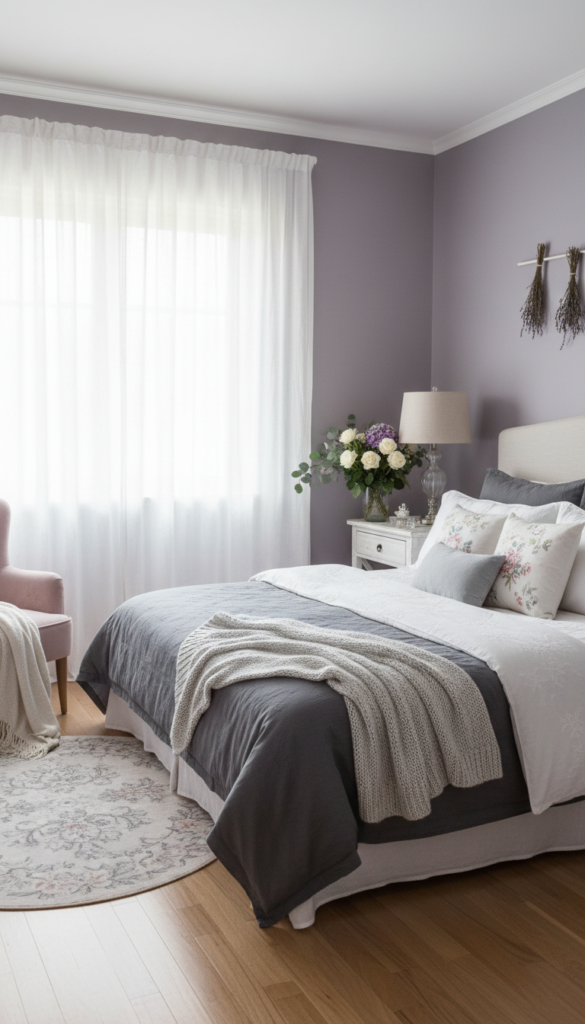
Soft lavender brings the calming scent of the flower to mind visually. It is a gentle, romantic color that encourages relaxation and ease. Unlike vibrant purples, this muted shade acts almost like a neutral.
How To Get The Look:
- Choose a dusty purple with gray undertones to avoid a nursery look.
- Pair with soft grays and silvers.
- Incorporate floral patterns in moderation.
Shopping List
- Lavender paint
- Gray bedding set
- Silver table lamp
- Dried lavender bunch
- Floral throw pillow
- Gray area rug
- White nightstand
- Sheer purple curtains
- Velvet chair
- Silver wall art
6. Stone Gray
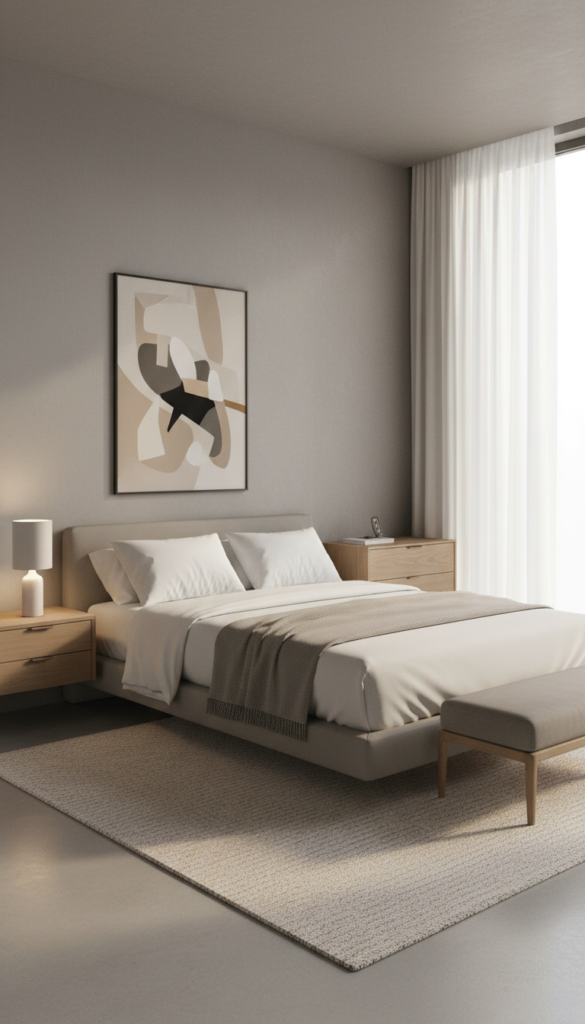
Stone gray offers the stability of mountain rocks. It is a cool, sophisticated color that quiets the mind. It works exceptionally well in modern, minimalist bedrooms where reducing visual clutter is the goal.
How To Get The Look:
- Pick a medium gray that doesn’t skew too blue or too brown.
- Use crisp white linens to create a hotel-like crispness.
- Soften the look with knit blankets and plush rugs.
Shopping List
- Gray interior paint
- White hotel sheets
- Chunky knit blanket
- Plush shag rug
- Black metal bed frame
- Modern table lamp
- Monochrome art
- Gray blackout curtains
- Concrete planter
- Minimalist clock
7. Sunset Peach
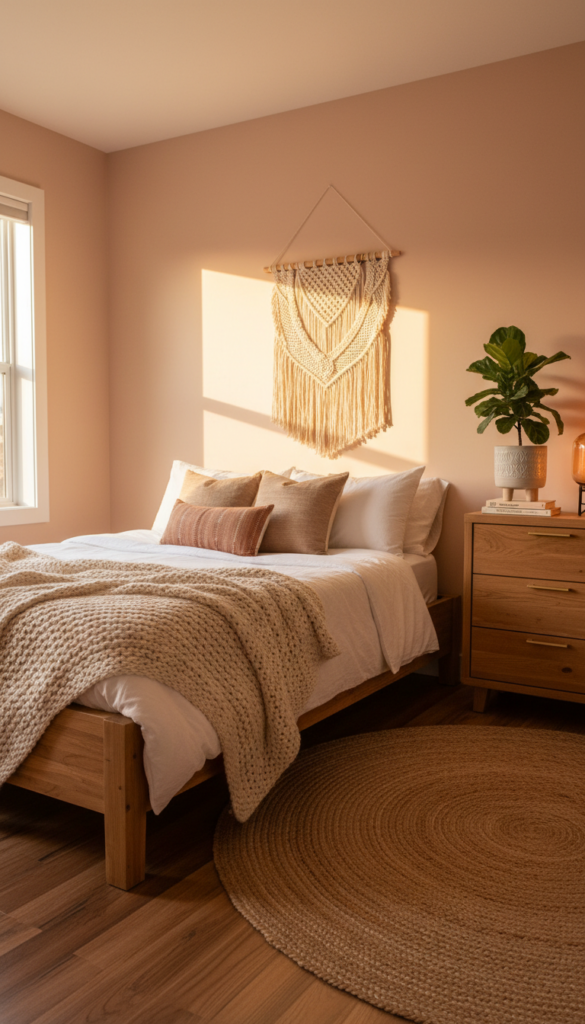
Capture the warmth of the horizon just before dusk. A soft peach or terracotta adds a gentle glow to the room without being overly energetic like orange. It creates a nurturing, comforting environment.
How To Get The Look:
- Choose a muted peach or clay color.
- Complement with warm woods and cream accents.
- Add soft lighting to enhance the warm glow.
Shopping List
- Peach interior paint
- Cream throw blanket
- Warm wood nightstand
- Sunset wall art
- Rattan pendant light
- Clay vase
- Peach bedding
- Boho rug
- Macrame wall hanging
- Amber light bulb
8. Raincloud Blue-Gray
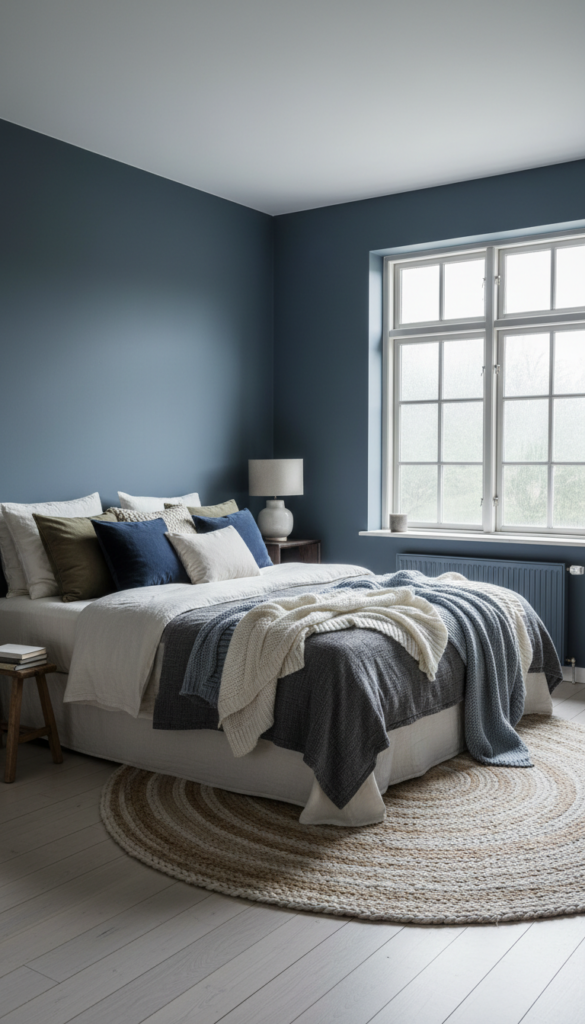
There is a specific comfort in a rainy day spent indoors. This hybrid color bridges the gap between blue and gray, offering a moody but peaceful backdrop. It is perfect for those who find true blue too cold and true gray too industrial.
How To Get The Look:
- Look for a slate blue with heavy gray undertones.
- Layer textures like linen, cotton, and wool.
- Use silver or brushed nickel hardware.
Shopping List
- Slate blue paint
- Linen duvet cover
- Gray cotton sheets
- Brushed nickel lamp
- Blue gray rug
- Abstract wall art
- Knitted pouf
- Silver curtain rod
- Glass vase
- Cozy slippers
9. Forest Floor Brown

Connect deeply with the earth using rich browns. While often overlooked, a deep truffle or mocha brown can be incredibly grounding. It creates a den-like feel that feels safe and secure.
How To Get The Look:
- Use a deep, warm brown for an accent wall or the whole room.
- Lighten the space with cream or beige bedding.
- Incorporate leather and wood textures.
Shopping List
- Dark brown paint
- Cream bedding set
- Leather accent chair
- Wooden wall art
- Beige throw blanket
- Brown area rug
- Brass table lamp
- Woven planter
- Faux fur pillow
- Natural wood shelf
10. Spring Bud Yellow
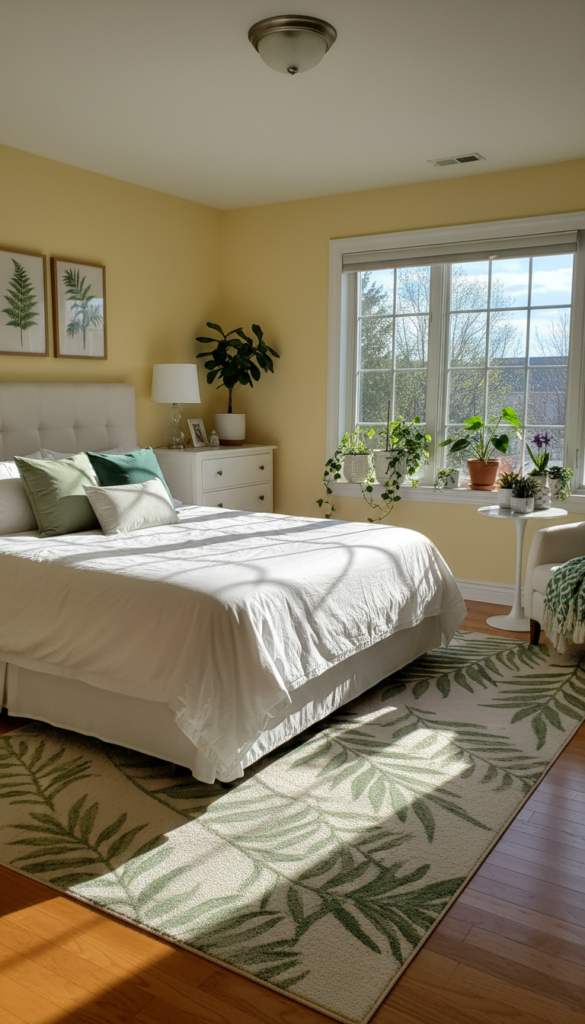
Wake up to sunshine every day with a soft, buttery yellow. This isn’t the neon yellow of a highlighter, but the gentle hue of a blooming daffodil. It promotes happiness and optimism, helping you start the day right.
How To Get The Look:
- Choose a pastel yellow that feels creamy, not acidic.
- Pair with white and soft greens for a garden feel.
- Allow plenty of natural light to filter in.
Shopping List
- Pale yellow paint
- White sheer curtains
- Floral bedding
- Green accent pillow
- White vase
- Yellow throw blanket
- Botanical print
- Rattan chair
- Jute rug
- Artificial tulips
11. Snowy White
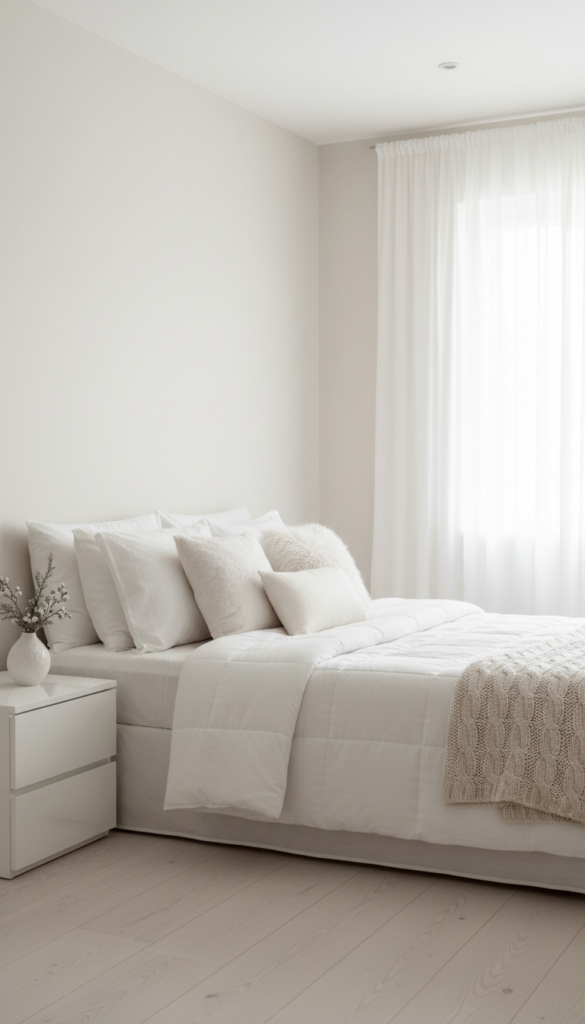
Sometimes, nature is at its most peaceful when it is blank. A snowy white room mimics the silence of a winter landscape. It cleans the palette of visual noise, allowing your mind to rest completely.
How To Get The Look:
- Select a warm white to keep it from feeling clinical.
- Layer different shades of white and cream for depth.
- Focus heavily on texture (fur, wool, linen) to add interest.
Shopping List
- Warm white paint
- White linen duvet
- Faux sheepskin rug
- Cream knit pillow
- White textured art
- Ceramic table lamp
- White blackout curtains
- Wooden bench
- Floating shelves
- White storage basket
Creating Your Natural Sanctuary
Transforming your bedroom with nature-inspired colors is more than just an aesthetic choice; it is an investment in your well-being. By surrounding yourself with the calming hues of the earth, sea, and sky, you create a physical signal to your body that it is time to rest.
Don’t feel pressured to overhaul your entire room in one weekend. Start by testing a few paint swatches on your wall and observing how they change with the light throughout the day. Once you find that perfect shade—whether it’s a misty green or a deep ocean blue—you’ll be one step closer to the peaceful sleep you’ve been dreaming of.
Frequently Asked Questions (FAQs)
1. What color is best for sleep anxiety?
Cool colors like soft blues, greens, and muted grays are generally considered best for anxiety. Blue, in particular, is associated with calmness and serenity, which can help lower blood pressure and heart rate, preparing the body for sleep.
2. Can I use dark colors in a small bedroom?
Yes, absolutely. While conventional wisdom says light colors make a room look bigger, dark nature-inspired colors like forest green or navy blue can blur the edges of the room, creating an expansive, night-sky effect. It creates a cozy, “jewel box” feeling that is perfect for sleeping.
3. Do I have to paint all four walls?
Not at all. If you are hesitant about color, try painting just the wall behind your bed as an accent wall. This provides a focal point and grounds the bed without overwhelming the space.
4. How do I choose the right finish for bedroom walls?
For bedrooms, a matte or eggshell finish is usually best. These finishes absorb light rather than reflecting it, creating a softer, more velvety look that is soothing to the tired eye. Avoid high-gloss finishes, which can feel too energetic and clinical.
5. What if I can’t paint my walls?
If you are renting or can’t paint, bring nature-inspired colors in through textiles. Large area rugs, floor-to-ceiling curtains, and bedding in sage green, sky blue, or sand beige can have a similar calming effect to painted walls.