Some links in this blog are affiliate links. If you make a purchase through these links, I may receive a small commission. This helps support the site at no extra cost to you.
The kitchen is often called the heart of the home, but it can also be the hardest room to personalize. Between appliances and cabinets, there isn’t always much wall space for art. That’s where textiles come in.
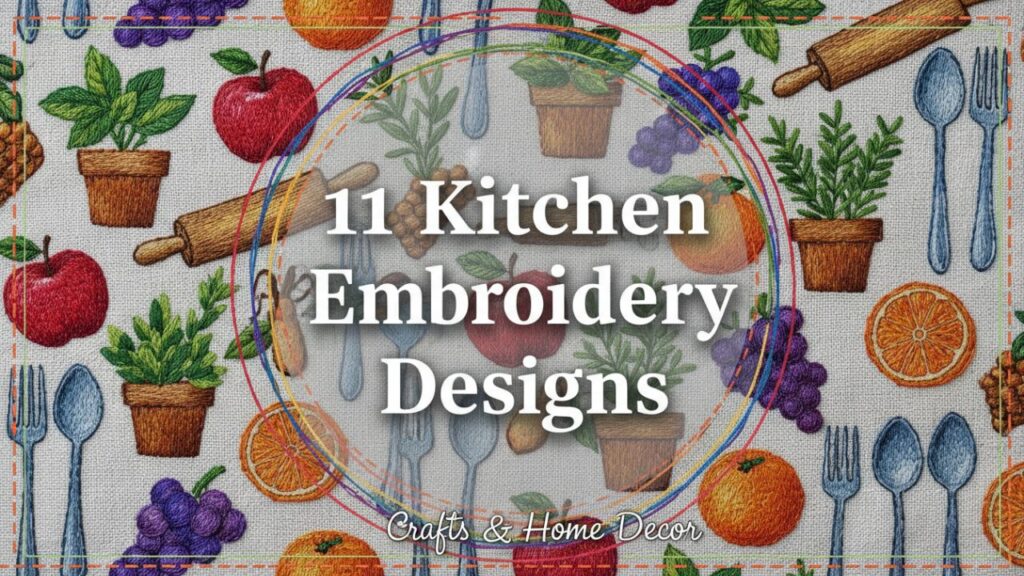
Adding embroidered touches to your towels, aprons, and curtains is a subtle way to inject personality and match your specific decor style. Whether you love rustic farmhouse vibes or sleek modern lines, there is a needlework design out there for you.
Here are 11 kitchen embroidery ideas tailored to different interior design styles.
1. Farmhouse Chic: Roosters & Mason Jars
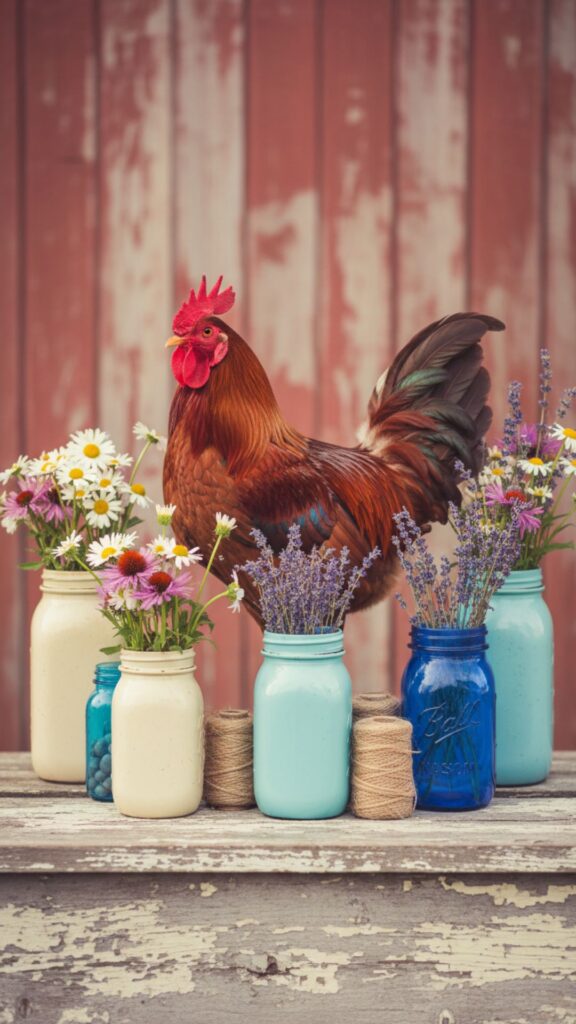
Nothing says “country kitchen” quite like a classic rooster motif or a vintage mason jar. This style relies on nostalgia and comfort, making it perfect for hand-stitched details.
How To Get The Look:
- Stick to a color palette of barn red, denim blue, and creamy white.
- Embroider motifs onto flour sack towels or linen runners.
- Use simple stitches like the backstitch or running stitch for a primitive feel.
Shopping List
- Farmhouse embroidery patterns
- Flour sack towels
- Red embroidery floss
- Blue embroidery floss
- Linen table runner
- Rooster iron on transfer
- Mason jar embroidery kit
- Cream embroidery fabric
- Wooden embroidery hoop
- Gingham ribbon
2. Modern Minimalist: Line Art Vegetables
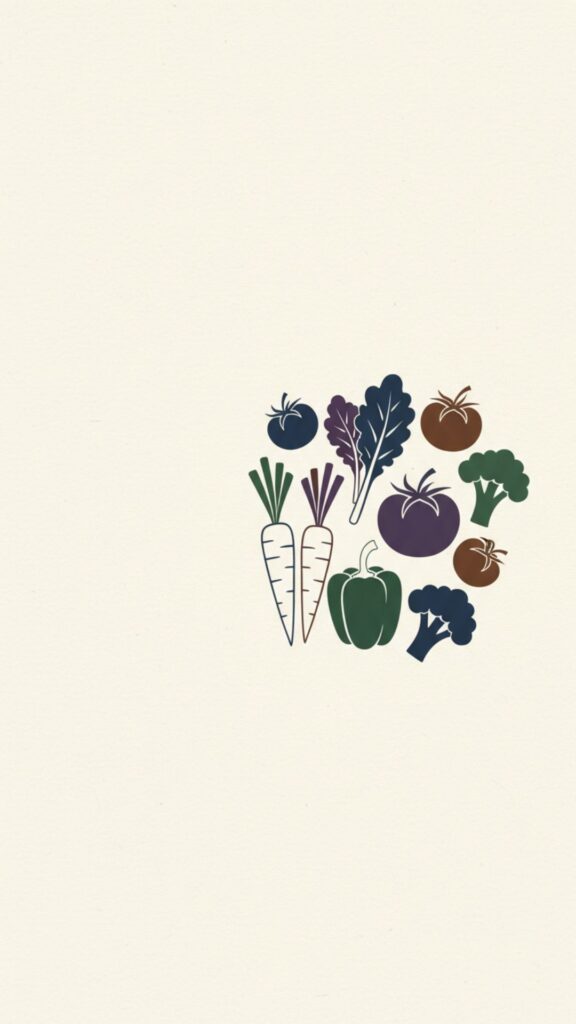
If your kitchen is full of clean lines and neutral tones, you don’t want embroidery that feels cluttered. Single-line art (continuous line) designs of vegetables or herbs add elegance without the visual noise.
How To Get The Look:
- Use a single dark color, like black or charcoal grey, for the thread.
- Keep the designs scalable and centered on napkins or tea towels.
- Focus on outlines rather than filling in shapes.
Shopping List
- Black embroidery floss
- White linen napkins
- Vegetable line art patterns
- Charcoal embroidery thread
- Minimalist embroidery kit
- Water soluble stabilizer
- Fine tip embroidery needles
- Modern tea towels
- Grey cotton thread
- Embroidery scissors
3. Boho Eclectic: Succulents & Cacti
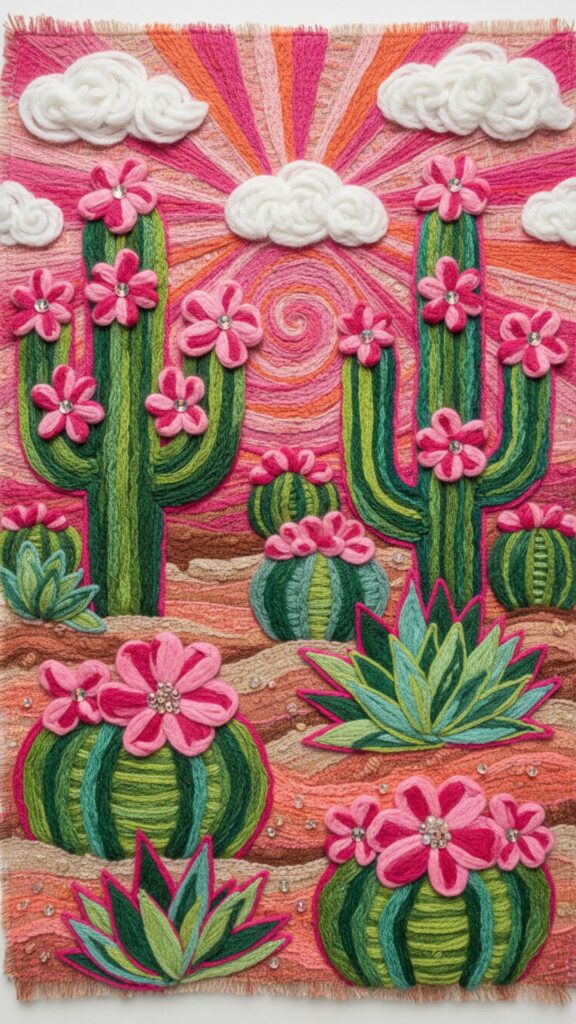
Bring the outdoors in with vibrant greens and desert vibes. This style is forgiving and fun, allowing for a mix of textures and bold choices.
How To Get The Look:
- Mix various shades of green with pops of pink or terracotta.
- Use textured stitches like French knots to mimic the prickly surface of a cactus.
- Embroider these onto canvas tote bags used for grocery storage.
Shopping List
- Green embroidery floss variety pack
- Terracotta embroidery thread
- Cactus embroidery pattern
- Succulent embroidery kit
- Canvas tote bags for embroidery
- Textured embroidery floss
- Boho embroidery designs
- Embroidery needle set
- Pink embroidery floss
- Plant embroidery patterns
4. Cottagecore: Mushrooms & Wildflowers
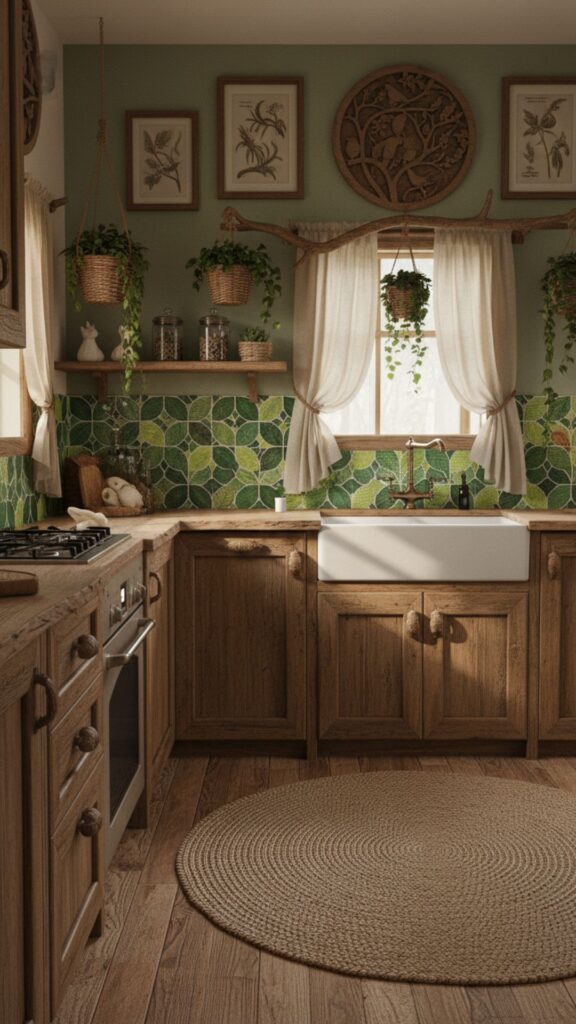
Whimsical and sweet, cottagecore kitchens thrive on details that feel foraged from a fairytale forest.
How To Get The Look:
- Use earthy tones: browns, moss greens, and muted yellows.
- Create small, scattered patterns rather than one large centerpiece.
- Perfect for apron pockets or the edges of a tablecloth.
Shopping List
- Mushroom embroidery pattern
- Wildflower embroidery kit
- Earth tone embroidery floss
- Linen apron for embroidery
- Moss green thread
- Embroidery transfer pen
- Cottagecore decor
- Small embroidery hoops
- Botanical embroidery book
- Mustard yellow floss
5. Vintage Retro: Cherries & gingham
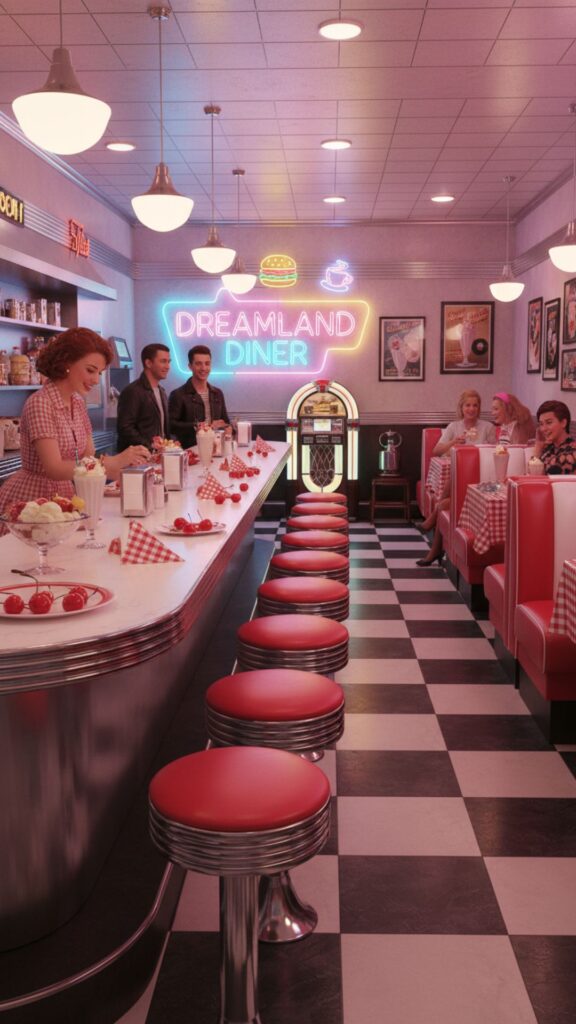
Channel the 1950s diner aesthetic with bright reds and playful fruit patterns.
How To Get The Look:
- Bright red cherries with green stems are iconic.
- Pair embroidery with checkered or gingham fabrics.
- Use satin stitch to make the fruit look shiny and plump.
Shopping List
- Cherry embroidery pattern
- Red satin embroidery floss
- Gingham fabric squares
- Retro kitchen towel
- Vintage iron on transfers
- Bright green embroidery thread
- Embroidery needles size 5-10
- Fruit embroidery designs
- White cotton fabric
- Diner style napkins
6. Coffee Bar: Cups & Beans
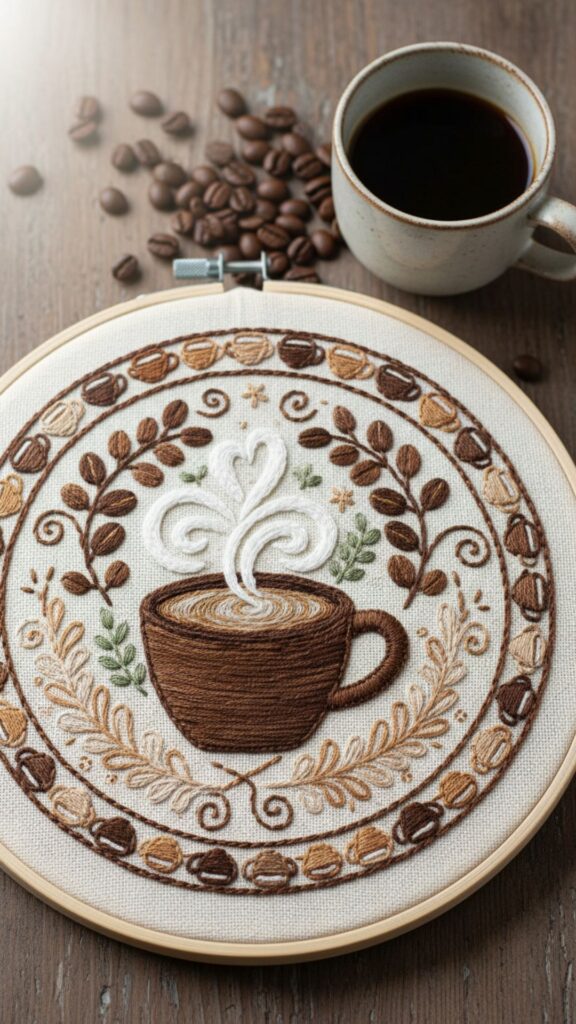
If you have a dedicated coffee station, accent it with themed embroidery art.
How To Get The Look:
- Use rich browns, creams, and black.
- Stitch phrases like “But First, Coffee” or simple steaming mug outlines.
- Frame the finished piece in a small hoop to hang near your coffee maker.
Shopping List
- Coffee embroidery kit
- Brown embroidery floss set
- Small wooden frames for embroidery
- Coffee bean pattern
- Cream embroidery cloth
- Lettering embroidery guide
- Espresso cup design
- Black thread
- Coffee decor accessories
- Hoop art display stand
7. Coastal: Shells & Blue Waves
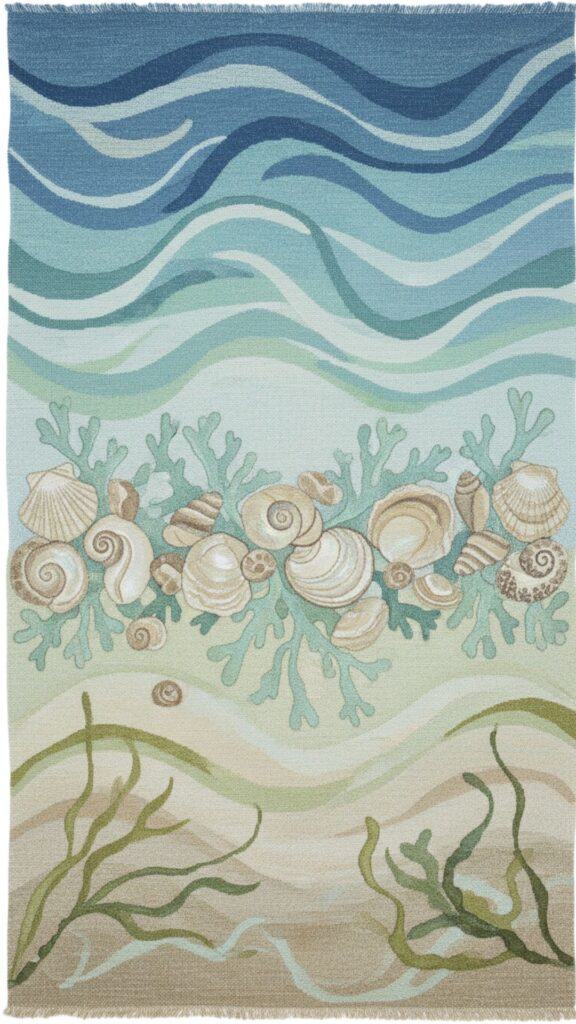
For kitchens near the sea (or those that wish they were), go for calming maritime themes.
How To Get The Look:
- A palette of seafoam green, sandy beige, and navy blue.
- Motifs like starfish, shells, or simple wave patterns.
- Use chain stitch for waves to give them texture and movement.
Shopping List
- Coastal embroidery patterns
- Seafoam green embroidery floss
- Navy blue thread
- Beige linen fabric
- Starfish embroidery design
- Shell embroidery kit
- Blue wave pattern
- Embroidery hoop 8 inch
- White kitchen towels
- Beach theme embroidery
8. Citrus Fresh: Lemons & Oranges
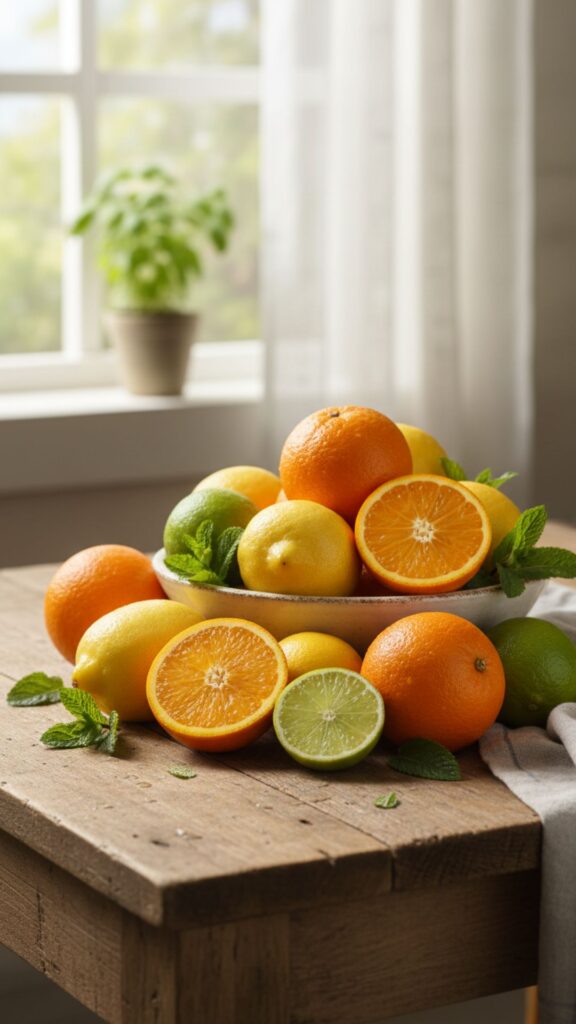
Brighten up a white kitchen with vibrant citrus fruits. It feels fresh, clean, and summery all year round.
How To Get The Look:
- Bright yellows and oranges paired with leaf greens.
- Add leaves and blossoms to the fruit to break up the color blocks.
- Great for placemats or centerpieces.
Shopping List
- Lemon embroidery pattern
- Yellow embroidery floss
- Orange embroidery thread
- Leaf green floss
- White placemats for embroidery
- Citrus embroidery kit
- Embroidery needles
- Fruit theme kitchen decor
- Summer embroidery designs
- Bright cotton thread
9. Herb Garden: Rosemary, Thyme & Basil
Functional and beautiful, herb designs look great in any kitchen but especially suit culinary enthusiasts.
How To Get The Look:
- Various shades of green are essential here.
- Include the names of the herbs in a nice script font underneath the plant.
- Display in a row of hoops on the wall.
Shopping List
- Herb embroidery patterns
- Green gradient embroidery floss
- Script lettering guide
- Botanical embroidery kit
- Wooden hoops 6 inch
- Garden theme embroidery
- Basil embroidery design
- Rosemary embroidery design
- Embroidery fabric linen
- Needle threader
10. Scandinavian: Geometric Folk Art
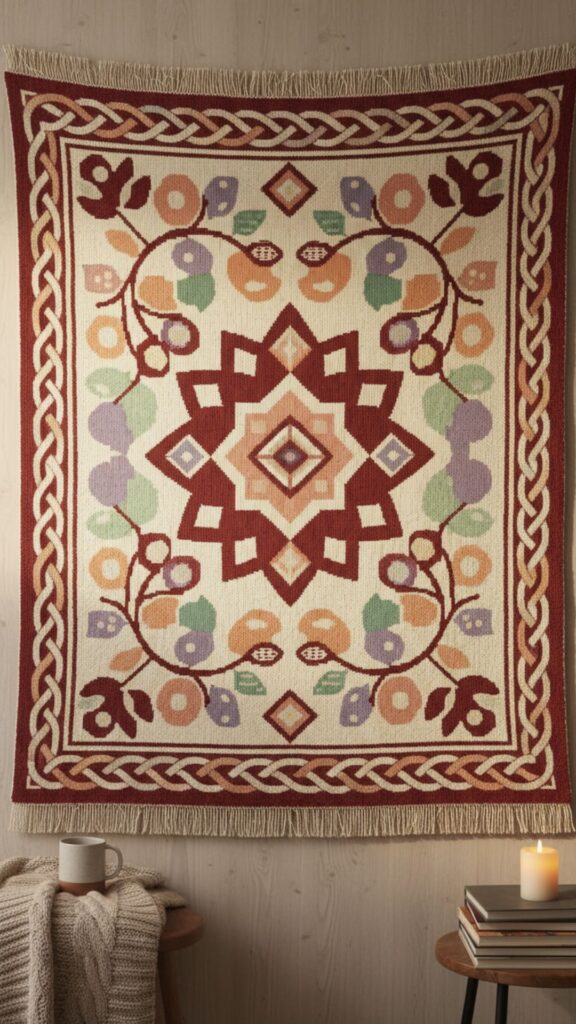
If you love Hygge, try Scandinavian folk art. It often features symmetrical floral or geometric patterns.
How To Get The Look:
- Red, white, and blue are traditional, but pastels work too.
- Focus on symmetry and repeating patterns.
- Looks stunning on a table runner or oven mitts.
Shopping List
- Scandinavian embroidery patterns
- Red and white embroidery floss
- Folk art designs
- Geometric embroidery kit
- Blue embroidery floss
- Oven mitts for embroidery
- Symmetrical embroidery patterns
- Cross stitch fabric
- Embroidery hoop set
- Nordic design book
11. Wine Lover: Grapes & Glasses
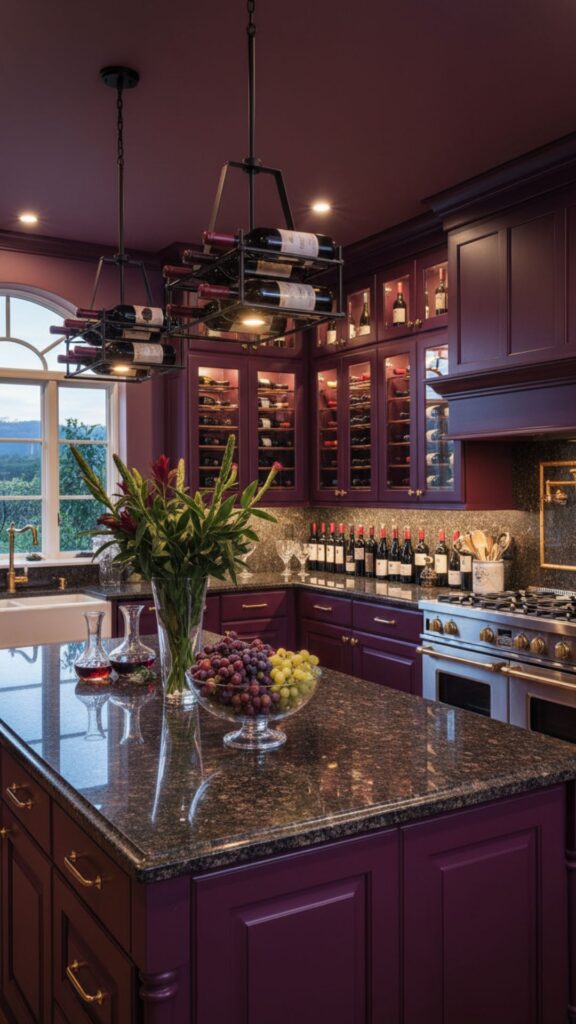
For the sommelier at home, wine-themed embroidery adds a sophisticated touch.
How To Get The Look:
- Deep purples, burgundies, and greens.
- Stitch bunches of grapes or elegant wine glasses.
- Great for napkins used during dinner parties.
Shopping List
- Wine embroidery designs
- Purple embroidery floss
- Burgundy thread
- Grape vine pattern
- Wine glass embroidery
- Dinner napkins for embroidery
- Metallic embroidery thread gold
- Embroidery stabilizer
- Wine theme kitchen decor
- Embroidery gift set
Get Stitching
Transforming your kitchen doesn’t require a full renovation. With a needle, some thread, and a bit of creativity, you can stitch your personality into the very fabric of the room. Choose the style that speaks to you and start creating something beautiful today.
Frequently Asked Questions (FAQs)
1. What is the best fabric for kitchen embroidery?
Cotton and linen are the top choices. They are durable, absorbent, and hold stitches well. Flour sack towels, specifically, are a favorite for kitchen embroidery projects because of their tight weave and vintage look.
2. Do I need a stabilizer for kitchen towels?
Yes, using a stabilizer is highly recommended. Kitchen towels can be flimsy or stretchy, and a stabilizer (water-soluble is great for towels) keeps the fabric tight while you stitch, preventing puckering and uneven designs.
3. Can I wash embroidered kitchen items?
Absolutely! However, you should take care. Wash on a gentle cycle with cold water to prevent colors from bleeding or threads from snagging. Avoid bleach, and if possible, hang dry or tumble dry on low.
4. What type of thread should I use?
Standard 6-strand cotton embroidery floss is perfect for most kitchen projects. It comes in hundreds of colors and is colorfast (meaning it won’t fade quickly). For items that will be washed frequently, ensure you buy high-quality floss to prevent running dyes.
5. I’m a beginner, where should I start?
Start with a kit! Kits come with the pattern pre-printed on the fabric, all the thread you need, and instructions. Look for a simple line art design or a small botanical pattern to get the hang of the basic stitches like backstitch and satin stitch.