Some links in this blog are affiliate links. If you make a purchase through these links, I may receive a small commission. This helps support the site at no extra cost to you.
A Japandi bedroom does not shout for attention.
It whispers calm, intention, and quiet confidence.
This aesthetic sits at the intersection of Japanese wabi-sabi and Scandinavian hygge, where simplicity is not emptiness but thoughtful restraint. In a world overflowing with visual noise, Japandi bedrooms feel like a deep breath at the end of a long day.
What makes Japandi bedroom aesthetic art decor so compelling is its balance. Nothing feels excessive, yet nothing feels bare. Every object has a reason to exist, every surface invites rest, and every piece of art feels grounded rather than decorative for the sake of trend.
This guide explores eleven Japandi bedroom aesthetic art decor ideas that bring harmony, warmth, and timeless character into your sleeping space. Each idea is rooted in philosophy as much as design, helping you create a bedroom that feels calm today and relevant years from now.

Table of Contents

11 Japandi Bedroom Aesthetic Art Decor Ideas
1. Minimalist Wall Art with Natural Imperfections
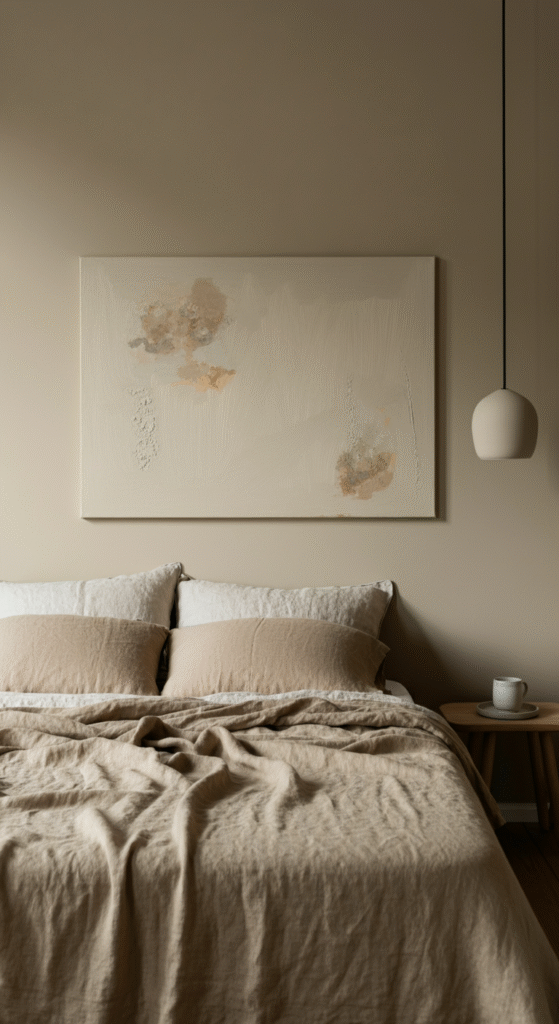
Japandi art embraces imperfection as beauty rather than flaw.
Instead of polished, glossy artwork, choose minimalist wall pieces that show texture, grain, or subtle irregularity. Hand-brushed ink art, raw clay wall plaques, or abstract line drawings on unbleached paper work beautifully in a Japandi bedroom.
Do you know that in Japanese aesthetics, a crack or uneven brushstroke is often valued because it reflects the maker’s hand? This idea contrasts sharply with mass-produced perfection and adds soul to the room.
Place one or two art pieces only. Japandi art decor works best when the wall can breathe. Overcrowding dilutes the calm and shifts the room away from balance.
Shopping List
- Hand-brushed abstract ink wall art on textured paper
- Wabi-sabi inspired neutral abstract canvas print
- Minimalist imperfect line drawing wall art
- Organic texture plaster-style wall art panel
- Handmade paper abstract wall decor
- Neutral minimalist brushstroke art print
- Earth-tone abstract wall art canvas
- Textured minimalist art framed print
- Soft beige abstract wall art for bedroom
- Modern wabi-sabi wall art decor
- Natural fiber framed abstract artwork
- Muted tone imperfect geometry art
- Hand-painted minimalist neutral wall art
- Subtle texture abstract art print
- Scandinavian Japanese fusion wall art
- Calm neutral bedroom abstract art
2. Neutral Color Art with Earthy Undertones
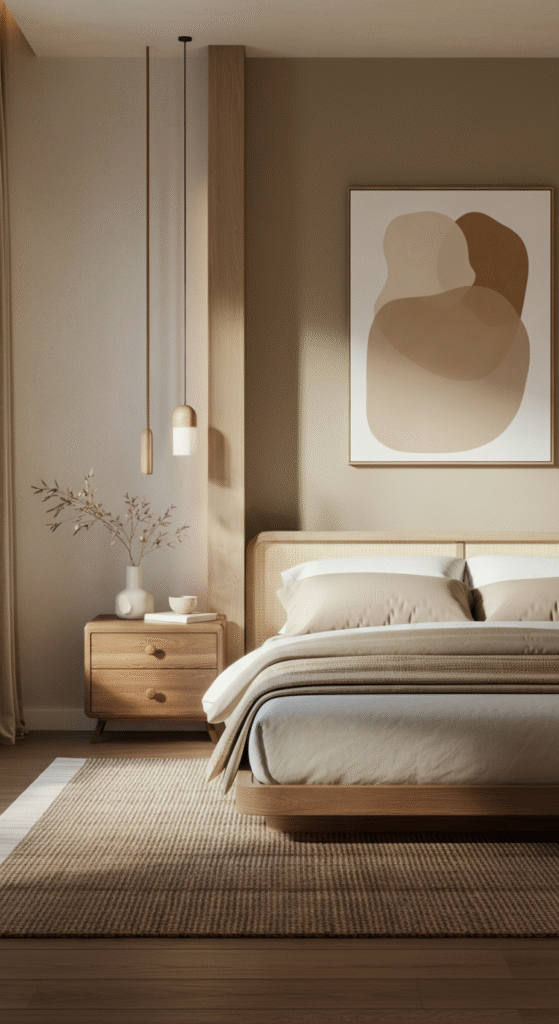
Color in Japandi bedrooms is never loud.
Art decor should echo soft neutrals such as sand, stone, clay, fog grey, or warm beige. These tones create a visual bridge between Scandinavian lightness and Japanese earth-rooted design.
A muted landscape, abstract color block art, or soft watercolor wash can add depth without overpowering the room.
Interesting fact: Japandi interiors often rely on colors found in nature because the human brain associates them with safety and rest, making them ideal for bedrooms.
Shopping List
- Beige and clay abstract canvas wall art
- Neutral color block minimalist wall decor
- Earth tone watercolor abstract art print
- Soft taupe and sand wall art canvas
- Stone-inspired neutral abstract artwork
- Warm grey minimalist bedroom wall art
- Organic earth palette abstract art
- Muted neutral landscape style wall art
- Minimalist beige wall art framed print
- Calm earthy abstract wall decor
- Soft linen tone abstract art print
- Natural pigment inspired wall artwork
- Neutral modern Japandi wall art
- Subtle gradient neutral art canvas
- Warm minimal abstract bedroom art
3. Wood Framed Art with Clean Geometry
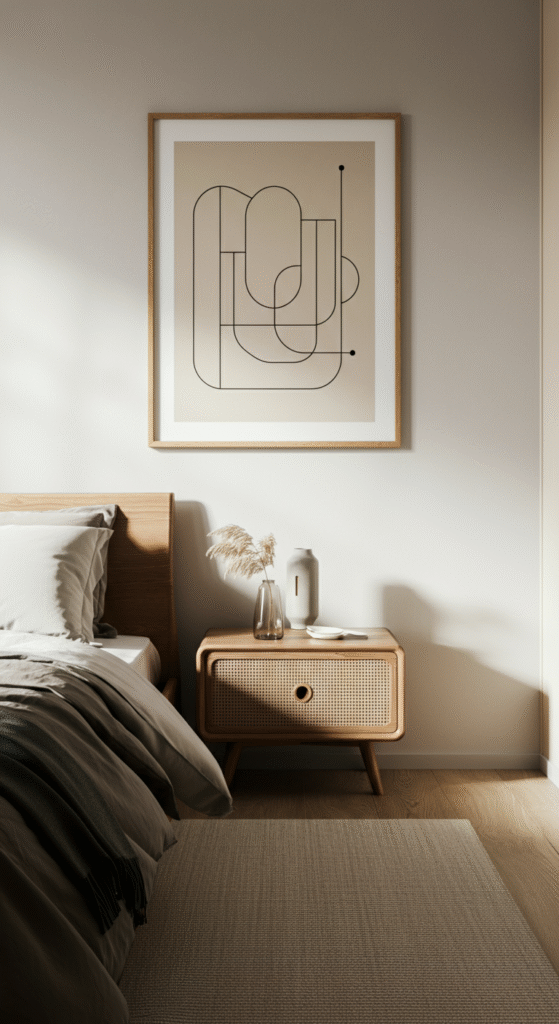
Frames matter as much as the artwork itself in Japandi decor.
Choose frames made from oak, ash, or walnut with clean, squared edges. Avoid ornate carvings or high-gloss finishes. The goal is quiet structure, not decoration.
Geometric art, such as simple circles, vertical lines, or asymmetrical grids, pairs beautifully with wooden frames. This reflects Scandinavian order balanced with Japanese asymmetry.
The frame should feel like part of the wall, not a separate statement piece.
Shopping List
- Geometric line art with oak wood frame
- Minimalist circle and line wall art framed
- Scandinavian geometric abstract art print
- Clean geometry neutral wall decor
- Modern Japandi framed line art
- Simple grid pattern wall art frame
- Abstract geometry bedroom wall art
- Minimalist triangle line art framed print
- Neutral geometric poster with wood frame
- Soft tone geometric abstract wall art
- Balanced shape minimalist wall decor
- Japanese Scandinavian geometry art print
- Thin line abstract framed artwork
- Clean form geometric bedroom art
- Modern neutral geometry wall art
4. Textile Art and Fabric Wall Hangings
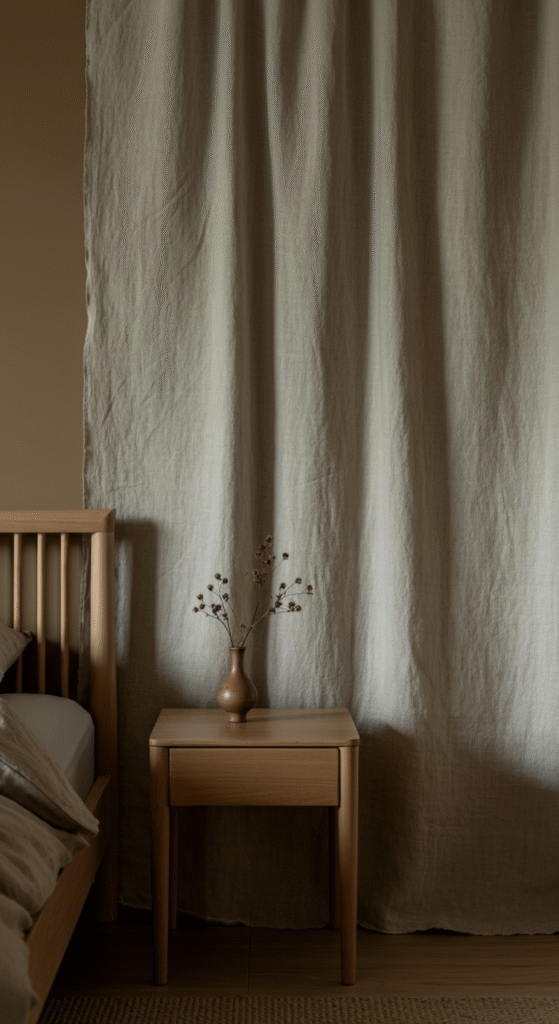
Japandi bedrooms benefit from soft surfaces that absorb sound and add warmth.
Fabric wall art made from linen, cotton, or wool introduces texture without visual clutter. Think woven panels, stitched minimalist patterns, or softly pleated fabric hangings.
Do you know that Japanese interiors traditionally used fabric dividers and wall coverings to soften acoustics and light? This concept translates perfectly into modern Japandi bedrooms.
Keep colors subdued and patterns restrained to maintain harmony.
Shopping List
- Linen fabric wall hanging decor
- Minimalist woven textile wall art
- Cotton tapestry neutral wall decor
- Handwoven wall hanging for bedroom
- Soft fabric panel wall art
- Neutral macrame wall decor minimalist
- Organic fiber textile wall hanging
- Minimalist stitched fabric wall art
- Natural cotton wall tapestry
- Neutral tone woven wall decor
- Japandi textile art wall hanging
- Soft pleated fabric wall decor
- Handcrafted textile bedroom wall art
- Muted woven fiber wall hanging
- Scandinavian Japanese fabric wall art
5. Nature Inspired Art with Subtle Storytelling
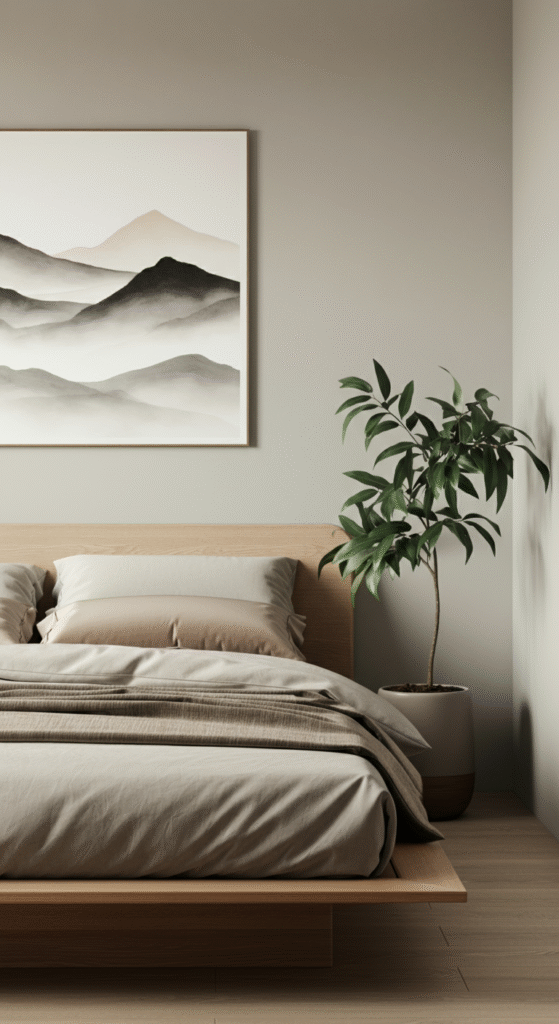
Japandi art often references nature without depicting it literally.
Instead of detailed floral paintings, look for abstract interpretations of mountains, water, or wind. A single branch sketch or misty horizon artwork can convey calm without distraction.
Myth worth knowing: In Japanese philosophy, nature is not something to dominate but something to coexist with. Japandi art reflects this belief by blending nature into interiors gently.
This approach helps the bedroom feel grounded and restorative.
Shopping List
- Abstract mountain inspired wall art
- Misty landscape minimalist art print
- Nature inspired neutral abstract canvas
- Soft horizon abstract bedroom wall art
- Organic landscape style wall decor
- Minimalist botanical line art print
- Earth inspired abstract wall artwork
- Calm nature tone bedroom wall art
- Subtle forest inspired art print
- Japanese nature concept wall art
- Neutral abstract water inspired canvas
- Soft organic scenery wall decor
- Nature form minimalist wall art
- Grounded earth tone landscape art
- Quiet nature abstract bedroom art
6. Low Placement Art for Visual Balance
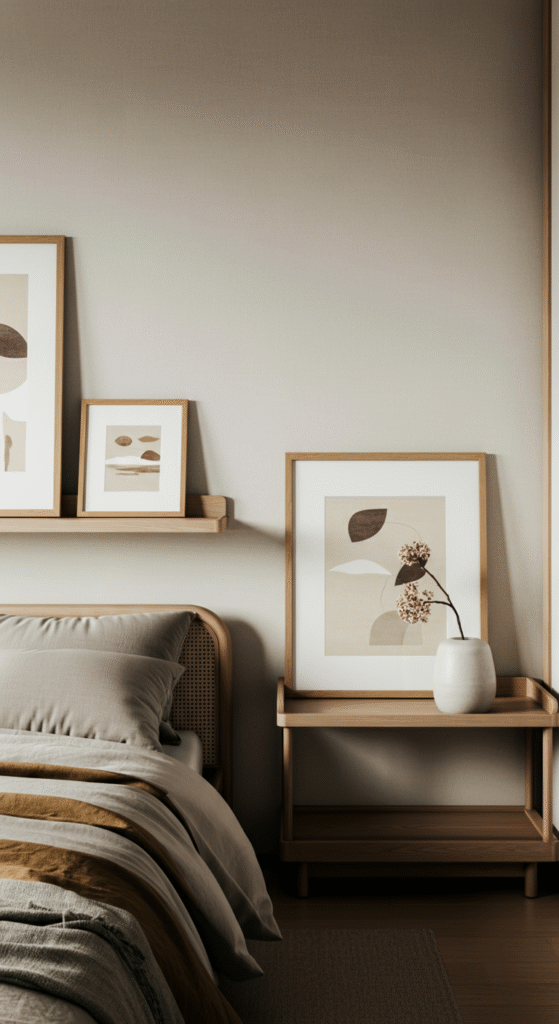
In Japandi bedrooms, art does not always hang at eye level.
Placing art lower on the wall aligns with Japanese interior traditions where furniture and visual elements stay close to the ground. This creates a feeling of stability and calm.
Lean framed art on a low shelf, dresser, or headboard ledge rather than hanging everything. This relaxed placement adds an informal elegance that defines Japandi style.
Lower placement also encourages slower visual movement, which is ideal for a sleeping space.
Shopping List
- Leanable framed abstract wall art
- Low shelf bedroom art decor
- Minimalist framed art for dresser top
- Neutral art prints for leaning display
- Small framed Japandi bedroom art
- Wood framed abstract art for shelves
- Modern neutral art for low placement
- Compact minimalist wall art frame
- Soft tone artwork for bedside shelf
- Small abstract canvas bedroom decor
- Low-profile framed wall art
- Minimalist art prints for headboard ledge
- Neutral artwork for floor leaning display
- Simple abstract art for low furniture
- Balanced visual bedroom art decor
7. Handmade Ceramics as Wall or Shelf Art
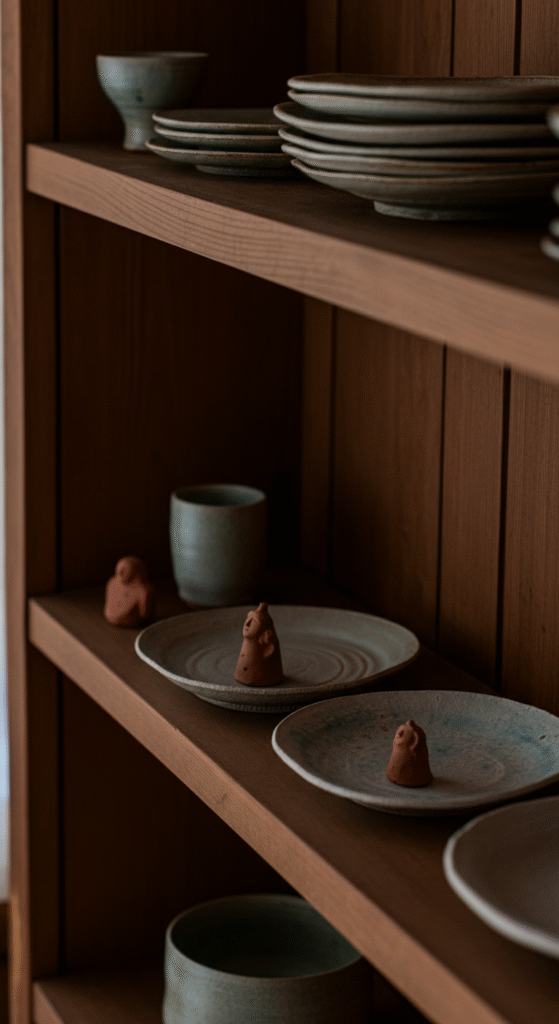
Art decor in Japandi bedrooms extends beyond framed pieces.
Handmade ceramic plates, sculptural wall tiles, or small clay objects displayed on shelves function as art while maintaining material honesty.
Do you know that uneven glazing and natural firing marks are considered marks of authenticity in Japanese ceramics? These details bring warmth and individuality to the bedroom.
Keep displays minimal and spaced apart to avoid visual noise.
Shopping List
- Handmade ceramic decorative plates
- Minimalist clay wall decor plates
- Neutral ceramic art display set
- Handcrafted pottery shelf decor
- Organic shape ceramic wall art
- Japandi style ceramic decor objects
- Textured clay art decorative pieces
- Minimal ceramic sculpture for shelf
- Earth tone pottery decor accents
- Hand-thrown ceramic wall hanging
- Small ceramic art bowls for decor
- Wabi-sabi ceramic decorative plates
- Matte glaze ceramic art objects
- Natural clay decorative wall tiles
- Handcrafted ceramic bedroom decor
8. Monochrome Ink Art for Quiet Drama
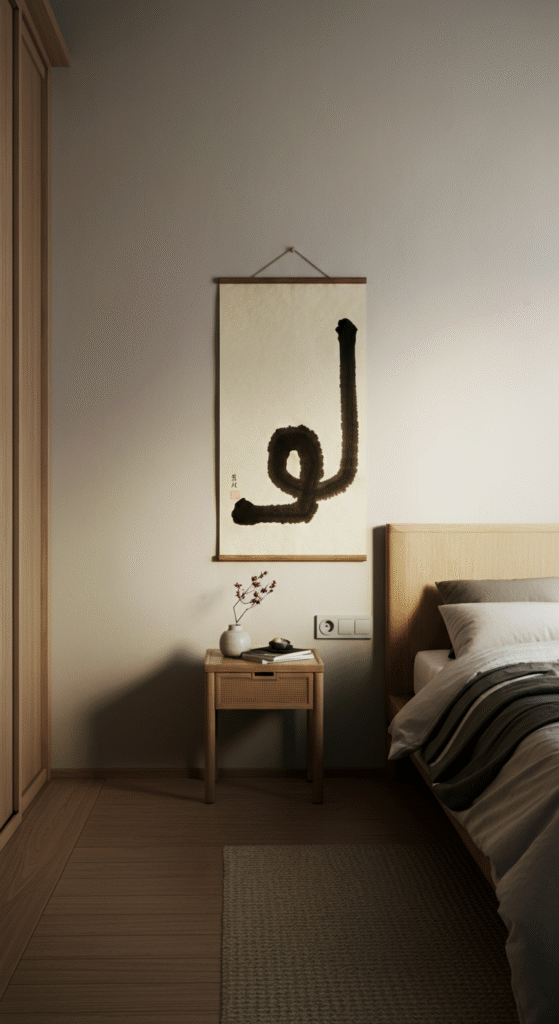
Black ink on off-white backgrounds offers contrast without chaos.
Ink wash art, calligraphy-inspired strokes, or abstract brush forms introduce depth while staying true to Japandi restraint.
This style adds a subtle focal point to neutral bedrooms, especially when paired with light wood furniture and soft textiles.
The beauty of monochrome art lies in what is left unsaid. Empty space becomes part of the composition.
Shopping List
- Black ink abstract wall art print
- Minimalist ink wash bedroom artwork
- Monochrome brushstroke wall art
- Japanese ink style abstract canvas
- Black and off-white minimalist art
- Calligraphy inspired ink wall decor
- Soft contrast monochrome bedroom art
- Ink line abstract framed print
- Minimal black ink wall art canvas
- Japandi monochrome abstract artwork
- Modern ink painting style wall art
- Neutral black and beige abstract art
- Simple ink form minimalist decor
- Abstract sumi-e style wall art
- Quiet dramatic ink bedroom artwork
9. Asymmetrical Gallery with Intentional Spacing
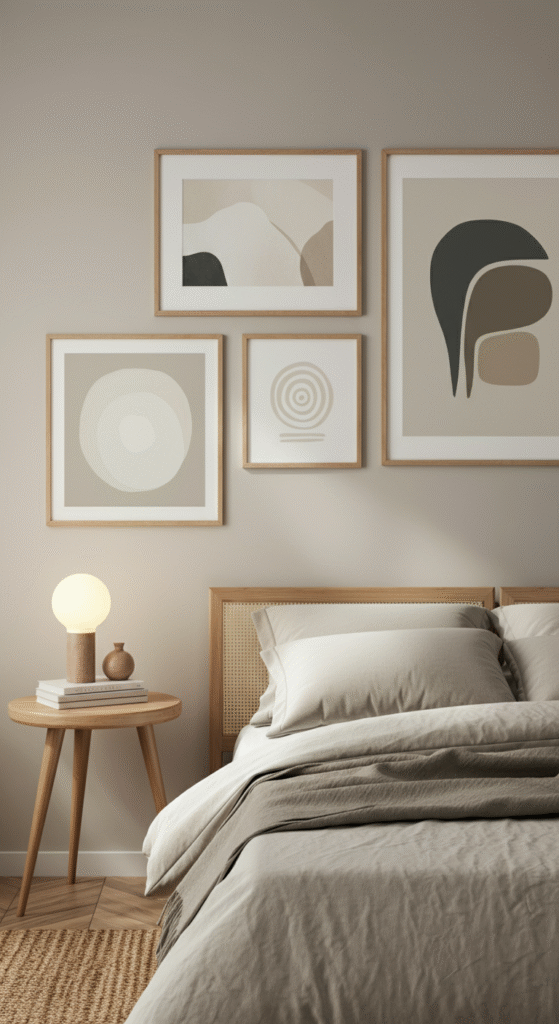
Japandi does not follow strict symmetry.
A small gallery wall can work if spacing feels intentional and relaxed. Mix two or three art pieces with different sizes but consistent tones and materials.
Interesting fact: Japanese aesthetics often favor asymmetry because it reflects the unpredictability of nature and life.
Avoid perfect alignment. Slight variation feels more organic and calming.
Shopping List
- Minimalist art print set for gallery wall
- Neutral abstract wall art collection
- Japandi gallery wall art prints
- Small mismatched abstract art frames
- Soft tone gallery wall decor set
- Scandinavian Japanese art print bundle
- Asymmetrical wall art decor set
- Neutral framed art mix set
- Modern minimalist wall art grouping
- Balanced tone abstract gallery prints
- Earthy gallery wall art pack
- Soft geometry art print set
- Japandi style framed art bundle
- Minimal wall art trio decor
- Natural palette gallery wall art
10. Sculptural Lighting as Art Decor
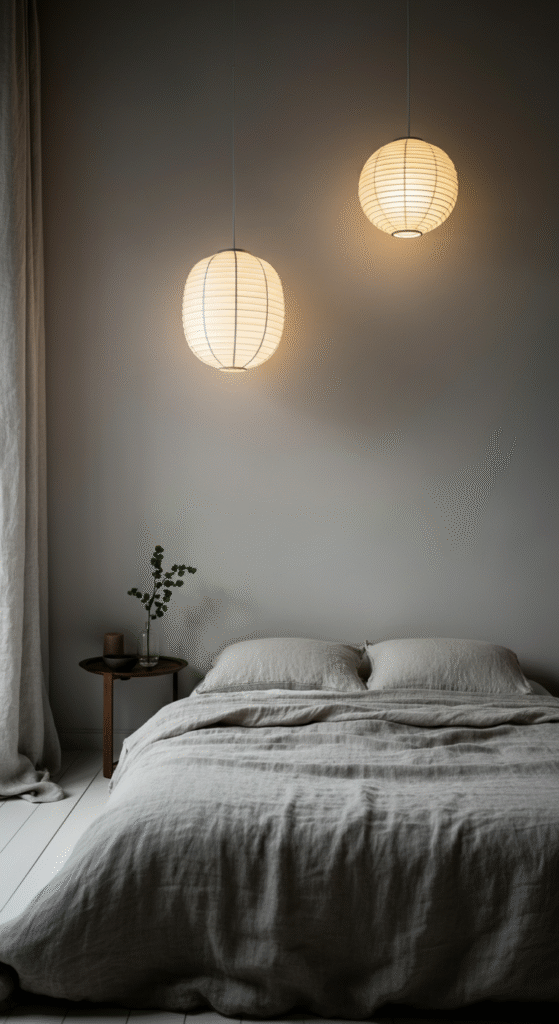
Lighting in Japandi bedrooms doubles as art.
Paper lanterns, linen-covered pendants, or sculptural bedside lamps add visual interest even when turned off. These forms echo Japanese paper traditions and Scandinavian functional design.
Soft diffused light enhances wall art and creates gentle shadows that change throughout the day.
Light becomes part of the decor narrative rather than a separate utility.
Shopping List
- Paper lantern pendant light
- Linen fabric bedside table lamp
- Minimalist sculptural bedside lamp
- Japanese style paper floor lamp
- Neutral tone modern bedroom lamp
- Soft glow table lamp minimalist
- Organic shape sculptural bedroom light
- Wood base linen shade lamp
- Modern Japandi pendant lighting
- Warm ambient paper shade lamp
- Minimal ceramic base table lamp
- Soft diffused bedroom reading lamp
- Scandinavian Japanese lighting decor
- Natural texture bedside lighting
- Calm sculptural bedroom light fixture
11. Negative Space as the Final Art Element
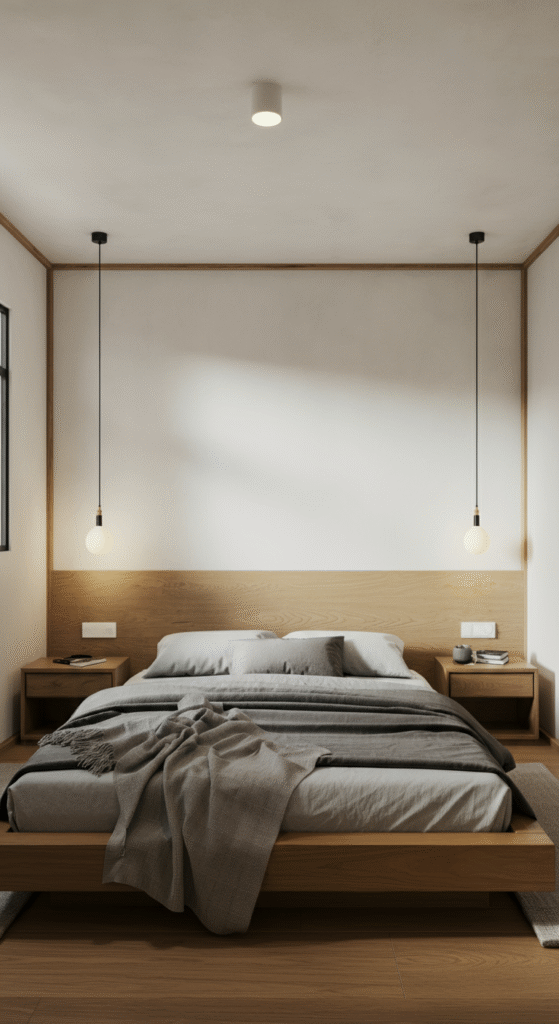
Perhaps the most overlooked Japandi decor idea is negative space.
Leaving walls partially empty allows the eye to rest and the mind to slow down. This space becomes a design choice, not an absence.
Do you know that in Japanese design philosophy, empty space is considered as meaningful as filled space? It gives objects room to exist fully.
Resist the urge to fill every corner. Balance is achieved not by adding more, but by knowing when to stop.
Shopping List
- Low platform wooden bed frame
- Neutral linen bedding set
- Minimalist wooden nightstand
- Soft textured area rug neutral
- Plain ceramic bedside vase
- Lightweight sheer curtain panels
- Natural wood bench for bedroom
- Minimal cotton throw blanket
- Low profile storage cabinet wood
- Simple floor cushion neutral tone
- Minimalist wooden wall shelf
- Soft neutral bed runner
- Plain ceramic table lamp
- Natural fiber laundry basket
- Uncluttered bedroom decor essentials
Conclusion
Japandi bedroom aesthetic art decor is not about following trends or collecting statement pieces.
It is about intention, restraint, and emotional balance. Each artwork, texture, and placement choice contributes to a larger feeling of calm and grounded living.
By blending Scandinavian simplicity with Japanese mindfulness, a Japandi bedroom becomes more than a place to sleep. It becomes a space to reset, reflect, and recharge.
When art is chosen thoughtfully and space is respected, the bedroom transforms into a quiet sanctuary that feels timeless, personal, and deeply restorative.
Frequently Asked Questions (FAQs)
What defines Japandi bedroom aesthetic art decor?
It blends Japanese wabi-sabi simplicity with Scandinavian warmth, focusing on balance, natural materials, and minimal yet meaningful art.
What type of art works best in a Japandi bedroom?
Minimalist, nature-inspired, abstract, or handmade art with neutral tones and subtle textures works best.
Can I use color in Japandi bedroom art decor?
Yes, but colors should be muted and earthy, such as beige, clay, soft grey, or warm taupe.
Is wall art necessary in a Japandi bedroom?
No. Japandi design values negative space, so fewer or even no wall art pieces can still feel complete.
Are handmade items important in Japandi decor?
Yes. Handmade ceramics, textiles, and art add authenticity and reflect the philosophy of imperfection.