Some links in this blog are affiliate links. If you make a purchase through these links, I may receive a small commission. This helps support the site at no extra cost to you.
Ever walked into a room and felt your shoulders just drop, like someone quietly turned down all the noise in your mind? That is exactly what a Japandi bedroom does. It blends the soft warmth of Scandinavian comfort with the mindful simplicity of Japanese living.
Together, they create a bedroom setup that feels calm, grounded, and beautifully intentional. And honestly, in a world that sometimes feels louder than it should, this style hits different.
Some people think Japandi is only about minimalism. But that is actually a myth. Japandi is not about removing things you love. It is about choosing items that make sense, feel peaceful, and support a slower rhythm of life. Every piece in the room has a purpose. Every tone feels gentle. Every corner feels thought through.
If you have been craving a softer bedroom environment, where mornings feel warm and nights feel quietly luxurious, these 11 Japandi bedroom setups will give you all the direction you need. Each idea works for small rooms, mid sized rooms, and larger spaces too.
Let’s start with the list.
Table of Contents

11 Bedroom Setup in Japandi Style
1. Low Platform Bed With Clean Lines
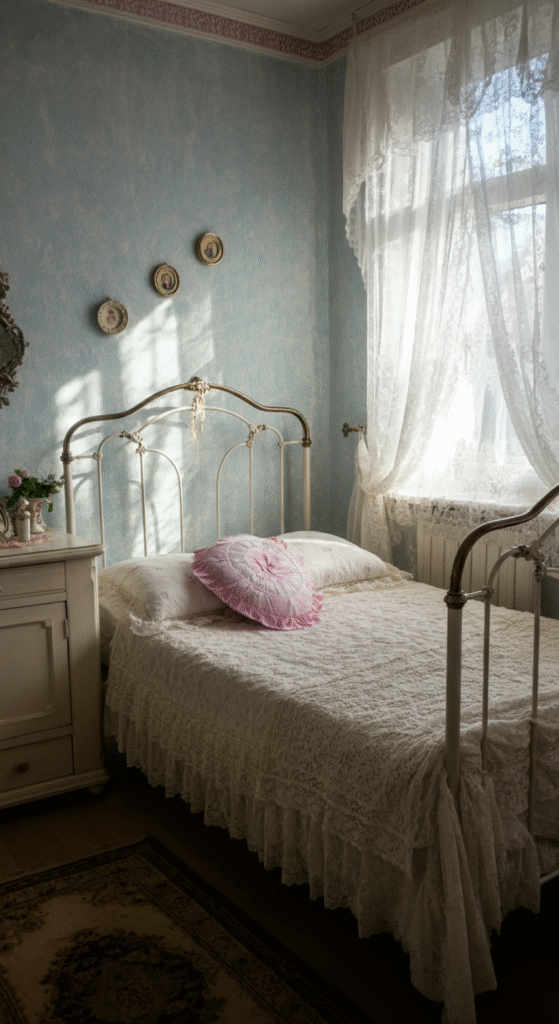
A low platform bed is one of the most recognizable parts of Japandi style. It makes the room feel grounded and closer to nature. Japanese interiors naturally lean toward lower furniture, and Scandinavian design keeps it clean, simple, and functional.
Do you know that in traditional Japanese interiors, sleeping closer to the floor is believed to help reduce visual clutter and create a deeper sense of peace? The low height spreads the visual weight of the room, making everything feel balanced.
Use natural wood tones like birch, oak, or acacia. Keep the bedding neutral. Soft creams, warm whites, muted beiges, and gentle clay tones work beautifully. This setup lets the bed become the calm anchor for your space.
Shopping List
- Solid Wood Low Platform Bed Frame
- Minimalist Oak Bedside Table
- Japanese Tatami Style Mattress Topper
- Neutral Linen Duvet Cover Set
- Soft Cotton Pillowcases
- Natural Beige Quilt Set
- Light Wood Wall Shelf
- Matte Ceramic Table Lamp
- Cream Floor Cushion
- Scandi Style Bed Bench
- Neutral Waffle Blanket
- Minimal Wooden Alarm Clock
- Soft Ivory Area Rug
- Low Height Storage Cabinet
- Natural Bamboo Bed Tray
- Beige Linen Upholstered Headboard
- Textured Throw Pillow in Warm White
- Minimal Wall Art Prints
- Matte White Pendant Light
2. Neutral Palette With Earthy Warmth
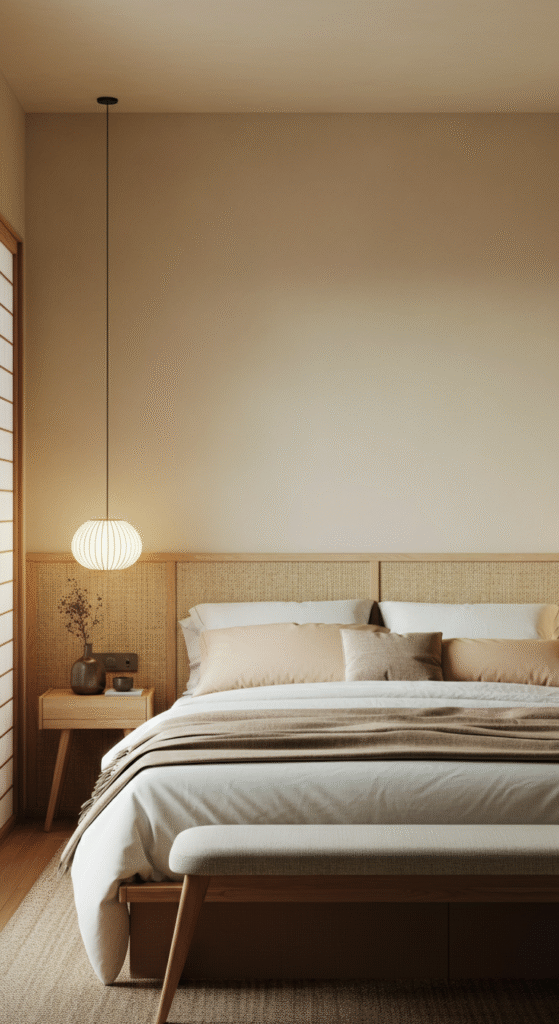
Color is everything in Japandi. You want your palette to feel quiet, airy, and earthy at the same time. Think soothing whites, light grays, sand tones, oatmeal beige, soft taupe, and warm wood browns.
A fun fact here. Scandinavian homes use lighter palettes because of long winters and limited daylight. Japan uses natural tones inspired by nature like river stones, rice paper, and bamboo. Japandi simply merges both worlds and keeps only the calmest shades.
Add layers of warm neutrals, let the tones flow naturally, and make sure you leave some breathing space on the walls. The room should feel like fresh morning air.
Shopping List
- Beige Linen Comforter Set
- Warm Taupe Cotton Bed Sheets
- Muted Sand Tone Throw Blanket
- Oatmeal Textured Area Rug
- Cream Blackout Curtains
- Soft Brown Decorative Pillow Covers
- Neutral Canvas Wall Art
- Matte Clay Ceramic Vase
- Warm White Table Lamp
- Light Oak Dresser
- Scandi Tone Wooden Nightstand
- Woven Neutral Storage Basket
- Rustic Beige Knit Throw
- Stone Beige Bedspread
- Matte Finish Bedside Tray
- Warm Neutral Floor Rug
- Taupe Velvet Cushion Cover
- Minimal Wood and Fabric Chair
- Textured Linen Curtain Panels
3. Natural Wood Elements Everywhere
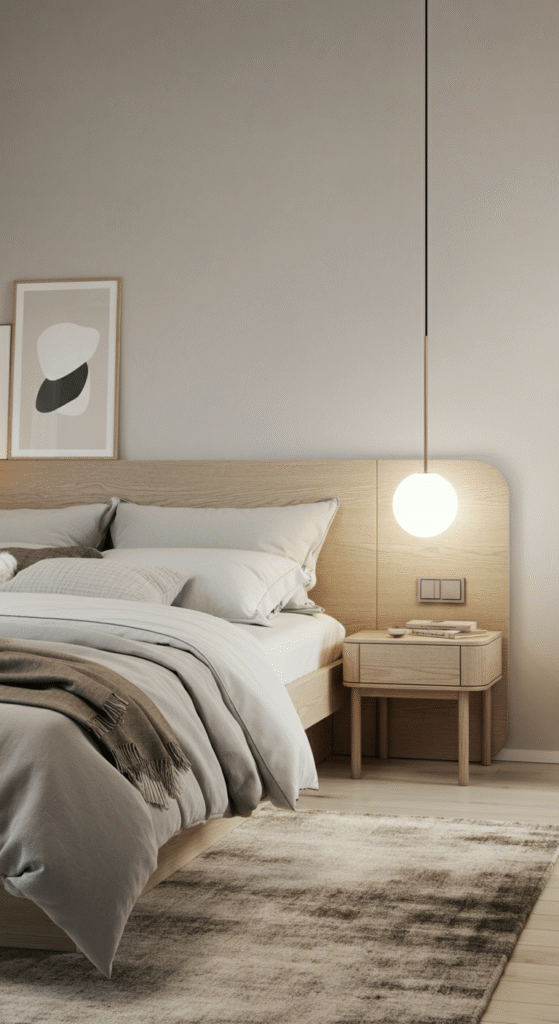
Wood plays a huge role in Japandi. Not only does it warm up the room, it adds life without feeling heavy. But the secret lies in keeping the wood tones consistent. Mixing too many can break the harmony.
Use natural wooden furniture, light toned side tables, bamboo decor, or a wooden bench at the foot of your bed. One thing many people do not know is that Japanese carpentry is built on the idea of harmony between structure and nature. Scandinavian design is based on comfort and warmth. When you blend both, the wood does more than decorate. It calms the space.
If you want, add a single darker wood piece to create visual depth.
Shopping List
- Solid Acacia Wood Bed Frame
- Birch Wood Nightstand
- Light Oak Storage Chest
- Wooden Wall Mounted Shelf
- Bamboo Table Lamp
- Cedar Wood Drawer Organizers
- Wooden Slatted Room Divider
- Ash Wood Bed Bench
- Scandi Pine Side Table
- Walnut Wood Jewelry Box
- Natural Wood Picture Frames
- Bamboo Woven Laundry Basket
- Handcrafted Wood Tray
- Wooden Diffuser With Essential Oils
- Rustic Wood Wall Decor Panel
- Natural Wood Desk Lamp
- Beech Wood Coat Rack
- Wood Grain Alarm Clock
4. Soft Lighting that Glows, Not Shines
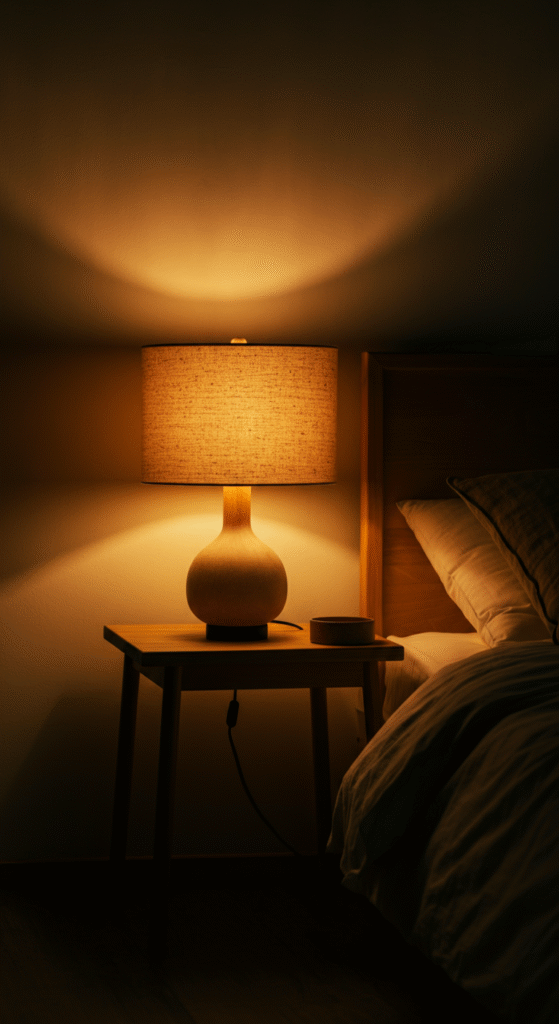
Japandi bedrooms look best with lighting that feels gentle. Avoid harsh white or cold blue lights. Instead, go for warm glow. It should feel like late afternoon sunlight or the softness of a paper lantern.
Choose rice paper lamps, linen shades, warm LED strips under shelves, or simple hanging pendants. Layer your lighting. One or two table lamps, ambient lighting, and maybe one hidden source of soft indirect lighting.
Interesting fact: in Japanese interiors, lighting is designed to imitate nature. Soft, diffused, and never overly bright. Scandinavian lighting, on the other hand, is about creating hygge, which basically means warmth and coziness. When you mix them, you get lighting that feels comforting and natural.
Shopping List
- Rice Paper Table Lamp
- Warm Glow LED Floor Lamp
- Linen Shade Bedside Lamp
- Soft Amber Edison Bulbs
- Dimmable Warm Light Bed Lamp
- Japanese Lantern Style Pendant
- Wood Base Ambient Light
- Under Shelf Warm LED Strip
- Minimalist Wall Sconce Light
- Warm Halo Night Lamp
- Frosted Glass Table Light
- Scandi Style Wooden Floor Lamp
- Warm Glow Bedside Touch Lamp
- Soft White Fabric Drum Shade
- Glow Diffuser Night Light
- Vintage Warm Tone Bulb Set
- Warm Ambient Candle Lamp
- Matte Beige Lamp Base
5. Decluttered Surfaces and Open Space
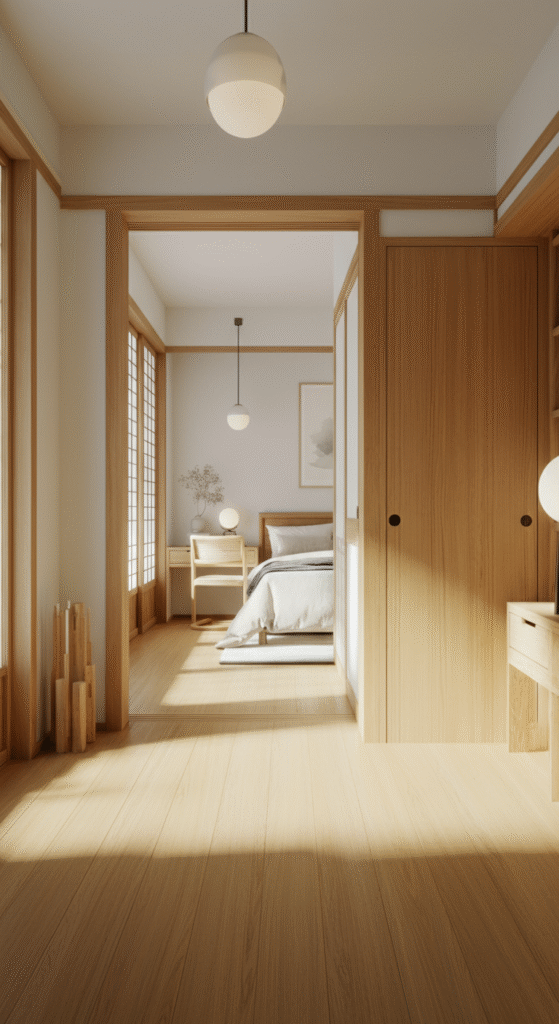
Japandi is not about having an empty room, but the surfaces should feel clear and breathable. Keep your bedside tables simple. Maybe a book, a vase, or a soft textured object. No heavy stacking.
Scandinavian design supports functionality. Japanese interiors support serenity. Both agree on one thing. A clutter free environment equals a calmer mind. There is an old Japanese saying that cluttered rooms create cluttered hearts. And honestly, try clearing your side table once and see the difference in how you sleep.
Open space is a design element in Japandi, not an accident.
Shopping List
- Floating Wall Shelf in Light Wood
- Hidden Storage Nightstand
- Minimal Wood Desk Organizer
- Neutral Fabric Storage Bins
- Under Bed Storage Boxes
- Matte White Wall Hooks
- Slim Minimal Side Table
- Foldable Woven Basket
- Compact Wood Drawer Unit
- Neutral Tone Magazine Holder
- Simple Ceramic Tray
- Low Profile Bedside Cabinet
- Matte Beige Storage Cube
- Soft Linen Storage Bag
- Minimal Wall Mounted Coat Rack
- Neutral Felt Storage Box
- Slim Scandi Shelf Unit
- Under Bed Sliding Drawer
6. Cozy Textures but in a Calm Way
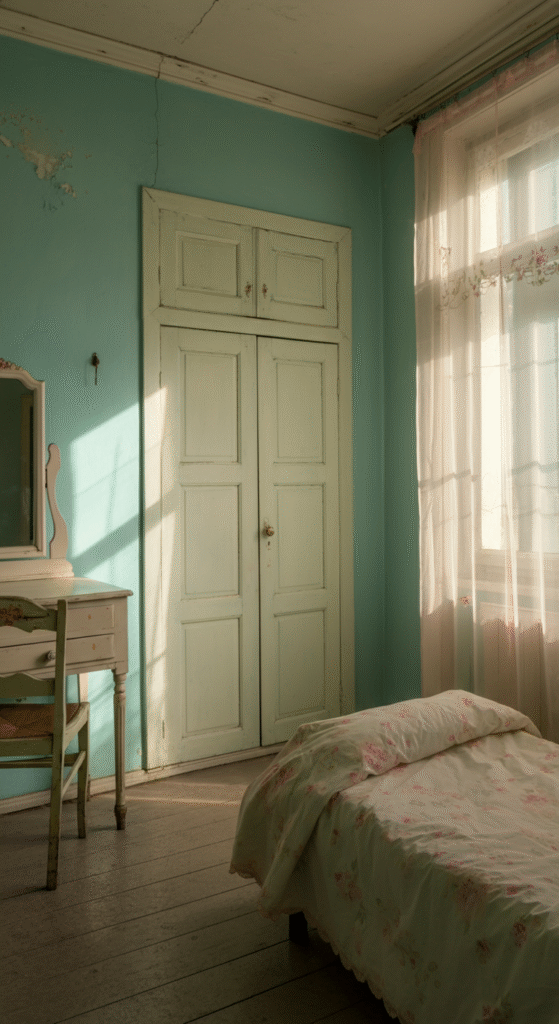
A Japandi bedroom uses textures to add warmth, but never in a loud or busy way. Choose linen bedding, cotton throws, light wool blankets, soft jute rugs, or waffle patterned pillows.
Textures here are not about showing off. They are about making your room feel lived in, natural, and slightly imperfect. In fact, this comes from the Japanese concept of wabi sabi, which celebrates imperfect beauty.
A common myth is that minimal bedrooms feel cold. Japandi proves that you can be minimal and cozy at the same time.
Shopping List
- Linen Bedding Set in Neutral Shades
- Soft Chunky Knit Throw Blanket
- Waffle Weave Cotton Quilt
- Light Jute Area Rug
- Neutral Shearling Pillow Cover
- Textured Linen Curtains
- Soft Wool Blend Blanket
- Scandi Style Floor Pouf
- Oatmeal Knit Bed Runner
- Cotton Slub Decorative Pillows
- Textured Bedspread in Beige
- Cozy Boucle Accent Chair
- Soft Plush Area Rug
- Light Wool Throw in Sand Tone
- Neutral Knit Ottoman
- Organic Cotton Throw Cloth
- Warm Textured Cushion Covers
- Muted Tone Fleece Blanket
7. A Touch of Greenery for Life and Balance
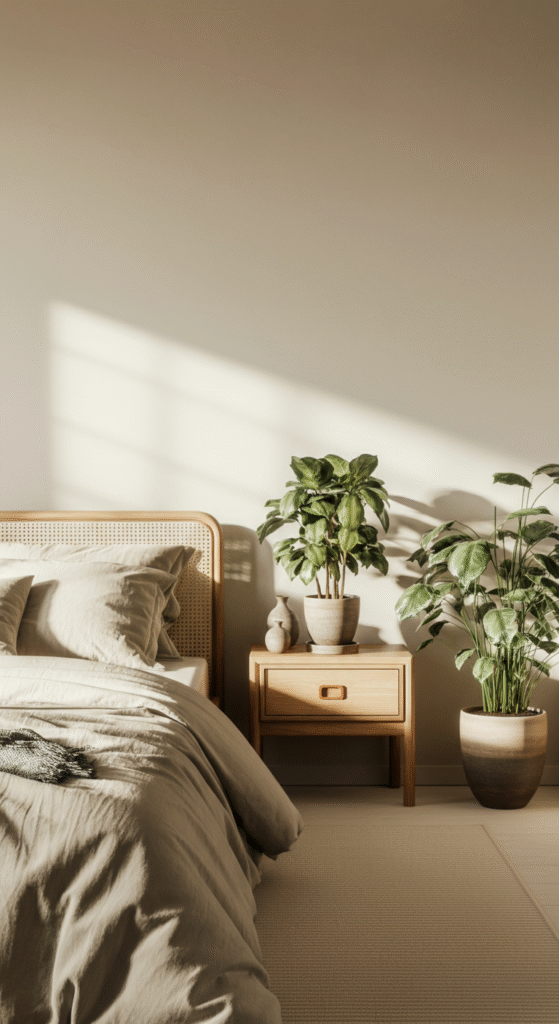
Plants help breathe freshness into a Japandi bedroom. But the key is choosing the right ones. You do not want busy, overly messy plants. Choose simple, structured greens.
Good choices include snake plant, ZZ plant, monstera, bamboo palm, or even a single tall branch in a ceramic vase. Scandinavian homes love greenery because it brings the outdoors inside. Japanese homes love greenery because it symbolizes calmness and renewal. Together, it creates a quiet balance.
Keep pots minimal. Matte ceramic, earthy clay, or simple neutral tones.
Shopping List
- Minimal Ceramic Plant Pot
- Snake Plant Potted
- ZZ Plant in Neutral Pot
- Monstera Deliciosa with Planter
- Bamboo Palm Plant
- Ficus Altissima in Matte Pot
- Tall Branch Vase
- Simple Glass Propagation Tube Set
- Neutral Clay Pot with Stand
- Mini Bonsai Tree
- Eucalyptus Stems for Decor
- Artificial Olive Tree in Linen Pot
- Scandi Wood Plant Stand
- Natural Terracotta Pot
- Indoor Plant Misting Bottle
- Neutral Pebbles for Plant Top Layer
- Ceramic Planter with Tray
- Light Wood Plant Holder
8. Functional Storage That Blends In
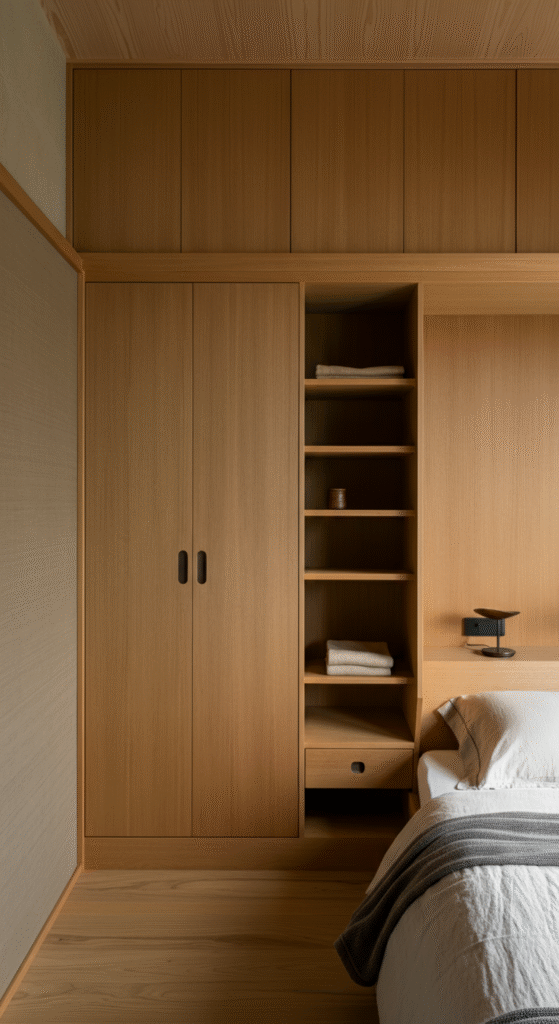
Japandi bedrooms thrive when storage stays hidden or blends naturally into the walls. Open shelves should have breathing space. Closed cabinets should match the overall room tone.
Use storage beds, under bed boxes, or built in wooden cabinets. Avoid shiny finishes. Stick with natural wood, textured laminates, or matte surfaces.
Interesting fact. Both cultures prioritize simple living, but for different reasons. Scandinavia values practicality and everyday comfort. Japan values mindfulness and less material attachment. The storage solutions combine both ideas quietly.
Shopping List
- Wooden Storage Bed Frame
- Matte Neutral Wardrobe Cabinet
- Low Profile Wood Dresser
- Under Bed Sliding Storage Drawers
- Minimal Light Wood Bookshelf
- Scandi Clothes Rail
- Matte Beige Storage Ottoman
- Closet Organizer Boxes
- Neutral Linen Shelf Baskets
- Foldable Fabric Storage Cube
- Wooden Cabinet With Hidden Shelves
- Minimal Bedside Storage Unit
- Light Oak Chest of Drawers
- Matte White Wall Cabinet
- Neutral Woven Under Bed Basket
- Slim Wooden Tower Shelf
- Linen Hanging Closet Organizer
- Hidden Compartment Bedside Table
9. Minimal Art but Deep Feeling
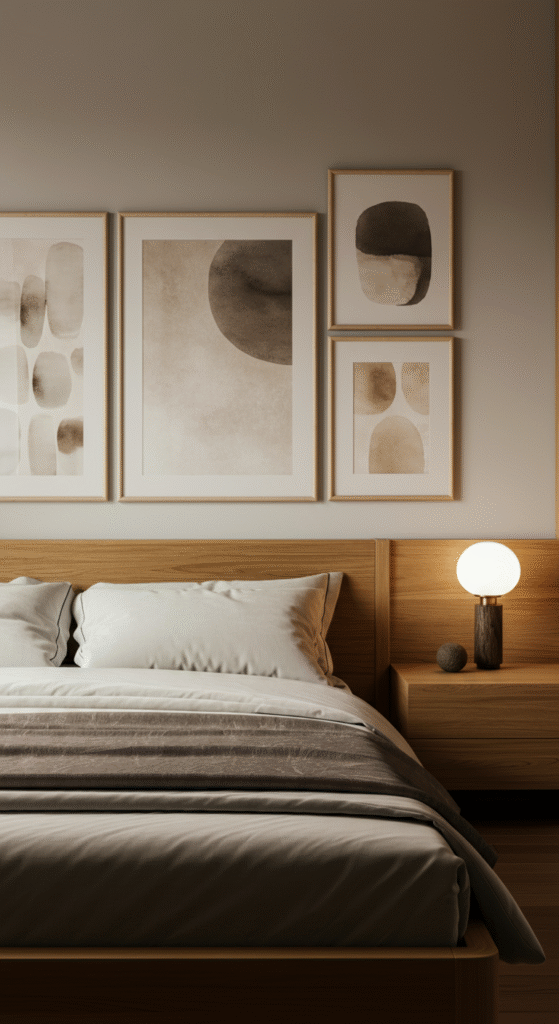
Art in a Japandi bedroom is simple. Usually one or two pieces. But the trick is choosing art that feels calm, airy, and nature connected. Use line drawings, soft watercolor inspired prints, abstract brush strokes, or organic shapes.
Do you know that both Japanese and Scandinavian art forms focus on quiet storytelling? Nothing loud. Nothing overdramatic. Just soft impressions that let your mind breathe.
Keep frames minimal. Wood, black, or white is enough.
Shopping List
- Neutral Abstract Wall Art Print
- Soft Brush Stroke Canvas Art
- Warm Tone Line Drawing Poster
- Minimalist Japanese Style Art
- Organic Shape Wall Print
- Matte Wood Frame Set
- Soft Beige Abstract Painting
- Nature Inspired Art Print
- Scandi Botanical Line Art
- Calm Watercolor Landscape Art
- Mono Tone Abstract Shapes
- Light Brown Organic Pattern Poster
- Neutral Minimal Triptych Set
- Matte White Frame Artwork
- Handmade Paper Texture Art
- Clay Tone Geometric Print
- Ink Wash Minimal Art Canvas
- Simple Circle and Line Art
10. Organic Materials to Keep the Room Grounded
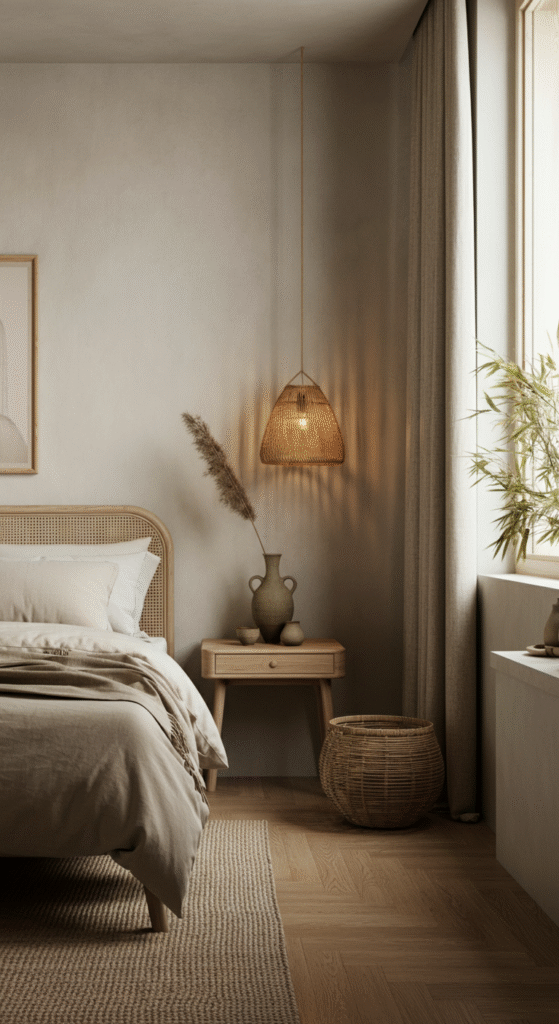
Japandi celebrates nature. So always bring in natural materials. Woven baskets, linen curtains, ceramic trays, cotton rugs, bamboo lamps, stone decor, easy to clean clay bowls, or even a textured wall panel.
These materials keep the room warm without feeling heavy. A small detail many people miss is that natural materials also age beautifully. That slightly worn look fits perfectly with the wabi sabi philosophy.
If you want to add depth, include soft stone textures or handmade pottery.
Shopping List
- Natural Jute Rug
- Handmade Ceramic Vase
- Linen Curtain Panels
- Rattan Headboard
- Bamboo Table Lamp
- Clay Decorative Bowl
- Organic Cotton Bedding
- Seagrass Storage Basket
- Wicker Wall Decor Set
- Woven Bamboo Tray
- Ceramic Candle Holder
- Linen Throw Blanket
- Stone Coaster Set
- Handcrafted Clay Pot
- Wood and Rattan Shelf
- Natural Cotton Cushion Covers
- Palm Leaf Basket
- Raw Linen Bedspread
- Stoneware Planter
11. Symmetry With a Relaxed Touch
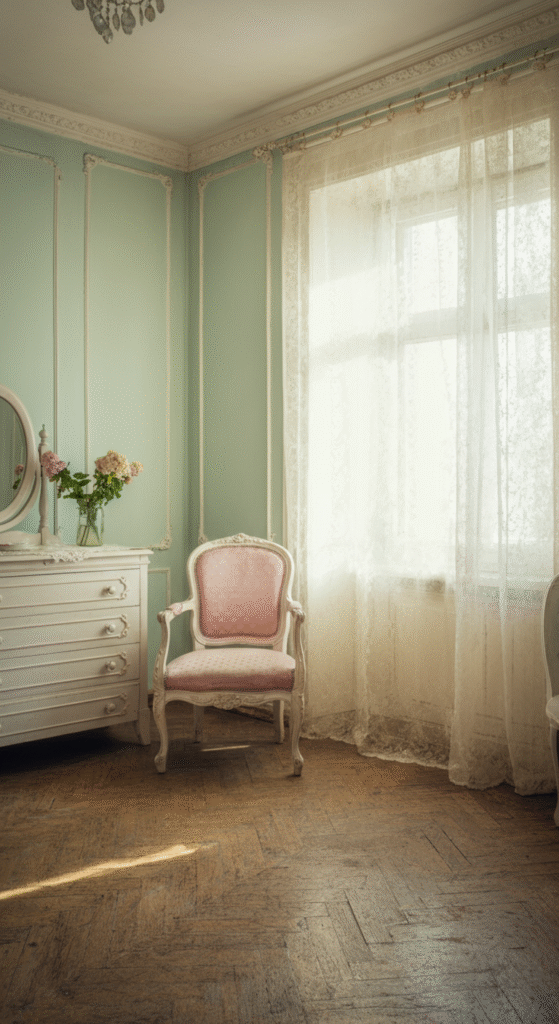
Unlike strict modern design, Japandi is calm and balanced, but never stiff. You can create symmetry using matching lamps, pillows, or side tables. But leave a little room for individuality. Like a single piece of pottery placed off center. Or a slightly uneven branch in a vase.
Scandinavian interiors feel comfortable when things look balanced. Japanese interiors appreciate natural irregularity. Mix both and you get a bedroom that feels stable but not overly perfect.
This is the little secret that makes Japandi feel more human.
Shopping List
- Matching Linen Pillow Sets
- Pair of Wooden Bedside Lamps
- Two Neutral Ceramic Vases
- Twin Light Oak Nightstands
- Matching Abstract Art Prints
- Dual Beige Throw Pillows
- Paired Table Lamps in Matte White
- Set of Symmetrical Wall Frames
- Two Linen Bedside Trays
- Neutral Bedside Lamp Pair
- Twin Scandi Wooden Stools
- Pair of Soft Knit Blankets
- Dual Tone Matching Cushions
- Two Soft Beige Bed Runners
- Twin Ceramic Pottery Pieces
- Matching Minimal Wall Sconces
- Two Identical Floor Rugs for Balance
- Symmetrical Candle Holder Pair
Conclusion
A Japandi bedroom setup is not just a style. It is a slow living experience. It encourages calmer nights, softer mornings, and a clearer mind. With its peaceful color palettes, natural textures, warm lighting, and mindful simplicity, this style fits beautifully into daily life.
The best part is that Japandi does not judge your room size. Whether your bedroom is small or large, it can feel peaceful when the elements are chosen with intention.
Try one idea or mix a few. You will feel the shift in the room and honestly, in yourself too.
Frequently Asked Questions (FAQs)
What colors work best for a Japandi bedroom?
Soft neutrals like beige, warm white, light gray, and natural wood tones work best.
Is Japandi the same as minimalism?
Not exactly. Japandi is softer and cozier, mixing minimalism with warmth and natural textures.
Can I use bold colors in Japandi style?
You can, but keep them muted. Deep green or soft clay works better than bright tones.
What type of bed is ideal for Japandi?
A low platform wooden bed fits perfectly because it keeps the room grounded and calm.
Are plants necessary in Japandi decor?
Not required, but simple structured plants add quiet balance and freshness.