Some links in this blog are affiliate links. If you make a purchase through these links, I may receive a small commission. This helps support the site at no extra cost to you.
Your bedroom should be more than just a place to sleep; it should be a sanctuary where the stress of the day melts away. Creating a Zen aesthetic isn’t just about following a design trend—it’s about cultivating a sense of balance, harmony, and tranquility in your personal space. By stripping away the unnecessary and focusing on flow, you create an environment that actively lowers your heart rate and clears your mind.

Achieving this look doesn’t require a complete renovation. Often, it comes down to making intentional choices about color, texture, and light. Whether you are living in a bustling city apartment or a quiet suburban home, these ten tips will help you transform your sleeping area into a haven of maximum comfort and peace.

1. Embrace an Earthy Color Palette
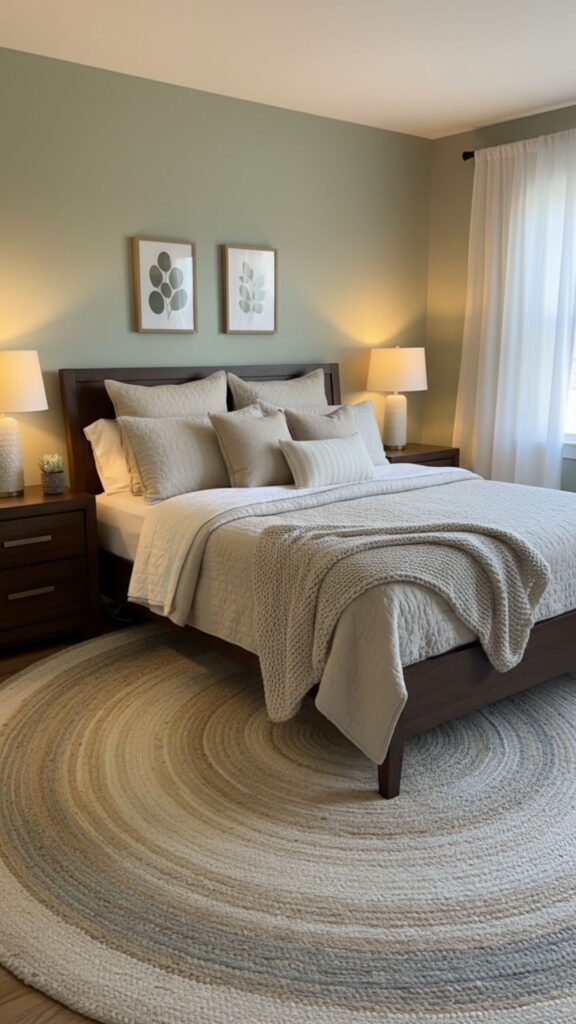
The foundation of a Zen bedroom is a soothing, neutral color scheme. Avoid loud, jarring colors that stimulate the senses. Instead, look to nature for inspiration—soft whites, warm beiges, muted greys, and pale earth tones set the stage for relaxation.
How To Get The Look:
- Paint walls in soft, matte shades of cream or sage.
- Choose bedding in solid, neutral tones rather than busy patterns.
- Add subtle depth with accents in charcoal or dark wood tones.
Shopping List
- Beige Duvet Cover Set
- Sage Green Throw Pillow
- Cream Blackout Curtains
- Neutral Area Rug
- Matte White Wall Decor
2. Choose Low-Profile Furniture
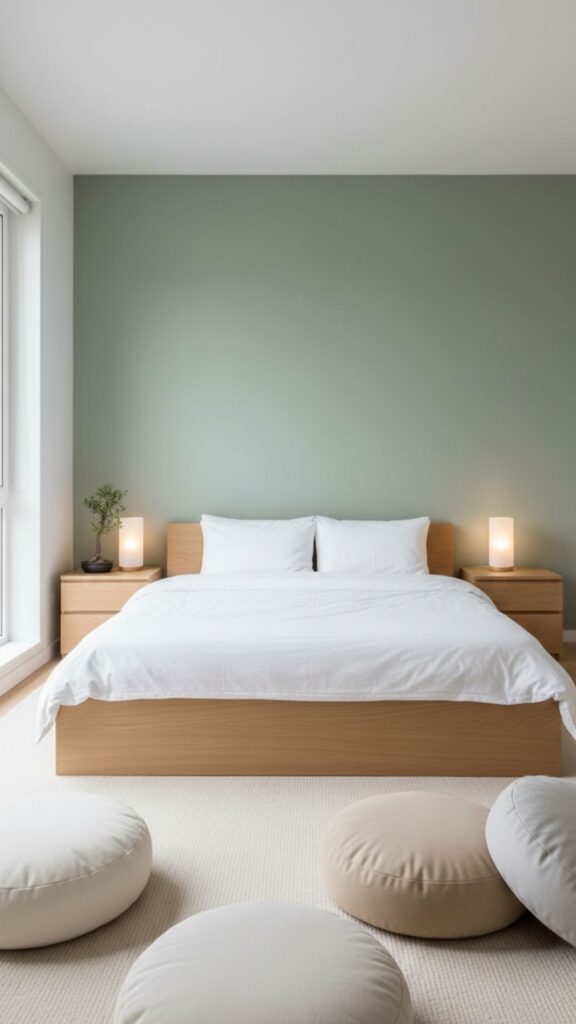
In traditional Japanese interiors, which heavily influence Zen design, furniture often sits closer to the ground. A low-profile bed or seating area grounds the room, creates a sense of spaciousness, and physically emphasizes the act of slowing down and resting.
How To Get The Look:
- Swap a high bed frame for a simple platform bed.
- Use floor cushions for a casual seating nook.
- Keep nightstands simple and roughly the same height as your mattress.
Shopping List
- Low Profile Platform Bed Frame
- Japanese Floor Mattress
- Meditation Floor Cushion
- Low Nightstand Modern
- Tatami Mat
3. Incorporate Natural Materials
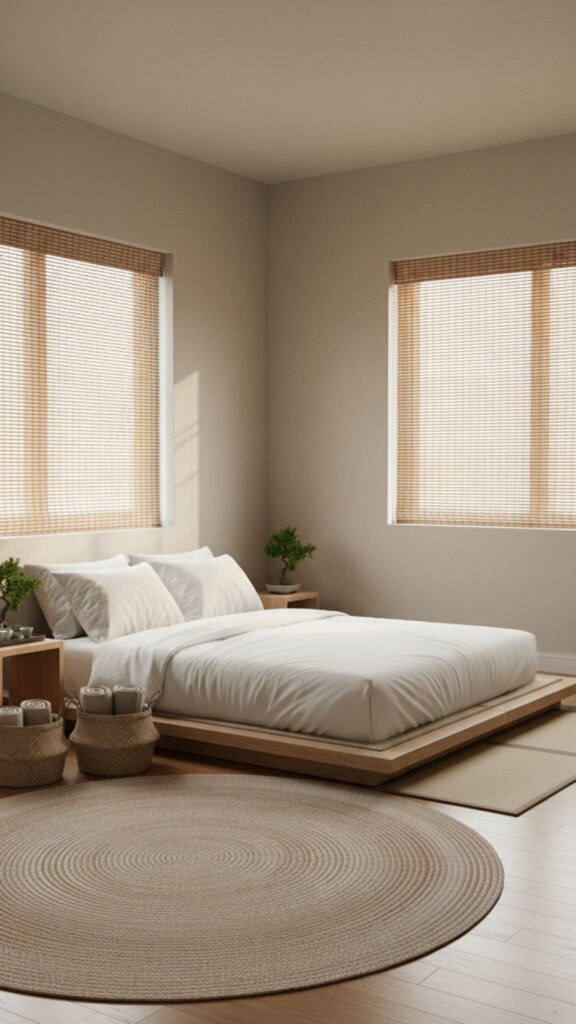
Synthetic materials can sometimes feel cold or sterile. Zen aesthetics prioritize organic warmth. Incorporating wood, bamboo, stone, and natural fibers connects your indoor space to the natural world outside, fostering a feeling of groundedness.
How To Get The Look:
- Opt for unpainted wood furniture with visible grain.
- Use bamboo shades instead of synthetic blinds.
- Decorate with woven baskets or stone accents.
Shopping List
4. Layer Soft Lighting
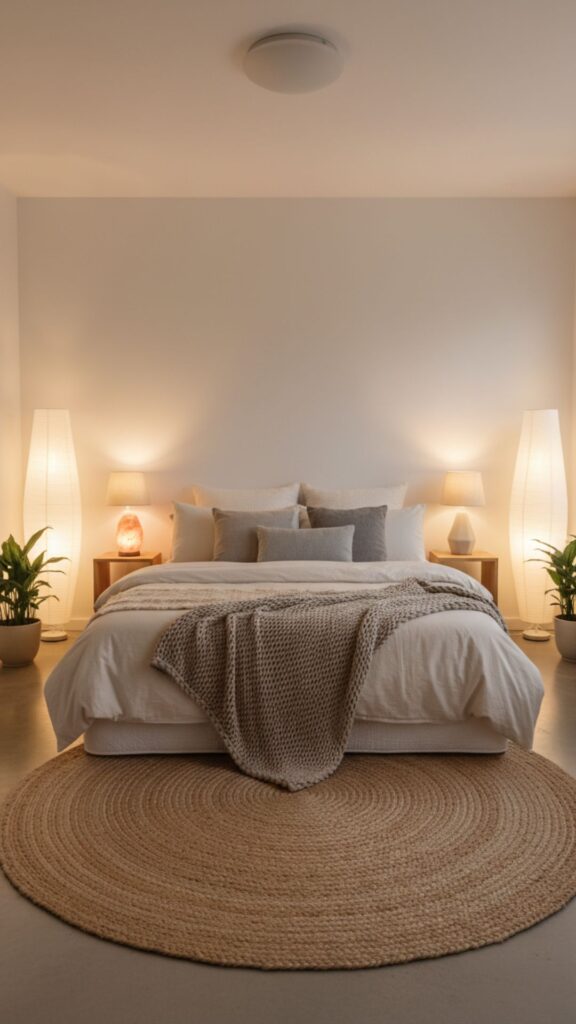
Harsh overhead lighting is the enemy of relaxation. To achieve a Zen vibe, you need lighting that mimics the soft glow of candlelight or the moon. The goal is to create a warm, diffused ambiance that signals to your brain that it is time to sleep.
How To Get The Look:
- Avoid using the “big light” in favor of lamps.
- Select paper lanterns or lamps with fabric shades to diffuse light.
- Use warm-toned LED bulbs (2700K-3000K).
Shopping List
5. Prioritize Minimalist Decluttering
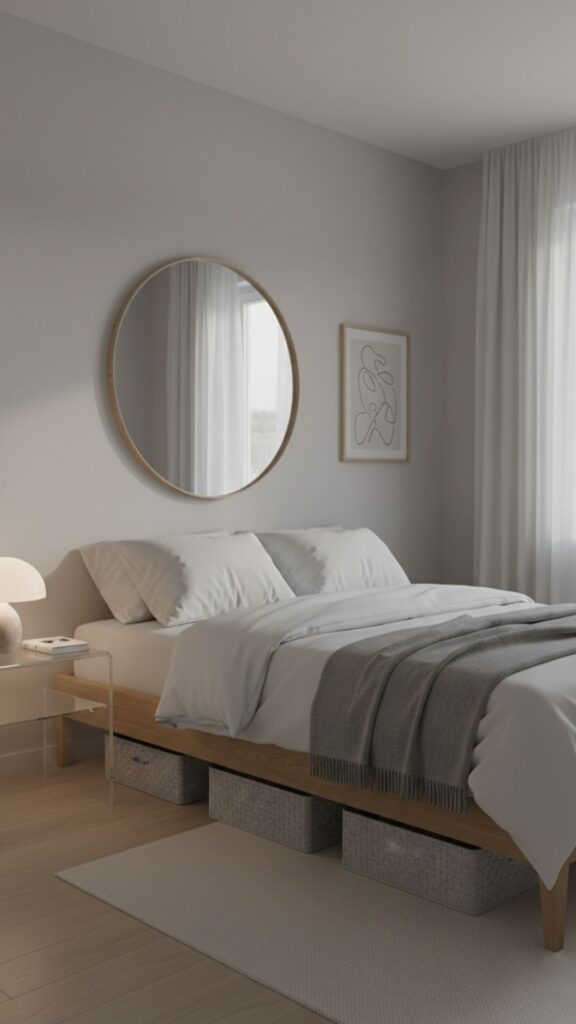
A cluttered space equals a cluttered mind. Minimalism is central to Zen philosophy. By keeping surfaces clear and ensuring every item has a dedicated place, you allow energy to flow freely through the room.
How To Get The Look:
- Remove everything from your nightstand except the essentials.
- Utilize hidden storage solutions like under-bed drawers.
- Keep decor items sparse and meaningful.
Shopping List
- Under Bed Storage Bins
- Minimalist Floating Shelves
- Cable Management Box
- Small Jewelry Tray
- Drawer Organizers
6. Introduce Biophilic Elements
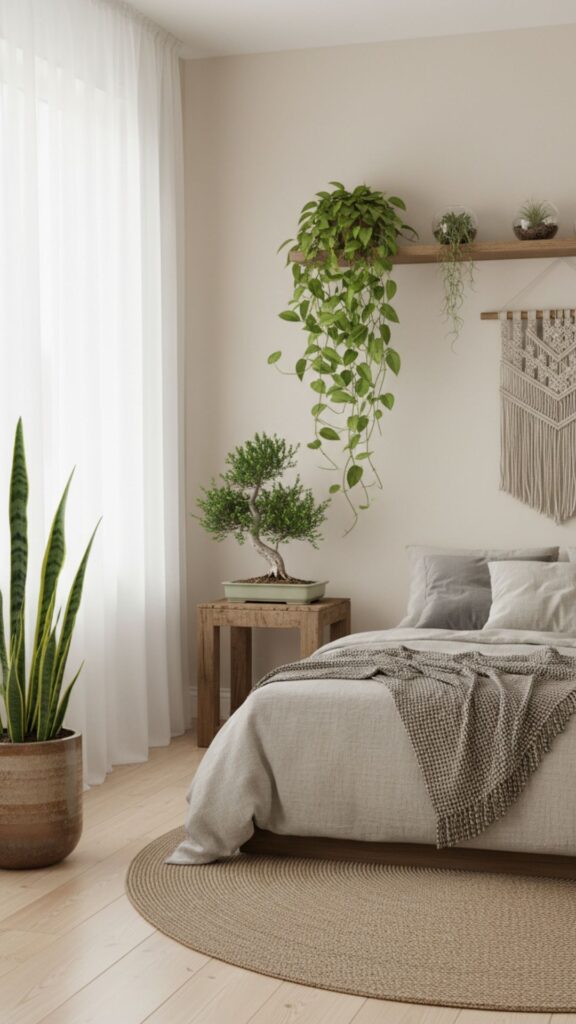
Bringing living plants into your bedroom adds a literal breath of fresh air. Plants not only look beautiful and calming against neutral backdrops, but many also help purify the air, leading to better sleep quality.
How To Get The Look:
- Place a potted snake plant or peace lily in a corner.
- Use a simple bonsai tree as a focal point.
- Hang a trailing pothos from a high shelf.
Shopping List
- Live Snake Plant
- Bonsai Tree Live Indoor
- White Ceramic Plant Pot
- Bamboo Plant Stand
- Trailing Pothos Plant
7. Invest in Natural Textiles

Touch is just as important as sight when it comes to comfort. Layering your room with textiles made from natural fibers like linen, cotton, and wool invites you to relax and unwind. These materials breathe better than synthetics, regulating your temperature for deeper sleep.
How To Get The Look:
- Switch to 100% linen or cotton sheets.
- Drape a chunky wool throw over the foot of the bed.
- Place a soft rug on either side of the bed for a warm step in the morning.
Shopping List
- 100% Linen Sheet Set
- Chunky Knit Blanket
- Waffle Weave Cotton Blanket
- Sheepskin Area Rug
- Cotton Muslin Throw
8. Use Aromatherapy for Atmosphere
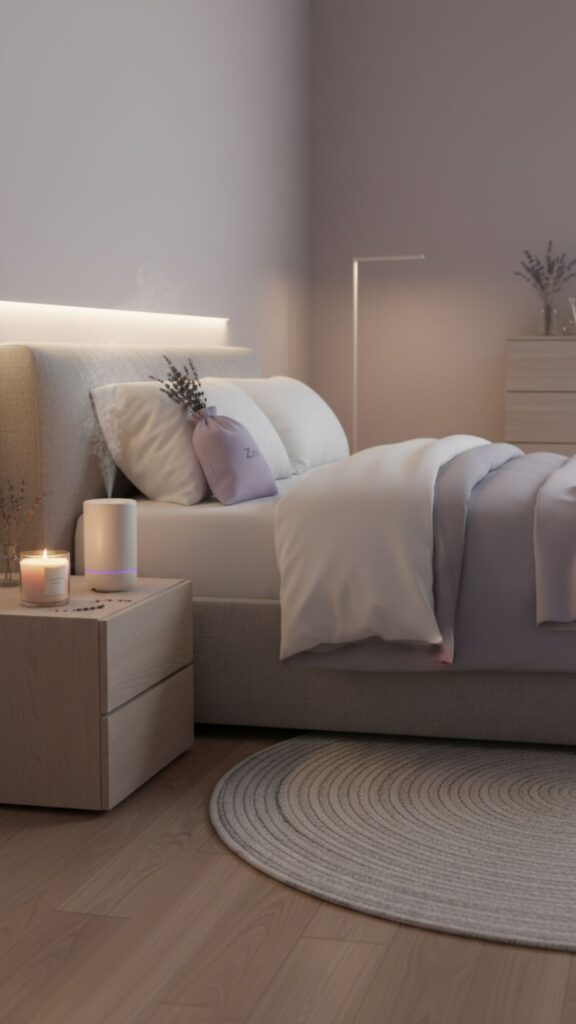
Engaging your sense of smell can instantly alter your mood. Certain scents, like lavender, sandalwood, and eucalyptus, are proven to promote relaxation. In a Zen bedroom, the scent should be subtle and natural, never overpowering.
How To Get The Look:
- Use an essential oil diffuser with a timer.
- Light a soy-based candle while reading before bed.
- Keep a sachet of dried lavender in your pillowcase.
Shopping List
- Ceramic Essential Oil Diffuser
- Lavender Essential Oil
- Sandalwood Soy Candle
- Reed Diffuser Set
- Incense Holder Ash Catcher
9. Create Flow with Shoji Screens
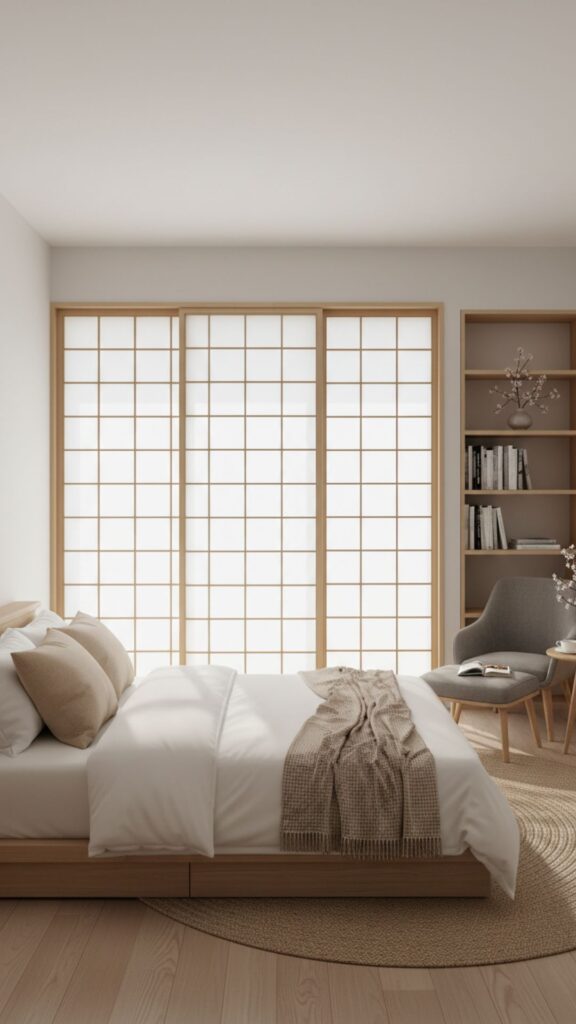
If you have a larger bedroom or a studio apartment, creating distinct zones without building walls is essential. Shoji screens—traditional Japanese room dividers made of translucent paper and wood—offer privacy while still allowing light to filter through gently.
How To Get The Look:
- Use a screen to hide a workspace or exercise corner at night.
- Place a divider near the dressing area for privacy.
- Choose a screen with a simple grid pattern to maintain the aesthetic.
Shopping List
- Shoji Screen Room Divider
- 4 Panel Room Divider White
- Bamboo Room Partition
- Folding Privacy Screen
- Rice Paper Divider
10. Curate Mindful Decor
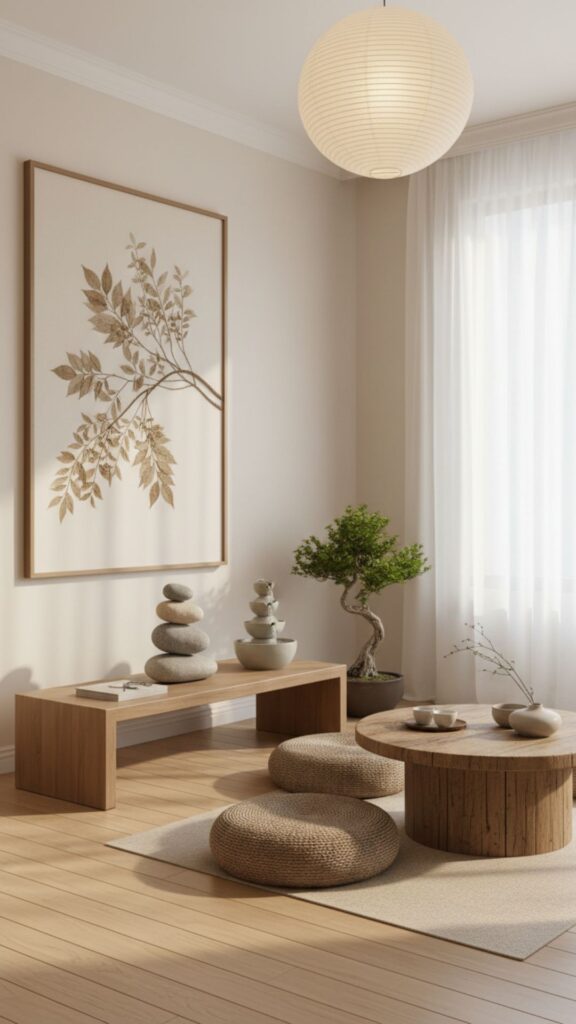
While minimalism is key, a few carefully chosen pieces of art or decor can serve as focal points for meditation and reflection. The goal is not to fill space, but to highlight beauty in simplicity.
How To Get The Look:
- Hang a single piece of nature-inspired art, like a watercolor landscape.
- Display a small stack of smooth river stones.
- Use a singing bowl or a small tabletop fountain for sound therapy.
Shopping List
- Zen Wall Art Prints
- Stacking Balancing Stones
- Tabletop Water Fountain
- Tibetan Singing Bowl Set
- Minimalist Vase
Your Personal Oasis Awaits
Creating a Zen bedroom isn’t about rigid rules; it is about crafting a space that feels right to you. By integrating natural elements, clearing clutter, and choosing calming colors, you build a physical environment that supports mental clarity and deep rest.
Start with one or two changes—perhaps a new plant or softer lighting—and watch how the energy of your room transforms.
Frequently Asked Questions (FAQs)
1. What defines the Zen bedroom aesthetic?
The Zen aesthetic is defined by minimalism, natural materials, and a sense of harmony. It focuses on clean lines, neutral colors, and unobstructed flow to create a calming atmosphere conducive to rest and meditation.
2. Is it expensive to create a Zen bedroom?
Not necessarily. The core of Zen design is minimalism, which often means buying less rather than more. You can achieve the look by decluttering, painting walls a neutral color, and repurposing existing furniture to be simpler and more functional.
3. What are the best plants for a Zen bedroom?
Plants that have simple, structural leaves work best. Snake plants, bamboo, bonsai trees, and peace lilies are popular choices because they look sculptural and are known for their air-purifying qualities.
4. Do I absolutely need a low platform bed?
While low beds are traditional in Japanese-inspired Zen design because they ground the space, they are not mandatory. You can achieve a similar effect with a simple, unadorned bed frame and by keeping bedding neutral and tidy.
5. How can I add personality to a minimalist Zen room?
Texture and intentional art are key. Instead of bright colors, use layers of linen, wool, and wood grain to add visual interest. Select one or two pieces of meaningful art or decor rather than displaying a large collection of items.