Some links in this blog are affiliate links. If you make a purchase through these links, I may receive a small commission. This helps support the site at no extra cost to you.
Creating a minimalist bedroom is harder than it looks. It’s not just about throwing away your clutter or painting everything white. True minimalism is the art of curation—choosing what stays to create a sense of calm and intentionality.
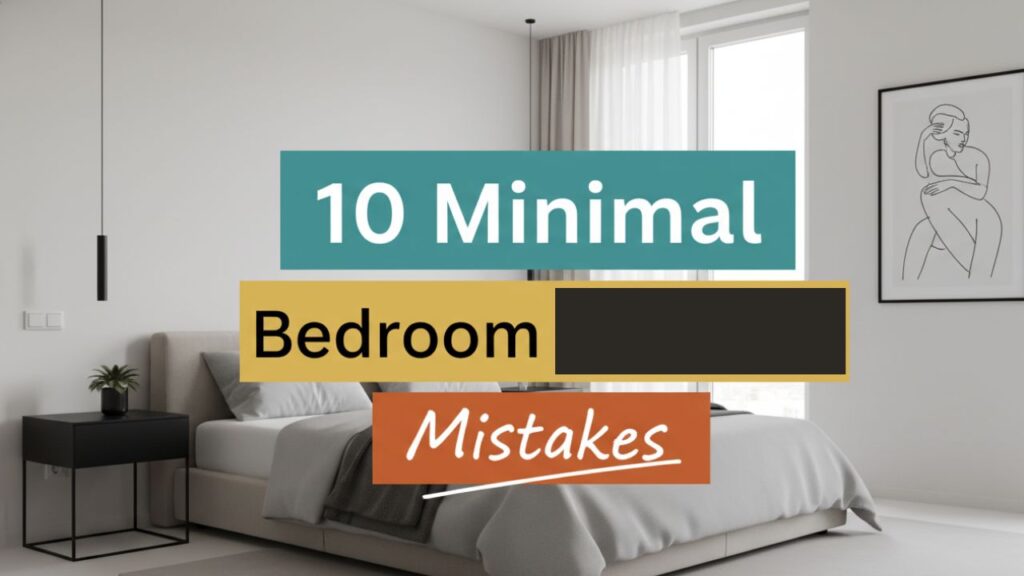
When done incorrectly, a minimalist room doesn’t feel serene; it feels cold, unfinished, or clinically sterile.
If your space feels lacking, you might be falling victim to common design pitfalls. Here are ten mistakes to avoid to ensure your sanctuary feels cozy, not empty.

10 Minimal Bedroom Mistakes
1. The “Everything White” Trap
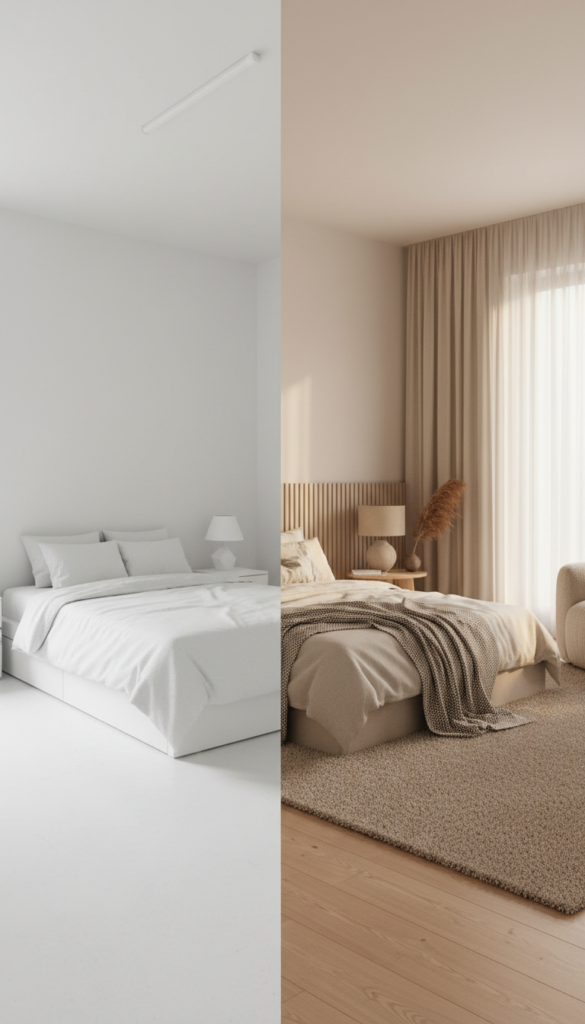
While white is a staple of minimalist design, relying on it exclusively can make your bedroom feel like a hospital ward rather than a retreat. Without contrast, the eye has nowhere to rest, and the room lacks depth.
How To Get The Look:
- Introduce warm neutrals like cream, beige, or taupe.
- Use natural wood tones in your furniture to ground the space.
- Add a single accent color through a throw pillow or vase.
2. Ignoring Texture
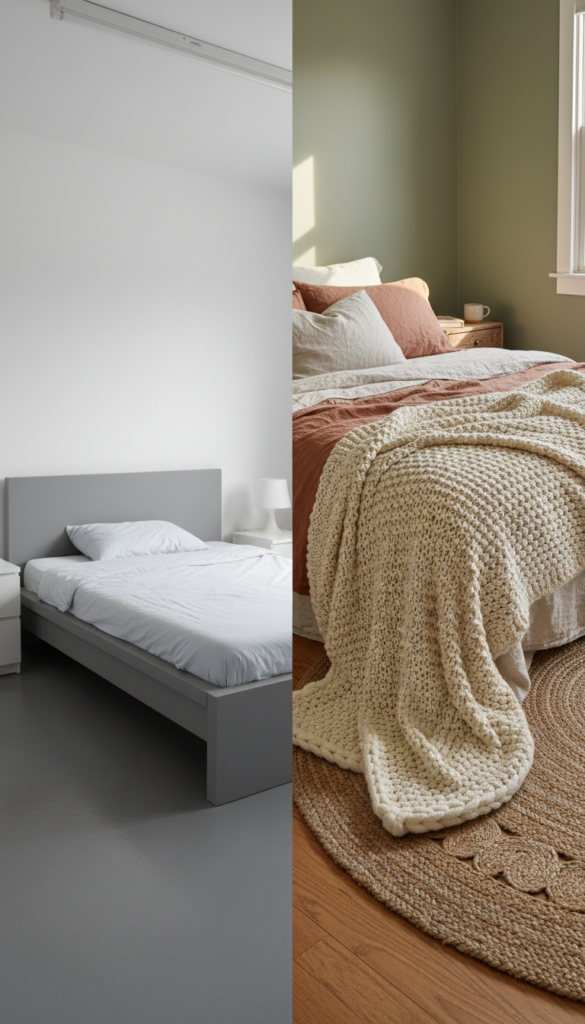
A lack of clutter means texture becomes your most important design tool. Smooth walls, smooth floors, and smooth bedding create a flat, uninviting atmosphere. Texture adds warmth without adding visual noise.
How To Get The Look:
- Layer a chunky knit throw over linen bedding.
- Choose a rug with a high pile or interesting weave (like jute or wool).
- Opt for matte finishes on furniture rather than high-gloss.
3. Poor Lighting Choices
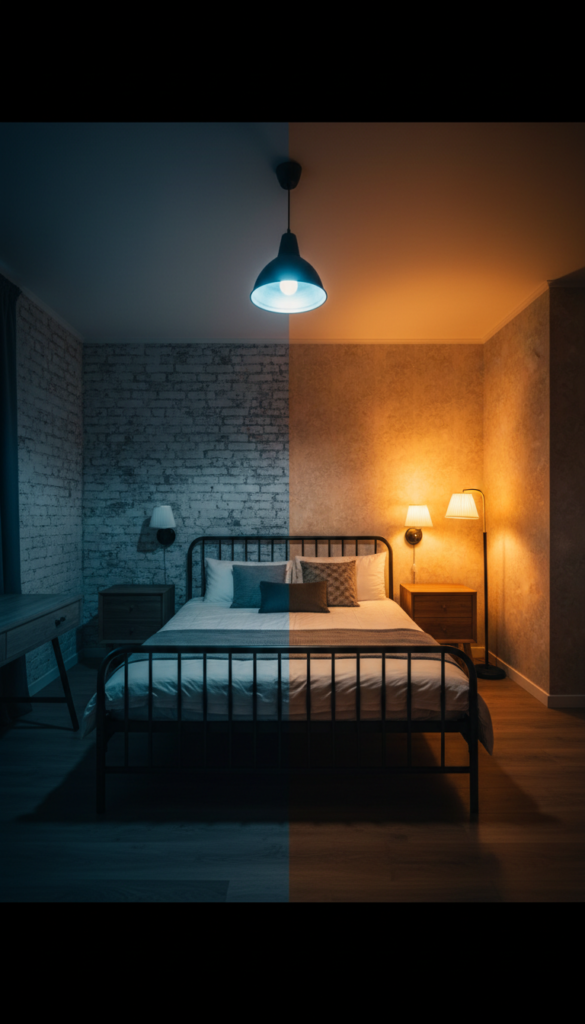
Relying on a single overhead light is the quickest way to kill the mood. Minimalism relies on ambiance. Harsh, bright lighting exposes every flaw and makes the room feel stark.
How To Get The Look:
- Install dimmer switches on overhead lights.
- Use warm-toned LED bulbs (2700K-3000K).
- Add bedside sconces or lamps for focused, softer light.
4. Incorrect Furniture Scale
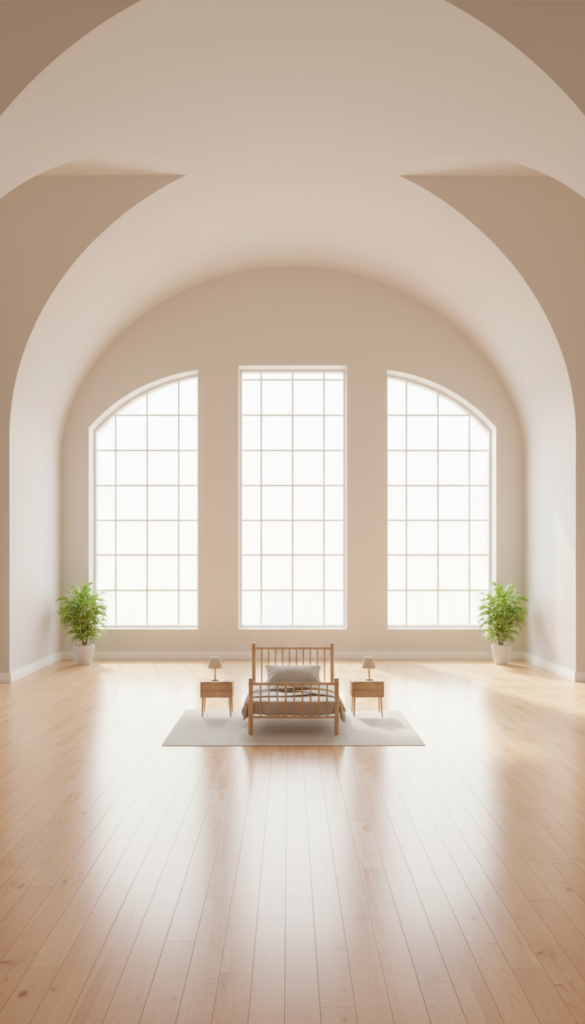
In an empty room, the furniture you do have speaks volumes. A common mistake is using furniture that is too small for the room, making the space feel cavernous and unanchored.
How To Get The Look:
- Measure your room before buying; aim for a bed frame that commands the space.
- Ensure nightstands are proportionate to the height of your mattress.
- Use a large area rug that fits under the bed and extends outwards.
5. Visible Cords and Cables
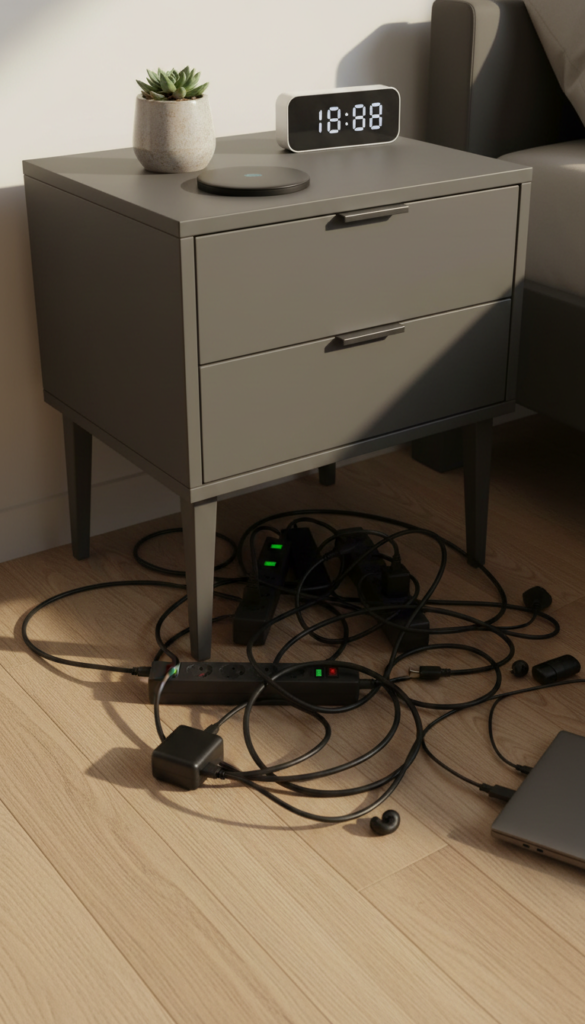
Nothing ruins a clean line faster than a tangle of charging cables. In a maximalist room, you might hide them behind decor. In a minimalist room, there is nowhere to hide.
How To Get The Look:
- Use furniture with built-in cable management.
- Route cords behind nightstands using adhesive clips.
- Invest in a wireless charging station that looks like decor.
6. Zero Personal Touches
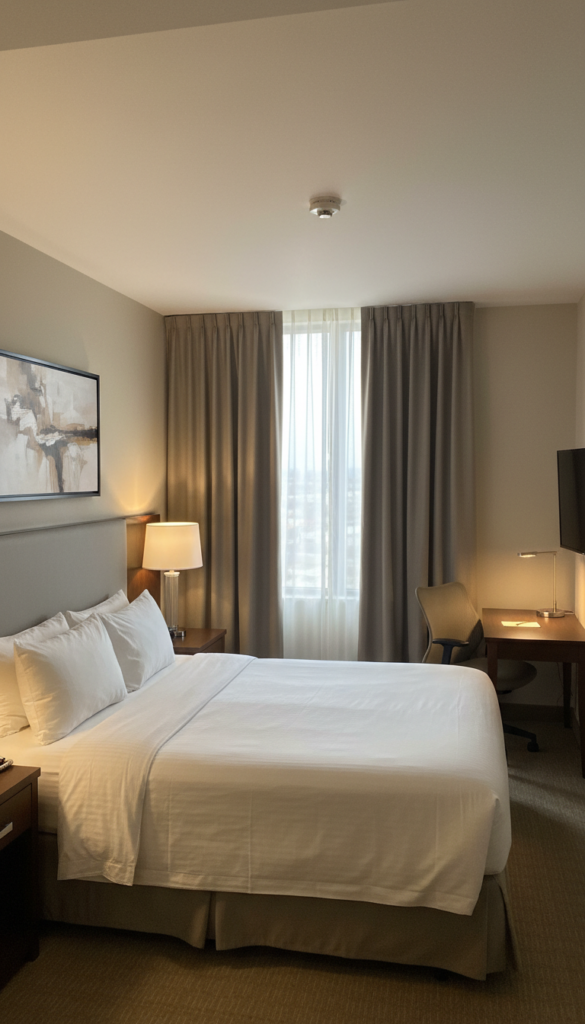
Minimalism shouldn’t erase your personality. A room completely void of art, photos, or personal items feels like a hotel room or a showroom, not a home.
How To Get The Look:
- Select one large piece of statement art instead of a gallery wall.
- Display a few curated books on your nightstand.
- Include a single plant or personal memento on a dresser.
7. Neglecting Window Treatments
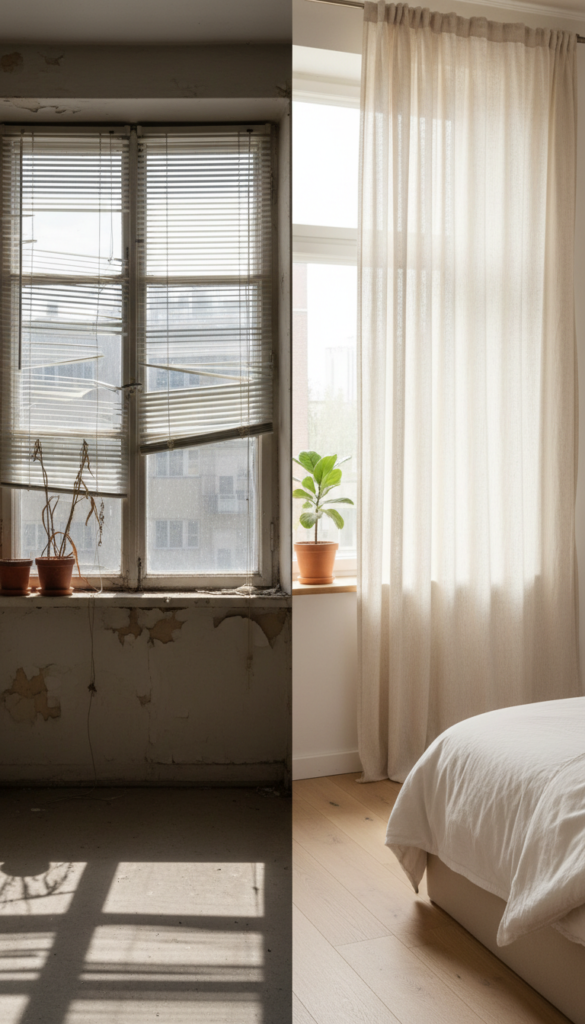
Leaving windows bare or using cheap plastic blinds detracts from the luxury of simplicity. Light control and privacy are essential for a bedroom’s function and aesthetic.
How To Get The Look:
- Install floor-to-ceiling sheer curtains to soften daylight.
- Layer blackout curtains over sheers for functionality and depth.
- Ensure the curtain rod is mounted high to make ceilings look taller.
8. Overcrowded Nightstands
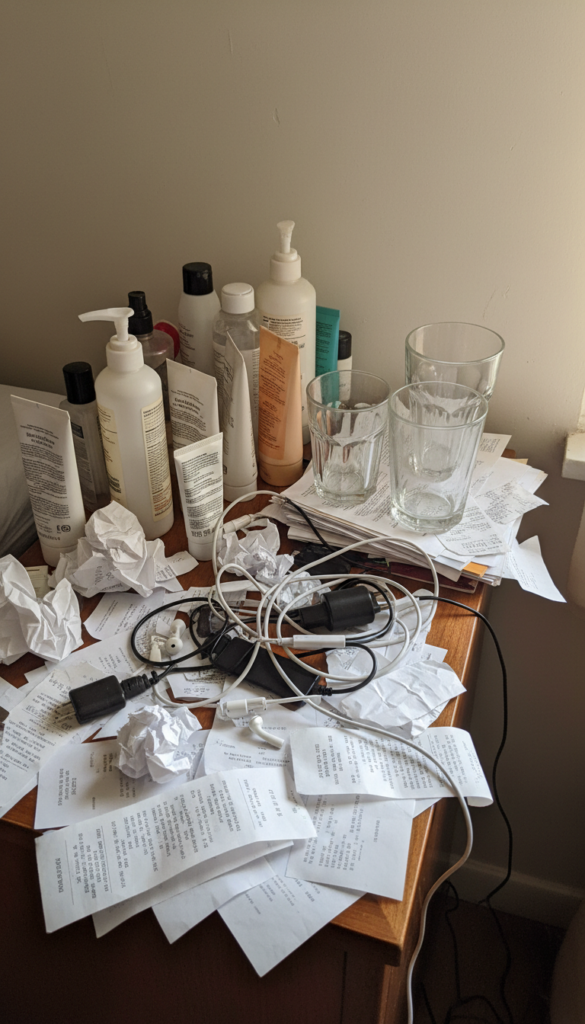
Your nightstand is for essentials, not a catch-all for receipts, water glasses, and lotions. A cluttered surface right next to your head disrupts the peaceful vibe you need for sleep.
How To Get The Look:
- Limit surface items to a lamp, a book, and a glass of water.
- Choose nightstands with drawers to hide daily necessities.
- Use a trinket tray to corral small items like jewelry.
9. Lack of Negative Space
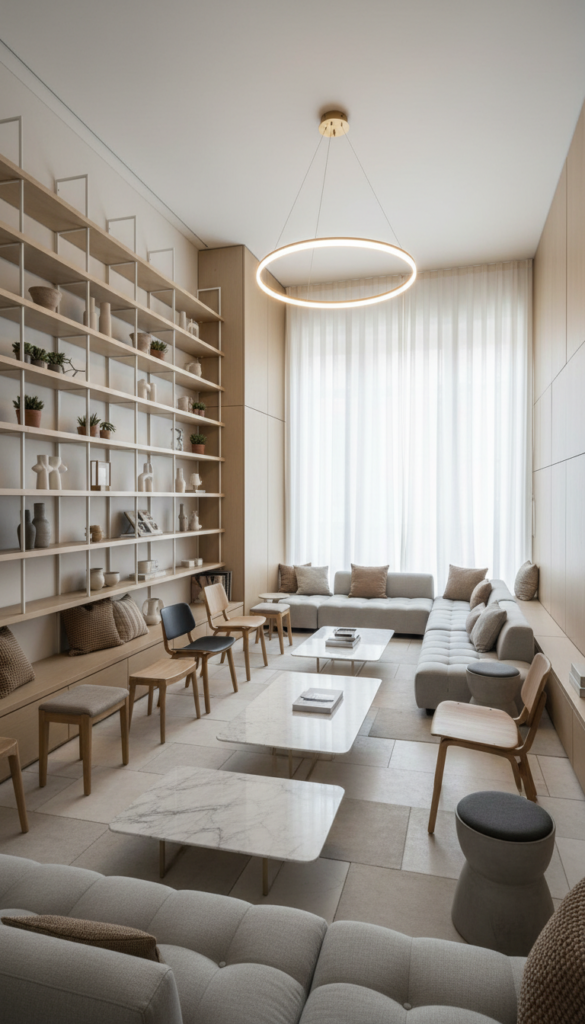
Ironically, some people try to fill every corner because they fear “empty” space. Minimalism requires negative space (empty areas) to let the design breathe.
How To Get The Look:
- Leave at least one wall bare or minimally decorated.
- Ensure there is ample walking path space around the bed.
- Don’t feel pressured to put a chair in a corner just to fill it.
10. Ignoring Bed Styling
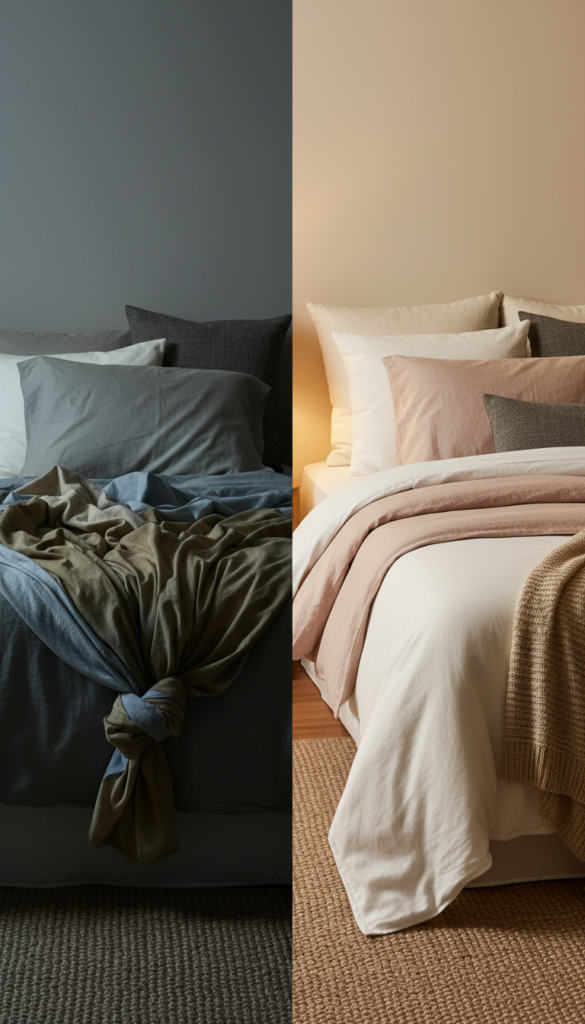
Since the bed is the focal point, messy or uninspired bedding ruins the whole room. Flat pillows and wrinkled synthetic sheets look unkempt, not minimal.
How To Get The Look:
- Invest in high-quality linen or cotton percale sheets.
- Learn the art of the “messy tuck” for an effortless look.
- Use two standard pillows and two euro shams for volume.
Create Calm, Not Emptiness
Correcting these mistakes transforms a bedroom from a sterile box into a rejuvenating sanctuary. Remember, the goal of minimalism is to strip away the distraction so you can focus on what matters: rest and relaxation.
By focusing on texture, scale, and lighting, you can achieve a look that is both clean and deeply inviting.
Frequently Asked Questions (FAQs)
1. Can I use color in a minimalist bedroom?
Yes, absolutely. While neutrals are common, you can use color. The key is to stick to a restrained palette. Choose one or two accent hues—like sage green, navy, or terracotta—and use them intentionally rather than splashing them everywhere.
2. How do I make a minimalist room feel cozy?
Texture is the secret ingredient for coziness. Mix materials like wood, wool, linen, and stone. Warm lighting is also crucial; avoid cool blue-toned lights and opt for warm, soft lamps to create a glow in the evening.
3. Is minimalism expensive to achieve?
It can be, but it doesn’t have to be. While high-quality, timeless furniture pieces are an investment, minimalism actually encourages buying less. You save money by not purchasing unnecessary decor items and focusing only on essentials.
4. How do I start decluttering my bedroom?
Start with surfaces. Clear off your nightstands and dresser. Then, tackle the closet. Ask yourself if each item serves a purpose or brings you joy. If not, donate or discard it. The goal is to remove visual noise.
5. What kind of art works best for minimalism?
Large-scale abstract art or black-and-white photography works well. One large piece often has a stronger, cleaner impact than a busy gallery wall with many small frames.