Some links in this blog are affiliate links. If you make a purchase through these links, I may receive a small commission. This helps support the site at no extra cost to you.
Silence is no longer just about sound.
In modern homes, silence is visual, tactile, and emotional. A Zen bedroom built with natural wood and linen textures answers a deeper need than style alone. It responds to overstimulation, fast living, and spaces that feel busy even when tidy.
Natural wood grounds the body. Linen softens the senses. Together, they create a bedroom that feels slower, calmer, and deeply restorative without appearing empty or cold.
Across cultures, from Japanese ryokan interiors to Nordic countryside homes, these two materials have quietly shaped restful spaces for centuries. Today, they return not as trends but as timeless anchors for mindful living.
This guide explores ten bedroom Zen styles using natural wood and linen textures, designed to inspire spaces that feel warm, breathable, and emotionally balanced. Each idea focuses on atmosphere rather than decoration, helping the bedroom become a place of true rest rather than visual noise.

Table of Contents

10 Bedroom Zen Style With Wood & Linen Textures
1. Low-Profile Wooden Bed With Linen Layering
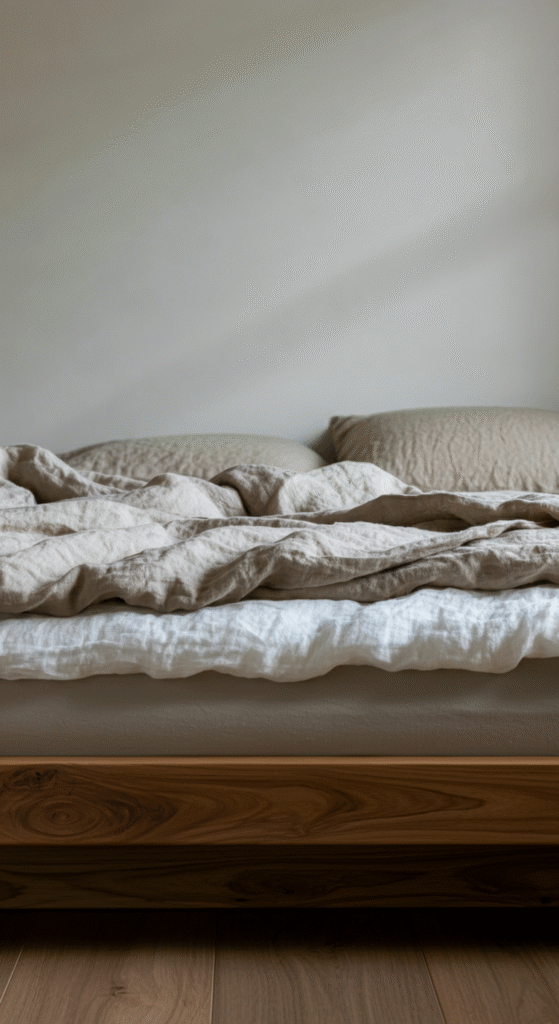
A low-profile wooden bed is the foundation of many Zen-inspired bedrooms.
The closer the bed sits to the ground, the more connected the body feels to the room. This concept aligns with traditional floor-level sleeping practices found in Japanese interiors, where grounding promotes relaxation and stability.
Choose solid wood with visible grain rather than polished or lacquered finishes. Oak, ash, teak, or pine work well when left slightly raw or reminds of nature.
Linen bedding adds softness without heaviness. Instead of perfectly matched sets, layer slightly varied linen tones. Wrinkled linen is not a flaw but part of its calming honesty.
Do you know linen fibers are naturally temperature-regulating, making them suitable for both warm and cool climates while also becoming softer with every wash.
Shopping List
- Solid wood low-profile platform bed frame
- Linen duvet cover set in natural beige
- Washed linen flat sheet
- Stonewashed linen pillowcases
- Natural wood slatted bed base
- Organic linen bed throw
- Undyed linen fitted sheet
- Wooden bedside floor tray
- Minimal wood headboard panel
- Linen mattress topper
- Natural fiber bed skirt
- Wooden bed leg risers
- Linen bolster pillow
- Handcrafted wooden bench for bed end
- Neutral linen bed scarf
2. Exposed Wooden Ceiling Beams With Neutral Linen Drapes
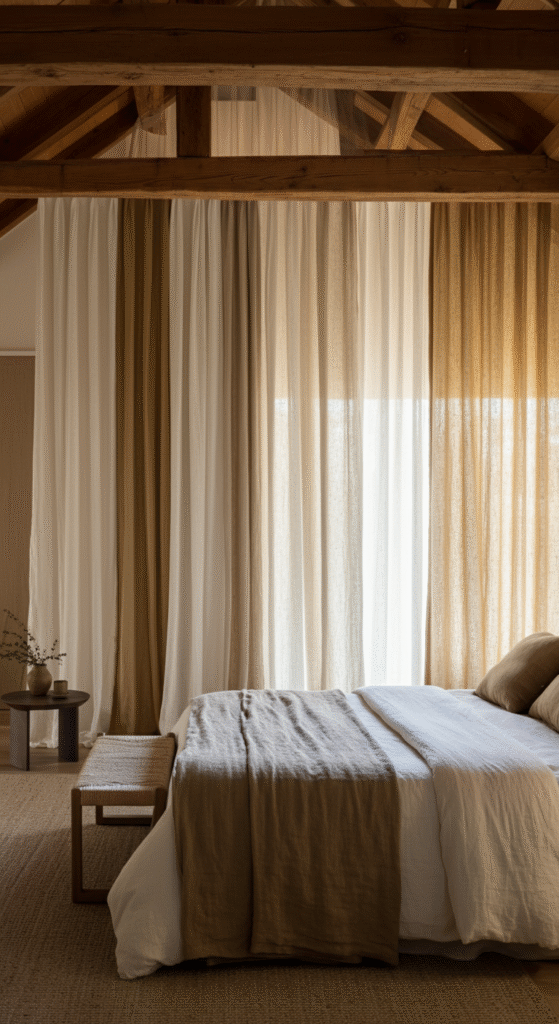
Exposed wooden beams instantly shift a bedroom’s energy from constructed to organic.
Even in modern homes, faux or structural beams introduce rhythm and warmth overhead. Wood above the eye line creates a feeling of shelter, similar to being under a tree canopy.
Pair beams with floor-to-ceiling linen drapes in soft whites, sand, or pale stone tones. Linen curtains diffuse daylight instead of blocking it, creating a gentle glow rather than harsh contrast.
An interesting fact is that linen filters light differently from cotton, scattering brightness in a way that reduces glare and visual fatigue.
This combination works especially well in bedrooms with high ceilings, balancing vertical space without adding visual weight.
Shopping List
- Natural linen curtain panels
- Ceiling-mounted linen drapery track
- Wooden curtain rod in oak finish
- Linen sheer window panels
- Tie-back linen curtain holders
- Thermal linen blackout curtains
- Washed linen voile curtains
- Natural wood ceiling beam wrap panels
- Linen curtain rings
- Textured linen valance
- Light-filtering linen drapes
- Raw wood decorative beam covers
- Linen curtain weights
- Neutral linen drapery hooks
- Organic flax linen curtains
3. Minimal Wooden Furniture With Soft Linen Accents
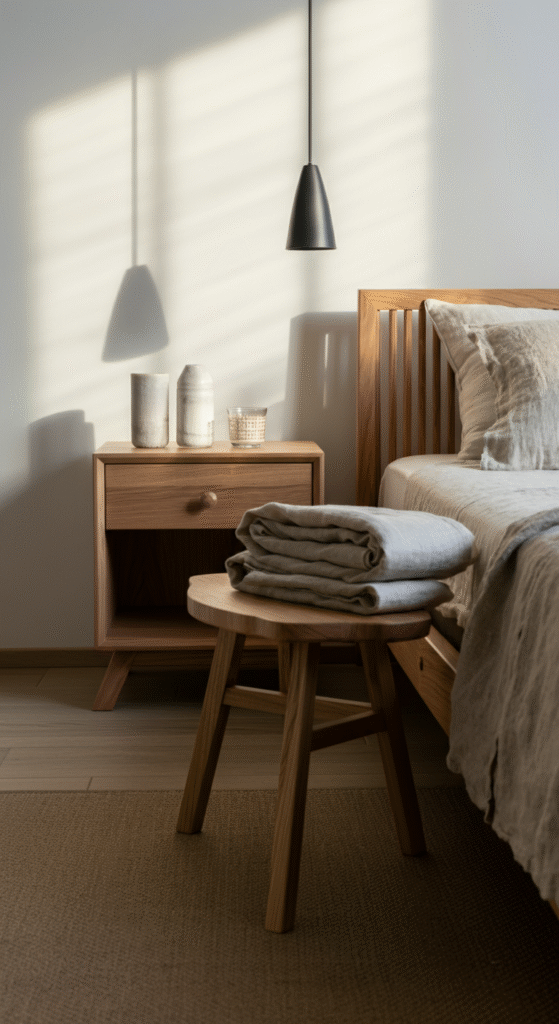
Zen bedrooms thrive on intentional emptiness.
Instead of filling the room, select a few essential wooden furniture pieces such as a nightstand, bench, or dresser, all in similar wood tones. Avoid glossy surfaces or ornate details.
Soften these pieces with linen accents. A linen runner on a dresser, a linen-covered bench cushion, or linen-lined storage baskets keep the room tactile without clutter.
There is a myth that minimal bedrooms feel cold or unfinished. In reality, the warmth of wood grain combined with linen texture prevents sterility while preserving calm.
The key is restraint. Every piece should feel purposeful and breathable.
Shopping List
- Solid wood bedside table
- Wooden minimalist dresser
- Linen drawer liners
- Linen-covered storage boxes
- Wooden bench with linen cushion
- Natural linen table runner
- Linen fabric storage basket
- Wooden open shelving unit
- Linen-covered jewelry tray
- Solid wood stool
- Neutral linen placemats for decor
- Wooden valet stand
- Linen accent cushion
- Wooden console table
- Linen-lined wooden organizer
4. Earth-Toned Linen Palette With Natural Wood Floors
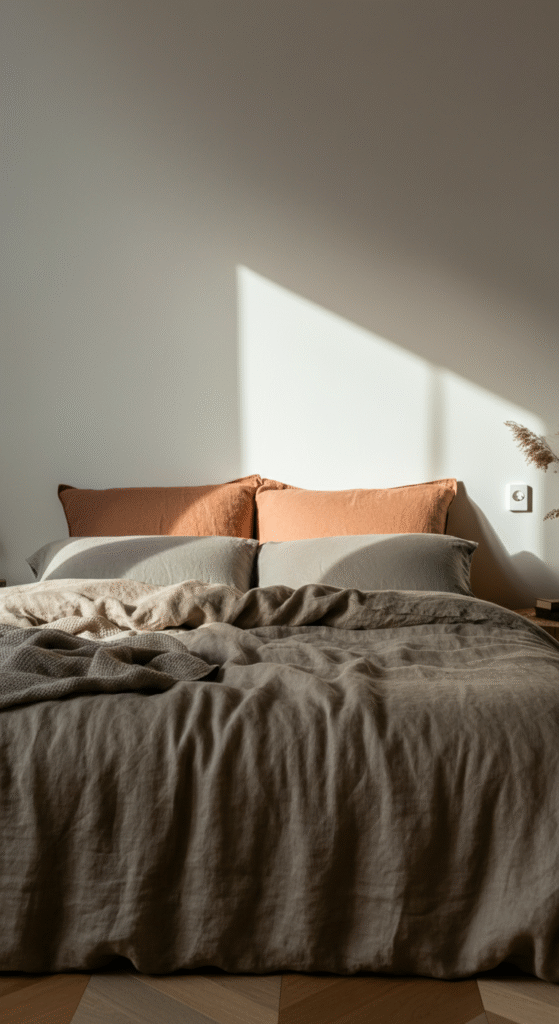
Color in a Zen bedroom should whisper, not shout.
Earth-toned linen bedding in clay, oat, soft moss, or warm taupe harmonizes beautifully with natural wood floors. The goal is tonal consistency rather than contrast.
Wood floors with visible knots and variations add authenticity. Avoid high-gloss finishes, which reflect light aggressively and disrupt calm.
Did you know natural wood flooring absorbs sound better than synthetic materials, contributing to a quieter and more restful sleeping environment.
This palette works particularly well in bedrooms designed for slow mornings and early sunlight.
Shopping List
- Earth-tone linen bedding set
- Linen pillow shams in clay tone
- Natural wood floor polish oil
- Linen bedspread in warm taupe
- Organic linen blanket
- Wood floor protector pads
- Linen mattress cover
- Natural wood floor cleaning brush
- Stonewashed linen throw blanket
- Wooden floor transition strips
- Linen cushion covers
- Natural oil finish wood care kit
- Linen bed runner
- Soft linen bed quilt
- Wood grain floor maintenance cloth
5. Floating Wooden Shelves Styled With Linen Textures
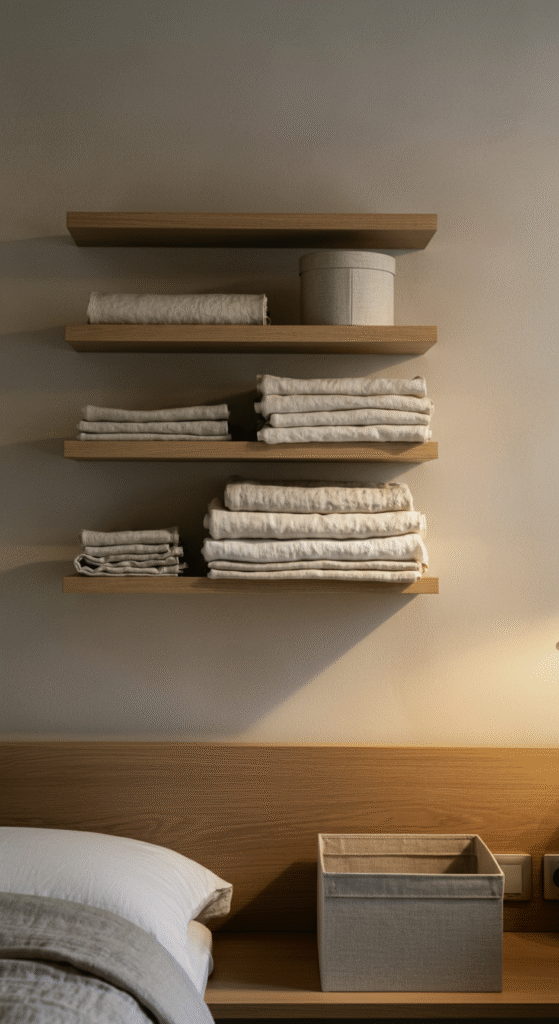
Floating wooden shelves allow function without visual heaviness.
Choose shelves made from the same wood tone as the bed or floor to maintain continuity. Limit shelf styling to a few meaningful items rather than decorative clutter.
Linen-covered books, folded linen throws, or small linen-wrapped boxes add softness to the shelf composition.
An interesting cultural note is that Zen philosophy values negative space as much as physical objects. Leaving parts of the shelf empty is not unfinished but intentional.
This approach keeps storage practical while maintaining serenity.
Shopping List
- Floating solid wood wall shelves
- Linen fabric storage cubes
- Linen book covers
- Wooden wall shelf brackets
- Linen-wrapped decorative boxes
- Natural wood wall anchors
- Folded linen hand towels for decor
- Wooden display ledge
- Linen document storage folders
- Wood shelf mounting hardware
- Linen-covered photo frames
- Wooden minimalist bookends
- Natural linen cloth storage pouches
- Floating shelf edge trim
- Linen-lined wooden trays
6. Wooden Wall Panels Paired With Linen Headboards
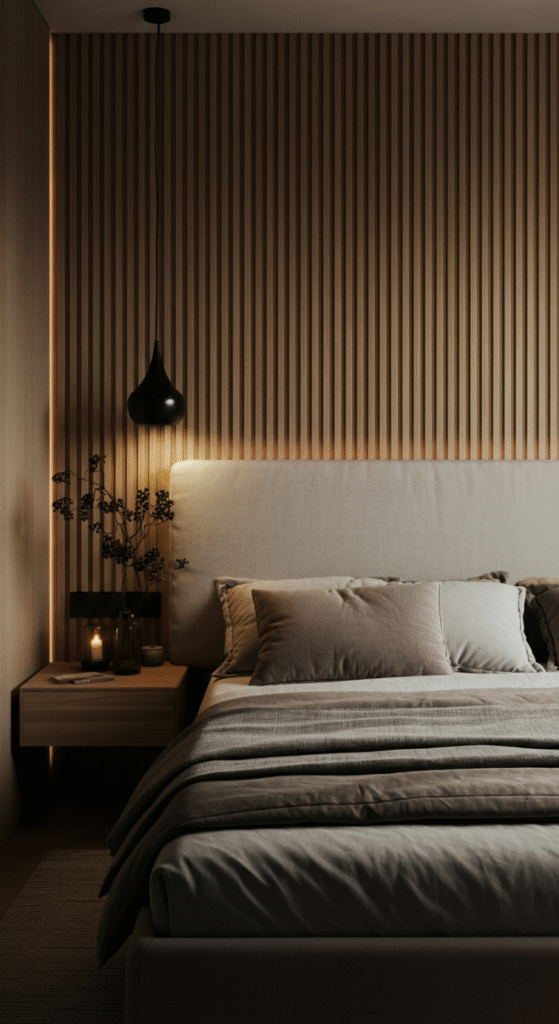
Wooden wall paneling behind the bed creates an immediate sense of enclosure and calm.
Panels can be vertical, horizontal, or slatted, but should maintain natural texture rather than heavy staining. Light or mid-tone wood works best for relaxation.
Pair this with a linen-upholstered headboard in an understated tone. Linen absorbs sound and adds softness where the body rests most often.
There is a common misconception that upholstered headboards are purely decorative. In reality, fabric-backed surfaces improve acoustic comfort in sleeping spaces.
Together, wood and linen transform the wall into a calming backdrop rather than a design feature demanding attention.
Shopping List
- Wood wall paneling boards
- Acoustic wood slat panels
- Linen upholstered headboard
- Neutral linen headboard slipcover
- Wood panel adhesive mounting kit
- Natural wood trim molding
- Linen padding for headboard backing
- Wood wall cladding sheets
- Linen wall padding panels
- Wood panel finishing oil
- Linen fabric wall upholstery
- Wood corner trim strips
- Linen-covered wall cushions
- Wood panel installation spacers
- Linen-textured wall art panels
7. Natural Wood Nightstands With Linen-Shaded Lighting

Lighting defines mood more than any single object.
Wooden nightstands with clean lines serve as functional anchors beside the bed. Choose designs without drawers if possible, allowing visual openness.
Top them with lamps featuring linen shades. Linen diffuses light gently, preventing harsh shadows and reducing eye strain before sleep.
Warm-toned bulbs paired with linen shades create a candle-like glow without flicker.
An interesting fact is that softer light in the evening helps signal the body’s natural sleep cycle, supporting deeper rest over time.
Shopping List
- Solid wood nightstand table
- Linen lampshade table lamp
- Wooden lamp base
- Warm white LED bulb
- Linen lamp shade replacement
- Wooden lamp switch dimmer
- Bedside linen table runner
- Wood nightstand drawer organizer
- Linen-covered coaster set
- Wooden charging station
- Linen fabric lamp diffuser
- Wood bedside storage tray
- Natural linen nightstand mat
- Wood grain lamp finial
- Linen lamp cord cover
8. Wooden Window Frames Enhanced With Linen Blinds
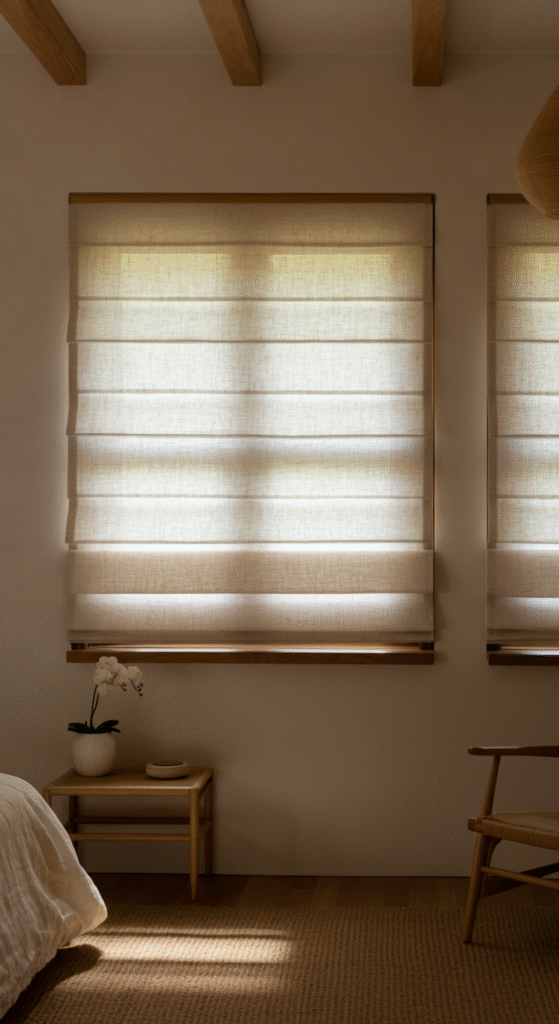
Windows are the bridge between interior calm and the outside world.
Natural wood window frames bring warmth and continuity, especially when they match flooring or furniture. Avoid painted frames if possible.
Linen blinds or Roman shades soften daylight while preserving privacy. Unlike synthetic materials, linen allows light to enter without sharp edges.
A subtle benefit of linen window treatments is improved airflow, allowing the room to breathe even when covered.
This pairing supports a bedroom that feels alive yet protected.
Shopping List
- Linen Roman blinds
- Wooden blind mounting brackets
- Linen roller shade
- Natural wood window trim
- Linen tie-up window shades
- Wooden blind cord cleats
- Linen sheer blinds
- Wood window frame sealant
- Linen blind lining fabric
- Wood curtain header rail
- Linen sun-filtering blinds
- Wood blind control wand
- Linen blind lift tape
- Natural wood casing panels
- Linen window shade hardware
9. Floor-Level Wooden Elements With Linen Rugs
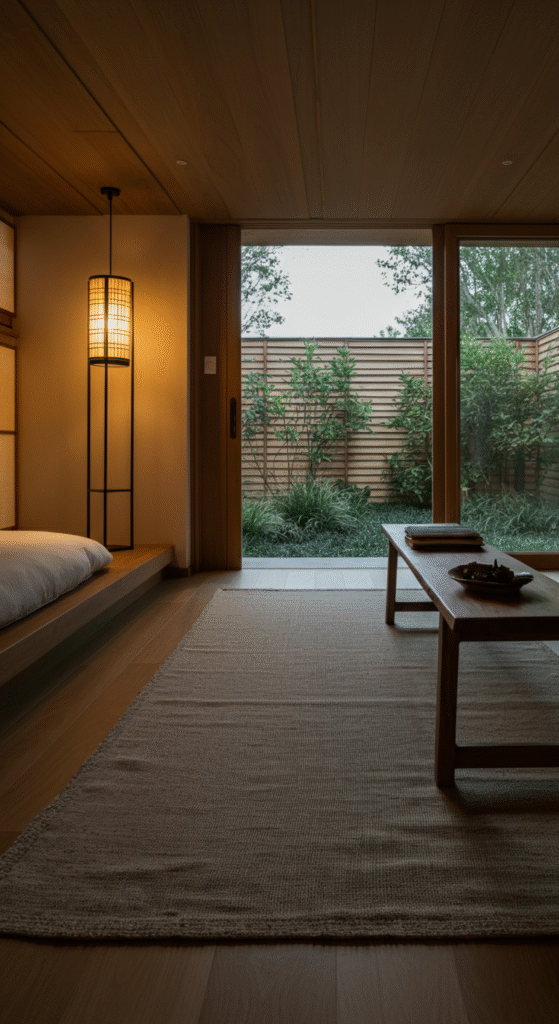
Zen bedrooms often emphasize connection to the floor.
Low wooden benches, floor trays, or meditation platforms bring attention downward, encouraging grounded movement and slower pacing.
Layer these elements with flat-woven linen rugs in neutral shades. Linen rugs offer texture without thick pile, keeping the floor visually light.
There is a myth that rugs are unnecessary in minimalist bedrooms. However, the right rug defines space without adding clutter.
Floor-level design invites mindful rituals such as stretching, reading, or quiet reflection.
Shopping List
- Low wooden bench
- Wooden floor seating platform
- Flat-woven linen area rug
- Linen floor mat
- Wood meditation stool
- Linen kneeling cushion
- Low wooden side table
- Natural linen yoga mat cover
- Wooden floor tray
- Linen pouf floor cushion
- Wood incense holder stand
- Linen rug underlay
- Wooden floor pillow base
- Linen meditation mat
- Solid wood floor altar table
10. Raw Wood Decor Balanced With Relaxed Linen Bedding
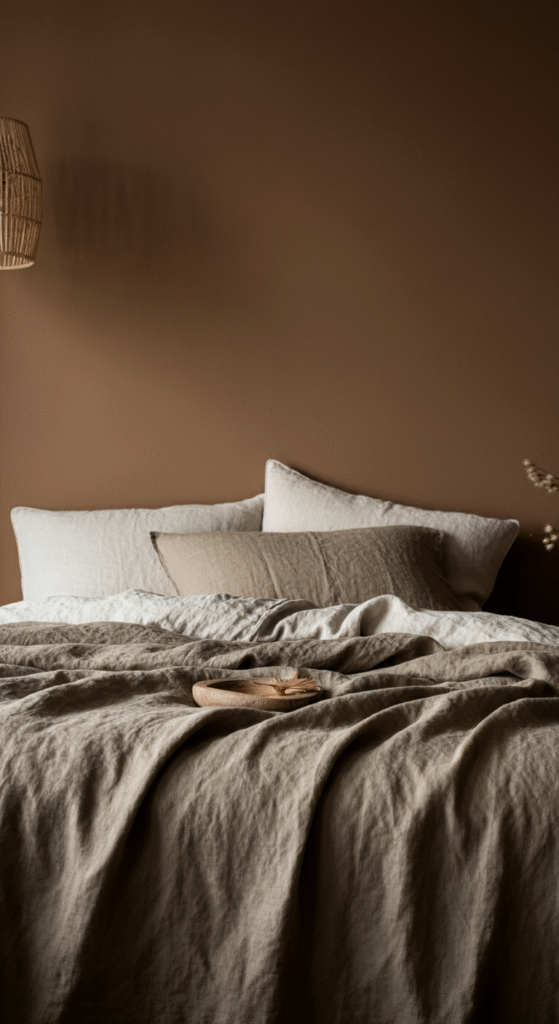
The final Zen style focuses on authenticity rather than perfection.
Raw wood elements such as driftwood pieces, unfinished stools, or hand-carved details introduce character without decoration overload.
Pair these with relaxed linen bedding that is intentionally imperfect. Wrinkles, folds, and movement reflect real life rather than staged aesthetics.
An interesting insight is that people report feeling more relaxed in spaces that appear lived-in yet orderly, compared to overly polished environments.
This balance between raw wood and soft linen creates a bedroom that feels human, honest, and deeply calming.
Shopping List
- Raw wood decorative stool
- Unfinished wood accent table
- Linen bedding set in neutral tones
- Stonewashed linen comforter
- Natural linen pillow covers
- Raw wood wall decor
- Wooden sculptural decor piece
- Linen bed throw blanket
- Live-edge wood side table
- Linen cushion inserts
- Hand-carved wooden bowl
- Linen fabric bed runner
- Driftwood decorative accents
- Linen-covered lumbar pillow
- Natural wood decorative tray
Conclusion: Creating a Bedroom That Breathes
A Zen bedroom built with natural wood and linen textures is not about copying a style.
It is about slowing down the visual rhythm of daily life and allowing materials to speak quietly. Wood grounds the senses with strength and warmth. Linen comforts through softness, breathability, and natural imperfection.
Together, they form spaces that encourage rest, reflection, and emotional balance.
Whether through a low wooden bed, linen-filtered light, or subtle floor-level elements, each choice contributes to a bedroom that feels less designed and more lived.
In a world filled with noise, the true luxury of a Zen bedroom is its ability to feel still.
Frequently Asked Questions (FAQs)
What defines a Zen bedroom style
A Zen bedroom focuses on simplicity, natural materials, and visual calm. It avoids clutter and relies on balanced textures, neutral tones, and thoughtful spacing to create a peaceful atmosphere.
Why are natural wood and linen ideal for Zen bedrooms
Natural wood adds warmth and grounding energy, while linen provides softness and breathability. Together, they create a balanced environment that feels calm, comfortable, and timeless.
Does a Zen bedroom have to be minimal
Yes, but not empty. Zen design emphasizes intentional choices. Every item should serve a purpose or add to the sense of calm without overwhelming the space.
Are wrinkles in linen acceptable in Zen interiors
Absolutely. Wrinkled linen is part of its natural character and contributes to the relaxed, lived-in feeling essential to Zen-style bedrooms.
Which colors work best for a Zen bedroom
Soft neutrals such as warm whites, beige, sand, muted greys, and gentle earth tones work best. These colors support relaxation and visual balance.